
Sign up to save your podcasts
Or

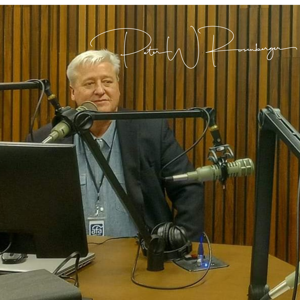


You pray. You fill the prescriptions. You make breakfast. And somewhere in the middle of it all, you wonder whether everything depends on you.
After forty years caring for my wife, Gracie, I know that feeling well.
In this episode of Hope for the Caregiver, I explore divine concurrence: how God carries out His sovereign purposes through the real choices and actions of His creatures. What does that mean when we're choosing a medical procedure, second-guessing a decision, asking for help, or trying to get some sleep?
Beginning with snowfall at our home in Montana and closing at the piano with William Cowper's "God Moves in a Mysterious Way," we look to Scripture for assurance that our work matters and our limitations do not exhaust God's care.
More at HopeForTheCaregiver.com.
After forty years as a caregiver, I know my way around hospitals, medications, and insurance forms. An old tractor on a Montana hillside? That's when I call a neighbor.
But asking for help can catch in your throat when you've spent years being the person everyone depends on. In this episode of Hope for the Caregiver, I share why specific requests help, how I'm learning skills that intimidate me, and why experience doesn't mean we're finished learning.
Plus, an update on Standing With Hope's prosthetic limb outreach in Ghana, a candid look at examining our hearts through Scripture, and Gracie singing "I Want to Be More Like Jesus."
Healthy Caregivers Make Better Caregivers™.
More at hopeforthecaregiver.com and caregiver.substack.com.
Family caregivers spend a lot of time talking to ourselves, replaying decisions, anticipating the next crisis, and wondering how much longer we can keep going. After forty years of caring for my wife, Gracie, I know how exhausting that conversation can become.
In this episode of Hope for the Caregiver, I explore what we say to ourselves when the pain persists and circumstances refuse to settle down. A husband caring for his wife with Alzheimer's offers a powerful example: exhausted by her repeated questions, he quietly reminds himself, "He's got this. Go ahead and answer her question." His response opens a conversation about caregiver stress, patience, and the peace Christ offers amid ongoing trouble.
Drawing from the Psalms and my own struggles, I share how Scripture gives us words to speak to our troubled hearts. Gracie closes the program with "Covenant Lament," a song I wrote following the Covenant School shooting in Nashville (where we attended church for many years when we lived in Nashville), for those moments when we need to borrow someone else's words until we can find our own.
If this episode helps you, share it with a caregiver who could use some encouragement today. And if you'd like these conversations delivered to your inbox, subscribe to Hope for the Caregiver.
I once sat in an Easter service surrounded by a thousand people and felt utterly alone. Caregiving can do that. Even in a crowded room. Even on a crowded pew.
In this episode, I turn to Genesis 2:18, talk about the difference between solitude and isolation, and share why those of us advocating for someone we love need people beside us, too.
I also tell the story of a diverted flight, an overnight bus ride, and a fellow passenger who needed help getting safely onto the next bus. Then I close at the caregiver keyboard with "Jesus, Thy Blood and Righteousness," a hymn for those days when the weight of caregiving leaves your head bowed.
A man sitting beside me on a flight told me his religious organization taught people to look inside themselves and become their own savior.
"I've seen my work," I told him. "I need a better Savior."
Caregiving has made me more certain of that. After forty years alongside Gracie, I've heard promises of healing and claims of a special word from God. How do we test what people say in His name?
In this episode, I wrestle with those questions, give thanks for God's mercy when He heals, and ask: Is Scripture sufficient? I close with "Thank You, Lord, for Saving My Soul," a chorus Gracie and I have sung in some very hard places.
"Where is God?"
It may be the most elemental question a family caregiver asks when suffering becomes relentless. But "where" is a curious question to ask about an omnipresent God. Scripture tells us that He is present at the accident scene, in the operating room, at the rehabilitation center, and beside the caregiver sitting alone at the kitchen table at two in the morning.
In this episode, Peter Rosenberger turns the question around. The first question God asked fallen humanity was, "Where are you?" God knew where Adam was. Adam needed to recognize where he was and why he was hiding.
Drawing from his own cancer diagnosis and Gracie's decades of chronic pain, Peter explores fear, caregiver exhaustion, hypervigilance, and our attempts to control outcomes that belong to God.
Being observant is not the same as being omniscient. Being responsible is not the same as being sovereign.
Peter also shares the remarkable story behind "My Hope Is Built on Nothing Less" and why its promise of God's unchanging grace offers an anchor for every caregiver facing a high and stormy gale.
More at caregiver.substack.com.
Caregivers live with questions that medicine cannot answer. Where is God in this? Can He be trusted? Does suffering have meaning? How long can I keep doing this?
In this episode, Peter Rosenberger explains why theology is not merely an academic subject for pastors and professors. It belongs at the hospital bedside, in the waiting room, and in the kitchen at two in the morning. What we believe about God shapes what we believe about ourselves, what we attempt to carry, and where we stand when everything around us changes.
The episode closes with an unexpected story and a deeply personal musical reflection on grief, faith, and offering the best of what we have.
After nearly six decades of quadriplegia and chronic pain, Joni Eareckson Tada speaks with uncommon clarity about suffering, hope, caregiving, and the daily grace that sustains when life does not get easier.
In this conversation about her new book, Keeping Faith When Life Hurts, Joni explains why Christian hope sustains us when normal is not returning and why, despite her weariness, she refuses to retire.
You can watch the video of this interview at Caregiver.Substack.com
Every caregiver eventually asks three questions: Where is God? Why would a good and loving God allow this? And how long, O Lord?
Drawing from forty years of caregiving, Peter Rosenberger begins with the first: Where is God when caregiving hurts? Through Scripture, hard-earned experience, and the story of a four-year-old amputee in Ghana, Peter explains why sound theology is not an academic luxury for caregivers. It is an anchor.
The episode concludes at the caregiver keyboard with "He Will Hold Me Fast."
We cannot always move another person's mountains. Sometimes our task is simply to help them see more clearly. Peter reflects on the small acts of care entrusted to us, the limits of what caregivers can control, and the God who holds the view beyond the glass.
Want to see more? Check the article on Peter's Substack. (www.caregiver.substack.com)
From the publisher's feed
Ranked by our users in the last 21 days

3,934 Listeners
4,797 Listeners
2,973 Listeners

7 Listeners

7 Listeners

14 Listeners
11 Listeners

14 Listeners
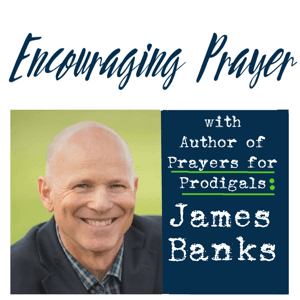
4 Listeners

29 Listeners

9 Listeners

56 Listeners

39,359 Listeners
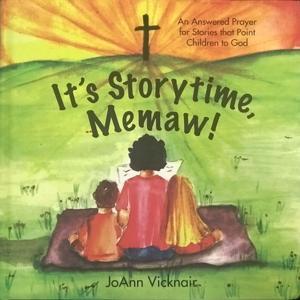
3 Listeners

1 Listeners

19,028 Listeners
0 Listeners
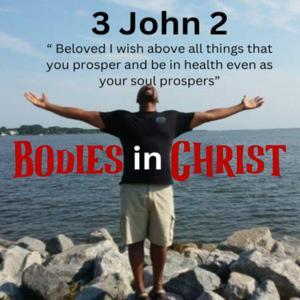
0 Listeners
16 Listeners

10 Listeners

2 Listeners

24 Listeners
0 Listeners

0 Listeners