
Sign up to save your podcasts
Or

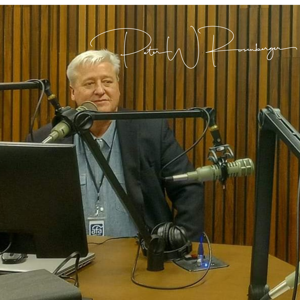


A caller recently asked about a woman caring for a disabled adult son while family members pressured her to take on additional caregiving responsibilities.
The details were complicated.
The answer wasn't.
One of the hardest lessons caregivers ever learn is knowing what is theirs to carry—and what is not.
In this conversation, we explore boundaries, stewardship, guilt, obligation, and why "No" is sometimes the most faithful answer a caregiver can give.
When does caregiving really end?
In this powerful conversation, Peter Rosenberger welcomes Emmy Award-winning journalist and actress Malena Cunningham to discuss her extraordinary journey as a family caregiver.
Click to order this book!
After losing her sister, Malena became the primary caregiver for her aging mother. Then, while caring for her mother through kidney failure and dialysis, her husband suffered a devastating stroke. Suddenly, she found herself caring for two loved ones at the same time while trying to hold her own life together.
Together, Peter and Malena explore:
Malena shares the deeply personal story behind her book, When Love Lets Go: A Daughter's Faith Journey and Her Mother's Final Days, and reflects on what it means to move forward after losing both her mother and husband within months of each other.
If you've ever cared for a loved one, faced difficult medical decisions, wrestled with grief, or wondered who you are after caregiving ends, this conversation offers wisdom, encouragement, and hope.
Healthy caregivers make better caregivers.
#Caregiving #FamilyCaregiver #Grief #Faith #EndOfLifeCare #CaregiverSupport #HopeForTheCaregiver #PeterRosenberger #MalenaCunningham #CaregiverBurnout #AgingParents #DementiaCare #ChronicIllness #ChristianPodcast #LossAndHope
On this special Memorial Day edition of Hope for the Caregiver, Peter Rosenberger reflects on sacrifice, remembrance, and the God who does not forget.
Drawing from deeply personal memories of his father serving as a Navy chaplain during Vietnam-era casualty notifications, Peter explores the unseen burden carried by military chaplains who walked up to front doors carrying the worst news a family could receive.
Why does Matthew's Gospel deliberately preserve the name of Uriah the Hittite in the genealogy of Christ? What does that reveal about honor, grief, and the faithfulness of God? And what can Memorial Day teach us about service, sacrifice, and the cost borne by military families across generations?
This moving program also features excerpts from Peter's interview with retired Army Chaplain Lt. Col. Michael Frazier, who shares firsthand experiences conducting casualty notifications, military funerals, and ministering to grieving families in moments of profound loss.
Featuring patriotic hymns, reflections on Scripture, the history of military chaplaincy, and a special closing performance of the National Anthem by Gracie Rosenberger.
A powerful Memorial Day conversation about duty, grief, faith, patriotism, and the sacred work of remembering.
In this episode of Hope for the Caregiver, Peter Rosenberger explores the power of questions, the kind that cut through noise, expose truth, and force clarity in moments when something real is at stake.
Drawing from hospital rooms, caregiving, Scripture, politics, and even funeral services, Peter examines why caregivers often learn to ask better questions than the rest of the culture. From Ronald Reagan's famous debate question to God's questions to Job, this episode looks at how honest questions reveal what we truly believe, what we fear, and what we ultimately want our lives to stand for.
Peter also shares practical caregiving wisdom about preparing a home for mobility challenges, including lessons learned from nearly forty years of caring for his wife Gracie who lives with severe disabilities.
Plus: another installment of Hymns Every Caregiver Ought to Know, featuring Charles Wesley's "And Can It Be," and why exhausted caregivers need more than slogans, they need truth strong enough to steady the soul.
Caregiver exhaustion can take people to strange places. For Peter Rosenberger, one of those places involved trying to admit himself into a mental health facility… and ending up with a tuna sandwich.
In this deeply personal and unexpectedly funny episode of Hope for the Caregiver, Peter reflects on burnout, despair, exhaustion, and the strange moments of clarity that sometimes come when caregivers run out of road.
Drawing from more than four decades caring for his wife Gracie through nearly 100 surgeries, Peter offers candid insight, hard-won perspective, and a reminder that weary caregivers are not as alone as they think.
It helps to listen to this while eating a tuna sandwich.
More encouragement for family caregivers at: caregiver.substack.com
After another national crisis, the familiar chorus returned: "We need to tone it down."
But who exactly is "we"?
In this episode of Hope for the Caregiver, Peter Rosenberger explores the dangerous habit of hiding personal responsibility behind collective language. Drawing from four decades as a caregiver, Peter examines accountability, media rhetoric, leadership, repentance, caregiving stress, and the difference between saying "we should do better" and "I should do better."
This is not a political rant. It's a conversation about ownership, moral clarity, public discourse, humility, and the kind of repentance that actually costs something.
Topics include: • Personal responsibility • Accountability and leadership • Caregiver stress and emotional exhaustion • Media rhetoric and public discourse • Faith, repentance, and humility
Peter Rosenberger is the host of the nation's longest-running radio program for family caregivers, Hope for the Caregiver.
HopeForTheCaregiver.com caregiver.substack.com
Caregivers often hear confident spiritual claims in the middle of real suffering. "The Lord told me" can sound comforting, but it raises a serious question. Who is actually speaking for God?
In this episode, Peter Rosenberger walks through 1 John 4:1 and explains why Scripture commands us to test every spirit. He addresses common phrases that sound spiritual but lack biblical authority, shows how conscience can be wrongly bound by human opinion, and points back to the sufficiency of God's Word.
With practical clarity and pastoral conviction, this episode helps caregivers think clearly, stand firmly, and find a true foundation when everything around them feels uncertain.
Award-winning composer, conductor, and Christian music icon Dick Tunney joins Peter Rosenberger to share his journey from the concert stage to the chemo room, as his wife battles cancer. A powerful conversation on caregiving, loss of control, and discovering real hope when faith is no longer theoretical.
In this episode of Hope for the Caregiver, I sit down with author and pastor Chris Maxwell (Chris Maxwell) to talk about something our culture desperately lacks—contentment. ( ChrisMaxwell.me )
Chris knows this struggle firsthand. After surviving encephalitis and living with lasting brain damage and epilepsy, he began asking a hard question: Can I be content with the life I have, not the one I thought I'd have?
We talk about:
At some point, we all have to face this question: Do we really believe what we say we believe—and what does that require of us right now?
If you're waiting for life to calm down before you find peace, this conversation may challenge that.
Because contentment isn't found when things get better. It's discovered when we trust God in the middle of what is.
From the publisher's feed
Ranked by our users in the last 21 days

3,935 Listeners
4,806 Listeners
2,971 Listeners

7 Listeners

7 Listeners

14 Listeners
11 Listeners

14 Listeners
4 Listeners
29 Listeners

9 Listeners

56 Listeners

39,368 Listeners
3 Listeners

1 Listeners

19,061 Listeners

0 Listeners
0 Listeners
16 Listeners

10 Listeners

2 Listeners

24 Listeners
0 Listeners

0 Listeners