
Sign up to save your podcasts
Or


There's a particular look that crosses someone's face when they realize they've just been understood.
I've seen it on a bus driver from Kenya after I spoke a few words of Swahili. I've seen it on a CNA from Ghana caring for my wife in a hospital room. I watched a hospital housekeeper from Haiti light up when I spoke a few words in French to her.
And I've seen it countless times on caregivers who quietly say, "You just said what I've been feeling."
The response is almost always the same:
How do you know my language?
Caregivers live in a kind of isolation that's hard to describe. It isn't only physical exhaustion, emotional strain, or long-term uncertainty. It's deeper than that. Many of us are surrounded by people who care, who want to help, who offer words—but those words don't quite land. Not because they're cruel, but because they're untranslated.
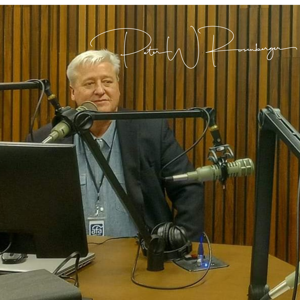
In this episode of Hope for the Caregiver, I reflect on what it means to speak the "language of the heart." While I learned a few words in several language, I speak "Fluent Caregiver" - and am committed to speaking the language of the caregiver's heart to as many as I can.
I also discuss why music reaches us so powerfully, and why some voices connect immediately while others never quite do. I also look at what Christmas tells us about this kind of connection, and why the name Emmanuel isn't a seasonal phrase, but a profound reality.
This episode moves through stories, music, suffering, compassion, and the gospel itself. It's about caregivers, yes—but also about anyone who has ever wondered what to say, or felt unseen because no one knew how to say it.
If you're carrying something heavy this season, I hope you'll listen.
After listeningIf you're walking with someone through addiction, disability, illness, or long-term suffering, you may feel pressure to say the right thing. This episode isn't about perfect words. It's about presence.
Sometimes the most faithful thing we can do is simply stay, listen, and speak with the same compassion we ourselves have received.
A resource for caregivers who need languageIf this episode resonated, you may find help in my book, A Caregiver's Companion.
It grew out of the same conviction behind today's program: caregivers don't just need encouragement. We need words that speak honestly to what we're carrying.
The book brings together Scripture, hymns, and lived experience from decades of caregiving, written to sit beside you rather than talk at you.
You can find it here: 👉 https://a.co/d/1l8nZfF
 View all episodes
 By Peter Rosenberger

4.8
3333 ratings
There's a particular look that crosses someone's face when they realize they've just been understood.
I've seen it on a bus driver from Kenya after I spoke a few words of Swahili. I've seen it on a CNA from Ghana caring for my wife in a hospital room. I watched a hospital housekeeper from Haiti light up when I spoke a few words in French to her.
And I've seen it countless times on caregivers who quietly say, "You just said what I've been feeling."
The response is almost always the same:
How do you know my language?
Caregivers live in a kind of isolation that's hard to describe. It isn't only physical exhaustion, emotional strain, or long-term uncertainty. It's deeper than that. Many of us are surrounded by people who care, who want to help, who offer words—but those words don't quite land. Not because they're cruel, but because they're untranslated.
In this episode of Hope for the Caregiver, I reflect on what it means to speak the "language of the heart." While I learned a few words in several language, I speak "Fluent Caregiver" - and am committed to speaking the language of the caregiver's heart to as many as I can.
I also discuss why music reaches us so powerfully, and why some voices connect immediately while others never quite do. I also look at what Christmas tells us about this kind of connection, and why the name Emmanuel isn't a seasonal phrase, but a profound reality.
This episode moves through stories, music, suffering, compassion, and the gospel itself. It's about caregivers, yes—but also about anyone who has ever wondered what to say, or felt unseen because no one knew how to say it.
If you're carrying something heavy this season, I hope you'll listen.
After listeningIf you're walking with someone through addiction, disability, illness, or long-term suffering, you may feel pressure to say the right thing. This episode isn't about perfect words. It's about presence.
Sometimes the most faithful thing we can do is simply stay, listen, and speak with the same compassion we ourselves have received.
A resource for caregivers who need languageIf this episode resonated, you may find help in my book, A Caregiver's Companion.
It grew out of the same conviction behind today's program: caregivers don't just need encouragement. We need words that speak honestly to what we're carrying.
The book brings together Scripture, hymns, and lived experience from decades of caregiving, written to sit beside you rather than talk at you.
You can find it here: 👉 https://a.co/d/1l8nZfF
3,958 Listeners

4,838 Listeners

2,986 Listeners

7 Listeners

7 Listeners

14 Listeners

11 Listeners

14 Listeners
4 Listeners

29 Listeners

9 Listeners

56 Listeners

40,434 Listeners
3 Listeners

1 Listeners

20,222 Listeners
0 Listeners

0 Listeners

16 Listeners
11 Listeners

2 Listeners

24 Listeners
0 Listeners

0 Listeners