
Sign up to save your podcasts
Or

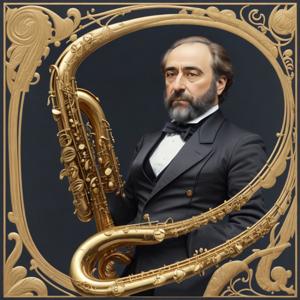


Rossini made a new visit to the workshops of our protagonist, Adolphe Sax, showing particular interest in his innovations, especially regarding the bass clarinet and the new saxophone. He was so impressed that he went as far as to say he had never heard anything so beautiful. Rossini's influence on the musical scene of the time opened doors for our protagonist's musical career, allowing him to establish connections with prominent figures in Italian music, such as Mr. Liverani, a distinguished Italian clarinet teacher, as well as Gaspare Spontini, a renowned opera composer and orchestra director in Italy.
In 1844, the saxophone took its first steps before the general public, thanks to the efforts of Adolphe Sax himself. Our protagonist not only used his workshops to produce innovative musical instruments but also transformed them into meeting points for prominent figures in the society, culture, and politics of Paris during that time.
The first official performance of the saxophone before an audience occurred at the “Salle des Concerts Herz” in Paris during a concert organized by the renowned composer Hector Berlioz. For this occasion, Berlioz adapted his composition "Chant Sacré" for six instruments, all of which were manufactured by Sax. Among them was the bass saxophone in C, successfully played by Adolphe Sax himself during that memorable performance, albeit not without some difficulties.
In a desperate attempt to preserve the sale of his workshop, Adolphe Sax becomes entangled in a subtle web of manipulations devised by an unscrupulous moneylender in collaboration with his own assistant. In the midst of this plot, our protagonist embarks on a fierce struggle to preserve his honor, confronting deceit and betrayals, challenging the cunning and ruthless schemes woven by his clever and merciless adversaries.
Berlioz denounces the persecutions suffered by Sax worthy of the Middle Ages. Amid accusations, manipulations, and sabotage, Sax defies traditions, threatening the interests of manufacturers and veteran musicians of that time, as reflected in the report of the French Industry Exhibition. Amid intrigues and challenges, the unexpected turn will come with the arrival of an enigmatic gentleman to his workshop, holding uncertainty about the fate of Sax and his extensive musical legacy.
In 1843, Italian composer G. Donizetti introduced Sax's bass clarinet in his opera "Don Sebastian," provoking opposition from the musicians of the Paris Opera, led by M. Carafa and the orchestra's principal clarinetist. This controversy reflected personal interests and the threat posed by Sax's innovations to the musicians of the time, as well as to traditional instrument manufacturers. The bass clarinet was ultimately removed from the score due to the strong opposition of the orchestra musicians.
From the publisher's feed