
Sign up to save your podcasts
Or



What kind of leader are you becoming through your everyday choices?
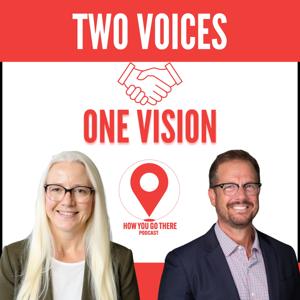
Scott Montgomery and Linda Misegadis close out the How You Go There workbook series by exploring the connection between management, leadership, and personal growth.
Through Scott’s story of being disqualified during a 70.3 Ironman race, they discuss how an unexpected setback can become an opportunity to lead with intention—and why your example matters far beyond the workplace.
The conversation also explores the workbook’s Manager vs. Leader exercise, identifying your top three leadership elements, and developing the emotional intelligence skills that help you build trust and support others.
Whether you’re leading a team, raising a family, or working on your own growth, this episode invites you to consider how your habits, communication, and values shape the example you set.
Explore the book, workbook, and resources:
Listen to more episodes:
EPISODE TIMESTAMPS
Follow the podcast, leave a review, and share this episode with someone who is thinking about the leader they want to become.
Produced by LJM Productions.
Leadership is not reserved for a title, a corner office, or one part of your life. It begins with the way you understand and lead yourself.
00:00 - Welcome and cooking up a leadership conversation
00:58 - Why leadership matters right now
01:36 - Leadership as influence, vision, and shared goals
02:41 - Balancing IQ and EQ
03:57 - Self-awareness inside the HYGT framework
05:25 - Leadership begins before the title
06:53 - Leadership as a behavior and practice
07:12 - Applying leadership at home
07:57 - Stress, work, relationships, and identity
09:35 - Transitions and avoiding old patterns
10:26 - Sponsor break
11:17 - Awareness and transformation
11:47 - Leadership beyond the workplace
12:44 - Self-leadership, boundaries, and authenticity
13:45 - Leadership across career stages and family life
14:48 - Your personal example as a leadership tool
15:17 - Three listener takeaways
16:19 - Accountability beyond admitting a mistake
16:45 - Conviction, disagreement, and recognizing results
17:03 - Books, workshops, and coaching resources
17:46 - Closing thoughts
Self-care is not a reward you earn after everything else is finished. It is part of the framework that helps you keep showing up for the people, work, and goals that matter.
00:00 - Welcome and why sustainable growth matters
01:16 - What self-care really means
03:17 - When exhaustion becomes a badge of honor
04:26 - Habits, fitness, and peak performance
06:14 - Preparing for demanding seasons
08:05 - The six dimensions of self-care
08:31 - Personal self-care
10:23 - Making time through habits and goals
12:22 - Sponsor break
13:17 - Spiritual self-care and purpose
15:56 - Physical self-care
18:22 - How the HYGT framework fits together
19:24 - Behavioral self-care: boundaries and routines
21:09 - Emotional self-care and managing your response
23:05 - Why top performers ask for support
24:59 - Self-care in family life
27:20 - The myth of perfect work-life balance
29:32 - Professional self-care
30:08 - Three practical takeaways
31:51 - Start where you are
Two people can walk through the same experience and leave with completely different outcomes. The difference is often the lens they bring to it.
00:00 Welcome to the How You Go There workbook series
Communication is not a skill you finish learning. The target keeps changing: different people, different seasons, different channels, and different stakes.
TIME
TOPIC
00:00
Welcome and the HYGT workbook series
02:29
Communication as an evolving leadership skill
03:01
Direct, indirect, supportive, and analytical styles
04:20
Self-awareness and adapting to the receiver
07:25
Being heard, contribution, and psychological safety
10:23
Sponsor message
11:09
Workbook scenario: the missed project deadline
16:55
Preparing and practicing difficult feedback
18:37
Using 'Yes, and' to keep the conversation open
21:31
Connection, acknowledgment, trust, and momentum
22:40
A practical one-conversation challenge
23:37
Closing and website
Communication shapes how we lead, collaborate, handle conflict, build trust, and move forward.
In this episode, Scott and Linda continue the How You Go There workbook series with a practical conversation about communication styles. They discuss why self-awareness matters, how direct, indirect, supportive, and analytical communicators can misunderstand each other, and why leaders need to pay attention to both their intent and their impact.
This conversation is especially useful for anyone leading a team, working across departments, navigating tension, or trying to communicate with more clarity and care.
Listen, reflect, and take the next intentional step.
Watch on YouTube: https://youtu.be/fXY8JNN2LIU
Timestamps
In this episode of How You Go There, Scott Montgomery and Linda Misegadis continue the workbook series with a conversation about coaching, mentors, advisors, and the kind of support that helps people move forward with intention.
They explore what makes coaching different from mentoring or advising, why certification and structure matter, how to think about chemistry with a coach, and why the right support depends on the stage of life or leadership you are in.
The episode also connects back to the How You Go There companion guide, which helps listeners reflect on relationships, habits, goals, and the kind of coaching support they may need next.
Reflection question from the episode:
Resources:
Podbean Timestamps
In this episode of How You Go There, Scott Montgomery and Linda Misegadis continue the workbook series with a conversation about mentors, advisors, and the relationships that shape personal and professional growth.
They explore why success is never really something we do alone, how mentor relationships can show up formally or naturally, and why perspective from outside ourselves can help us move from being busy to actually moving forward. Scott and Linda also talk about gratitude, vulnerability, closure, and the difference between a mentor, an advisor, a friend, and a coach.
This conversation invites listeners to reflect on the people who have helped shape their path, the wisdom they may not have recognized at the time, and how to approach mentorship with curiosity, respect, and appreciation.
For more information head over to howyougothere.com
Timestamps
In this episode of How You Go There, Scott Montgomery and Linda Misegadis talk about what it really means to set goals that fit your life, your work, and the season you're in.
In this episode of How You Go There, Scott Montgomery and Linda Misegadis continue the workbook series with a conversation about habits, accountability, and the small routines that shape how we show up each day.
They talk about why habits often fail when we try to change too much too fast, how the cue-action-reward loop works in real life, and why habits are less about perfection and more about creating the conditions for peak performance.00:00 Welcome to the workbook series
From journaling and reflection to making the bed and building self-awareness, this episode offers practical ways to think differently about the habits that quietly shape your life, leadership, and next steps.
Learn more, access resources, and follow the podcast at www.howyougothere.com.
From the publisher's feed
The How You Go There Podcast helps you understand your journey so you can intentionally shape what comes next.
Hosted by Scott Montgomery, author of How Did You Get Here?, and Linda Misegadis, HR leader and host of the Her Resources Podcast, the show explores the real experiences, relationships, and decisions that shape our personal and professional paths.
Each episode walks through ideas and exercises from the How You Go There workbook, combining practical reflection with real stories from Scott, Linda, and their guests. Together, they unpack pivotal career moments, leadership challenges, and the partnerships that influence where we end up in life and work.
Whether you're navigating leadership, career growth, or your next chapter, this podcast offers simple tools and insights to help you reflect with purpose and move forward with intention.
Learn more:
https://howyougothere.com
Listen & connect:
https://linktr.ee/hygtpodcast