
Sign up to save your podcasts
Or

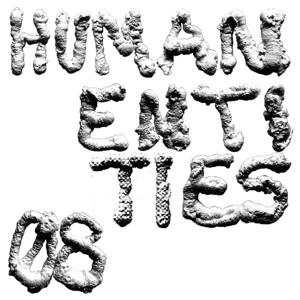


Human Entities 2026: culture in the age of artificial intelligence
Tenth edition
Tue, 2 June 2026, 6.30pm
Permacomputing: small entrances to a wide collective
Ana Meisel
Web developer and artist
Permacomputing applies permaculture, a design for Earth care, people care and fair share, to computing. It focuses on repair and inspects the all-encompassing impacts of technology through trails of ecology, conviviality and anti-capitalist politics. Communities dedicated to these ethics continue to form around the world and exercise it with art, mutual aid and practical guides to technological degrowth and maintainable systems. The aim is to impair dominant tech powers that funnel our emotions into data with seamlessly blunt interactions that coast us into a world of alienation filled with environmental harm. This momentous friction creates a new politicisation due to tech’s ubiquity and polarisation. Permacomputing’s idiosyncratic and minimal computing practices require slowness, thoughtfulness and communal knowledge sharing. This deepens relationships and sociability, and subsequently opens gateways to politics and class consciousness from ecofeminist, decolonial and communal foundations.
Ana Meisel
Ana Meisel is a Polish-German web developer and artist based in London, UK. Her focus is on historically-informed computing through the lens of critical theory, ecological responsibility, whole-systems thinking, and community organising. She is part of Superkilogirls, a collective that looks at feminist critiques of computing and automation, runs External Pages, an internet art gallery and co-organises London’s Permacomputing Club. Her work has been showcased in diverse contexts like the Cyberfeminism Index and San Jose Museum of Art. Her interests include tech resistance movements, DIY tech culture, and the Eastern Bloc.
https://ana.help
@dj_anicka
https://mastodon.social/@anmeisel
This event is part of
Human Entities 2026: culture in the age of artificial intelligence
Tenth edition
Public talks, May – June 2026
Human Entities 2026: culture in the age of artificial intelligence
Tenth edition
Wed 27 May 2026, 6.30pm
Beyond the senses: science and the mystery of psychic phenomena
Peter Bancel
Senior Researcher at the Institut Métapsychique International, Paris (France) and Fellow at the Institute of Noetic Sciences, California (US)
Anomalies – the things that don’t fit our view of the world – are often the starting point of discoveries. As physicist Richard Feynman put it, “It’s the thing that doesn’t fit that is the most interesting.” A major challenge for science today is to understand consciousness. Theories abound, progress is being made, yet there is no consensus or even a clear path forward. In situations like this, anomalies can provide crucial direction for research. In this talk, we will look at the anomaly of psi phenomena – apparent capacities of consciousness such as telepathy and precognition – and explore the scientific evidence. If the reality of psychic phenomena is established, it may serve as a signpost toward understanding how and why we experience experience at all – the core of human consciousness. We will also consider what this would imply for science more broadly and how it invites us to understand the world.
Peter Bancel
Peter Bancel is a senior researcher at the Institut Métapsychique International (IMI) in Paris and a fellow of the Institute of Noetic Sciences in California. In the early 2000s, he collaborated with the Global Consciousness Project based in Princeton (US) before joining the IMI in 2010. Alongside his scientific work, he is a long-time Buddhist practitioner and meditation teacher, with a longstanding interest in consciousness that bridges contemplative traditions and empirical research. Since joining the IMI, he has focused on how psychic phenomena – often called “psi” – can be studied using the methods of mainstream science. His work explores precognition, experimental design in psi studies, and possible connections with quantum physics. He holds a PhD in Experimental Physics from the University of Pennsylvania. After postdoctoral research at IBM, he moved to France, where he worked at the CNRS in Paris and later at the Institut des Matériaux Jean Rouxel at the University of Nantes.
https://www.imiresearch.fr
This event is part of
Human Entities 2026: culture in the age of artificial intelligence
Tenth edition
Public talks, May – June 2026
Ficha Técnica/Credits
Organised by CADA in partnership with Lisbon Architecture Triennale
Programmed by Jared Hawkey/Sofia Oliveira with guest programmers: Andrea Pavoni, Kaitlyn Davies, Zagalo Pereira.
CADA is funded by: República Portuguesa – Cultura, Juventude e Desporto / Direção-Geral das Artes
ApoiosSupport: Câmara Municipal de Lisboa, Universidade Nova de Lisboa, Faculdade de Ciências e Tecnologia – NOVA LINCS, Instituto Ciências Sociais, Universidade de Lisboa; DINAMIA’CET (ISCTE-IUL), Faculdade de Belas Artes, Universidade de Lisboa, Departamentos de Design de Comunicação e Arte Multimédia
Art direction + graphic design: Emir Karyo
Photography: Joana Linda
Sound: Diogo Melo, Fernando Fadigas
Human Entities 2026: culture in the age of artificial intelligence
Tenth edition
Wed 20 May 2026
Reclaiming Digital Sovereignty
Paris Marx
Tech critic
For several decades, we’ve allowed ourselves to become deeply dependent on US technologies, platforms, and digital services. The alliance between Silicon Valley and the Trump administration has shown us how that choice hasn't just made us vulnerable; it’s now empowering anti-democratic and authoritarian forces. Paris Marx will discuss how we became so dependent on US tech and what it might look like to chart of different course. Getting off US tech won’t be easy, but it presents an opportunity to reimagine how we use digital technology for the better.
Paris Marx
Paris Marx is a Canadian tech critic. He hosts the award-winning Tech Won’t Save Us podcast and speaks around the world about the politics of technology. Paris is the author of Road to Nowhere and his next book Hyperscale comes out later this year.
https://parismarx.com
https://techwontsave.us
https://roadtonowherebook.com/
This event is part of
Human Entities 2026: culture in the age of artificial intelligence
Tenth edition
Public talks, May – June 2026
Ficha Técnica/Credits
Organização CADA em parceria com a Trienal de Arquitectura de Lisboa
Organised by CADA in partnership with Lisbon Architecture Triennale
Programado por Jared Hawkey/Sofia Oliveira com programadores convidados/ Programmed by Jared Hawkey/Sofia Oliveira with guest programmers: Andrea Pavoni, Kaitlyn Davies, Zagalo Pereira.
O CADA é uma estrutura financiada por/CADA is funded by: República Portuguesa – Cultura, Juventude e Desporto / Direção-Geral das Artes
Apoios/Support: Câmara Municipal de Lisboa, NOVA-LINCS, Universidade Nova de Lisboa, Faculdade de Ciências e Tecnologia – NOVA LINCS; Instituto Ciências Sociais, Universidade de Lisboa, DINAMIA’CET (ISCTE-IUL) e/and Faculdade Belas Artes, Universidade de Lisboa, Departamentos de Design de Comunicação e Arte Multimédia.
Direção de arte + design gráfico/ Art direction + graphic design: Emir Karyo
Fotografia/ Photography: Joana Linda
Som/Sound: Diogo Melo, Fernando Fadigas
Foto/Photo: Anne Barth/re:publica
Human Entities 2025: culture in the age of artificial intelligence
Ninth edition
Wed 14 May 2025, 6.30pm
Artist Talk: Welcome to Jankspace, babesDaniel FelsteadContent producer
Jankspace is the leaking residual of the stack as it metabolises meatspace into hallucinogenic sludge. It’s the Uberdriver’s chaotically impressive multi-display setup of knotted cables, flashing screens and beeping notifications. It’s literally us and our gorgeously fucked-up, uncomputable bodies that we know aren’t quite programmed right and no amount of optimization is going to fix. In this artist talk Daniel will use the concept of jankspace to explore some of the central themes of his practice, namely, the aesthetic derangement of everyday digital culture, our unhinged mediated bodies, and the idiotic delusions of transhumanism.
Daniel FelsteadDaniel Felstead is an academic and content producer whose practice focuses on the relationship between the body, technology, and culture. e is the course leader of MA Fashion Media & Communication at the London College of Fashion (UAL). Daniel has spoken and exhibited internationally including Architectural Association, Berlin Critics Week, Die Angewandte, Fundació Foto Colectania, Global Art Forum, MAPS, ICA, PAF, RCA, RISD, Shedhalle, Transmediale and V&A Museum. His PhD explored speculative modes of production, complex systems and the platform in relation to participatory art. Most recently Daniel has produced a series of critically acclaimed short film commissions that explore the myths, ideologies and realities of the metaverse, AI, biotech and neural media.
https://www.instagram.com/felstead.daniel
Credits
Organised by CADA in partnership with Lisbon Architecture Triennale and Faculty of Fine Arts, University of Lisbon
Programmed by Jared Hawkey/Sofia Oliveira with guest programmers: Andrea Pavoni, Lavínia Pereira and Olivia Bina.
CADA is funded by: República Portuguesa – Cultura / Direção-Geral das Artes
Support: Câmara Municipal de Lisboa; Universidade NOVA de Lisboa, Faculdade de Ciências e Tecnologia – NOVA LINCS; Instituto Ciências Sociais, Universidade de Lisboa; DINAMIA’CET (ISCTE-IUL) and Faculdade Belas Artes, Universidade de Lisboa, Departamentos de Design de Comunicação e Arte Multimédia.Art direction + graphic design: Emir KaryoPhotography: Renato Chorão
Sound: Fernando Fadigas
Human Entities 2025: culture in the age of artificial intelligence
Ninth edition
Thur 5 June 2025, 6.30pm; book-signing session at 6pm
Planta Sapiens: Rethinking Intelligence in the Living World
Paco Calvo
Professor of Philosophy of Science, Principal Investigator of the Minimal Intelligence Laboratory (MINT Lab) at the University of Murcia (Spain)
Our conventional understanding of intelligence has long been shaped by human and animal models, leaving little room to consider the cognitive potential of plants. However, emerging research challenges this perspective, revealing that plants engage with their surroundings in ways that suggest problem-solving, flexible adaptation, and even anticipatory forms of behavior.In this talk, I will present key findings, exploring how plants process information, respond to stimuli, and coordinate their actions through sophisticated signaling mechanisms. Beyond the scientific discoveries, these insights prompt deeper philosophical questions. Why do we struggle to conceive of plants as more than passive organisms? What assumptions shape our tendency to separate the human from the nonhuman, intelligence from instinct, or agency from environment? Our conceptual and linguistic frameworks are often ill-equipped to accommodate the possibility that plants, too, participate in the web of cognition. By questioning these biases, we open the door to a more expansive and inclusive view of life; one that recognizes intelligence as a broader, more distributed phenomenon across biological systems. This shift in perspective not only deepens our understanding of plants but also challenges us to rethink fundamental ideas about mind, perception, and the interconnected nature of all living beings.
Paco Calvo
Professor of Philosophy of Science, Principal Investigator of the Minimal Intelligence Laboratory (MINT Lab) at the University of Murcia (Spain). His research interests range broadly within the cognitive sciences, with special emphasis on plant intelligence, ecological psychology and embodied cognitive science, robotics and AI. He uses time-lapse photography to explore perception-action and learning in plants. His scientific articles have appeared in Annals of Botany, Biochemical and Biophysical Research Communications, Frontiers in Neurorobotics, Frontiers in Robotics and AI, Journal of the Royal Society, Plant, Cell & Environment, Plant Signaling & Behavior, Scientific Reports, and Trends in Plant Science, among other journals. He is author of the popular science book Planta Sapiens ( 2023; with Natalie Lawrence).
https://www.um.es/mintlab/index.php/about/people/paco-calvo
Credits
Organised by CADA in partnership with Lisbon Architecture Triennale
Programmed by Jared Hawkey/Sofia Oliveira with guest programmers: Andrea Pavoni, Lavínia Pereira and Olivia Bina.
CADA is funded by: República Portuguesa – Cultura / Direção-Geral das Artes
Support: Câmara Municipal de Lisboa; Universidade NOVA de Lisboa, Faculdade de Ciências e Tecnologia – NOVA LINCS; Instituto Ciências Sociais, Universidade de Lisboa; DINAMIA’CET (ISCTE-IUL) and Faculdade Belas Artes, Universidade de Lisboa
Art direction + graphic design: Emir Karyo
Photography: Joana Linda
Sound: Diogo Melo
Human Entities 2025: culture in the age of artificial intelligence
Ninth edition
Wed 28 May 2025, 6.30pm
Notes on ‘Content’
Caroline Busta
Writer and editor
As one-point perspective gives way to collective forms of knowing, media proliferates with no end, text is increasingly scanned and sensed more than read, and the myth of the individual-creative-genius is dissolved by the logic of swarm-trained LLMs, we are undergoing an epochal shift in human expression and reception. Surveying this communicational climate change, New Models co-founder Caroline Busta will examine the role of ‘content’ therein and some emergent frameworks of adaptation.
Caroline BustaCaroline Busta is a co-founder of the critical media channel New Models. She was previously EIC of Texte zur Kunst, and an Assoc. Editor of Artforum. She co-edited Holly Herndon & Mat Dryhurst’s survey catalogue, All Media is Training Data (2024, Serpentine/König) and her recent essay ‘Hallucinating sense in the era of infinity-content’ appears in the SS24 issue of Document journal.
https://studio.newmodels.io
Credits
Organised by CADA in partnership with Lisbon Architecture Triennale
Programmed by Jared Hawkey/Sofia Oliveira with guest programmers: Andrea Pavoni, Lavínia Pereira and Olivia Bina.
CADA is funded by: República Portuguesa – Cultura / Direção-Geral das Artes
Support: Câmara Municipal de Lisboa; Universidade NOVA de Lisboa, Faculdade de Ciências e Tecnologia – NOVA LINCS; Instituto Ciências Sociais, Universidade de Lisboa; DINAMIA’CET (ISCTE-IUL) and Faculdade Belas Artes, Universidade de Lisboa
Art direction + graphic design: Emir Karyo
Photography: Joana Linda
Sound: Diogo Melo
Human Entities 2023: culture in the age of artificial intelligence
Seventh edition, Wednesday 19 April 2023
Artist talk
Mark Leckey
Mark Leckey is one of the most influential artists working today. Since the late 1990s, his work has looked at the relationship between popular culture and technology as well as exploring the subjects of youth, class and nostalgia. He works with sculpture, film, sound and performance – and sometimes all four at once. In particular, he is known for Fiorucci Made Me Hardcore (1999) and Industrial Light and Magic (2008), for which he won the Turner Prize.
His work has been widely exhibited internationally, including solo exhibitions at Tate Britain, in 2019, Serpentine Gallery, in 2011, Kölnischer Kunstverein, Cologne, in 2008 and at Le Consortium, Dijon, in 2007. His performances have been presented in New York City at the Museum of Modern Art, Abrons Arts Center; at the Institute of Contemporary Arts, London, both in 2009; and at the Solomon R. Guggenheim Museum, New York City, in 2008. His works are held in the collections of the Tate and the Centre Pompidou.
https://markleckey.com
https://www.cabinet.uk.com/mark-leckey
https://www.tate.org.uk/art/artists/mark-leckey-6877/introducing-mark-leckey
https://www.youtube.com/@MrLeckey
https://www.instagram.com/mark.leckey
https://twitter.com/MarkLeckey
https://www.nts.live/shows/mark-leckey
Human Entities 2024: culture in the age of artificial intelligence
Eighth edition, 15 May 2024
Plant consciousness
Monica Gagliano
Evolutionary ecologist, Research Associate Professor (Adjunct) at Southern Cross University, Australia
Monica Gagliano PhD is an internationally award-winning research scientist, selected by Biohabitats as one of the 24 most Inspiring Women of Ecology, together with Jane Goodall, Rachel Carson, Sylvia Earl, and Terry Tempest Williams. She has been an invited lecturer at the most prestigious universities, including UC Berkeley, Stanford, Harvard, Dartmouth and Georgetown. Monica’s pioneering work has been widely featured by prominent media, such as The New York Times, Forbes, The New Yorker, The Guardian, National Geographic, and many others. Monica is Research Associate Professor (Adjunct) of evolutionary ecology based in Australia. She is currently Chief Scientist at Kaiāulu|Coherence Lab in Hawaii, and Research Associate at the Takiwasi Centre in Perú.
Monica has pioneered the brand-new research field of plant bioacoustics, which for the first time, experimentally demonstrates that plants emit voices and detect and respond to the sounds of their environments. Her work has extended the concept of cognition in plants. By demonstrating experimentally that learning and memory are not the exclusive province of animals, Monica has reignited the discourse of plant subjectivity, as well as ethical and legal standing. Inspired by encounters with nature and indigenous elders from around the world, Monica applies an innovative and holistic approach to science, one that is comfortable engaging at the interface between areas as diverse as ecology, physics, law, anthropology, philosophy, literature, music, the arts, and spirituality. By re-kindling a sense of wonder for the beautiful place we call home, she is helping to create a new ecology of mind that inspires the emergence of revolutionary solutions toward human interactions with the world we co-inhabit.
Monica’s studies have led her to author numerous ground-breaking scientific articles and books, including Thus Spoke the Plant (2018) and The Mind of Plants (2021).
https://www.monicagagliano.com
https://www.instagram.com/_monicagagliano_
https://en.wikipedia.org/wiki/Monica_Gagliano
https://researchportal.scu.edu.au/esploro/profile/monica_gagliano/overview
Credits
Organised by CADA in partnership with Lisbon Architecture Triennale and Faculty of Fine Arts, University of Lisbon
Programmed by Jared Hawkey/Sofia Oliveira with guest programmers: Andrea Pavoni, Justin Jaeckle, Lavínia Pereira and Olivia Bina.
Funded by: República Portuguesa – Cultura / Direção-Geral das ArtesSupport: Câmara Municipal de Lisboa; Universidade NOVA de Lisboa, Faculdade de Ciências e Tecnologia – NOVA LINCS; Instituto Ciências Sociais, Urban Transitions Hub, Universidade de Lisboa; DINAMIA’CET (ISCTE-IUL) and Faculdade Belas Artes, Universidade de Lisboa, Departamentos de Design de Comunicação e Arte Multimédia
Design: Pedro Loureiro
Photography: Joana Linda
Sound: Diogo Melo
Human Entities 2024: culture in the age of artificial intelligence
Eighth edition, 5 June 2024
Solarpunk means dreaming green
Jay Springett
Strategist and writer
Solarpunk is a movement in speculative fiction, art, fashion, and activism that seeks to answer and embody the question “what does a sustainable civilization look like, and how can we get there?”
In our current age of popular dystopia, climate grief, and biosphere collapse, Solarpunk has become a ‘creative container‘ for more fertile futures. Not one future singular, but many. Solarpunk encourages everyone to re-imagine what life might be like en-route to a better world. Our collective future will not be imposed upon us from above, but instead created bottom up by individuals in polyphony. A texture consisting of multiple simultaneous lines of independent melody.
The future never passively arrives fully formed, instead, it must be dreamed. Solarpunk is one such dream. In this talk Jay will cover the story of how solarpunk came to be and its attempts at inspiring people to ‘remake our present and future history’.
Jay Springett
Jay Springett is a strategist and writer from London.
He is known as a leading voice in the speculative genre of Solarpunk, which described in 2019 as a ‘memetic engine’ – a tool to power the ‘refuturing’ of our collective imagination. In 2020 his Solarpunk short story ‘In The Storm, A Fire’ was long listed for the BSFA Award for Short Fiction. Jay is a Fellow of Royal Society of Arts in London and was selected as one of WeAreEurope’s 64 Faces of Europe in 2019. He is currently an instructor at The New Centre and speaks regularly about the future, technology and culture at events around the world. He currently hosts two podcasts: PermanentlyMoved.Online, a 301 second long personal journal and Experience.Computer, an interview show about aphantasia, creativity, and the imagination.
Jay has been writing online at http://www.thejaymo.net since 2010.
Credits
Organised by CADA in partnership with Lisbon Architecture Triennale and Faculty of Fine Arts, University of Lisbon
Programmed by Jared Hawkey/Sofia Oliveira with guest
Funded by: República Portuguesa – Cultura / Direção-Geral das Artes
Support: Câmara Municipal de Lisboa; Universidade NOVA de Lisboa, Faculdade de Ciências e Tecnologia – NOVA LINCS; Instituto Ciências Sociais, Urban Transitions Hub, Universidade de Lisboa; DINAMIA’CET (ISCTE-IUL) and Faculdade Belas Artes, Universidade de Lisboa, Departamentos de Design de Comunicação e Arte Multimédia
Design: Pedro Loureiro
Photography: Joana Linda
Sound: Diogo Melo
Human Entities 2024: culture in the age of artificial intelligence
Eighth edition, 29 May 2024
Artificial Intelligence Design and the Logic of Social Cooperation
Matteo Pasquinelli
Associate Professor in Philosophy of Science, Ca’ Foscari University, Venice
A conversation around the book “The Eye of the Master: A Social History of Artificial Intelligence” with the author Matteo Pasquinelli.
What is AI? A dominant view describes it as the quest “to solve intelligence” – a solution supposedly to be found in the secret logic of the mind or in the deep physiology of the brain, such as in its complex neural networks. Pasquinelli’s book The Eye of the Master argues, to the contrary, that the inner code of AI is shaped not by the imitation of biological intelligence, but the intelligence of labour and social relations, as it is found in Babbage’s “calculating engines” of the industrial age as well as in the recent Large Language Models such as ChatGPT.
Matteo Pasquinelli
Associate Professor in Philosophy of Science at the Department of Philosophy and Cultural Heritage of Ca’ Foscari University in Venice where he is coordinating the ERC project AI MODELS.
http://matteopasquinelli.com
https://pric.unive.it/projects/ai-models/home
https://www.versobooks.com/products/735-the-eye-of-the-master
Credits
Organised by CADA in partnership with Lisbon Architecture Triennale and Faculty of Fine Arts, University of Lisbon
Programmed by Jared Hawkey/Sofia Oliveira with guest
Funded by: República Portuguesa – Cultura / Direção-Geral das Artes