
Sign up to save your podcasts
Or

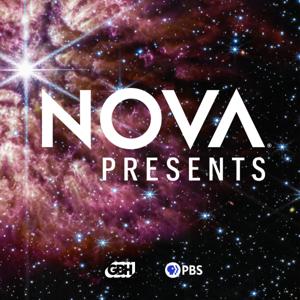

David Kaiser thinks a good place to hunt for tiny black holes might be… Mars? How do you detect something microscopic, invisible, and speeding through space? Primordial black holes have long eluded astrophysicists—if they exist at all. But the hunt is heating up. David joins Hakeem to explore how scientists are combing through old data and designing new experiments that could finally catch one of these elusive objects—and possibly not only solve the century-old mystery of dark matter, but also confirm the existence of Hawking Radiation. And, yes, he explains why Mars might hold the key.
Make sure to subscribe now so you never miss an episode. Learn more about NOVA and visit our YouTube channel.
--------------------------
Guest Bio:
David Kaiser is a professor of physics and the history of science at MIT. His research spans the history of modern physics, cosmology, and the foundations of quantum theory. He is the author of several books, including How the Hippies Saved Physics, and is a frequent contributor to public conversations about science and its history.
 View all episodes
 By GBH

4.4
244244 ratings
David Kaiser thinks a good place to hunt for tiny black holes might be… Mars? How do you detect something microscopic, invisible, and speeding through space? Primordial black holes have long eluded astrophysicists—if they exist at all. But the hunt is heating up. David joins Hakeem to explore how scientists are combing through old data and designing new experiments that could finally catch one of these elusive objects—and possibly not only solve the century-old mystery of dark matter, but also confirm the existence of Hawking Radiation. And, yes, he explains why Mars might hold the key.
Make sure to subscribe now so you never miss an episode. Learn more about NOVA and visit our YouTube channel.
--------------------------
Guest Bio:
David Kaiser is a professor of physics and the history of science at MIT. His research spans the history of modern physics, cosmology, and the foundations of quantum theory. He is the author of several books, including How the Hippies Saved Physics, and is a frequent contributor to public conversations about science and its history.

78,636 Listeners

43,898 Listeners
14,378 Listeners

348 Listeners

943 Listeners

1,353 Listeners

1,189 Listeners

13 Listeners
547 Listeners

12,237 Listeners

821 Listeners

6,435 Listeners

375 Listeners

509 Listeners
4,170 Listeners

2,359 Listeners

2,096 Listeners

159 Listeners

691 Listeners

6,564 Listeners

707 Listeners
381 Listeners

810 Listeners
2,306 Listeners