
Sign up to save your podcasts
Or

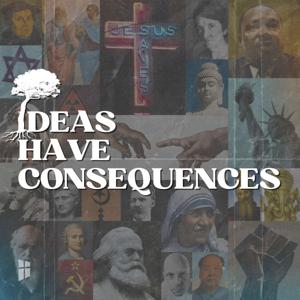


Narratives, propaganda, fake news, misinformation... you have all heard these terms thrown around continuously. The question is, in a storm of confusion, how do we find the truth about what's going on? J.I. Packer once said, "The Evangelical is not afraid of facts, for he knows that all facts are God's facts; nor is he afraid of thinking, for he knows that all truth is God's truth, and right reason cannot endanger sound faith." Don't let narratives and propaganda discourage you from searching for facts and truth. We hope this episode will encourage you to boldly continue your search for truth.
God created all people and cultures equal in terms of their inherent, God-given value, but clearly, not all cultures are the same. Some have higher levels of freedom, justice, and prosperity, while others have far less and, instead, higher levels of poverty, crime, and corruption. How do we account for these differences? At the root, all cultural differences can be traced to differences in worship. At the center of culture is “cult” or religion. From these deep roots, cultural values are formed, and values drive differences in policies, laws, norms, and institutions. These, in turn, have consequences for the nation, for good, or for ill. When a nation worships the one true and living God, it shapes its values, norms, and institutions differently than a culture rooted in idolatry.
As followers of Jesus, we are to lovingly serve our nations in ways that contribute to good fruit. In short, we are to work for the blessing of our nations.
This is a short debrief discussion we had after recording episode 10, "Public Practical Theology: with Bob Osburn."
We invite you to join us as we wrestle with a few practical questions that seem to be overlooked in this day and age. Questions such as, why are we focused on spirituality when the Bible is focused on our life? Or, do you have to evangelize before you disciple?
Why, during this time of rapid church growth around the world, do evangelical Christians have so little influence on their surrounding culture? In this episode, we discuss an important new book, "Developing Redemptive Change Agents: Discipleship that Helps Nations Flourish Rather than Flounder" by Bob Osburn. Bob is the founder of Wilberforce Academy in Minneapolis, an organization that disciples exchange students at the University of Minnesota to be redemptive change agents who often return to their home countries in positions of leadership and influence.
Nations, nationalism, and Christian nationalism
"Therefore go and make disciples of all nations" (Matt. 28:19). "I will make you into a great nation, and I will bless you..." (Gen. 12:2). Nations are a key concept throughout the Bible. Nations represent a middle ground between tribalism on one side, and empire, on the other. Given this, why is there so much negativity today towards the concept of nations, and particularly the concept of “nationalism,” or “Christian nationalism” today? Join Darrow, Scott, Luke, and Dwight as they seek to understand this important and controversial subject.
“All social engineering is preceded by verbal engineering,” wrote William Smith. In other words, if you want to change a culture, you must first change its language. Today, this “verbal engineering” is happening in the West with increasing rapidity and force. Powerful words, such as justice, freedom, truth, marriage, and many more, have been intentionally and radically redefined by influential people and institutions seeking to fundamentally transform Western culture. We are seeing increasing evidence that in one generation, the mainstream meaning of a word can change, with the culture-changing along with it. In this episode, we look at the power of words and language, and how we as faithful Christians need to treasure, protect, and fight for true biblical definitions if we want to see our cultures reflect the truth, goodness, and beauty of God’s eternal Kingdom.
In a post-truth time, how can you claim anything is true? "'What is truth?' retorted Pilate" (John 18:38). As Christians, we believe that Christ is the Way, the Truth, and the Life. But can you defend that? How do we know that the biblical worldview is the only one rooted in truth?
Whether you are a long-time friend of the Disciple Nations Alliance or have recently heard about us, you have probably noticed we talk a lot about worldview. That is because our worldviews shape our ideas and beliefs, and these, in turn, determine how we live our lives. This is true not only for individuals but for whole cultures. There is nothing more important or more practical than the topic of worldview if we want to see positive change in lives and cultures—our own and others.
In this episode, we unpack the basic concept of worldview and why it is so important.
For part three of this series on biblical authority, we cover the role of the state's authority in a society. "Let everyone be subject to the governing authorities, for there is no authority except that which God has established..." (Rom 13). In this episode, we unpack the God-given description and boundaries for civic authority. Let us advocate for biblical civic authority. Because if we don't, another idea in culture will happily define it for us instead.
God has all authority in heaven and earth, hallelujah! However, because we are made in His image, we also have been given areas of authority. These areas are given to us to steward and ultimately account for. In this episode, we narrow in on three of the primary areas of authority in any society and their God-given descriptions and boundaries: the individual, the family, and the church.
From the publisher's feed
Worldviews shape communities, influence politics, steer economics, set social norms, and ultimately affect the well-being of both your life and your nation. Obedience to the Great Commission…

8,591 Listeners

7,109 Listeners
13,156 Listeners