
Sign up to save your podcasts
Or



In Part Two of our conversation with Dr. Anita Vasudevan, MD, MPH, we continue exploring what happens when medicine, motherhood, infant feeding, sleep, and informed consent collide.
This episode begins with a conversation about the power dynamic between parents and physicians—and why “my pediatrician said it was okay” does not always mean a recommendation is evidence-based, individualized, or within that provider’s deepest area of expertise. Dr. Anita talks openly about the importance of physicians being able to say, “I don’t know,” and about why parents should feel empowered to ask questions, push back, or seek a second opinion when something does not feel right.
We also talk about the realities of short medical appointments and why sleep training can become the quickest default recommendation when truly understanding a baby’s sleep, feeding, sensory needs, airway, iron status, lactation, or medical red flags may require far more time than a pediatric visit allows.
Dr. Anita then shares more of her own experience as both a physician and a patient.
The conversation moves into co-sleeping and harm reduction, including why withholding safer bedsharing information can leave exhausted parents unintentionally falling asleep in chairs, recliners, or unprepared beds.
Dr. Anita closes with a reminder that the intense focus on infant independence is largely a Western cultural framework—and that parents should feel permission to lean into closeness, nurture, and their own intuition. If your provider makes you feel unsafe asking questions or dismisses what you are noticing, you deserve a provider who will listen.
About Our GuestDr. Anita Vasudevan, MD, MPH is a family medicine physician whose work and lived experience as a mother have led her to advocate for more nuanced, responsive, and relationship-centered infant and postpartum care.
Follow Dr. Anita on Instagram at @dranitavasu.
This is Part Two of Nurture: The Radical Choice in Infant Care on IDK who needs to hear this…
Safe Bed-Sharing Resources
If you are bed-sharing, considering it, or just want to have a safe setup just in case... education and intentional risk reduction matter. I’ve linked resources from Tiffany Belanger of Cosleepy that walk parents through safer co-sleeping practices, setup considerations, and practical ways to reduce risk.
These are affiliate links, which means I may earn a commission if you purchase through them at no additional cost to you.
Safe co-sleeping resources here.
Safe Sleep Seven
Meet your hosts:
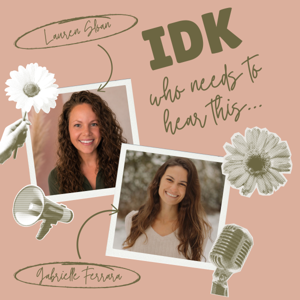
Lauren Sloan, RN-BSN, CLC
Lauren is a registered nurse, Certified Lactation Counselor, pediatric sleep specialist, and founder of The Early Neurodiversity Company. Her work focuses on infant and early-childhood neurodivergence, sensory processing, nervous-system regulation, attachment, sleep, and helping families move beyond “watch and wait” through individualized, neurodiversity-affirming support.
Gabrielle Ferrara, Nurture Neuroscience Practitioner, LCSW, PMH-C
Gabrielle is a Licensed Clinical Social Worker, Nurture Neuroscience Practitioner, and Perinatal Mental Health Certified clinician specializing in maternal mental health, attachment, infant development, and responsive family support.
In this episode of IDK Who Needs to Hear This…, Lauren and Gabrielle are joined by Dr. Anita Vasudevan, MD, MPH, a family medicine physician and mother whose own pregnancy, NICU, and breastfeeding experiences reshaped the way she thinks about infant care, postpartum support, and the parent-baby dyad.
Together, they discuss why nurture, proximity, breastfeeding, responsiveness, and closeness can feel almost radical in a medical culture that often prioritizes independence, separation, efficiency, and getting parents “back to normal.”
They also explore gaps in physician training around breastfeeding, the influence of medical voices on social media, reverse cycling when babies return to childcare, the risks of broad sleep and feeding recommendations, and why true informed consent requires parents to hear not only what we know—but what we don’t.
This is Part One of our conversation with Dr. Anita.
Follow Dr. Anita on Instagram at @dranitavasu.
Safe Bed-Sharing ResourcesIf you are bed-sharing, considering it, or just want to have a safe setup just in case... education and intentional risk reduction matter. I’ve linked resources from Tiffany Belanger of Cosleepy that walk parents through safer co-sleeping practices, setup considerations, and practical ways to reduce risk.
These are affiliate links, which means I may earn a commission if you purchase through them at no additional cost to you.
Safe co-sleeping resources here.
Safe Sleep Seven
Meet your hosts:
Lauren Sloan, RN-BSN, CLC
Lauren is a registered nurse, Certified Lactation Counselor, pediatric sleep specialist, and founder of The Early Neurodiversity Company. Her work focuses on infant and early-childhood neurodivergence, sensory processing, nervous-system regulation, attachment, sleep, and helping families move beyond “watch and wait” through individualized, neurodiversity-affirming support.
Gabrielle Ferrara, Nurture Neuroscience Practitioner, LCSW, PMH-C
Gabrielle is a Licensed Clinical Social Worker, Nurture Neuroscience Practitioner, and Perinatal Mental Health Certified clinician specializing in maternal mental health, attachment, infant development, and responsive family support.
In this episode of I Don’t Know Who Needs to Hear This…, Lauren and Gabrielle sit down without a formal agenda and unpack several conversations they have recently encountered online—from the way educators speak about overwhelmed parents, to the idea that “Velcro babies are made,” to crying at daycare drop-off, to sleep-training advice given to parents of very young infants.
What connects all of these conversations is a broader cultural tendency to dismiss children’s communication, frame dependence as a problem, and place the responsibility on mothers to make their babies and children more convenient.
And yes—it really is that deep.
Meet the hostsLauren Sloan, RN-BSN, CLC
Lauren is a registered nurse, Certified Lactation Counselor, pediatric sleep specialist, and founder of The Early Neurodiversity Company. Her work focuses on infant and early-childhood neurodivergence, sensory processing, nervous-system regulation, attachment, sleep, and helping families move beyond “watch and wait” through individualized, neurodiversity-affirming support.
Gabrielle Ferrara, Nurture Neuroscience Practitioner, LCSW, PMH-C
Gabrielle is a Licensed Clinical Social Worker, Nurture Neuroscience Practitioner, and Perinatal Mental Health Certified clinician specializing in maternal mental health, attachment, infant development, and responsive family support.
Brittany Chambers—Good Night Moon Child
Kaitlin Klimmer
James McKenna, PhD
Dr. James McKenna’s work on infant sleep, arousal, proximity, and the biology of mother-infant sleep is referenced throughout the episode as part of the broader discussion about developmentally normal waking, closeness, and infant regulation.
What is on the other side of a season that felt impossible?
In Part One, Lauren and Gabrielle unpacked the “high-needs baby” label—what it can explain, what it can obscure, and why some babies may need more because of temperament, sensory differences, medical concerns, nervous-system differences, or simply because babies are dependent by design.
In Part Two, they turn toward what comes after.
This episode is for the parent who is still in the trenches and wondering whether any of the effort matters. The holding. The rocking. The feeding. The contact naps. The nights spent co-regulating a baby who is crying in your arms. The appointments, the advocacy, the second-guessing, the exhaustion, and the feeling that you are pouring everything you have into a child who still seems often dysregulated.
Together, they discuss how these experiences can build a kind of confidence that is difficult to manufacture any other way. When you spend months being told that you are anxious, dramatic, overreacting, coddling your baby, or creating bad habits—and eventually learn that your observations were accurate—it can fundamentally change the way you advocate moving forward. When you spent years nurturing your baby, and now you see the evidence that it was beneficial all along.
You begin to trust yourself differently.
You become less shaken by outside opinions. You become better able to recognize when someone simply does not understand your lived experience. You may find yourself extending more grace to other parents because you remember what it felt like to be judged from the outside while barely surviving on the inside.
What does it actually mean to have a “high-needs baby”?
For many parents, finding this label can feel like relief. Finally, there are words for an experience that seems profoundly different from what everyone around you is describing. Your baby needs constant proximity. They wake frequently. They struggle to settle. They want to be held all day and all night. Ordinary tasks—showering, eating, using the bathroom, leaving the house—can suddenly require an enormous amount of planning.
As Lauren and Gabrielle have both moved further into motherhood and their professional work, they have also started asking a more complicated question: Is “high needs” always the most helpful way to understand what is happening?
In Part One of this two-part conversation, Lauren and Gabrielle unpack the high-needs baby label: where it came from, why it can be validating, where it can become limiting, and why understanding biologically normal infant needs is essential before deciding that a baby needs “more” than expected.
Babies are dependent by design. They are wired for proximity, co-regulation, frequent feeding, contact, and deeply responsive relationships with their caregivers. In many cases, behaviors we have culturally framed as unusually demanding may actually fall well within the spectrum of normal infancy. As Gabrielle explains, babies are inherently high-needs creatures—and sometimes our expectations of what a “normal” baby should look like are actually based on the more easygoing outlier.
At the same time, Lauren and Gabrielle are careful not to swing too far in the opposite direction. Sometimes a baby really is struggling more. Reflux, iron deficiency, sleep-disordered breathing, sensory differences, nervous-system differences, neurodivergence, physical discomfort, and other underlying needs can all make infancy significantly more difficult. When every concern is dismissed as temperament—or parents are simply told, “You just have a high-needs baby”—the label can become another barrier to meaningful assessment and support.
This episode also explores the role of attunement and “goodness of fit” between parent and child. Sometimes what feels like an impossibly high-needs baby is also a relationship between two nervous systems, two sensory profiles, and two sets of needs that do not naturally align.
There is no single answer to what a high-needs baby is, because there is no single high-needs baby.
Sometimes the answer is temperament. Sometimes it is biology. Sometimes it is a sensory or nervous-system need. Sometimes it is discomfort that deserves further investigation. Sometimes it is a mismatch between what a baby needs and what their environment—or their parent’s current capacity—can realistically provide. And often, it is several of those things at once.
This conversation is not over.This episode is Part One of a two-part series.
In Part Two: On the Other Side of High Needs, Lauren and Gabrielle will talk about what happens after the most intense years begin to ease, the perspective that comes from looking back, how parenting in this way can change you, and some of the unexpected strengths, insights, relationships, and gifts that can emerge on the other side of an extraordinarily demanding season of parenthood.
If you are currently in the thick of it, Part One is about understanding what may be happening right now.
Part Two is about what you may one day be able to see when you look back.
Back-to-school season is often framed as exciting, empowering, and developmentally necessary—but for highly sensitive and neurodivergent children, transitions into preschool, daycare, kindergarten, early childhood special education, therapy, or other unfamiliar environments may be significantly more complex.
In this episode, Lauren and Gabrielle discuss what happens when a child needs more time, proximity, preparation, or support than the system is willing to provide. Lauren shares her family’s experience transitioning from home-based early intervention into school-district services, including what happened when specific boundaries and conditions were not honored—and the lasting impact that experience had on her child.
They also examine the immense mental load carried by parents who recognize that a transition is overwhelming their child while being told they are anxious, overprotective, coddling, or preventing independence. The central message of this episode is simple: you are not unreasonable for recognizing that your child needs a different transition. It feels harder because, in many cases, it genuinely is harder.
Lauren and Gabrielle explore the difference between meaningful collaboration and compliance-driven systems, the power imbalance parents may experience in meetings with professionals, and why advocacy is so difficult when you are already questioning your own observations. They discuss how parents can support therapy without interfering with an assessment, why professionals should clearly communicate the parent’s role, and how a familiar caregiver can prevent accidental misattunement from escalating into dysregulation.
The conversation also challenges the belief that children must be exposed to unnecessary distress in order to learn resilience. A major transition is not the moment to remove support, force separation, or require a child to “work through” overwhelm. Children do not need to be traumatized before they are considered eligible for accommodation. Support can come first.
Meet Your HostsLauren Sloan, RN-BSN, CLCLauren is a registered nurse, Certified Lactation Counselor, pediatric sleep specialist, and founder of The Early Neurodiversity Company. Her work focuses on infant sleep, early neurodivergence, sensory processing, attachment, and helping families move beyond "watch and wait" through evidence-informed, individualized support.
Instagram: @earlyneuroco
Website: https://earlyneuroco.com
Gabrielle is a Licensed Clinical Social Worker, Nurture Neuroscience Practitioner, and Perinatal Mental Health Certified clinician. She specializes in maternal mental health, attachment, infant development, and responsive sleep support, helping families understand the connection between caregiver well-being and child development.
Instagram: @nurtured.mom.nurtured.baby
Website: https://gabrielle-ferrara.com
If you enjoyed this episode, be sure to subscribe, leave a rating and review, and share it with someone who appreciates thoughtful conversations about parenting, sleep, neurodiversity, and maternal mental health.
Follow IDK Who Needs to Hear This... for new episodes every week.
Social media has transformed the way parents access information, but it has also transformed the way parenting advice is created, shared, and consumed.
In this episode, Lauren and Gabrielle explore what happens when nuanced conversations are reduced to sound bites, blanket recommendations, and viral posts. They discuss why parents are increasingly caught between conflicting expert opinions, how algorithms reinforce certainty over curiosity, and why individualized care is often lost in online discourse.
Together, they unpack recent conversations surrounding evidence-based practice, Safe Sleep Seven, infant temperament, autism, medical red flags, night feeding, and the responsibilities that come with educating millions of parents online. Rather than debating individual creators, this conversation examines the broader culture of parenting content and why families deserve more than black-and-white answers.
Whether you're a parent trying to navigate conflicting advice or a professional supporting families, this episode is an invitation to think critically, remain curious, and make room for nuance.
Meet Your HostsLauren Sloan, RN-BSN, CLCLauren is a registered nurse, Certified Lactation Counselor, pediatric sleep specialist, and founder of The Early Neurodiversity Company. Her work focuses on infant sleep, early neurodivergence, sensory processing, attachment, and helping families move beyond "watch and wait" through evidence-informed, individualized support.
Instagram: @earlyneuroco
Website: https://earlyneuroco.com
Gabrielle is a Licensed Clinical Social Worker, Nurture Neuroscience Practitioner, and Perinatal Mental Health Certified clinician. She specializes in maternal mental health, attachment, infant development, and responsive sleep support.
Instagram: @nurtured.mom.nurtured.baby
Website: https://gabrielle-ferrara.com
If you enjoyed this episode, be sure to subscribe, leave a rating and review, and share it with someone who appreciates thoughtful conversations about parenting, sleep, neurodiversity, and maternal mental health. Follow IDK Who Needs to Hear This... for new episodes.
Content Warning: This episode includes discussion of postpartum depression, postpartum anxiety, OCD, postpartum psychosis, suicidal thoughts, birth trauma, and other sensitive mental health topics. Please listen with care.
When mothers struggle postpartum, one recommendation seems to rise above all others: sleep train your baby.
What if we've mistaken a default recommendation for a comprehensive solution?
In this episode, Lauren and Gabrielle are joined once again by therapist and maternal mental health specialist Natalie Bowler for a thoughtful conversation about postpartum mental health, sleep deprivation, trauma, attachment, and the growing tendency to present sleep training as the primary intervention for struggling mothers. Together, they explore what may be missing from these conversations—and why supporting maternal mental health requires far more than simply addressing infant sleep.
The discussion examines the importance of comprehensive maternal mental health assessment, the role of trauma and grief in the postpartum period, the influence of societal expectations surrounding independence, and why individualized, family-centered support matters. Rather than framing babies as the problem to solve, this episode asks what becomes possible when we support the entire family system.
About Our GuestNatalie BowlerNatalie Bowler is a therapist specializing in trauma, attachment, and maternal mental health with more than 10 years of clinical experience. She is also a Nurture Neuroscience Practitioner, Mother Hunger Facilitator, and supports families through an attachment-focused, trauma-informed lens.
Instagram: @safehavenmama
Therapy Practice: safehaventherapy.com
Consulting & Coaching: safehavencandc.com
Founder of The Early Neurodiversity Company
Instagram: @earlyneuroco
Website: https://earlyneuroco.com
Lauren is a registered nurse, certified lactation counselor, certified pediatric sleep specialist, and disability advocate challenging how we recognize and support neurodivergence from birth. Through a neurodiversity-affirming, biologically informed approach, she helps families better understand sleep, regulation, sensory processing, and early child development.
Gabrielle Ferrara, Nurture Neuroscience Practitioner, LCSW, PMH-CInstagram: @nurtured.mom.nurtured.baby
Website: https://gabrielle-ferrara.com
Gabrielle is a licensed therapist and Nurture Neuroscience Practitioner specializing in maternal mental health, attachment, and infant sleep. She supports families through a responsive, relationship-based approach that prioritizes both parent and child wellbeing.
In this episode, Lauren and Gabrielle are joined by therapist, maternal mental health specialist, and attachment-focused, Nurtured Neuroscience practitioner Natalie Bowler to unpack a frequently misunderstood concept in parenting: the idea of the “good enough” parent.
Together, they explore the origins of D.W. Winnicott’s Good Enough Mother theory, Edward Tronick’s research on attunement and repair, and how the often-cited “30% attunement” statistic has been interpreted, and misinterpreted, across parenting spaces. The conversation dives into what secure attachment actually requires, the role of repair in healthy relationships, and why “good enough” was never intended to be a justification for intentional disconnection.
The discussion also examines the cultural pressure toward independence, separation, and behavior modification, and how those messages shape not only our relationships with our children, but also the way parents view themselves. From infancy through adolescence, Lauren, Gabrielle, and Natalie challenge listeners to consider what happens when we stop viewing children as problems to solve and start seeing them as humans deserving of attunement, relationship, and understanding.
Resources MentionedBooksNatalie Bowler is a Licensed Professional Counselor in Tennessee and South Carolina with more than 10 years of experience supporting individuals through trauma, attachment challenges, and maternal mental health concerns. She is also a Nurture Neuroscience Practitioner and a Mother Hunger Trained Facilitator.
Instagram: @safehavenmama
Therapy Practice: safehaventherapy.com
Consulting & Coaching: safehavencandc.com
Natalie offers:
Founder, The Early Neurodiversity Company
Instagram: @earlyneuroco
Website: earlyneuroco.com
Instagram: @nurtured.mom.nurtured.baby
Website: gabrielle-ferrara.com
If this episode resonated with you, please subscribe, leave a review, and share it with a parent who may need to hear it.
In this episode, Lauren and Gabrielle discuss the recent BBC investigation into the sleep industry and the growing calls for regulation. While both agree that dangerous advice should be addressed, they explore the potential unintended consequences of broad regulation and ask an important question: who gets to decide what constitutes the standard of care?
The conversation expands into informed consent, behaviorism, safe sleep, bedsharing, medical advocacy, cognitive dissonance, attachment, and the role sleep professionals can play in helping families identify underlying factors that impact sleep and wellbeing.
Topics discussed include:
Instagram: @earlyneuroco
Website: earlyneuroco.com
Connect with GabrielleInstagram: @nurtured.mom.nurtured.baby
Website: gabrielle-ferrara.com
The information shared in this podcast is for educational purposes only and is not intended to diagnose, treat, or replace individualized medical advice.
From the publisher's feed
“IDK who needs to hear this…” a podcast creating space to question what’s considered normal in early parenting. Through a nervous system and neurodiversity-informed lens, we unpack baby behavior,…