
Sign up to save your podcasts
Or

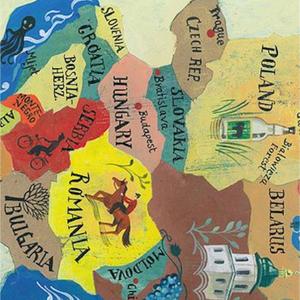


In the last episode of 2019, we look at the state of play in the judiciary in Hungary and what the most recent amendments mean for rule of law and the independence of the court system. To make sense of it all, we are joined by Dávid Vig, the director of Amnesty International Hungary and Ágnes Kovács, a lecturer at ELTE’s Department of Human Rights and Politics.
History minute: The history of courts in Hungary
Resources:
A Constitutional Crisis in the Hungarian Judiciary, Joint report by Amnesty International Hungary & Hungarian Helsinki Committee, 10 July 2019
Nothing ever disappears, it only changes: The Hungarian Government switches to higher gear to curb judicial independence, Amnesty International Hungary, 19 November 2019
Orban’s New Judicial Overhaul Prompts Rule-of-Law Concerns Again, Zoltan Simon, Bloomberg, 16 November 2019
The fragility of an independent judiciary: Lessons from Hungary and Poland — And the European Union, Kriszta Kovács & Kim Lane Scheppele, Communist and Post-Communist Studies, Vol. 51, Issue 3, September 2018
Subscribe via RSS feed.
Subscribe via iTunes.
This episode is a forward-looking one, which builds on our previous discussion about the economic legacy of the transition. We discuss a new report from Visegrad Insight titled “European Futures,” the current state of EU budget negotiations when it comes to Central Europe, and the impact of regional politics on the economy.
Guests: Daniel Gros, director of CEPS; Wojciech Przybylski, editor-in-chief of Visegrad Insight; and Tomasz Kaszprowicz, economic editor of Res Publica
Resources:
#European Futures: Scenarios for cohesive growth, CEPS and Visegrad Insight, October 2019
EU Expenditure and Revenue 2014–2020, European Union
Money Talks: EU Budget Negotiations Widen East and West Divide, Balkan Insight, 13 November 2019
The EU’s budget tribes explained, Politico Europe, 4 November 2019
Subscribe via RSS feed.
Subscribe via iTunes.
In this episode we talk to Dóra Győrffy, a professor at the Pázmány Péter Catholic University in Hungary, about the economic legacy of the transition. We take stock of the frontrunners and those who did things by the book implementing neoliberal reforms, but we also touch on the failures, and the apparent decoupling of political and economic success.
Resources:
Trust and Crisis Management in the European Union, Dóra Győrffy, Palgrave Macmillan, 2018
From Democratic Dissatisfaction to Financial Crisis, Dóra Győrffy, In: Jensen, J; Miszlivetz, F (eds.) Reframing Europe’s future : challenges and failures of the European construction, Routledge, 2015, pp. 93–114
Huge wage rises signal new phase in Central Europe’s economic transformation, Ben Hall, The Financial Times, 16 October 2019
Subscribe via RSS feed.
Subscribe via iTunes.
This episode is the first segment of a two-part series with Talk Eastern Europe (TEE) on the results of the European Parliament elections in Central Europe. We talk to Edit Zgut, a visiting lecturer at the Center for Europe in the University of Warsaw and discuss the V4 and what is next for the opposition in Hungary and Poland. Stay tuned for part two on Bulgaria, Romania, and more Poland with TEE!
History minute: The Left That’s Not There — Social Democratic Parties in Central Europe
Resources:
2019 Election Results, European Parliament
Why Brussels Overlooks Central Europeans for Top EU Jobs, Edit Zgut, Politico Europe, 21 May 2019
End of the Third Way, Marcin Zaborowski & Wojciech Przybylski, Visegrad Insight, 27 May 2019
Talk Eastern Europe, New Eastern Europe, 2019
Subscribe via RSS feed.
Subscribe via iTunes.
Progressive newcomer Zuzana Caputova secured a surprise victory in Slovakia’s presidential elections this past weekend. We talk about what led to her success and what it means for the future of the country with Oľga Gyárfášova, the director of the Institute of European Studies and International Relations at Comenius University in Bratislava.
History minute: Presidents and their Powers
Resources:
The Winter of Our Discontent, Olga Gyarfasova, Visegrad Insight, 27 April 2018
Can Zuzana Caputova Save Slovakia, Dariusz Kalan, Foreign Policy, 28 March 2019
Hailed by Liberals, Slovakia’s First Female President is Under a Lot of Pressure to Turn the of Populism, Emily Tamkin, Washington Post, 1 April 2019
The Fourth Generation: From Anti-Establishment to Anti-System Parties in Slovakia, Olga Gyarfasova, New Perspectives, Volume 26, Nr. 1/2018
Subscribe via RSS feed.
Subscribe via iTunes.
We’re back! Here with us today is Marius Dragomir, the director of the Center for Media, Data, and Society at Central European University (CEU) and we discuss the crisis-ridden media environment in the region. Despite the doom and gloom around the failure of the old business model and increasing political control, there are some good examples emerging that provide reason for optimism.
History minute: Media Pluralism in an Authoritarian Regime
Resources:
Media Influence Matrix, Center for Media, Data, and Society, CEU, 2019
Control the money, control the media: How the government uses funding to keep media in line, Marius Dragomir, Journalism, Vol. 19, Issue 8, 2018
The Free Press Under Threat in Central Europe, Lenka Kabrhelova, Nieman Lab for Journalism, 27 February 2019
Media in Central Europe: From independent observer to political tool and the new enemy, Zselyke Csaky, Visegrad Insight, December 2017
Subscribe via RSS feed.
Subscribe via iTunes.
In a long-awaited episode we tackle the important question of energy security in the Central European region. For this, we talk to András György Deák, senior fellow at the Institute of World Economy of the Hungarian Academy of Sciences and a former consultant to several large energy companies in the region.
History minute: The Function of the Economic Clout
Resources:
Energy, Russian Influence, and Democratic Backsliding in Central and Eastern Europe, Expert Forum / NED, May 2017
Eastern Europe is trying to break its dependence on Russian gas. Western Europe is doing the opposite, Rick Noack, The Washington Post, October 2018
The Trojan Horse of Russian Gas, David Koranyi, Foreign Policy, February 2018
The Failure of Economic Nationalism. Central and Eastern Europe before World War II, Ivan T. Berendt, Révue Économique, Année 2000, 51–2, pp. 315–322
Subscribe via RSS feed.
Subscribe via iTunes.
In this episode we discuss a new report titled Central European Futures — Five Scenarios for 2025 that maps five possible futures for the region and offers insight as well as recommendations. A true discussion starter! The guests on the show are Joerg Forbrig, a director and senior transatlantic fellow at the German Marshall Fund and Wojciech Przybylski, the editor in chief of Visegrad Insight.
History Minute: The Strange Case of Hybrid Alignments
Resources:
Central European Futures — Five Scenarios for 2025, Visegrad Insight, 2018
Recommended podcast:
Talk Eastern Europe, New Eastern Europe, 2018
Subscribe via RSS feed.
We talk to Aljaž Pengov Bitenc, a Slovenian journalist and fellow podcast host in this episode and navigate the not-so-choppy waters of Slovenian politics together. We talk about the outcome of the recent elections, the failure of Orbanization, the lack of illusions but also extremes, and many more.
History minute: The Ambiguity of National History
Resources:
Sleeping with Pengovsky: A blog on Slovenian politics
To Understand What Just Happened in Slovenia, You Have to Go Back to Donald Trump and Roseanne Barr, Slavoj Žižek, The Independent, 4 June 2018
Slovenia Lawmakers Buck the Trend in Central Europe, Endorsing a Centre-Left Government, Associated Press, 13 September 2018
Slovenia, Nations in Transit, 2018
Subscribe via RSS feed.
Subscribe via iTunes.
We’re back! In this episode we are talking to Milan Nič, a senior fellow at the German Council on Foreign Relations. We discuss what has happened in Slovakia since the horrific murder of investigative journalist Ján Kuciak and his fiancé this spring, how much influence does Russia have in the country, and where Slovak politics is going once former prime minister Robert Fico decides to fully retire.
History Minute: Traditions of Russophobia and Russophilia in the Region
Resources:
Select publications, Milan Nič, German Council on Foreign Relations
Slovakia Tries to Mask its Oligarchic Democracy with Strong EU Ties, Dariusz Kalan, World Politics Review, 6 November 2017
Six Months after the Murder of Jan Kuciak his Killers Still Enjoy Impunity, Ifex, 21 August 2018
Slovakia, Nations in Transit 2018, Freedom House
Testing Democratic Resolve in Slovakia in: Sharp Power: Rising Authoritarian Influence, Chapter 5, National Endowment for Democracy, 2017
Euro-Orientalism: Liberal Ideology and the Image of Russia in France (c. 1740−1880), Ezequiel Adamovsky, Oxford: Peter Lang, 2006
Subscribe via RSS feed.
Subscribe via iTunes.
From the publisher's feed