
Sign up to save your podcasts
Or

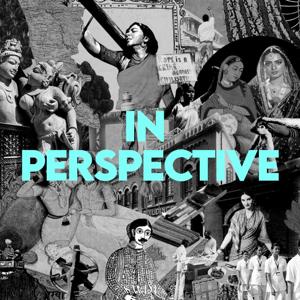


In this episode, anthropologist Dr. Aarti Sethi talks to us about understanding debt, distress and social relations in agrarian societies in India.
‘In Perspective’ is The Swaddle’s podcast series where academics reveal little-known facts about Indian history, society and culture.
Notes:
00:01:05:03- How has agriculture been central to the emergence of modern industrial capitalism around the world?
00:08:01:01- How did monetary debt become central to the production process for farmers in central India? In what ways has this contributed to farmers' distress in the region?
00:20:46:02- In what ways has the centrality of debt impacted social relations and hierarchies in rural society?
00:33:05:14- Does the interconnection of everyday life and inter-family social relations with farming have anything to do with the pressure that the centrality of debt puts on farmers?
00:41:05:05- Why do say that the 2016 Jallikattu ban centers around the differing social conception of animals?
00:48:14:17- Was the media coverage of the Jallikattu ban and animal cruelty unfair, or not nuanced enough to capture the complexity of human-animal relationships in rural India?
In this episode, historian Dr. Janaki Nair discusses why religious scriptures formed the basis for colonial law in India, how women fought against child marriage in the 20th century, and why Indu Malhotra's dissenting judgement in the Sabarimala verdict is significant.
‘In Perspective’ is The Swaddle’s podcast series where academics reveal little-known facts about Indian history, society and culture.
Notes:
00:01:00:20- How and why did religious texts and traditions become central to determining women’s position in colonial legal frameworks?
00:04:58:03- What are the difficulties with deciding when religious custom becomes law?
00:07:08:01- What was the Madras case on the question of ‘can women inherit under Mitakshara law?'
00:09:24:02- What were the problems with interpreting scriptures, especially with norms pertaining to sati and child marriage?
00:12:27:09- How did the notion of not interfering in social customs define the attitude towards child marriage laws in colonial India? Do we see a continuity in that till today, or did something change in the 1920s? Was there an active pushback then?
00:27:06:19- What was the significance of Indu Malhotra’s dissenting judgment in the Sabarimala verdict?
In this episode, sociologist Dr. Niharika Banerjea speaks with us about transnational feminisms, the queer critique of happiness, and the revolutionary possibilities of friendship.
‘In Perspective’ is The Swaddle’s podcast series where academics reveal little-known facts about Indian history, society and culture.
Notes:
00:01:09:07- In sexuality studies, is there an invisibilization of certain sexualities that do not follow categorisations, especially in the global south? Does transnational queer research hold radical possibilities in addressing some of those power dynamics and research hierarchies?
00:07:02:19- What place does lesbian feminism occupy within postcolonial feminism and the movement for LGBT rights? Is this limiting in any way?
00:14:31:07- What factors were responsible for the rise in discourse around women loving women and the need to spotlight this kind of violence?
00:16:26:04- Why are legislative changes important for queer rights around the world? What are the limitations of legislative changes in addressing exclusion?
00:22:11:11- What is the critique of the ‘pursuit of happiness’ by queer theorists? What does it mean to put the liveability of LGBTQ+ lives in conversation with critical engagements with happiness?
00:31:36:02- Is friendship political? What power does it hold when it comes to social justice movements?
In this episode, feminist historian and social critic Dr. Jayakumari Devika speaks with us about the Channar rebellion in the 19th century, women's writing, and changing gender relations in Kerala.
‘In Perspective’ is The Swaddle’s podcast series where academics reveal little-known facts about Indian history, society and culture.
Notes:
00:00:56:06- What led to Malayali women gaining access to public life in the late 19th and early 20th century in Kerala? What effect did this have on women’s liberation?
00:17:20:11- In what ways was the work of women writing in 20th century Kerala oppositional? And how was it received in literary circles at the time, and by the general public?
00:29:53:10- Where did Nadar women’s impetus to resist and fight for their right to wear an upper garment come from? What was the significance of it?
00:51:56:05- The targets of family planning in Kerala have invariably been women. Did a lot of the women understand what was happening? Did they resist this?
00:57:15:13- What impact did liberalization and the opening up of the global labor market have on gender relations and the nature of the nuclear family in Kerala?
01:07:33:23- Can you contextualize the opposition from neo-savarna and sangh-parivar organizations and campaigns after the 2018 verdict on women’s entry in the Sabarimala temple? How does discourse from campaigns like the ‘Ready to Wait’ campaign complicate the idea of women’s agency?
01:13:36:00- Did we anticipate the kind of public discourse that arose around the issue of women’s entry to the Sabarimala temple in 2018? Have there been precedents to this?
In this episode, historian Dr. Ishita Pande speaks with us about the Phulmoni Dasi case and the problems with gender justice debates around child marriage in India.
‘In Perspective’ is The Swaddle’s podcast series where academics reveal little-known facts about Indian history, society and culture.
Notes:
00:01:03:15- How did legal norms around age for regulating sexuality come into existence in India?
00:06:23:03- What was the Phulmoni Dasi rape case? How did that case reconstitute child marriage as a socio-medical problem, with a substantial focus on the child-wife’s body? What were the problems with this kind of discourse?
00:12:49:19- How did arguments around boys and boyhood become important in the passage of the Child Marriage Restraint Act? Were similar concerns expressed about protecting girls?
00:12:49:19- In what ways did the public debate around the Child Marriage Restraint Act of 1929 end up rendering Muslims a political minority?
00:19:48:09- What debates did the ‘Rangeela Rasool’ tract generate in 1924?
00:26:20:21- How did developments in the field of sexology affect the debates and arguments in favor of regulating children’s sexuality and child marriage in the 20th century?
00:31:55:07- What inspired your work around age in relation to sexual relations?
In this episode, anthropologist Dr. Mahuya Bandyopadhyay speaks with us about the idea of imprisonment, human rights, and the linkages between violence within the prison system and violence in society at large.
‘In Perspective’ is The Swaddle’s podcast series where academics reveal little-known facts about Indian history, society and culture.
Notes:
00:01:00:02- How has human rights law evolved to take a more humane approach towards imprisonment and punishment?
00:09:19:13- Have we seen examples of a more humane approach towards law and order on the ground where we have been able to strike a balance between questions of human rights and security?
00:13:26:07- What role did colonialism play in shaping the prison system in India - from the design of the prison system to the very idea of what constitutes the prison system? How heavily does this still weigh down on us today? Does it stand in the way of implementing a more humane approach?
00:18:05:20- What are the key problems with the societal perception of prisoners today? How does this perception stand in the way of securing human rights for prisoners?
00:21:52:14 What unique challenges do women prisoners in India face? What kind of systemic reform could help in the betterment of conditions and access to justice within prisons?
00:28:28:21- Is there a linkage between custodial violence and the centrality of violence to the prison system in India? How do we understand this linkage? How do we see the linkages between violence in the prison system in the practice of policing and the way violence is viewed in Indian society at large?
00:33:35:05- What needs to change for us to question some of the ideas about the conflict between the human rights approach and the concept of security?
In this episode, anthropologist Dr. Sarah Pinto talks to us about the links between women's societal position and the diagnosis and treatment of their mental illnesses, and the powerful counter-narratives of women's trauma in South Asian literature.
‘In Perspective’ is The Swaddle’s podcast series where academics reveal little-known facts about Indian history, society and culture.
Notes:
00:01:11:00- How does geopolitical positioning impact the diagnosis, treatment and perception of mental illness? What sort of patterns and differences can be seen in the global north and global south?
00:06:11:20- What does the history of hysteria in India tell us about societal perceptions of women and their emotions here? How does the Indian perception of hysteria differ from the historical notions of hysteria in the Western context?
00:11:53:13- How is the Indian society’s perception of women’s mental illness related to factors like marital relationships, kinship and policing of women's bodies? How does this play out differently in urban and rural contexts?
00:18:33:08- Does sexual policing in the treatment of women’s mental illnesses come from shortcomings in clinical training, or internal biases that shape the lens with which medical practitioners operate?
00:21:25:06- Does the societal position of women in India impact treatment of their mental illnesses? How does this gendered lens impact the treatment they get in their homes, in psychiatric wards and in clinics?
00:26:30:22- When we think of traditional healing methods used to treat mental illnesses in India, it’s usually in a negative context. Is there an alternate, positive perspective with which we can look at this?
00:32:52:09- What sort of perspectives on caregiving and on living with mental illness do we see in Indian literature? What can we learn from these narratives?
In this episode, historian Dr. Arunima Datta talks to us about the lesser known history of thousands of Indian coolie women who worked on plantations in British Malaya in the 19th century, the surprising reasons for them joining the Rani of Jhansi regiment during the freedom struggle, and the contemporary relevance of their stories.
‘In Perspective’ is The Swaddle’s podcast series where academics reveal little-known facts about Indian history, society and culture.
Notes:
00:00:21:09- What led to colonial administrators and European planters promoting Indian coolie women’s migration to British Malaya in the 19th century?
00:02:44:10- Why did they recruit Indian coolie women in particular?
00:04:44:00- How did the representation of coolie women in popular nationalist and colonial discourses on British Malaya misrepresent Indian coolie women? Did these depictions take away from the coolie women’s agency?
00:06:06:24- Could you tell us about the famous 1910 case involving Letchmee, a coolie woman, and Deyal Singh? Why did the trial become ‘sensational’?
00:08:54:19- What were the issues with the “moralities” colonial administrators deployed when describing or adjudicating this and other cases related to coolie women’s intimate relationships?
00:12:03:05- How did Indian coolie women become central to the power struggle that escalated between the British imperial governments and Indian nationalists between the 1920s and 1930s?
00:14:21:00- Why did many coolie women end up joining the Rani of Jhansi Regiment, and how did they describe this shift in their lives in their own accounts?
00:19:13:24- What is the contemporary relevance of these narratives of Indian coolie women in British Malaya? Why is it important for us to look back at this and what can we learn from it?
In this episode, gender and language studies scholar Dr. Geeta Patel discusses why Ismat Chughtai's Lihaaf was charged for obscenity, the 'homely' girl in matrimonial ads, and challenging notions of respectability in Indian society.
‘In Perspective’ is The Swaddle’s podcast series where academics reveal little-known facts about Indian history, society and culture.
Notes:
00:00:53:00- What role did modern Indian literature play in nationalist discourses in the 20th century? How does the work of Meeraji (Mohammad Sanaullah Dar) help us conceive of new modernizing nationalisms in this context?
00:09:54:04- What is ‘homeliness?’ How have linkages between domesticity and a woman’s identity been forged since 19th century India? Is this changing today?
00:16:16:03- Why was Ismat Chughtai’s 1942 short story ‘Lihaaf’ charged for being obscene? What do the narratives around that story tell us about the Indian state’s perceptions of gender and sexuality at the time?
00:19:52:21- What is the heteronuclear family? In what ways do we see the ideal of the heteronuclear family propagated in advertisements post independence in India?
00:24:57:15- What are the problems with how we understand sex and desire in popular discourse in India today? What does reclaiming narratives around pleasure and desire entail?
In this episode, independent dance practitioner and writer Ranjana Dave talks to us about the evolution of Indian classical dance, and what it means for dance to be political.
‘In Perspective’ is The Swaddle’s podcast series where academics reveal little-known facts about Indian history, society and culture.
Notes:
00:00:47:09- How do we interrogate the relationship between classical dance and contemporary Indian society? Is classical dance a rigid art form, or is there scope for fluidity and evolution of the form with time?
00:05:17:06- What notions of gender and gender roles do we see in these narratives, and do dancers question some of these narratives through the way in which they perform them?
00:08:50:04- Are contemporary performers of classical dance bringing ideas of queerness and consent into stories they depict, especially canonical ones?
00:10:39:24- Are there common notions of the perfect ‘ideal’ body that are espoused across different dance forms? How are contemporary movement artists questioning these notions?
00:13:38:15- Do ideas of transgressive desire percolate in classical dance forms? Are there ways in which contemporary movement artists are making those speak to society?
00:17:41:18- Does theIndian classical dance community resist these transgressive narratives and interpretations of canonical stories, because of ideas about the purity of form?
00:19:33:16- Has there been a history of resistance through dance in India?
00:22:28:02- As the internet becomes central to our content consumption, in what ways is dance interacting with the digital medium, and is this resulting in an evolution of the form?
From the publisher's feed

13 Listeners

0 Listeners
2 Listeners

0 Listeners

0 Listeners
2 Listeners

8 Listeners

0 Listeners

0 Listeners
0 Listeners