
Sign up to save your podcasts
Or

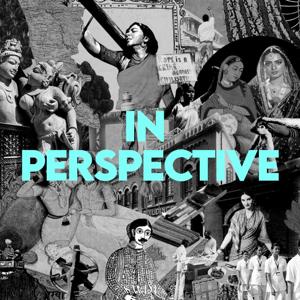


In this episode, historian and gender studies scholar, Dr. G. Anurima talks to us about why we've misunderstood the nature of matriliny in Kerala, Ravi Varma's legacy as a 'public artist,' and how family photos reflect domestic hierarchies.
‘In Perspective’ is The Swaddle’s podcast series where academics reveal little-known facts about Indian history, society and culture.
Notes:
00:01:07:02- Why do you describe Ravi Varma as India’s first public artist? What are the broader implications of Ravi Varma's Work, and the ways in which it was circulated and reproduced?
00:14:12:17- What representations of friendships do we see in different cultural mediums in 19th century Kerala?
00:23:54:02- How is Nair matriliny understood outside Kerala, and within Kerala?
00:53:46:17- What notions of family do family photographs represent? How does this complicate the idea of a visual being a mirror of society?
In this episode, literature scholar Dr. Shampa Roy talks to us about why widows were villains in early Bangla detective novels, portrayals of women criminals in daroga accounts, and descriptions of zenanas in British women's travel writings
‘In Perspective’ is The Swaddle’s podcast series where academics reveal little-known facts about Indian history, society and culture.
Notes:
00:01:03:09- What depictions of violence in domestic spaces do we see in Bankim Chatterjee’s domestic novels in the 1870s?
00:13:52:09- How do Priyonath Mukhopadhyay’s immensely popular darogah accounts from the late 19th century dismantle cultural stereotypes around Hindu femininity?
00:26:11:23- What social factors impacted portrayals of women criminals in early Bangla detective fiction? Are there any parallels with depictions of the vamp in Bombay cinema?
00:38:58:07- What is the significance of the letters that British feminist Eleanor Rathbone exchanged with Indian feminists? What were the questions it raised about intersectionality, and intersections and interactions between Indian and imperial feminism?
00:49:30:12- Who was Fanny Parkes? How did her travel journals subvert the stereotypical colonial understandings of royal women who resided in zenanas?
In this episode, historian and gender studies scholar Dr. Mytheli Sreenivas discusses women writing about the need for desire in marriage in Tamil magazines in the 1920s, the complicated impact of modern property laws, and the Dravidian nationalist vision for casteless marriage in colonial South India.
‘In Perspective’ is The Swaddle’s podcast series where academics reveal little-known facts about Indian history, society and culture.
Notes:
00:01:17:11- What kind of debates did we see in lawsuits brought by women in colonial Indian courts around what constitutes a wife versus what constitutes a concubine?
00:04:46:12- What was the mercantile vision of a family versus the joint family? What kind of debates around women’s access to family property do we see in court cases in 20th century colonial South India? And how was the mercantile vision of the conjugal family used to exclude women from individual ownership of property?
00:10:57:08- How did Dravidian nationalism approach the issue of marital reform in the 20th century?
00:15:38:20- If we think more broadly about women’s role in the domestic sphere, how was it shifting in the 19th century? And in what ways did this shape national identity in 19th century South Asia?
00:19:59:14- What led to a shift in the Tamil magazine landscape from an emphasis on appropriate domesticity to a more radical critique of gender relations by the 1920s and 30s?
00:23:51:09- In that space of Tamil print culture, did we see any outright criticisms of marriage itself?
00:25:01:14- How did reproductive self-regulation get linked to national sovereignty in inter-war India? And was this reproductive regulation targeted at all Indians?
00:30:44:10- How was the ‘hum do, hamare do’ or the small family ideal popularised in India in the 1960s, and how did it tie the idea of a happy future to heteronormative reproduction?
In this episode, essayist and documentary filmmaker Dr. Shohini Ghosh discusses the changing notions of media censorship, Indian movie stars embracing queerness, and how Rituparno Ghosh shaped queer cinema in India.
A link to Shohini’s documentary film — Tales of the Night Fairies
‘In Perspective’ is The Swaddle’s podcast series where academics reveal little-known facts about Indian history, society and culture.
Notes:
00:01:13:06- Media censorship is often informed by this notion that the media that people consume has a direct and harmful impact on their behaviour. Where does this notion come from? And what are the problems with conceiving media impact and harm in this way?
00:05:36:09- What impact has Bollywood had on sexual harassment, stalking and people’s behaviours in romantic relationships? How do we look at this vis-a-vis the argument that media impact on human behavior is exaggerated?
00:10:12:03- What public debates around censoring songs and advertisements do we see in the late 20th century in India?
00:13:48:08- Have social media and OTT platforms changed state conceptions of obscenity or have they pushed boundaries in any way?
00:21:27:02- What does the 2009 ban on the Savita Bhabhi website and the debate between the detractors and the supporters tell us about our attitude towards pornography and sex and sexuality in India?
00:26:16:23- Why did the movie ‘Fire’ lead to so much controversy and moral panic in the late 1990s? How did it change the public discourse around women loving women in India?
00:34:44:14- In what ways do we see the emergence of a new queer cinema in 20th century India? How does it displace conventional cinematic codes of masculinity and femininity?
00:43:14:04- How did Rituparno Ghosh’s films and star persona make queer issues central to public debates in Bengal?
In this episode, historian Dr. Divya Kannan talks to us about the evolution of education in colonial India, and how caste and gender have played a huge role in shaping access.
‘In Perspective’ is The Swaddle’s podcast series where academics reveal little-known facts about Indian history, society and culture.
Notes:
00:01:00:10- How do you deal with the difficulties of doing archival work on childhood, particularly with understanding what constitutes the child’s voice in the archive?
00:03:57:20- How did India’s National Education Policy come into being in the 19th century? And in what ways has it evolved from its colonial roots?
00:08:10:19- In what ways have these early ideas around primary education and the purpose of education seeped into the kind of mindset we have towards education today?
00:11:57:01- How has the British empire impacted the notion of childhood and children’s identities in colonial India? Do we see similar patterns in colonized nations across the globe?
00:16:58:18- When can we trace back the beginning of girls’ education in India to? What were some of the formative factors that played a role in girls’ education in the 19th century?
00:21:47:23- Have we moved away from this idea of gendered labor and looking at education within the larger framework of nurture and care? Or does it still persist in a lot of ways?
00:26:36:10- What types of values about femininity were espoused in schools run by missionaries for girls in the 19th century? Why was there an emphasis on being good wives and mothers? Could you elaborate on the history of Home Sciences?
00:33:49:15- In what ways did colonial missionaries seek to fashion the identity of poor natives that they educated? How did the gulf between primary and secondary education end up reproducing social caste and class hierarchies?
00:39:58:11- What is the importance of archiving childhood? What is the significance of studying the history of childhoods in South Asia and beyond?
In this episode, historian Dr. Charu Gupta discusses how the growth of print culture led to public debates around gender, sexuality and erotic literature in 19th century India.
‘In Perspective’ is The Swaddle’s podcast series where academics reveal little-known facts about Indian history, society and culture.
Notes:
00:01:18:06- What role did print media play in furthering communalism in contemporary India?
00:04:47:22- Do you think that there has been a build-up on how communalism is furthered through print media over the years? And has print media affected the way in which it has played out on TV media and digital media?
00:07:05:17- What kind of debates around obscenity do we see with the growth of print culture in 19th century colonial north India, and in what ways did these ideas of obscenity clamp down on women’s sexuality and agency?
00:16:20:00- Could you tell us a little bit about the shuddhi and sangathan movements? In what ways did they define ideas of masculinity and femininity vis-a-vis the communal Hindu identity in early 20th century United Provinces?
00:22:08:14- In what ways did Swadeshi rhetoric impact norms for middle-class, upper caste Hindu women’s clothing in colonial India, and how did this lead to the creation of a new sartorial morality?
00:25:53:20- What was the relationship between women, gender and medicine in colonial India?
00:29:45:20- How did sexology become popular in colonial India?
00:32:40:01- How does the vernacular help us in studying colonial India?
00:38:52:00- What do you think about the current censorship rules that have been passed recently by the Information and Broadcast Ministry, saying that it would now begin to cover OTT digital platforms like Amazon and Netflix? Do you see any continuities with censorship laws laid out over time?
In this episode, gender studies scholar, Dr. Ashwini Tambe talks to us about debates around girlhood, age of sexual consent, and state regulation of commercial sex work in colonial India.
‘In Perspective’ is The Swaddle’s podcast series where academics reveal little-known facts about Indian history, society and culture.
Please note that the word 'prostitution' is used in this podcast because it is historically specific to that time. The practice being referred to is commercial sex work.
Notes:
00:00:54:18-Why has the minimum age for sexual relations been such a contested issue around the world?
00:03:11:20- If we specifically look at the case of India, what arguments have been made regarding the legal definition of ‘girlhood’ when it came to non-marital sex in the 20th century? What kind of contradictions did we see around the definition of girlhood for sexual relations within and outside of marriage?
00:05:47:22- Was the difference between the age of consent (or the age of sex outside marriage) and the age of marriage a conscious choice, made after much public debate and discourse, or was it something that happened because it was not thought through enough?
00:09:32:12- What were the circumstances that led to the legal age of marriage being raised to 18 at the end of the 20th century? What factors played a role here, especially in regards to state policy on birth control?
00:15:29:19- What kind of debates are we seeing around the age of marriage in contemporary India, and why are feminists arguing in favour of reducing the age of both sexual consent and marriage?
00:19:24:02- How was the Contagious Diseases Act introduced in colonial India, and how was it used to control sex work in colonial India from 1860 to 1890? How did the treatment towards European and Indian sex workers differ?
00:29:24:22- How did debates around Indian, British and East European commercial sex workers become a sight for arguments around contesting nationalism and national pride in colonial India?
In this episode, researcher and Director of the Internet Democracy Project, Dr. Anja Kovacs discusses using the feminist idea of consent to prevent data misuse, how anonymity can empower women online, and why we need to reimagine how data governance works.
‘In Perspective’ is The Swaddle’s podcast series where academics reveal little-known facts about Indian history, society and culture.
Notes:
00:00:59:20- Why and how do physical and data bodies matter in debates around the governance of data?
00:06:51:14- How does one respond to people who say that this is the price you pay for being on the internet?
00:12:07:02- What is data sovereignty, and what are the problems with the discourse around sovereignty and data colonialism in India?
00:19:13:23- What would it mean for the Indian state to actually step in and take steps to protect individual freedom and autonomy with regard to their data, and are there any instances of strong policy-making for this in other countries?
00:30:21:23- What impact have gender and sexuality issues had on the development of freedom of expression online in India, and what role do Indian courts play in this regard?
00:41:07:20- How has evolving discourse on gender and sexuality impacted digital rights in India including through the judiciary?
In this episode, researcher Amrita Nandy talks to us about the romanticisation of maternal sacrifice, perceptions of voluntary non-mothers, and the imposition of caregiving on women.
‘In Perspective’ is The Swaddle’s podcast series where academics reveal little-known facts about Indian history, society and culture.
Notes:
01:01:20- Why is the mother seen as the "epitome of femininity and womanhood?" What kind of mother do moralistic narratives around motherhood centre, and who do they exclude as a corollary to that?
11:11:20- What is maternormativity? How has the notion of motherhood been romanticised in Indian society, and how does it get linked to notions of the nation and morality?
15:10:10- How is voluntary non-motherhood treated in society, and does the choice to not be a mother actually enable more freedom and autonomy for women?
19:18:08- What are the challenges that voluntary non-mothers face in society? What does it mean to emphasise being ‘childfree’ rather than the negative connotations that come with the idea of being childless?
24:32:22- What socio-economic and gender dynamics play out in an unmarried couple’s abortion decision-making process in India and how does shame and stigma shape a man’s involvement in his partner's abortion?
31:12:24- What is the context behind a lot of early marriages, where women voluntarily elope and marry their partners? Why are punitive legal responses harmful in such cases?
In this episode, anthropologist Dr. Naisargi Dave joins us to discuss letter exchange as a form of community-building for women loving women in the 1990s, the fraught relationship between the lesbian movement and the autonomous women’s movement in India, and the problems with arguing for queer rights on the basis of the right to privacy.
‘In Perspective’ is The Swaddle’s podcast series where academics reveal little-known facts about Indian history, society and culture.
Title Image Credit: Outlook Magazine
Notes:
01:05:23- What led to the emergence of lesbian activist movements in India? How did the word lesbian open up new possibilities of personal attachment and community?
02:50:08- How did letter writing come to play a significant role in the formation of lesbian communities in India?
06:42:08- Where did the idea of exchanging letters to build a community come from? The involvement of Sakhi, Bombay Dost magazines.
07:55:15- Did they face any resistance back then? Was there any censorship against these ads?
11:29:16- Why was the relationship between the lesbian movement and the autonomous woman’s movement in India fraught in the 1990s?
15:02:03- Did we see these conflicts in any of the public debates or exchange of articles?
16:38:00- Are the two goals of queer activism — of creating and attaining legal rights and the achievement of justice — in conflict? Could you explain this in the context of the landmark Naz Foundation case?
20:57:16- When did modern animal rights activism originate in India and what different forms did it take? How does it relate to the larger history of liberalism in India?
27:22:03- How did some of the first few historic moments in Indian animal rights activism look at protection of animals without looking at oppression of humans?
30:53:08 - What is this emphasis of the ‘witnessing human subject’ in animal rights activism?
From the publisher's feed

13 Listeners

0 Listeners
2 Listeners

0 Listeners

0 Listeners
2 Listeners

8 Listeners
0 Listeners

0 Listeners
0 Listeners