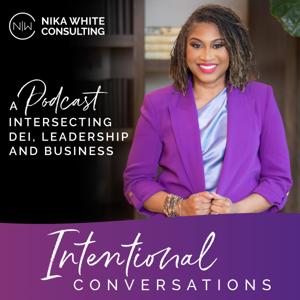
Intentional Conversations

Intentional Conversations

Download on the App Store

Intentional Conversations episodes

  • Intentional Conversations Reunion Episode

    Welcome to Intentional Conversations, the podcast where thoughtful leadership meets meaningful impact.

    This week we’re honored to be joined by Dr. Ingrid R.G. Waldron for a powerful discussion.

    🎧 Grab your headphones, hit play, and let the conversation begin!

    ** Be sure to SUBSCRIBE to our channel because we're all about keeping the great conversations flowing. **

    HIGHLIGHTS FROM THE CONVERSATION:

    From CHELSEA - Community and partnering has given me the opportunity to be less selfish.

    Ask questions, really be clear about your why and be clear about what you’re getting, but also what you’re giving.

    From DR. VENESSA - Continue to be curious, ask community, clients how can you help them, how can you serve?

    FROM DAWN - Give yourself the gift of breaking up with busyness and bow up with authenticity.

    Helps to create space for joy, community, connection.

    CONNECT WITH NWC:

    LinkedIn: https://linkedin.com/company/nikawhiteconsulting

    Facebook: https://facebook.com/nikawhiteconsulting

    Instagram: https://instagram.com/nikawhiteconsulting

    Subscribe to NWC YouTube channel: youtube.com/@NikaWhite2015?sub_confirmation=1

    NWC Website: https://nikawhite.com

    59 min
  • Intentional Conversations with Robyn Hicks-Guinn

    Welcome to Intentional Conversations, the podcast where thoughtful leadership meets meaningful impact.

    This week we’re honored to be joined by Robyn Hicks-Guinn for a powerful discussion.

    🎧 Grab your headphones, hit play, and let the conversation begin!

    ** Be sure to SUBSCRIBE to our channel because we're all about keeping the great conversations flowing. **

    Estate Planning, Guardianship, and Business Succession in Minority Communities
    • The minority community is less likely to make comprehensive estate plans.
    • For baby boomers, there’s a hesitation to even have the conversation. Their children are asking for it, but the parents won’t engage. It’s important to explore what’s causing the resistance — sometimes it’s a lack of trust, other times it's fear of death.
    • Many in the community simply don’t see the value in planning. But at some point, you have to ask: What am I leaving behind? Or… Do I want the state to decide for me?
    • It’s important to have minority representation across the board — because trust in the process starts there.

    Business Succession Planning

    Business succession clients are typically small to mid-sized businesses. Important questions to consider:

    • What does retirement look like for you?
    • When do you plan to retire?
    • Will you sell your business, transition it, or close it down?

    If you don’t plan for the unseen, you're not only failing your business — you may also be failing your clients and your future retirement.

    And when a business shuts down without a plan, you're unlikely to receive the full value from it.

    If your goal is for your children to take over, get them involved early. Let them start with small tasks to see if they share your passion for the work.

    The Role of an Attorney

    An attorney’s job is to protect everyone’s rights — and to educate clients on how the law applies.

    When it comes to guardianships, the right person is someone willing to rise to the occasion and serve. Many family members are reluctant to take on the role, and that’s okay. A good attorney will start the conversation with:

    “I’m not here to judge. I’m here to protect the person who needs to be protected.”

    But the best way to avoid guardianship altogether?

    ➡️ Set up a Healthcare Power of Attorney and a Durable Power of Attorney.

    Without them, the court may appoint someone your loved one would never have chosen.

    Estate Planning and Children
    • Estate planning affects children more than we often realize.
    • If something were to happen to you, who would care for your kids in the short term?
    • Estate planning is really about this question:
    • How are we protecting our children from themselves?
    • Creditors can access these assets — so choose someone who aligns with your values and vision for your children’s future.
    • A guardian becomes a pseudo-parent. And it’s critical to understand:
    • Custody and guardianship are not the same.

    Hot Topics Covered:
    • How are your assets being protected?
    • What’s your plan for business closure or succession?
    • What does it mean to name a guardian — and what happens if you don’t?

    Life Outside the Law

    Engaging in outside activities helps her reset. Traveling makes her feel grateful for the family and home she has.

    What Do You Recommend For Next Steps?
    • Whether it’s scheduling a free consultation or just learning more, take the next step toward protecting what matters most.
    • Estate planning, probate, and guardianship are critical — and every family deserves guidance. Seek out an attorney in your local community who can walk with you.
    • Attend seminars. Ask questions. And start the conversations today.


    🟣 CONNECT WITH ROBYN:

    LinkedIn: https://www.linkedin.com/in/rhicks8/

    Website: https://www.hicksguinnlaw.com/

    🟣 CONNECT WITH NWC:

    LinkedIn: https://linkedin.com/company/nikawhiteconsulting

    Facebook: https://facebook.com/nikawhiteconsulting

    Instagram: https://instagram.com/nikawhiteconsulting

    Subscribe to our YouTube channel: https://www.youtube.com/@NikaWhite2015

    Visit our website to learn more: https://nikawhite.com


    54 min
  • Intentional Conversations with Dr. Carleen S. Carey

    Welcome to Intentional Conversations, the podcast where thoughtful leadership meets meaningful impact.

    This week we’re honored to be joined by Dr. Carleen S. Carey for a powerful discussion.

    🎧 Grab your headphones, hit play, and let the conversation begin!

    ** Be sure to SUBSCRIBE to our channel because we're all about keeping the great conversations flowing. **

    KEY TAKEAWAYS DR. CARLEEN:

    • Having animals and agriculture for children is necessary for the soul and good for regulating their emotions. Having a pet to talk to is good for students.
    • Kids want to get out of the classroom and have hands-on experience. Kids want to get out into the world.
    • Not just your nervous system benefits, but your digestive system. 
    • When thinking about environmental racism, lower income areas have less shade and are hotter which influences asma and other issues.
    • COVID showed inequities in schools through lack of access and technology. Also lack of testing to create IEP or 504s to support students. Some students didn’t find out they had a learning disability until high school.
    • Students were accessing school through a phone and not a laptop
    • How do we think about immigrants, teacher training on technology, first generation students, and having a print-rich environment
    •  Brains that rely heavily on AI are deteriorating. I have a lot of questions around AI also deteriorating our environment.
    • What’s the intersection between race, authorship and power: who is telling the story and who benefits the most and the least, why is it told that way? 
    • What stories do I believe about myself?
    • What stories do people easily believe about me?
    • Reciprocity and respect are a two way street
    • Healthy skepticism is good for a critical thinking mind.
    • How do we correct the past because it’s still relevant, if we’re still talking about it today?
    • Those historical narratives come back around and can affect you today.

    🟣 CONNECT WITH DR. CARLEEN:

    LinkedIn: https://www.linkedin.com/company/akomaleadershipconsulting/

    Website: https://www.akomaleadershipconsulting.com/about

    🟣 CONNECT WITH NWC:

    LinkedIn: https://linkedin.com/company/nikawhiteconsulting

    Facebook: https://facebook.com/nikawhiteconsulting

    Instagram: https://instagram.com/nikawhiteconsulting

    Subscribe to our YouTube channel: https://www.youtube.com/@NikaWhite2015

    Visit our website to learn more: https://nikawhite.com

    54 min
  • Intentional Conversations with Dr. Joel Pérez

    Welcome to Intentional Conversations, the podcast where thoughtful leadership meets meaningful impact.

    This week we’re honored to be joined by Dr. Joel Pérez for a powerful discussion.

    🎧 Grab your headphones, hit play, and let the conversation begin!

    ** Be sure to SUBSCRIBE to our channel because we're all about keeping the great conversations flowing. **

    RESOURCES FROM THIS EPISODE:

    How To Cultivate Genuine Self-Awareness And Propel Your Leadership

    How to Achieve Organizational Excellence through Cultural Humility


    KEY TAKEAWAYS DR. JOEL:

    • Cultural competence is the foundation for working towards developing a posture of cultural humility.
    • Every leader can benefit from cultural humility.
    • I want to create space for people in the middle who are struggling to find answers and are afraid to ask questions from either side of the argument. These people isolate themselves because they are afraid to ask questions.
    • The conversations I love having are those coming from a place of curiosity.
    • What is the ideal state you want to be in, instead of what do you want to fix? We’re so conditioned to fix things.
    • Always focused on the things you want to fix first and that is the wrong place to start.
    • Individual - what biases do you have - we all have them. They never go away, but you can do things to mitigate their impact. Ask yourself “What biases do I need to check before I talk to this person?”
    • Get clear about your identities and how are they present in the work you do.
    • Developing “other” awareness - as you get to know your people, ask questions, but it must be modeled, so share more about yourself.
    • You cannot force people to share more about themselves, and you shouldn’t.
    • In the process of people feeling comfortable sharing more about themselves, you can begin to identify where the problems are.
    • Find people around you that you trust who can give you honest feedback.
    • Being reflective, how did I show up and how was that perceived?
    • Yes do conferences, read books, get certificates, but if you’re relying on that only, you have to do it in community, you cannot do it in isolation.
    • Self awareness is central!
    • We spend so much money to get clear on who we are, but what do you do with it!

    WHAT ARE COMMON PITFALLS INDIVIDUAL LEADERS FALL INTO WHEN TRYING TO CREATE INCLUSIVE ENVIRONMENTS?

    • They’ve not developed their curiosity. We don’t listen, not deep listeners and we don’t train ourselves to be deep listeners. We like to tell people what to do when the better idea is to say 'Tell me more about your decision making process', is it ok if I give you feedback?
    • Leaders really struggle with developing the ability to be deeply curious and deep listeners.
    • Maybe just learning how to breathe.
    • Create a 15-minute gap between meetings.
    • You have to do this work in community, not by yourself.


    🟣 CONNECT WITH DR. JOEL :

    LinkedIn: https://www.linkedin.com/in/joelperezphd/

    Instagram: https://www.instagram.com/apoyocoaching01/

    Website: https://apoyocoaching.com/home-5144


    🟣 CONNECT WITH NWC:

    LinkedIn: https://linkedin.com/company/nikawhiteconsulting

    Facebook: https://facebook.com/nikawhiteconsulting

    Instagram: https://instagram.com/nikawhiteconsulting

    Subscribe to our YouTube channel: https://youtube.com/@nikawhiteconsulting

    Visit our website to learn more: https://nikawhite.com

    Sign up for our weekly newsletter, The Inclusion Insider: https://nikawhite.com/newsletter

    Check out Dr. Nika White’s book, *Inclusion Uncomplicated*: https://nikawhite.com/inclusionuncomplicated

    50 min
  • Intentional Conversations with Dr Sylvia Rohde-Liebenau

    Welcome to Intentional Conversations, the podcast where thoughtful leadership meets meaningful impact.

    This week we’re honored to be joined by Dr. Sylvia Rohde-Liebenau for a powerful discussion.

    🎧 Grab your headphones, hit play, and let the conversation begin!

    ** Be sure to SUBSCRIBE to our channel because we're all about keeping the great conversations flowing. **

    KEY TAKEAWAYS FROM DR. SYLVIA:

    • Being an artist (dance, acting, and singing) has always been a part of my life which impacts my work.
    • Art brings a different perspective to life and work. It’s very helpful for people not usually in the arts to engage in artistic expression.
    • Power is the ability to achieve intended outcomes.
    • Power shows up similarly around the world. It shows up in an old understanding of power, influenced by patriarchy. By clinging to power they diminish their own power and community.
    • Clinging to power comes from fear. A fear state guides this. This is where embodiment comes from. Grounded authenticity allows you to tap into humanity.
    • Embodiment is being present in our body. Being in your body protects your authority and power. You can regulate more and sense other people’s feelings. By connecting with ourselves, we can connect with others.
    • Book mentioned: Who’s in Charge
    • If leaders lack professional, personal power they’re not engaging with their employees. If leaders are transactional, instead of transformational, everyone suffers.
    • We need a more contemporary view on power.
    • By being more in the body... aware of the body and moving intentionally. It transform the leader from a talking head to a person and can bring people along.
    • When we physically move our bodies, we are more present.
    • Many people believe emotions should stay out of work, but it’s much better than 10 years ago.
    • The fear of emotions is because people don’t want to be seen as weak.
    • But emotions is about being vulnerable and honest. Not showing emotions makes you seem closed off and distant which undermines your leadership.
    • Coaching begins with identity: Who are you? Who are you at your essence?


    🟣 CONNECT WITH DR. SYLVIA:

    LinkedIn: linkedin.com/in/sylviarohdeliebenau

    Website: https://www.smartpowermethod.com/


    🟣 CONNECT WITH NWC:

    LinkedIn: https://linkedin.com/company/nikawhiteconsulting

    Facebook: https://facebook.com/nikawhiteconsulting

    Instagram: https://instagram.com/nikawhiteconsulting

    Subscribe to our YouTube channel: https://youtube.com/@nikawhiteconsulting

    Visit our website to learn more: https://nikawhite.com

    Sign up for our weekly newsletter, The Inclusion Insider: https://nikawhite.com/newsletter

    Check out Dr. Nika White’s book, *Inclusion Uncomplicated*: https://nikawhite.com/inclusionuncomplicated

    52 min
  • Intentional Conversations with Dr. Ingrid R.G. Waldron

    Welcome to Intentional Conversations, the podcast where thoughtful leadership meets meaningful impact.

    This week we’re honored to be joined by Dr. Ingrid R.G. Waldron for a powerful discussion.

    🎧 Grab your headphones, hit play, and let the conversation begin!

    ** Be sure to SUBSCRIBE to our channel because we're all about keeping the great conversations flowing. **

    DR. INGRID'S KEY TAKEAWAYS:

    • When you have the challenges of not being promoted, you begin to blame yourself, but she realized it wasn’t her, it was the system.
    • Racism has an impact on our mental health.
    • What’s problematic - people assume its about Black people and about race, it’s about so much more. People focus on the race.
    • There’s a specific flavor of racism for Blacks, so don’t get it confused or forget about it
    • The way we label people and the way we see people very much collides with our ideologies of mental illness.
    • It sounds great for Black women to say we’re strong, but then we’re not seen as not deserving of care or empathy.
    • There’s not one way to be a Black woman.
    • If you’re having problems with employment or settling in, those lead to mental health issues or stressors.
    • A barrier is the infighting, we need to stop that. We need to come together without all the egos, we are our own worst enemy.
    • If future health professionals aren’t being taught, they will provide clinical care without thinking about race, particularly, anti-Black racism.
    • Policy is the root of everything, who are the policy makers… do they look like me?
    • We need to diversify who we’re hiring for: mental health policy makers, diversity the health systems work force - more Black nurses, Black mental health therapists, Black psychologists.
    • Seeking help for mental illness is a weakness, Black people are better than that, Black people don’t do that, it’s a white people thing… mental illness is not a weakness, seeking help is not a weakness. Being vulnerable is a strength.


    🟣 CONNECT WITH DR. INGRID:

    LinkedIn: https://www.linkedin.com/in/ingrid-waldron-ph-d-2908a725/

    Instagram: https://www.instagram.com/waldroningrid/

    Facebook: https://www.facebook.com/ingrid.waldron/

    Her Book: https://www.amazon.com/There%C2%92s-Something-Water-Environmental-Communities/dp/1773630571

    🟣 CONNECT WITH NWC:

    LinkedIn: https://linkedin.com/company/nikawhiteconsulting

    Facebook: https://facebook.com/nikawhiteconsulting

    Instagram: https://instagram.com/nikawhiteconsulting

    Subscribe to our YouTube channel: https://youtube.com/@nikawhiteconsulting

    Visit our website to learn more: https://nikawhite.com

    Sign up for our weekly newsletter, The Inclusion Insider: https://nikawhite.com/newsletter

    Check out Dr. Nika White’s book, *Inclusion Uncomplicated*: https://nikawhite.com/inclusionuncomplicated

    54 min
  • Intentional Conversations with Hady Mendez

    Welcome to Intentional Conversations, where we intersect diversity, equity, and inclusion with leadership and business.

    This week we welcomed Hady Mendez to Intentional Conversations!

    So, grab your headphones 🎧, press play, and let the conversation begin!

    ** Be sure to SUBSCRIBE to our channel because we're all about keeping the great conversations flowing. **

    🎯 KEY TAKEAWAYS FROM HADY MENDEZ:

    • “Graffiti art is the voice of the people who are not the majority.” Hady is also an amateur graffiti photographer.
    • Her work with incarcerated women reinforced the importance of empowering others to advocate for themselves — not just helping, but teaching.
    • Underestimated professionals often face confidence issues due to being told they’re “too much” or “not enough.” Mentorship and sponsorship are critical.
    • Lack of exposure to corporate success skills and limiting beliefs can hold people back. Fear of speaking up is common.
    • Allies can uplift underestimated professionals by affirming their value, crediting their ideas, and ensuring they’re included in key conversations.
    • Employee Resource Groups (ERGs) are thriving — especially multigenerational ERGs, with Gen Z bringing assertiveness and openness to the table.
    • Leaders should help identify and challenge the limiting beliefs of their team members, especially those from underestimated communities.
    • Hady’s upcoming book (Sept 2025) explores how women of color can disrupt and lead in the workplace. Each chapter shares personal stories and practical takeaways.
    • Assimilation shouldn’t be the cost of success. Hady encourages others to lean into their superpowers and show up boldly and authentically.

    🟣 CONNECT WITH HADY:

    LinkedIn: https://www.linkedin.com/in/hadymendez

    Website: https://boldlyspeaking.com

    🟣 CONNECT WITH NWC:

    LinkedIn: https://linkedin.com/company/nikawhiteconsulting

    Facebook: https://facebook.com/nikawhiteconsulting

    Instagram: https://instagram.com/nikawhiteconsulting


    Subscribe to our YouTube channel:

    https://youtube.com/@nikawhiteconsulting


    Visit our website to learn more:

    https://nikawhite.com


    Check out Dr. Nika White’s book, *Inclusion Uncomplicated*

    https://nikawhite.com/inclusionuncomplicated


    Sign up for our weekly newsletter, The Inclusion Insider:

    https://nikawhite.com/newsletter

    55 min
  • Intentional Conversations with Elise Ahenkorah

    Welcome to Intentional Conversations, where we intersect diversity, equity, and inclusion with leadership and business.

    This week we welcomed Elise Ahenkorah to Intentional Conversations!

    So, grab your headphones 🎧, press play, and let the conversation begin!

    ** Be sure to SUBSCRIBE to our channel because we're all about keeping the great conversations flowing. **

    KEY TAKEAWAYS FROM ELISE:

    • You should be involved with your communications leader from the outset of the work, executive team, HR team and comms team all need to work together to say how it is going to work.
    • We don’t need to change the language or how we communicate this work, based on who is in the office.
    • When DEI is done really well, it creates talent and business outcome.
    • Systems driven work, tied to real business outcomes, is key.
    • The most impactful change does not occur for employees based on events, inclusion propels performance.
    • Trust is the foundation for high performing teams, when you center belonging, it is where trust comes in. It is critical to have this woven into your values.
    • Trust is the area where you have the most agency and control, in an area where you don’t have a lot of control over other factors.
    • Know you have an open door policy, no misconceptions about what’s occurring behind the scenes, this is a leadership principle, a cultural experience, can’t control much but can control how I show up
    • Be honest about the visibility that you can provide as a leader.
    • Provide as many resources as you can.
    • The person your teammate wants to hear from most is the people leader.
    • The human approach to leadership gets lost when we’re in the middle of volatile times.
    • Executive and middle manager buy-in - if the executives buy-in and middle managers don’t, there’s going to be issues.
    • Shifting from one-off events, but moving to systems driven inclusion work that drives measurable thought around inclusion, engagement, retention, profitability.
    • Whatever works for your team, it doesn’t matter the word, it’s what makes your employees feel respected, valued and heard.


    CONNECT WITH ELISE:

    Visit her website - www.inclusionfactor.ca

    On IG - @inclusionfactor.ca


    LET'S STAY CONNECTED:

    Follow us on LinkedIn, Facebook, and Instagram — just search “Nika White Consulting.”

    Subscribe to our YouTube Channel: new videos weekly! Search “Nika White Consulting” on YouTube.

    Visit www.nikawhite.com to learn more and sign up for our weekly newsletter.

    Check out Inclusion Uncomplicated by Dr. Nika White — now in hard copy and paperback on Amazon.

    53 min
  • Intentional Conversations with Kelley Cornish

    Welcome to Intentional Conversations, where we intersect diversity, equity, and inclusion with leadership and business.

    This week we welcomed Kelley Cornish to Intentional Conversations!

    So, grab your headphones 🎧, press play, and let the conversation begin!

    ** Be sure to SUBSCRIBE to our channel because we're all about keeping the great conversations flowing. **

    KEY TAKEAWAYS FROM KELLEY:

    Vision - a world where every community thrives. Financial inclusion, workforce readiness, community action and wellbeing.

    Corporate people align with his vision, they may not agree with his religious take.

    Don’t have to step into a church to align with the vision.

    IMPORTANCE OF RADICAL CARE

    I need for you to go and deal with whatever you’re feeling about this situation, then come back. I need you 100%, I can’t have 50% of you.

    You don’t realize how much you have to deal with until you get in an intentional space to deal with it.

    When you’re called, the passion begins driving you so much, you lose the passion for the work.

    When you’re not feeling right, you’re feeling weird, listen to your body.

    SYMPTOMS OF BURNOUT

    What are the burnout triggers? What are the burnout safeguards?

    Burnout triggers are: Irritated easily, not listening well, being very direct, when I get tired thinking about the future, not eating good food When the sleeping pattern is so disruptive, know on the verge of hitting a wall.

    Our work is so much bigger than us, so when we don’t take the time to understand that, it can overwhelm you.

    Sometimes you can have too many voices around you, all well intended, this is also a sign, when I have too many people speaking into my life about what I need to be doing.

    Burnout can be not thinking straight, making poor decision, judgment off, not negotiating well… it’s NOT just I can’t get out of the bed. Look for it during the day to day.

    Be unapologetic about who I need, don’t need, who I need in my space, don’t need in my space.

    When you’re doing good, it doesn’t feel like work.

    It’s not all about the money, it’s about the intrinsic value. In the US, people are trying to figure out how they can bring purpose and meaning to someone’s day. Realizing they have been capitalistic and where is it going to take us?

    LIFE and LEADERSHIP UNPLUGGED PODCAST

    What do you do to reset?

    What is your purpose and how are you going to sustain in your purpose without burn out?

    This is across every sector, everyone deals with burnout.

    WHAT’S NEXT?

    Your “why” does evolve and each layer brings in new people to chase purpose.

    My hope for you is that you continue to trailblazer, show up as your authentic self as you always do and continue to fight the good fight. The hope, strength and tenacity and the burgeon passion to always do what is right. Use your voice to speak to power as you have so eloquently done for years.


    CONNECT WITH KELLEY:

    Follow on Instagram - search @lifeleadershipunplugged and @kelleycornish

    Visit her website - kelleycornish.com

    On LinkedIn - @kelleyfcornish

    Binge her podcast, Life and Leadership Unplugged 

    LET'S STAY CONNECTED:

    Follow us on LinkedIn, Facebook, and Instagram — just search “Nika White Consulting.”

    Subscribe to our YouTube Channel: new videos weekly! Search “Nika White Consulting” on YouTube.

    Visit www.nikawhite.com to learn more and sign up for our weekly newsletter.

    Check out Inclusion Uncomplicated by Dr. Nika White — now in hard copy and paperback on Amazon.

    53 min
  • Intentional Conversations with Shari Dunn

    Welcome to Intentional Conversations, where we intersect diversity, equity, and inclusion with leadership and business.

    This week we welcomed Shari Dunn to Intentional Conversations!

    So, grab your headphones 🎧, press play, and let the conversation begin!

    ** Be sure to SUBSCRIBE to our channel because we're all about keeping the great conversations flowing. **

    KEY TAKEAWAYS FROM SHARI:

    “I wouldn’t take anything for the journey now.” -Maya Angelou

    • My background as an attorney, teacher, and journalist brings depth and multi-approach to DEI consulting. This comes into play every day.  
    • New book, Qualified, Black women are the canaries in the coal mine and they have been signaling that something is wrong for a long time.
    • There’s too much trend, this isn’t happening in isolation. 
    • Inhospitable for Black women, means it’s going to be inhospitable for many other people. 
    • Competency checking, name it, describe it and what to do about it.  
    • There are people in the pipeline, but the pipeline is blocked by competency checking.  
    • Imposter syndrome is the symptom of competency checking. 
    • Youth and competency checking. Try not to put the burden on Black people. Structures and institutions should change, show kids that this isn’t a reflection on them so they can see it and know it’s not about them. Give them a historical context. 
    • Must pull apart these large terms to get the appropriate solutions. Not surface level solutions. 
    • You can’t outlaw the word Diversity and Equity. 
    • Make the unconscious, conscious: Until we make unconscious ways, conscious, we will say its fate.
    • Need to remove the barriers so people can naturally move forward, and systems can change. 
    • People are rightfully nervous or fearful because the mindset now is that people want to say it’s fate, and not make the unconscious, conscious. 
    • The difference now is that more White people are seeing it, there’s an opportunity to stop the mindset. 
    • Storytelling and messaging is key. People on this side have not been very clear. Don’t want people hung up on the word, describe the term so people understand. 
    • To have a diverse environment, you must go slow to go fast.

    CONNECT WITH SHARI:

    Visit her website

    On LinkedIn

    Purchase Shari's book, Unqualified


    LET'S STAY CONNECTED:

    Follow NWC: LinkedIn, Facebook, Instagram

    Subscribe: NWC YouTube Channel (New videos weekly!)

    Explore: NWC Website

    Inclusion Uncomplicated Dr. White's latest book (Hard copy & NEW Paperback version available)

    Join: Weekly Newsletter

    54 min

About Intentional Conversations

From the publisher's feed

A podcast intersecting the work of diversity, equity and inclusion with leadership and business by bringing different voices from across the DEI business spectrum to the table to educate, encourage…