
Sign up to save your podcasts
Or

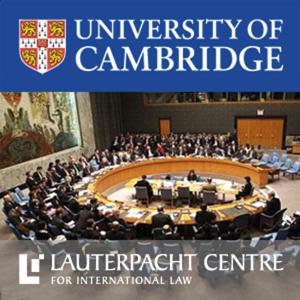

International organizations law has always revolved around the relationship between the organization and its member states. This has proven to be of some use, but leaves important gaps unaddressed. What, e.g., about purely international affairs (think judicial review, think relations between organs)? And it ignores the existence of a vast external world. By concentrating solely on the relations with member states, it proves difficult, perhaps impossible, to hold international organizations to account for their acts affecting third parties, and equally difficult to make sense of relations between international organizations inter se. By shifting the perspective to relations with the private sector, perhaps it might be possible to come to a better, more comprehensive understanding of international organizations than is currently provided by both law and theory.
Jan Klabbers was educated in international law and political science at the University of Amsterdam, where he also defended his doctoral thesis. In 1996 he was appointed professor of international law at the University of Helsinki, a position he recently left to take up the Whewell Chair in Cambridge. His research focuses mostly on the law of treaties and the law of international organizations – today’s talk taps into his current, ERC-sponsored PRIVIGO project.
Chair: Prof Surabhi Ranganathan, Centre Deputy Director
This lecture was given on 10 October 2025 and part of the Friday Lunchtime Lecture series at the Lauterpacht Centre.
 View all episodes
 By LCIL, University of Cambridge

4.4
1111 ratings
International organizations law has always revolved around the relationship between the organization and its member states. This has proven to be of some use, but leaves important gaps unaddressed. What, e.g., about purely international affairs (think judicial review, think relations between organs)? And it ignores the existence of a vast external world. By concentrating solely on the relations with member states, it proves difficult, perhaps impossible, to hold international organizations to account for their acts affecting third parties, and equally difficult to make sense of relations between international organizations inter se. By shifting the perspective to relations with the private sector, perhaps it might be possible to come to a better, more comprehensive understanding of international organizations than is currently provided by both law and theory.
Jan Klabbers was educated in international law and political science at the University of Amsterdam, where he also defended his doctoral thesis. In 1996 he was appointed professor of international law at the University of Helsinki, a position he recently left to take up the Whewell Chair in Cambridge. His research focuses mostly on the law of treaties and the law of international organizations – today’s talk taps into his current, ERC-sponsored PRIVIGO project.
Chair: Prof Surabhi Ranganathan, Centre Deputy Director
This lecture was given on 10 October 2025 and part of the Friday Lunchtime Lecture series at the Lauterpacht Centre.

7,731 Listeners

4,165 Listeners

4,101 Listeners

283 Listeners

155 Listeners

113,035 Listeners

24,830 Listeners
19 Listeners
6 Listeners
3 Listeners

1 Listeners

5 Listeners

16 Listeners

0 Listeners

0 Listeners

56 Listeners

646 Listeners

1 Listeners

16,446 Listeners

3,562 Listeners

483 Listeners

1,215 Listeners

1 Listeners

626 Listeners