
Sign up to save your podcasts
Or


Send us Fan Mail
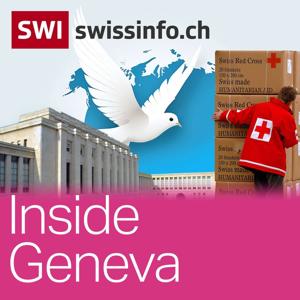
On this week's Inside Geneva podcast episode, we take stock of aid cuts and what they mean for new crises such as Ebola.
“It is a catastrophe. It is not an opportunity. But now we have an obligation to transform the system: there’s no other way the humanitarian system can survive this crisis without any change,” says Professor Karl Blanchet from the University of Geneva.
A new report says aid delivery must change, but huge cuts are not the way.
“The suspension of funding by major donors, not only the United States but also the UK, Germany and others, [means that] there are going to be excess deaths. Millions of people are going to die who should not have died because of these funding cuts,” says Professor Esperanza Martinez from the Australian National University.
What happens in a crisis like Ebola if aid funding is driven by ‘anti-diversity’ ideology?
“Every process in society follows a gendered pattern, so it is often going to be women who are the caretakers of the sick. It is going to be women who are washing the bodies of the dead and preparing them for burial,” says Hannah Reinl from the Geneva Gender Champions organisation.
Who stands to lose the most from the world’s only superpower withdrawing from aid organisations such as the World Health Organization (WHO)?
“If the US had not withdrawn from the WHO, then we would have been part of the WHO’s response. Which means that when the WHO learned about this, the US government would have learned about it as well. Instead, [US Secretary of State] Marco Rubio is saying that he did not find out about this until ten days later. Well, maybe we should not have pulled out of the WHO, and we would have found out about it earlier,” says Nicholas Enrich, a former USAID official and author of Into the Wood Chipper.
Join Imogen Foulkes on Inside Geneva to listen to the full interviews.
Get in touch!
Thank you for listening! If you like what we do, please leave a review or subscribe to our newsletter.
For more stories on the international Geneva please visit www.swissinfo.ch/
Host: Imogen Foulkes
Production assitant: Claire-Marie Germain
Distribution: Sara Pasino
Marketing: Xin Zhang
 View all episodes
 By SWI swissinfo.ch

4.4
1515 ratings
Send us Fan Mail
On this week's Inside Geneva podcast episode, we take stock of aid cuts and what they mean for new crises such as Ebola.
“It is a catastrophe. It is not an opportunity. But now we have an obligation to transform the system: there’s no other way the humanitarian system can survive this crisis without any change,” says Professor Karl Blanchet from the University of Geneva.
A new report says aid delivery must change, but huge cuts are not the way.
“The suspension of funding by major donors, not only the United States but also the UK, Germany and others, [means that] there are going to be excess deaths. Millions of people are going to die who should not have died because of these funding cuts,” says Professor Esperanza Martinez from the Australian National University.
What happens in a crisis like Ebola if aid funding is driven by ‘anti-diversity’ ideology?
“Every process in society follows a gendered pattern, so it is often going to be women who are the caretakers of the sick. It is going to be women who are washing the bodies of the dead and preparing them for burial,” says Hannah Reinl from the Geneva Gender Champions organisation.
Who stands to lose the most from the world’s only superpower withdrawing from aid organisations such as the World Health Organization (WHO)?
“If the US had not withdrawn from the WHO, then we would have been part of the WHO’s response. Which means that when the WHO learned about this, the US government would have learned about it as well. Instead, [US Secretary of State] Marco Rubio is saying that he did not find out about this until ten days later. Well, maybe we should not have pulled out of the WHO, and we would have found out about it earlier,” says Nicholas Enrich, a former USAID official and author of Into the Wood Chipper.
Join Imogen Foulkes on Inside Geneva to listen to the full interviews.
Get in touch!
Thank you for listening! If you like what we do, please leave a review or subscribe to our newsletter.
For more stories on the international Geneva please visit www.swissinfo.ch/
Host: Imogen Foulkes
Production assitant: Claire-Marie Germain
Distribution: Sara Pasino
Marketing: Xin Zhang

6,826 Listeners

7,639 Listeners

5,767 Listeners

1,799 Listeners

13 Listeners

986 Listeners

720 Listeners
145 Listeners

15,592 Listeners

15,950 Listeners

3,336 Listeners

1,183 Listeners

797 Listeners

2,300 Listeners
1,411 Listeners

0 Listeners

1,092 Listeners

3 Listeners

0 Listeners

7 Listeners

0 Listeners

0 Listeners