
Sign up to save your podcasts
Or

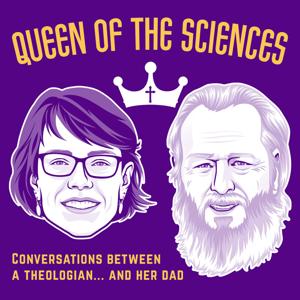

In today's show we set aside the question of whether we can say the Scriptures are true, reliable, accurate, historically verifiable, false, fake, or toxic, to ask whether they are holy--whether they are in themselves, and whether (and how) they make us holy. Reframing the question this way avoids many of the pitfalls of the past centuries and opens up new possibilities for theological reasoning.
Show Notes:
1. The texts we discuss vis-à-vis their being-holy and making-holy qualities are Joshua 8:1–29, Nehemiah 7:7bff, and Mark 9:1. We also refer to Romans 1 and I Timothy 3:16.
2. Yes! Paul Hinlicky (i.e. Dad) has a forthcoming commentary on Joshua in the Brazos Theological Commentary on the Bible series. Personal favorites of mine are Ephraim Radner on Leviticus, Robert Jenson on Ezekiel, and Joseph Mangina on Revelation.
3. Walter Brueggemann's book is Theology of the Old Testament.
4. Karl Barth's essay is "The Strange New World within the Bible."
5. The texts of Luther's mentioned in this episode are the Large Catechism (Apostles' Creed, Article III, §40) and "The Freedom of a Christian" (sometimes known in English as "Concerning Christian Liberty").
6. Heiko Oberman's take on Scripture and tradition can be found in The Dawn of the Reformation.
7. Paul Hinlicky's book on God's nature and revelation in light of the gospel is Divine Complexity.
8. You can read about half of Origen's homilies on Joshua on Google Books.
9. Here is the Joint Declaration on the Doctrine of Justification.
More about us at sarahhinlickywilson.com and paulhinlicky.com!
 View all episodes
 By Sarah Hinlicky Wilson

4.9
6666 ratings
In today's show we set aside the question of whether we can say the Scriptures are true, reliable, accurate, historically verifiable, false, fake, or toxic, to ask whether they are holy--whether they are in themselves, and whether (and how) they make us holy. Reframing the question this way avoids many of the pitfalls of the past centuries and opens up new possibilities for theological reasoning.
Show Notes:
1. The texts we discuss vis-à-vis their being-holy and making-holy qualities are Joshua 8:1–29, Nehemiah 7:7bff, and Mark 9:1. We also refer to Romans 1 and I Timothy 3:16.
2. Yes! Paul Hinlicky (i.e. Dad) has a forthcoming commentary on Joshua in the Brazos Theological Commentary on the Bible series. Personal favorites of mine are Ephraim Radner on Leviticus, Robert Jenson on Ezekiel, and Joseph Mangina on Revelation.
3. Walter Brueggemann's book is Theology of the Old Testament.
4. Karl Barth's essay is "The Strange New World within the Bible."
5. The texts of Luther's mentioned in this episode are the Large Catechism (Apostles' Creed, Article III, §40) and "The Freedom of a Christian" (sometimes known in English as "Concerning Christian Liberty").
6. Heiko Oberman's take on Scripture and tradition can be found in The Dawn of the Reformation.
7. Paul Hinlicky's book on God's nature and revelation in light of the gospel is Divine Complexity.
8. You can read about half of Origen's homilies on Joshua on Google Books.
9. Here is the Joint Declaration on the Doctrine of Justification.
More about us at sarahhinlickywilson.com and paulhinlicky.com!

2,190 Listeners
19,481 Listeners
578 Listeners
836 Listeners
4,438 Listeners

355 Listeners
762 Listeners
2,061 Listeners
400 Listeners
458 Listeners
249 Listeners
3,355 Listeners
294 Listeners

869 Listeners

918 Listeners