
Sign up to save your podcasts
Or

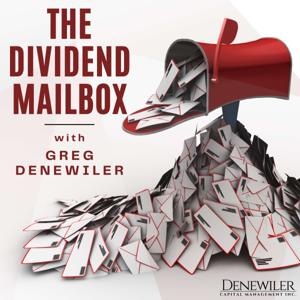

Real estate investors don't think of themselves as dividend investors. Neither do venture capitalists or business owners collecting profit distributions. But strip away the labels, and every one of them is doing the same thing: buying a stream of income and betting it grows. The wrapper is different. The logic is identical.
To prove it, Greg walks through three real investments, all made in 2013, with the same $535 million starting point: Republic Plaza (one of Denver’s premier office towers), Sysco ($SYY), and DCM’s own Model Portfolio. In year one, the building won on income. Today, thirteen years later, it's generating the least of the three, and the building itself has lost nearly half its value. The model portfolio, which started with the lowest income, now generates the most. The difference wasn't asset class. It was whether the income grew.
That compounding gap is what Greg calls the "second decade effect"—the point where a growing income stream laps a higher but stagnant one. It's also why income focus gives investors something price-chasing never can: control, predictability, and a reason to stay put when markets get uncomfortable.
Topics Covered:
[00:00] Introduction & the "income mailbox" reframe
[01:34] Why the word "dividend" misleads investors
[04:26] The foundation: every investment is a bet on cash flow
[06:09] Three investments, same $535 million starting point, 2013
[09:17] Thirteen years later: how each one performed
[13:59] The "second decade effect" — why growing income wins over time
[17:48] Two mindsets: growing income vs. speculating on price
[20:11] What the NYSE closing bell taught Greg about how investors think
[24:38] Dividends vs. buybacks: why income creates capital discipline
[28:42] Three takeaways and final thoughts
________
Dividend Growth: The Quiet Engine of Wealth
Dividend growth investing sounds simple, but doing it well for decades is not. That’s why we wrote Dividend Growth: The Quiet Engine of Wealth—a practical guide to building a framework you can stick with when things get uncomfortable. You can get a free copy here.
Plus, join our market newsletter for more on dividend growth investing.
________
Send us Fan Mail
________
Resources:
📅 Schedule a meeting: Financial Planning & Portfolio Management
📊 Getting into the weeds: DCM Investment Reports & Models
________
If you found this valuable, subscribing and leaving a review helps more investors find the show.
Instagram | Facebook | LinkedIn | X
________
Disclaimer: Past performance does not guarantee future results. Every investor should consider whether an investment strategy is right for them and all the risks involved. Stocks, including dividend stocks, are volatile and can lose money. Denewiler Capital Management may or may not have positions in the publicly traded companies mentioned herein.
 View all episodes
 By Greg Denewiler
5
4343 ratings
Real estate investors don't think of themselves as dividend investors. Neither do venture capitalists or business owners collecting profit distributions. But strip away the labels, and every one of them is doing the same thing: buying a stream of income and betting it grows. The wrapper is different. The logic is identical.
To prove it, Greg walks through three real investments, all made in 2013, with the same $535 million starting point: Republic Plaza (one of Denver’s premier office towers), Sysco ($SYY), and DCM’s own Model Portfolio. In year one, the building won on income. Today, thirteen years later, it's generating the least of the three, and the building itself has lost nearly half its value. The model portfolio, which started with the lowest income, now generates the most. The difference wasn't asset class. It was whether the income grew.
That compounding gap is what Greg calls the "second decade effect"—the point where a growing income stream laps a higher but stagnant one. It's also why income focus gives investors something price-chasing never can: control, predictability, and a reason to stay put when markets get uncomfortable.
Topics Covered:
[00:00] Introduction & the "income mailbox" reframe
[01:34] Why the word "dividend" misleads investors
[04:26] The foundation: every investment is a bet on cash flow
[06:09] Three investments, same $535 million starting point, 2013
[09:17] Thirteen years later: how each one performed
[13:59] The "second decade effect" — why growing income wins over time
[17:48] Two mindsets: growing income vs. speculating on price
[20:11] What the NYSE closing bell taught Greg about how investors think
[24:38] Dividends vs. buybacks: why income creates capital discipline
[28:42] Three takeaways and final thoughts
________
Dividend Growth: The Quiet Engine of Wealth
Dividend growth investing sounds simple, but doing it well for decades is not. That’s why we wrote Dividend Growth: The Quiet Engine of Wealth—a practical guide to building a framework you can stick with when things get uncomfortable. You can get a free copy here.
Plus, join our market newsletter for more on dividend growth investing.
________
Send us Fan Mail
________
Resources:
📅 Schedule a meeting: Financial Planning & Portfolio Management
📊 Getting into the weeds: DCM Investment Reports & Models
________
If you found this valuable, subscribing and leaving a review helps more investors find the show.
Instagram | Facebook | LinkedIn | X
________
Disclaimer: Past performance does not guarantee future results. Every investor should consider whether an investment strategy is right for them and all the risks involved. Stocks, including dividend stocks, are volatile and can lose money. Denewiler Capital Management may or may not have positions in the publicly traded companies mentioned herein.
3,217 Listeners
3,339 Listeners

521 Listeners

810 Listeners
948 Listeners
700 Listeners

2,035 Listeners
61 Listeners

40 Listeners
25 Listeners
32 Listeners
41 Listeners
73 Listeners
38 Listeners

48 Listeners