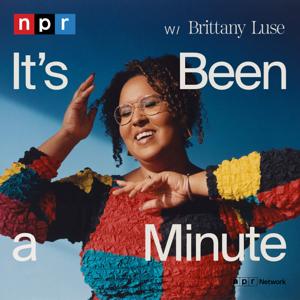
It's Been a Minute
Download on the App Store
  • Ranking

    13th

    on Spirituality

  • Favorites

    3,296

    Followers

  • Typical duration

    27 min

    per episode

  • If it hooks

    67%

    finish an episode

Based on Podcast App listening data

It's Been a Minute episodes

  • Do you want out of The Cult of Homeownership?
    When the dream of buying a home seems unattainable, is it time to find a new dream? Or is there another option on the table?

    Bill Pulte, the director of the Federal Housing Finance Agency, or the FHFA, said the administration is “working on” a plan to introduce 50 year mortgage terms for homebuyers. But some Americans have already been working on their own plans towards homeownership… and it’s not the ‘nuclear family’ route.

    Brittany is joined by NPR chief economics correspondent Scott Horsley and NPR producer & author of The Other Significant Others: Reimaging Life with Friendship at the Center, Rhaina Cohen to get into the cult of homeownership in America. Together they search for a new outlook of what ‘adulthood’ looks like.

    (0:00) Will Millennials and Gen-Zers be able to buy homes?
    (7:56) Why Trump's mortgage policy probably won't work
    (10:53) The fundamental reasons housing is so expensive
    (12:37) Want to buy a home? Consider these options.
    (20:13) Responding to your comments

    Follow Brittany Luse on Instagram: @bmluse

    For handpicked podcast recommendations every week, subscribe to NPR’s Pod Club newsletter at npr.org/podclub.

    See pcm.adswizz.com for information about our collection and use of personal data for sponsorship and to manage your podcast sponsorship preferences.

    NPR Privacy Policy

    20 min
  • Crime is down. Why don't people feel safe?
    What’s the difference between feeling unsafe and being unsafe?

    According to Gallup, about half of Americans see crime as being extremely or very serious. And there are a lot of very real threats out there to people’s safety, but there’s also a lot of fearful rhetoric that’s more unfounded. While immigrants are less likely to commit crimes than U.S.-born citizens, and trans people are unlikely to commit mass shootings, fear of these groups is being weaponized against them. So how can we disentangle being unsafe and feeling unsafe – and better protect ourselves and each other?

    Brittany gets into it with Nicole Lewis, engagement editor at The Marshall Project, and Lex McMenamin, writer and editor.

    Follow Brittany Luse on Instagram: @bmluse

    For handpicked podcast recommendations every week, subscribe to NPR’s Pod Club newsletter at npr.org/podclub.

    See pcm.adswizz.com for information about our collection and use of personal data for sponsorship and to manage your podcast sponsorship preferences.

    NPR Privacy Policy
    24 min
  • The fear & shame of modern parenting
    Have you talked to a parent recently? Are they...okay?

    From textbook bans to health food trends, there’s a whole culture of fear and political propaganda that preys on new parents, convincing them that just buying this or just voting for that will keep their children safe. But how do you know if something is a moral panic or a legitimate concern?

    Brittany is joined by Karen Leick, author of Parents, Media and Panic through the Years, and Cynthia Wang, Clinical Professor of Management and Organizations at Northwestern University to sift through the differences.

    (0:00) The burdensome anxiety of modern parenting
    (2:01) How parental fear & shame impacts children
    (4:26) How perceived threats shape parental behavior
    (10:31) The emotional impact of parental fears on kids
    (13:13) How to know a real vs. perceived threat in modern life

    Follow Brittany Luse on Instagram: @bmluse

    For handpicked podcast recommendations every week, subscribe to NPR’s Pod Club newsletter at npr.org/podclub.

    See pcm.adswizz.com for information about our collection and use of personal data for sponsorship and to manage your podcast sponsorship preferences.

    NPR Privacy Policy
    18 min
  • Have we lost the art of reading?
    No disrespect, but...when President Trump threw a Great Gatsby-themed party for Halloween, it kind of missed the point of the book. And, it's not just Trump. A quick search online, and you'll see a lot of people increasingly misinterpreting other famous books.

    Are people just bad at reading? Are we just laying our own biases on top of classic texts? Or is something else going on?

    Andrew Limbong, host of NPR's Book of the Day, and writer-critic Princess Weekes join Brittany to dissect novel interpretations of literary fiction. They look at what these re-interpretations say about our current moment: from what we want from a book to how books lose meaning online.

    (0:00) Why 'The Great Gatsby' gets misread
    (6:07) How 'Lord of the Rings' became a Christian Nationalist text
    (12:46) Literary Interpretation vs. Media Literacy
    (16:34) The rise of BookTok
    (19:28) The consequence of missing the point of a book

    Follow Brittany Luse on Instagram: @bmluse

    For handpicked podcast recommendations every week, subscribe to NPR’s Pod Club newsletter at npr.org/podclub.

    See pcm.adswizz.com for information about our collection and use of personal data for sponsorship and to manage your podcast sponsorship preferences.

    NPR Privacy Policy

    21 min
  • Exercise is more important than ever
    Have you picked up a couple weights recently? Started walking, or jogging, or doing pilates? So have a lot of other people.

    You see the fitness Instagram accounts and gym tips all over TikTok, but how does exercise culture fit into our broader culture? And how does more enthusiasm for exercise square with the focus on fitness in our politics? Brittany gets into it with  Jonquilyn Hill, host of Vox’s Explain it to Me podcast, and Shelly McKenzie, author of Getting Physical: the Rise of Fitness Culture in America.

    (0:00) Americans are obsessed with exercise right now. Why?
    (2:36) What exercise does for mental and financial health
    (5:59) How exercise became a status symbol for young people
    (10:13) Why gyms are seeking women over 65
    (12:57) Why JFK and Trump both politicized fitness
    (16:33) What the government and its citizens have in common: body shame?

    Follow Brittany Luse on Instagram: @bmluse

    For handpicked podcast recommendations every week, subscribe to NPR’s Pod Club newsletter at npr.org/podclub.

    See pcm.adswizz.com for information about our collection and use of personal data for sponsorship and to manage your podcast sponsorship preferences.

    NPR Privacy Policy

    21 min
  • How 'Fascism' became a meme
    The word "fascism" is being thrown around a lot right now. Does it capture our current cultural and political moment?

    Nearly 50% of Americans have associated President Trump with "fascism." Trump himself has used the word against his own opponents. Others have used the word to denounce skinny-tok as "body fascism." But why are Americans so willing to use the word? And is its ubiquity making it lose its meaning?

    In this episode, Brittany is joined by Nicholas Ensley Mitchell, a professor of education and policy at the University of Kansas and author of "On Bigotry: Twenty Lessons on How Bigotry Works and What to Do About It." He explains how Black Americans mapped the blueprint for fighting fascism in America, and questions whether the word "fascism" fits our current moment.

    (0:00) How 'Fascism" solidified 'American' identity
    (5:32) Why 'Fascist' is a useful word for the right and the left
    (12:45) Why the civil rights movement is a model for fighting fascism
    (17:39) Is *this* a better word than 'fascism' for this moment?

    Follow Brittany Luse on Instagram: @bmluse

    For handpicked podcast recommendations every week, subscribe to NPR’s Pod Club newsletter at npr.org/podclub.

    See pcm.adswizz.com for information about our collection and use of personal data for sponsorship and to manage your podcast sponsorship preferences.

    NPR Privacy Policy

    21 min
  • Rosalía & the evolving definition of Latinidad
    Spanish artist and musical chameleon Rosalía released her latest album, Lux, today. The single, "Berghain," seems like a return to form. Operatic vocals, grand instrumentals, beautiful visuals -- the album is primed for critical praise. But for those who are hyperaware of Rosalia’s transformations -- from flamenco songstress to Afro-Caribbean queen -- they have other questions about this evolution. Brittany is joined by writer-critics Bilal Qureshi and Michelle Santiago Cortés to unpack Rosalía’s “church girl era,” and the complicated nuances of Latinidad in music.

    Follow Brittany Luse on Instagram: @bmluse

    For handpicked podcast recommendations every week, subscribe to NPR’s Pod Club newsletter at npr.org/podclub.

    See pcm.adswizz.com for information about our collection and use of personal data for sponsorship and to manage your podcast sponsorship preferences.

    NPR Privacy Policy

    22 min
  • Should we all start locking up our phones?
    Does your phone feel like a blessing or a burden? Either way, there's probably a lot you can learn from new phone bans.

    Many K-12 students are going phone-free - but not by choice. In over half the country, there are now restrictions on cellphone possession and use in class. The goal is to increase student focus and enhance learning...but when you think about school shootings, phones have been a big part of parents' safety plans for their kids. So are phone bans the best solution? And what do these policies teach all of us about the role phones play in our lives?

    Brittany is joined by David Figlio, professor of economics at the University of Rochester, and Kathy Do, Assistant Project Scientist at University of California Los Angeles to find out.

    Follow Brittany Luse on Instagram: @bmluse

    For handpicked podcast recommendations every week, subscribe to NPR’s Pod Club newsletter at npr.org/podclub.

    See pcm.adswizz.com for information about our collection and use of personal data for sponsorship and to manage your podcast sponsorship preferences.

    NPR Privacy Policy

    18 min
  • How 'Socialism' got sexy to young people
    What does ‘socialism’ mean to a generation that grew up with COVID… not the Cold War? How have the compounding effects of college protests, financial insecurity, and student loan debt shaped a culture? 

    This is… The ABCs of the Culture Wars. For the next few weeks, Brittany breaks down the history, subtext, and evolving meanings of the buzzwords you hear all over the news and social media. Today we're talking about the S-word: Socialism. And why the word has gained new meaning for a younger generation looking for relief. 

    Brittany is joined by Axios senior politics reporter Holly Otterbein and head of Teen Vogue’s politics section, Lex McMenamin.

    Follow Brittany Luse on Instagram: @bmluse

    For handpicked podcast recommendations every week, subscribe to NPR’s Pod Club newsletter at npr.org/podclub.

    See pcm.adswizz.com for information about our collection and use of personal data for sponsorship and to manage your podcast sponsorship preferences.

    NPR Privacy Policy

    18 min
  • The politics of hunger
    Is hunger in America a choice?


    This week, over 40 million people worried about losing their SNAP benefits due to the government shutdown. But with Thanksgiving just around the corner, who's hurt most by hunger? And why do some believe that if you’re hungry, it’s your fault? Brittany gets into it with Poonam Gupta, research associate at the Urban Institute, and Maggie Dickinson, associate professor at Queens College and author of Feeding the Crisis: Care and Abandonment and America's Food Safety Net. 

    See pcm.adswizz.com for information about our collection and use of personal data for sponsorship and to manage your podcast sponsorship preferences.

    NPR Privacy Policy

    23 min

About It's Been a Minute

From the publisher's feed

Want in on a secret? Your likes and dislikes didn't develop by accident. There are subtle and not-so-subtle forces around you, shaping what you think, how you act, and even who you think you are.…

Best of It's Been a Minute

Ranked by our users in the last 21 days

More shows like It's Been a Minute

This American Life by This American Life

This American Life

90,425 Listeners

Fresh Air by NPR

Fresh Air

37,794 Listeners

The NPR Politics Podcast by NPR

The NPR Politics Podcast

25,958 Listeners

Pop Culture Happy Hour by NPR

Pop Culture Happy Hour

11,536 Listeners

Code Switch by NPR

Code Switch

14,641 Listeners

1A by NPR

1A

4,690 Listeners

The Daily by The New York Times

The Daily

112,317 Listeners

Up First from NPR by NPR

Up First from NPR

56,581 Listeners

Throughline by NPR

Throughline

16,338 Listeners

Life Kit by NPR

Life Kit

4,736 Listeners

Short Wave by NPR

Short Wave

6,572 Listeners

Consider This from NPR by NPR

Consider This from NPR

6,339 Listeners

Vibe Check by Zach Stafford, Saeed Jones

Vibe Check

1,773 Listeners

Wild Card with Rachel Martin by NPR

Wild Card with Rachel Martin

1,003 Listeners

The Sam Sanders Show by KCRW & Sam Sanders

The Sam Sanders Show

652 Listeners