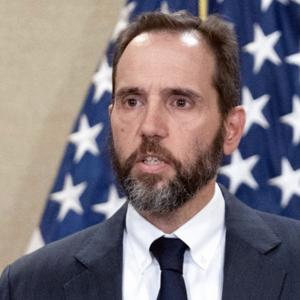
Jack Smith versus Donald Trump

Jack Smith versus Donald Trump

By Inception Point AINewsPolitics
Download on the App Store

Jack Smith versus Donald Trump episodes

  • "Revealing the Complexities of Trump's Agenda: An Unexpected Perspective"
    ## Navigating the Complexities of Trump’s Agenda and the Unfolding Legal Drama with Jack Smith
    In a political climate where former President Donald Trump is often characterized by his polarizing positions and the fervent base that champions them, a deeper examination into his wider political and legal landscape reveals complexities that many of his critics and supporters alike may not fully recognize. At the heart of these complexities lies the intersection of Trump’s political agenda and the legal challenges he faces, notably with prosecutor Jack Smith at the forefront of the January 6 case.
    Donald Trump, whose tenure as the 45th President of the United States was marked by significant policy shifts and a distinct approach to governance, has often been framed as an individual more inclined towards division than building consensus. However, a nuanced look into his political pursuits suggests a more complex scenario. Trump's strategies and policies, while controversial, have ignited substantial debate on foundational issues such as immigration reform, economic nationalism, and America's role on the global stage. These debates, while polarizing, have spurred a broader public engagement in national discourse, suggesting that Trump’s impact on public policy discussion might be more nuanced than the binary of consensus-builder or divider suggests.
    Amidst this, the legal drama unfolding with Jack Smith, the special prosecutor appointed to lead the investigation into Trump’s involvement in the events leading up to and on January 6, adds another layer of complexity. Smith, known for his meticulous approach and no-nonsense demeanor, has become a central figure in what could be one of the most defining legal battles in recent American political history. The January 6 case, focusing on the attack on the United States Capitol, not only questions the boundaries of free speech and political mobilization but also places Trump's actions and intentions under rigorous scrutiny.
    This trial, as it progresses, is not merely about the legal jeopardy that Donald Trump faces but also about the underlying questions concerning the fabric of American democracy. The implications of this case extend beyond the courtroom, provoking discussions about accountability, the rule of law, and the resilience of the United States' democratic institutions. It challenges the nation to reconcile the actions of a former leader with the principles it holds dear, making the outcome of this legal battle a pivotal moment in America’s contemporary political saga.
    As Jack Smith leads this consequential trial, both the prosecution and defense find themselves navigating not just a legal landscape but a deeply divided public opinion. The trial's proceedings and eventual outcome could have far-reaching implications not only for Trump but for the broader political climate, potentially influencing public trust in both the legal system and the electoral process.
    Understanding the intricacies of
    This content was created in partnership and with the help of Artificial Intelligence AI.
    4 min
  • "Judge Paves Way for Former President's Attorney Questioning"
    In an unprecedented move, Judge Arthur Engoron, who presided over Donald Trump's fraud trial, has allowed a subpoena for a lawyer Donald Trump consulted about the trial. This decision marks a significant development in the ongoing legal saga surrounding the former President of the United States, indicating the depth of the investigation and the wide net being cast by legal authorities.
    Donald Trump, a figure no stranger to litigation, has found himself at the center of various legal battles since leaving office in January 2021. The fraud trial overseen by Judge Engoron is just one of many fronts on which Trump is fighting. However, this recent decision by Judge Engoron underscores the seriousness with which the judiciary is pursuing allegations of wrongdoing.
    The lawyer subpoenaed, whose identity remains undisclosed, reportedly spoke with Trump regarding the details of his fraud trial. The issuance of the subpoena suggests that prosecutors believe the conversation between Trump and the lawyer could reveal critical information relevant to the case. This strategic move by the court highlights the thorough approach being taken in gathering evidence and testimonies.
    In addition to the fraud trial overseen by Judge Engoron, Donald Trump faces scrutiny from Special Counsel Jack Smith. Smith has been tasked with leading the investigations into not only Trump's possible involvement in criminal fraud but also the handling of classified documents in South Florida. The broad scope of these investigations into Trump's actions before, during, and after his presidency implies the potential for wide-ranging legal repercussions for the former president.
    Jack Smith, known for his rigorous and no-nonsense approach to legal investigations, is spearheading efforts to untangle the complex web of allegations against Trump. The dual investigations into fraud and mishandling classified documents underscore the gravity and breadth of the legal challenges confronting Trump. Smith's role in navigating these intricate legal waters will be pivotal in determining the outcome of these high-profile cases.
    The cases against Donald Trump, spanning from New York to South Florida, highlight the unprecedented nature of the legal scrutiny facing a former president. With developments such as Judge Engoron's decision to allow a subpoena for a lawyer who spoke with Trump about the fraud trial, it is clear that these legal proceedings are venturing into rarely charted territories. As these cases evolve, the implications for Donald Trump, his past conduct, and his political future remain under intense examination.
    As the legal drama unfolds, all eyes will be on the decisions made by figures like Judge Engoron and Special Counsel Jack Smith. Their actions will not only shape the course of Donald Trump's legal battles but also set precedents for how former presidents can be held accountable for their actions in and out of office. The coming months are sure to bring more developments i
    This content was created in partnership and with the help of Artificial Intelligence AI.
    4 min
  • "Trump's Legal Battles Facing Setbacks as Strategies Falter"
    In a notable development, critics are suggesting that the strategy of using the law and legal processes against former President Donald Trump, often referred to as 'lawfare', is on the brink of collapsing. This perspective gains significant resonance against the backdrop of recent comments made by President Joe Biden, which seem to have cast a controversial light on the Justice Department's and Special Counsel Jack Smith's operations.
    Jack Smith, a figure known for his prosecutorial rigor, has been at the forefront of leading the investigations against Donald Trump. The investigations have scrutinized a wide array of Trump's activities, ranging from his business dealings to his actions during and after his presidency. This pursuit by the Justice Department, under Smith's guidance, has been viewed by some as a concerted effort to hold Trump accountable for alleged misdeeds, whereas others have criticized it as a politicized attempt to target the former president.
    The assertion that this 'lawfare' against Trump is faltering stems partly from President Biden's recent remarks, which have ignited a debate about the impartiality and the motivations behind the ongoing legal challenges faced by Trump. Critics argue that Biden's statements could imply a political undercurrent influencing the legal processes, thus undermining the judiciary's independence and potentially prejudicing the cases against Trump.
    The controversy brings to light the complex and often contentious relationship between politics and the legal system, especially as it pertains to figures like Donald Trump who remain polarizing and influential in the American political landscape. The debate is not just about the legal cases per se but also about broader questions of justice, fairness, and the role of law in political contests.
    For Trump, the implications of this unfolding situation are profound. A collapse of the 'lawfare' against him could not only vindicate him in the eyes of his supporters but also significantly impact his political future, including any plans to run for office again. Conversely, for his critics and those who believe that the legal challenges are warranted, any perceived undermining of these processes could represent a serious setback in efforts to hold powerful figures accountable.
    This discourse around the legal challenges facing Trump, amplified by President Biden's comments and the actions of Special Counsel Jack Smith, encapsulates a pivotal moment in American politics. It raises critical questions about the balance of power, the independence of the judiciary, and the role of legal accountability in the fabric of democratic society.
    As the situation evolves, all eyes will be on the ongoing investigations and the potential implications of the current criticisms. Whether the 'lawfare' against Donald Trump indeed collapses or takes a different turn, the outcomes will undoubtedly have lasting ramifications not just for the individuals involved but for the prin
    This content was created in partnership and with the help of Artificial Intelligence AI.
    4 min
  • "Politician Defends Controversial Proposal as 'Reasonable'"
    In an unfolding political drama that has gripped the nation, recent developments have thrown the spotlight once again on former President Donald Trump, his ongoing legal battles, and the Biden administration. At the heart of this latest saga are two key figures: Donald Trump and Special Counsel Jack Smith, whose roles and actions have become central to the narrative that is captivating audiences and political commentators alike.
    In a move that has sent shockwaves through the political landscape, J.D. Vance, a known Trump supporter, has come out in defense of what he terms Trump's "Biden revenge plan," describing it as "totally reasonable." This defense comes amidst a backdrop of legal and political skirmishes that have pitted Trump against various entities, including the current administration led by President Joe Biden. Vance's remarks underscore the deep divisions and the intensely polarized nature of current American politics, particularly in relation to Donald Trump's contentious legacy and his influence on the Republican Party.
    Adding an intriguing dimension to the unfolding drama, a hypothetical scenario presented by a conservative legal icon has stunned audiences. The scenario suggested that the Supreme Court gave Joe Millsaps a "legal OK to assassinate Donald Trump," a statement that, despite being purely speculative and hyperbolic, has ignited a flurry of discussions around the legal battles Trump is facing. This sensational hypothetical aims to dramatize the extent of legal scrutiny and the perceived existential threats Trump contends with, further fueling the debate about the legal challenges and political vendettas that characterize the post-presidency period for Trump.
    At the center of the legal controversies surrounding Trump is Jack Smith, a figure who has found himself in the unenviable position of being at the eye of the storm. Smith, known for his meticulous approach and legal acumen, has been tasked with navigating the complex legal waters of investigations involving Donald Trump. The suggestion by a conservative legal icon, delivered in a tone of desperation and disbelief to journalist Ali Velshi, that Smith could play a crucial role in determining Trump's legal fate, underscores the gravity and the highly charged nature of the ongoing investigations.
    Jack Smith's role as special counsel involves leading the probes into various allegations against Donald Trump, ranging from obstruction of justice to potential financial crimes and misconduct. Smith's investigations are pivotal, not only for their legal implications but also for their potential to influence the political landscape. With the weight of the legal system behind him, Smith's actions could have far-reaching consequences for Donald Trump, the political future of the Republican Party, and the overarching fabric of American democracy.
    As the nation waits with bated breath, the unfolding legal drama encapsulated in the interactions between Donald Trump and Jack Smith
    This content was created in partnership and with the help of Artificial Intelligence AI.
    4 min
  • "Former Leader Unleashes Scathing Rebuke of Current Administration"
    In a bold and characteristic move, former President Donald Trump seized the occasion of the 4th of July to release a statement that not only commemorated the independence of the United States but also served as a platform to sharply criticize the current administration. Trump lambasted what he perceives as the shortcomings and failures of President Joe Biden and Vice President Kamala Harris, further intensifying the already palpable tensions within the political landscape of the country.
    Trump, who has remained an influential figure in American politics since leaving office, directed his critique towards President Biden, labeling him as a "highly incapable president." This language echoes Trump's frequent attacks on Biden's policies and leadership style, which he often contrasts against his administration's achievements and approach. The former president's relentless critique of Biden is indicative of deep-seated political rivalry and also serves as a reminder of his potential interest in reclaiming the presidency in the future.
    Adding to his criticism, Trump did not spare Vice President Kamala Harris, whom he mockingly referred to as 'Laffin' Kamala Harris'. Trump's choice of nickname for the Vice President underscores his strategy of using derisive monikers to undermine his political opponents, a tactic he has employed throughout his career in public life. The former president's mention of Harris specifically also highlights the significant role she plays in the current administration and her prominence as a figure in national politics.
    Trump's 4th of July statement transcends a mere celebration of America's independence, positioning itself as a poignant critique of the current administration. Through his message, Trump is signaling not only his disapproval of Biden and Harris's policies and leadership but also his continued relevance and influence in the political arena. His statement reflects the polarized nature of American politics, wherein occasions of national significance can become platforms for political discourse and critique.
    The implications of Trump's 4th of July message are far-reaching. It serves as a reminder of the political divide that exists in the United States, a divide that Trump is both a product and a producer of. It also suggests that the former president remains a formidable force in American politics, one who is willing to use his platform to critique his successors and possibly lay the groundwork for a political comeback. Whether one agrees with his assessments or not, it is clear that Trump's ability to shape the political conversation remains undiminished. As the political landscape in the United States continues to evolve, the ripples from Trump's 4th of July statement are likely to be felt for some time, underscoring the enduring impact of his presidency and his continuing role in the national discourse.
    This content was created in partnership and with the help of Artificial Intelligence AI.
    4 min
  • Intriguing Verdict: Culpability Lies with Judicial Leader
    The unfolding legal scenario surrounding former President Donald Trump is nothing short of a political and legal drama, one that has captured the attention of the nation and raised significant questions about the nature of presidential immunity, the balance of powers, and the future of political accountability in the United States. At the heart of these developments is a ruling that has stirred controversy and debate, pointing fingers at an unexpected figure: Merrick Garland.
    Merrick Garland, the Attorney General of the United States, who was appointed by President Joe Biden, finds himself at the epicenter of a whirlwind of criticism for his role—or perceived lack thereof—in the legal maneuvers and decisions that have led to this pivotal moment. Critics argue that the backlash from a ruling on presidential immunity, which many find unfavorable towards holding former President Donald Trump accountable, can be traced back to decisions and actions taken under Garland's watch.
    The concept of presidential immunity, while deeply rooted in the American legal framework to ensure that sitting presidents can perform their duties without undue interference, has been a contentious issue, especially in cases involving allegations of misconduct either before or after a president's term. The specific ruling that has reignited the debate around this principle has sparked a wide array of opinions, with some viewing it as a necessary protection of executive power, while others see it as a barrier to justice, especially when concerning former President Trump.
    The role of Jack Smith, a name increasingly synonymous with the government's legal battles against Trump, is also crucial in this narrative. As a special prosecutor, Smith carries the weight of navigating the complex legal and ethical terrain of prosecuting a former president, a task that involves balancing the law, public interest, and the political ramifications of his actions.
    Critics of the ruling argue that Garland's Department of Justice has misplayed its hand, either by underestimating the legal arguments in favor of presidential immunity or by not adequately preparing for the possibility that courts would extend such immunity to actions taken beyond the scope of official presidential duties. With the spotlight on Garland, questions arise about the strategy and foresight of the Department of Justice under his leadership, especially in cases of such profound political and historical significance.
    As the legal and political drama unfolds, with Donald Trump at its center and figures like Merrick Garland and Jack Smith playing pivotal roles, the nation watches closely. The debate over presidential immunity, the balance of power, and the mechanisms of accountability in American democracy is far from over. The controversy surrounding the ruling, and the criticism aimed at Garland, underscore the complex challenges of prosecuting former high-ranking officials, revealing the intricate dance between law, po
    This content was created in partnership and with the help of Artificial Intelligence AI.
    4 min
  • "Trump Florida Case Crawls Forward as Lengthy Hearing Commences"
    In a significant development that promises to further shape the legal landscape surrounding former President Donald Trump, a federal judge is currently overseeing a critical three-day hearing. This hearing centers on a series of motions in the case concerning the alleged mishandling of classified documents, a case that places Trump at the epicenter of a whirlwind of legal scrutiny. As this judicial process unfolds, the ramifications for Trump, a towering figure in American politics, could be profound, marking another chapter in the ongoing tug-of-war between the former President and the institutions tasked with upholding the nation’s laws.
    At the heart of this legal maelanage is an assortment of motions that aim to either advance or stymie the case, underscoring the complexity and political tensions that often accompany legal challenges involving high-profile figures. These motions play a crucial role in shaping the trajectory of the proceedings, potentially slowing down the process. Such a strategic approach to litigation is not uncommon, particularly in cases of this magnitude, where the stakes are exceedingly high both for the individual involved and for the broader implications concerning the handling of classified information by government officials.
    Presiding over this consequential case is a judge tasked with navigating the intricate legal and ethical questions these motions present. The decisions made in this courtroom could have far-reaching implications not only for Donald Trump but also for the precedents it sets regarding the treatment of classified material. As the legal battle unfolds, observers are keenly watching to see how the judge addresses each argument, aware of the significant historical and legal weight these rulings carry.
    The implications of this case extend beyond the legalist jargon and procedural maneuvers. It represents a critical test of the legal system’s ability to hold high-ranking officials accountable, a principle that lies at the core of the rule of law. For Donald Trump, who has maintained a significant political following and has hinted at future political aspirations, the outcomes of these hearings could influence his standing and future in American politics.
    Moreover, this case underscores the broader debates surrounding national security, the proper handling of classified information, and the responsibilities of those entrusted with such sensitive material. It raises questions about transparency, accountability, and the boundaries of executive privilege, topics that have long fueled discussions in the realms of law and governance.
    As the hearing proceeds, the legal strategies employed, the rulings made, and the subsequent reactions will undoubtedly provide further fodder for these discussions. Observers, legal experts, political commentators, and the public at large await the outcome of this three-day hearing, recognizing its potential to shape not only the legal fate of Donald Trump but also the stan
    This content was created in partnership and with the help of Artificial Intelligence AI.
    4 min
  • "Judicial Showdown: Judge Grills Prosecutor in Mar-a-Lago Case"
    In an unprecedented twist unfolding within the hallowed corridors of the American judicial system, former President Donald Trump finds himself at the center of yet another significant legal drama. This time, the spotlight falls on Judge Aileen Cannon, who has been described as Trump's preferred judge, and her surprising decision that seemingly puts Mar-a-Lago prosecutor Jack Smith ‘on trial.’
    This case stems from the highly publicized investigation into alleged mishandlings of classified information at Trump's Mar-a-Lago estate. At the forefront of this investigation is Jack Smith, a prosecutor with an extensive background in handling cases of national significance. Smith's pursuit of evidence and accountability in this case, however, has led to an unexpected confrontation with Judge Cannon, a development that could have profound implications for the proceedings.
    Judge Aileen Cannon, appointed by Trump during his presidency, has garnered attention for her rulings, which some critics argue reflect a favorable bias toward the former president. Her recent decisions in connection to the Mar-a-Lago case have only intensified this debate. While judges are expected to maintain an impartial stance, Cannon's actions have raised questions about judicial integrity and the influence of political affiliations on the bench.
    At the heart of this controversy is a procedural move by Cannon that effectively puts Smith's prosecutorial conduct under scrutiny. This unusual step has significant ramifications, not only for the immediate legal strategies of both the defense and the prosecution but also for the broader message it sends about the balance of powers within the United States legal system.
    This confrontation between Smith and Cannon underscores a broader struggle within the American judiciary: the tension between political allegiance and the pursuit of impartial justice. As both a symbol of Trump's enduring influence in American politics and a pivotal figure in the quest for accountability, Smith finds himself navigating a legal and ethical minefield.
    The implications of Judge Cannon's decision extend far beyond the confines of the courtroom at Mar-a-Lago. They touch on vital questions about the rule of law, the independence of the judiciary, and the potential for political considerations to overshadow legal principles. As this drama unfolds, the eyes of the nation—and indeed, the world—are fixed on how these tensions will resolve and what this will mean for the precedents set for future presidents and administrations facing legal scrutiny.
    What makes this situation particularly compelling is the broader context of Trump's legal entanglements and the increasing polarization within the American political landscape. This case is but one chapter in a saga that has seen the former president embroiled in multiple legal challenges, each of which has sparked intense debate about the nature of presidential immunity, the limits of executive power, and the mech
    This content was created in partnership and with the help of Artificial Intelligence AI.
    5 min
  • "Uncharted Waters: The Intricate Path of Prosecuting a Former President"
    ### Prosecuting Donald Trump: The Prelude to a Legal Showdown Led by Jack Smith
    In a move that marks a significant escalation in the legal confrontations facing former President Donald Trump, special counsel Jack Smith has filed a pre-trial motion aimed at modifying the conditions of Trump’s release. This step by Smith, a seasoned prosecutor known for his meticulous approach to cases of high significance, underscores the gravity of the situation at hand and highlights the intensifying legal scrutiny surrounding Trump.
    Donald Trump, once the commander-in-chief of the most powerful nation on Earth, finds himself at the center of a legal storm, the likes of which has rarely been seen in American history. The exact nature of the charges being prepared by Jack Smith’s team has been the subject of widespread speculation, fueling debates about accountability, the rule of law, and the political implications that such a prosecution could have on the United States' deeply divided landscape.
    Jack Smith, appointed as special counsel, brings to the table a formidable reputation for impartiality and effectiveness. With a career that spans various high-profile cases, including war crimes and public corruption, Smith's background positions him as a daunting adversary in the courtroom. His decision to seek a modification of Trump's release conditions signals a cautious approach to ensuring that the integrity of the judicial process is maintained throughout what promises to be a highly contentious legal battle.
    While the specific details of the motion filed by Smith remain under wraps, legal experts suggest that such a step could involve a range of measures, from restrictions on Trump's communication and travel to more stringent oversight of his activities. The aim is likely to prevent any potential interference with witnesses or the manipulation of public opinion through direct appeals to his substantial base of supporters.
    The prosecution of a former president is an event of monumental significance, rife with legal, political, and social ramifications. Critics and supporters of Trump alike are watching closely, aware that the outcome of this case could set precedents affecting the very core of American democratic principles. For Trump, the implications are personal and political, presenting perhaps the most formidable challenge he has faced to date.
    On the other hand, for Jack Smith and his team, the mission is clear: to navigate the complexities of this unprecedented prosecution with diligence and fairness, ensuring that justice is served in a manner that upholds the highest standards of the law. The proceedings that lie ahead promise to be a defining episode in American jurisprudence, offering a test case for the resilience of the country's legal and democratic institutions.
    As the pre-trial phase moves forward, the world watches, waiting to see how this historic confrontation between a former president renowned for his defiance of conventional norms an
    This content was created in partnership and with the help of Artificial Intelligence AI.

    4 min
  • "States Challenge Gag Order in High-Profile Trial: Claim Violation of First Amendment"
    In a significant development that has escalated tensions in an already highly charged political atmosphere, 24 states have come together to file an amicus brief challenging what they term as an "unlawful" gag order proposed by Special Counsel Jack Smith in the classified documents case against former President Donald Trump in Florida. This remarkable move underscores the deep divide and the complex interplay between politics and the judicial process, illustrating the contentious nature of this case that sees Trump facing 40 felony counts.
    The core of the controversy lies in the attempt by Jack Smith to impose a gag order on Donald Trump, a measure critics argue is both "wrong and unconstitutional." The proposed gag order aims to restrict Trump's ability to publicly discuss the case's details, a move that Smith's team likely views as crucial to ensuring an unbiased trial and protecting the integrity of the proceedings. However, detractors see this as an infringement on free speech and a direct attack on the former president's right to defend himself in the public arena.
    The states rallying against the gag order present a united front, asserting that such a measure not only impinges on Trump's constitutional rights but also sets a dangerous precedent that could stifle free speech and transparency in the judicial process. Their collective action, filing an amicus brief, is a powerful statement of solidarity and a manifestation of the political battle lines being drawn around this high-profile case.
    At the heart of the legal battle is the serious nature of the charges against Trump. The 40 felony counts he faces related to the mishandling of classified documents have grave implications, not just for Trump personally, but also for national security. The stakes are exceptionally high, and the spotlight on this case is intense, fueling a national conversation about accountability, the rule of law, and the balance between safeguarding sensitive information and the public's right to information.
    Special Counsel Jack Smith, appointed to lead the investigation, represents a figure of significant interest and, to some, controversy. His decision to push for a gag order reflects the complexities and challenges of prosecuting a case of this magnitude, especially against a former president known for his commanding use of media and public discourse to rally support and shape narratives.
    The opposition from the 24 states to the gag order is not just a legal maneuver but a political statement, highlighting the polarized views on Trump's innocence or guilt, the fairness of the judicial system, and the appropriate limits of free speech in relation to ongoing legal proceedings. As the debate unfolds, it brings to the forefront fundamental questions about constitutional rights, the power dynamics between state and federal authorities, and the implications for future cases involving high-profile figures.
    As the case proceeds, the nation watches closely, understand
    This content was created in partnership and with the help of Artificial Intelligence AI.
    4 min

About Jack Smith versus Donald Trump

From the publisher's feed

Jack Smith vs. Donald Trump: A High-Stakes Showdown for American DemocracyOn the one side, you have Jack Smith, a seasoned prosecutor known for his meticulousness and tenacity. On the other, Donald Trump, the former president whose fiery rhetoric and unconventional methods continue to captivate and divide the nation. Their impending legal clash promises to be a historic spectacle, with the stakes reaching far beyond the courtroom walls.The central battleground is Trump's alleged interference in the 2020 election. As special counsel, Smith is tasked with investigating and potentially prosecuting any crimes related to these claims, which include pressuring state officials to overturn the results and potentially inciting the January 6th Capitol riot.Trump, meanwhile, is not known for taking legal challenges lying down. He has vehemently denied any wrongdoing and is mounting a vigorous defense, asserting presidential immunity and questioning the legitimacy of the investigation. His supporters remain fiercely loyal, ready to paint him as the victim of political persecution.Beyond the specific charges, this case carries immense symbolic weight. A successful prosecution of Trump, especially on accusations related to undermining democracy, would send a powerful message about the rule of law and accountability for powerful individuals. Conversely, a Trump victory could be seen as validation of his tactics and embolden further challenges to democratic norms.The legal journey ahead is likely to be long and winding. Trump's lawyers have already filed numerous motions to dismiss the case, and the Supreme Court may be called upon to rule on critical questions regarding presidential immunity. Public opinion and political pressure will undoubtedly play a role, making the case a hotbed of partisan scrutiny and media firestorm.However, amidst the noise, Smith's quiet competence and meticulous approach may prove decisive. His career is marked by successful prosecutions of major financial crimes and organized crime figures, showcasing his ability to navigate complex legal challenges and build airtight cases.Ultimately, the Jack Smith vs. Donald Trump case transcends a mere legal battle. It's a clash of ideologies, a test of democratic principles, and a defining moment for American political history. While the outcome remains uncertain, the mere existence of this high-stakes showdown reveals a nation grappling with deep divisions and searching for a path forward.