
Sign up to save your podcasts
Or

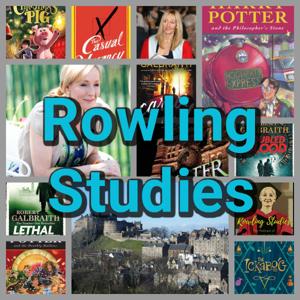

The Hogwarts Professor comment threads have been jumping so Nick Jeffery and John Granger decided to dedicate a conversation to a review of the Greatest Hits in the last week (to do a complete review yourself, click on ‘Activity’ in the left margin of the Hogwarts Professor Substack home page).
After their reviewing the remarkably global and growing audience of Rowling Readers — 36 countries, 46 states! — and tracking The Presence’s location — her yacht seems to be in Fiji but she is touring Levesden Studios? — Nick and John read out fifteen comment subjects and discuss the merits, deficiencies, and promise of each.
The lede story is the theory shared by Jaclyn Hayes that Cormoran Strike and the late Charlotte Campbell were half-siblings with Jonny Rokeby in common as their absentee father. From her notes:
I think Charlotte was blackmailed (via threat of exposing the relatedness btw her and Cormoran) into marrying Jago to provide him a male heir. Perhaps their relatedness is even an open secret in Charlotte’s family, similar to the “secret” relatedness of Decima and Rupert in THM (another parallel).
Charlotte was forbidden from telling Cormoran about the blackmail, but since she’s conniving and obsessed with him, she uses their unexpected encounter at the Paralympics gala to drop hints about her predicament, hoping he’ll solve the mystery and save her or take her back once she’s fulfilled the terms of her marriage/birth agreement with Jago.
She then orchestrates another encounter with Cormoran to drop more hints-- this time at Franco’s, which she knows will trigger the memory of her father’s outrage at seeing her and Cormoran dating again. She hopes Cormoran will realize her father was angry because he knew they were related, not simply because he thinks Cormoran wasn’t good enough for her. She then tells Coromoran things would be different if he’d taken the job her father offered him (calling to mind the job Tara gives Rupert to keep him quiet in THM), and says she found out she was pregnant at Tara’s house and later “lost” (not aborted) the baby.
Read the whole thing. Ed Shardlow’s response, in which he points out that the hallmark given to silver and DNA testing of human beings have a lot in common, and Tamspells and Jaclyn Hayes discussion of Strike’s dreams in previous books give the Strike:Charlotte::Rupert:Decima theory some heft.
Cheryl Rose Orrocks asked for help with research she is doing on a possible divine marker, mythologically divine at least, being placed in each book at the appearance of that novel’s killer. The only holes in her theory at the time Nick and John recorded their conversation were Troubled Blood and Running Grave — and Catherine has since posted a neat solution for Strike 5. Check that out and please share the missing god or goddess from Running Grave!
Nick and John also review and discuss:
* Ed Shardlow’s idea that the characters creating narratives inside Rowling-Galbraith stories are perhaps best understood as creating their stories as Rowling writes hers, i.e., inspired by Lake material and crafted with the tools in their Sheds;
* Vicky’s thank you to Dr Fimi for the Ursula Le Guin quotation;
* Ed Shardlow’s ‘RL Mystery’ with back-up from Tamspells and J. S. Maleksen;
* Cheryl Rose Orrocks’ YouTube notes about the Dirty Bomb Theory conversation (and just how wrong John is about Carmen the opera and Carmen Ellacott); and
* Answers to listener requests for more information — all of which can be found in the Links section below!
In the week to come, John pledges to post his Hallmarked Man Names exegesis, Nick is working on his review of Aurora Leigh, the supposed template of Ink Black Heart (and the only book ever confirmed by Rowling as such), they will record their Part Two ring charting this weekend, and John is reorganizing his 2017 seven week online course — Wizard Reading Formula — for which class Paid Subscribers will get a greater than 50% discount.
John and Nick thank everyone listening and especially those active on the comment threads and taking part in the Hallmarked Man Ring Reading Workshop!
Links to Subjects Discussed in the Conversation Above:
Cheryl Rose Orrocks: Can you let me know the title and author of the book about Gothic elements?
The one John used for Harry Potter’s Bookshelf was Patterns of fear in the Gothic novel, 1790-1830 by Ann Tracy, now only ‘in print’ via a Kindle version.
John read from his much longer Harry Meets Hamlet and Scrooge: Harry Potter’s Hogwarts Adventures as the Gateway to English Literature in the conversation above, in which the list of subjects is spelled out (e.g., the castle, supernatural atmosphere, horror, isolation, subterranean passages, fragmentation and reunion, prophecy, ancestral curse, tainted blood, bond of blood, graveyard, corpses, Decay of Aristocratic Privilege, Rise of Bourgeoisie, forest, memories, dreams, found book, doppelgangers, scar or tell-tale mark, mysterious stranger, confused origin, night, mist and fog, distant past, death,, etc.).
John also recommends The Handbook of Gothic Literature, ed. Marie Mulvy-Roberts, and The Cambridge Companion to Gothic Fiction, ed. Jerrold Hogle.
Who is the mystery writer John was talking about who killed a women when she was an adolescent?
Anne Perry, author of the Thomas and Charlotte Pitt and William Monk series of historical detective fiction. John recommends Anne Perry and the Murder of the Century, the book written by the journalist who out’d Perry as a convicted murderer writing murder mysteries. Perry died in 2023.
J. S. Maleksen I too enjoyed this post, immensely. Can someone recommend a version of Cupid and Psyche and other relevant works of mythology for a Striker who assiduously avoided mythology through seven years of post-secondary education. I’m willing to gut it out in order to understand Rowling’s work. TIA.
John shared his favorites in the conversation above — Hamilton’s Mythology: Timeless Tales of Gods and Heroes, Graves’ The Greek Myths, Powell’s Classical Myth, and Schwab’s Gods and Heroes: Myths and Epics of Ancient Greece but Dr Dimitra Fimi responded in the thread today:
It’s a really difficult question this, and yet it shouldn’t be. But the truth is that there is no contemporary authoritative collection of Greek/Classical mythological retellings that’s up-to-date with recent scholarship, etc. Catherine recommends Hamilton’s book below, which is still good in many respects, but these earlier compilations (like Bulfinch’s too) often synthesize different versions of mythological narratives, and omit some interesting variations. My recommendations are a bit heavier on the scholarly side of things, but still readable (the issue will be getting hold of them, but I provide links where possible):
1) Classical Myth by Barry B. Powell - as implied by the astronomical price on Amazon.uk (https://amzn.to/3JYkLfF) this is mostly available second-hand now, but there is a scanned version via Archive.org: https://archive.org/details/classicalmyth0000powe (you’ll need to create a free account, but once you do you can log in and borrow the book digitally to read)
2) Early Greek Myth: A Guide to Literary and Artistic Sources (2 Volumes) by Timothy Gantz is great, and at least easier to get hold of. It gives the tales and their versions as well as an overview of their sources. The Amazon price of Vol. 1, for example, is a bit more accessible: https://amzn.to/4oTFKQ1
For those interested in the de profundis interpretation of classical myth, see The Door in the Sky: Coomaraswamy on Myth and Meaning and Symbolism in Greek Mythology by Paul Diel.
You can find the post about Beedle the Bard that Dr Fimi discussed in her conversation with Nick and John at her Substack, ‘A Kind of Elvish Craft:’ “You must’ve heard of Babbitty Rabbitty!”: Secondary World Fairy Tales in J.K. Rowling’s Harry Potter Series
 View all episodes
 By John Granger

4.8
88 ratings
The Hogwarts Professor comment threads have been jumping so Nick Jeffery and John Granger decided to dedicate a conversation to a review of the Greatest Hits in the last week (to do a complete review yourself, click on ‘Activity’ in the left margin of the Hogwarts Professor Substack home page).
After their reviewing the remarkably global and growing audience of Rowling Readers — 36 countries, 46 states! — and tracking The Presence’s location — her yacht seems to be in Fiji but she is touring Levesden Studios? — Nick and John read out fifteen comment subjects and discuss the merits, deficiencies, and promise of each.
The lede story is the theory shared by Jaclyn Hayes that Cormoran Strike and the late Charlotte Campbell were half-siblings with Jonny Rokeby in common as their absentee father. From her notes:
I think Charlotte was blackmailed (via threat of exposing the relatedness btw her and Cormoran) into marrying Jago to provide him a male heir. Perhaps their relatedness is even an open secret in Charlotte’s family, similar to the “secret” relatedness of Decima and Rupert in THM (another parallel).
Charlotte was forbidden from telling Cormoran about the blackmail, but since she’s conniving and obsessed with him, she uses their unexpected encounter at the Paralympics gala to drop hints about her predicament, hoping he’ll solve the mystery and save her or take her back once she’s fulfilled the terms of her marriage/birth agreement with Jago.
She then orchestrates another encounter with Cormoran to drop more hints-- this time at Franco’s, which she knows will trigger the memory of her father’s outrage at seeing her and Cormoran dating again. She hopes Cormoran will realize her father was angry because he knew they were related, not simply because he thinks Cormoran wasn’t good enough for her. She then tells Coromoran things would be different if he’d taken the job her father offered him (calling to mind the job Tara gives Rupert to keep him quiet in THM), and says she found out she was pregnant at Tara’s house and later “lost” (not aborted) the baby.
Read the whole thing. Ed Shardlow’s response, in which he points out that the hallmark given to silver and DNA testing of human beings have a lot in common, and Tamspells and Jaclyn Hayes discussion of Strike’s dreams in previous books give the Strike:Charlotte::Rupert:Decima theory some heft.
Cheryl Rose Orrocks asked for help with research she is doing on a possible divine marker, mythologically divine at least, being placed in each book at the appearance of that novel’s killer. The only holes in her theory at the time Nick and John recorded their conversation were Troubled Blood and Running Grave — and Catherine has since posted a neat solution for Strike 5. Check that out and please share the missing god or goddess from Running Grave!
Nick and John also review and discuss:
* Ed Shardlow’s idea that the characters creating narratives inside Rowling-Galbraith stories are perhaps best understood as creating their stories as Rowling writes hers, i.e., inspired by Lake material and crafted with the tools in their Sheds;
* Vicky’s thank you to Dr Fimi for the Ursula Le Guin quotation;
* Ed Shardlow’s ‘RL Mystery’ with back-up from Tamspells and J. S. Maleksen;
* Cheryl Rose Orrocks’ YouTube notes about the Dirty Bomb Theory conversation (and just how wrong John is about Carmen the opera and Carmen Ellacott); and
* Answers to listener requests for more information — all of which can be found in the Links section below!
In the week to come, John pledges to post his Hallmarked Man Names exegesis, Nick is working on his review of Aurora Leigh, the supposed template of Ink Black Heart (and the only book ever confirmed by Rowling as such), they will record their Part Two ring charting this weekend, and John is reorganizing his 2017 seven week online course — Wizard Reading Formula — for which class Paid Subscribers will get a greater than 50% discount.
John and Nick thank everyone listening and especially those active on the comment threads and taking part in the Hallmarked Man Ring Reading Workshop!
Links to Subjects Discussed in the Conversation Above:
Cheryl Rose Orrocks: Can you let me know the title and author of the book about Gothic elements?
The one John used for Harry Potter’s Bookshelf was Patterns of fear in the Gothic novel, 1790-1830 by Ann Tracy, now only ‘in print’ via a Kindle version.
John read from his much longer Harry Meets Hamlet and Scrooge: Harry Potter’s Hogwarts Adventures as the Gateway to English Literature in the conversation above, in which the list of subjects is spelled out (e.g., the castle, supernatural atmosphere, horror, isolation, subterranean passages, fragmentation and reunion, prophecy, ancestral curse, tainted blood, bond of blood, graveyard, corpses, Decay of Aristocratic Privilege, Rise of Bourgeoisie, forest, memories, dreams, found book, doppelgangers, scar or tell-tale mark, mysterious stranger, confused origin, night, mist and fog, distant past, death,, etc.).
John also recommends The Handbook of Gothic Literature, ed. Marie Mulvy-Roberts, and The Cambridge Companion to Gothic Fiction, ed. Jerrold Hogle.
Who is the mystery writer John was talking about who killed a women when she was an adolescent?
Anne Perry, author of the Thomas and Charlotte Pitt and William Monk series of historical detective fiction. John recommends Anne Perry and the Murder of the Century, the book written by the journalist who out’d Perry as a convicted murderer writing murder mysteries. Perry died in 2023.
J. S. Maleksen I too enjoyed this post, immensely. Can someone recommend a version of Cupid and Psyche and other relevant works of mythology for a Striker who assiduously avoided mythology through seven years of post-secondary education. I’m willing to gut it out in order to understand Rowling’s work. TIA.
John shared his favorites in the conversation above — Hamilton’s Mythology: Timeless Tales of Gods and Heroes, Graves’ The Greek Myths, Powell’s Classical Myth, and Schwab’s Gods and Heroes: Myths and Epics of Ancient Greece but Dr Dimitra Fimi responded in the thread today:
It’s a really difficult question this, and yet it shouldn’t be. But the truth is that there is no contemporary authoritative collection of Greek/Classical mythological retellings that’s up-to-date with recent scholarship, etc. Catherine recommends Hamilton’s book below, which is still good in many respects, but these earlier compilations (like Bulfinch’s too) often synthesize different versions of mythological narratives, and omit some interesting variations. My recommendations are a bit heavier on the scholarly side of things, but still readable (the issue will be getting hold of them, but I provide links where possible):
1) Classical Myth by Barry B. Powell - as implied by the astronomical price on Amazon.uk (https://amzn.to/3JYkLfF) this is mostly available second-hand now, but there is a scanned version via Archive.org: https://archive.org/details/classicalmyth0000powe (you’ll need to create a free account, but once you do you can log in and borrow the book digitally to read)
2) Early Greek Myth: A Guide to Literary and Artistic Sources (2 Volumes) by Timothy Gantz is great, and at least easier to get hold of. It gives the tales and their versions as well as an overview of their sources. The Amazon price of Vol. 1, for example, is a bit more accessible: https://amzn.to/4oTFKQ1
For those interested in the de profundis interpretation of classical myth, see The Door in the Sky: Coomaraswamy on Myth and Meaning and Symbolism in Greek Mythology by Paul Diel.
You can find the post about Beedle the Bard that Dr Fimi discussed in her conversation with Nick and John at her Substack, ‘A Kind of Elvish Craft:’ “You must’ve heard of Babbitty Rabbitty!”: Secondary World Fairy Tales in J.K. Rowling’s Harry Potter Series

153,617 Listeners

5,176 Listeners
4,869 Listeners
6,588 Listeners

2,859 Listeners
28,419 Listeners
862 Listeners
1,172 Listeners

67,074 Listeners
3,337 Listeners
15,180 Listeners
655 Listeners
135 Listeners
8,493 Listeners
845 Listeners