
Sign up to save your podcasts
Or

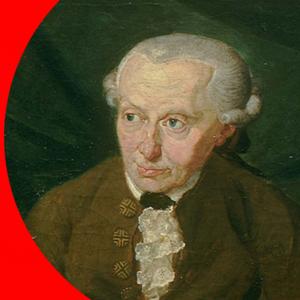


No state has been fully republican in the sense of Kant so far. This begs the question how a despotic state may be made more republican. Kant did not support the path of revolution, which always is an injustice, but that of step by step reform. For this it is necessary that the philosophers in the world sense - i. e. the sages serving as lawgivers of reason and reflecting on the final purposes of humanity, while abstracting from everything particular and all self-interest - be heard by the rulers. And for this in turn it is only necessary that they have the right to speak their thoughts freely in public.
Quote: 0:08
How a despotic state is to be made more republican: 1:11
The philosophers ought not to rule but to advise the ruler: 12:27
- Kant's own nature did not strive for ruling: 23:32- Power corrupts the jugdment: 30:08
There must be freedon of speech for the philosophers: 1:02:51
Freedom of speech is not a purpose in itself: 1:33:52Darkening: 1:51:30
Thanks: 2:19:48
On the role of the philosopher in the state and the political meaning of so-called freedom of speech Kant writes in his text Perpetual Peace: https://www.gutenberg.org/files/50922/50922-h/50922-h.htm. In addition you can also read the relevant reflections in his handwritten estate on anthropology: https://korpora.org/kant/aa15/ (I am not aware of any English translation).
Whoever wants to support my aufkläring work can do so via:
https://ko-fi.com/jonathanivoloewer
https://www.patreon.com/jonathanivoloewer
https://www.paypal.com/donate/?hosted_button_id=VDDT7T7XHR77U
Thumbnail: www.hotpot.ai
Kant distinguishes two forms of government: The despotic and the republican one. The form of government here is different from the form of state: Autocracy, aristocracy or democracy all can govern in a despotic or a republican manner. What matters for Kant is not who is the sovereign in the state, what matters is that the sovereign represents the citizens and gives laws which protect freedom and represent the common will, as well as that the sovereign isn't the regent at the same time, i. e. that the lawgiver and the executive power are separate from one another. The republic is a rule of law state which subjects people only to reason, despotism is an unjust state where they are dependent on the arbitrary whims of the ruler.
Quote: 0:08
Republic and despotism: 0:16
The architectonic deduction of the forms of government: 23:19
1) In the republic all human beings are free: 42:47
- A state that wants to make people happy is despotic: 55:33
2) In the republic all subjects are equal before the law: 1:13:23
- The republican equality is equality of force through the law: 1:24:45
- The lawgiver is above the law and therefore must be irreprehensible: 1:36:24
3) In the republic all independent citizens are fraternally united as lawgivers: 1:40:10
- Right of suffrage: 2:20:10
What makes a republic: 3:02:05
Liberty, equality, fraternity: 3:04:33
The republic according to the four titles of the table of categories: 3:17:11
The form of government matters, not the form of rulership: 3:34:57
The endurance of the republic ought to be guaranteed by the constitution: 3:43:49
Thanks: 3:58:23
Republicanism and its three principles Kant describes in his essays Perpetual Peace: https://www.gutenberg.org/files/50922/50922-h/50922-h.htm and On the common saying: That may be correct in theory but it is of no use for practice: https://hesperusisbosphorus.files.wordpress.com/2015/02/theory-and-practice.pdf as well as in the preliminary works to the both texts: https://korpora.org/kant/aa23/153.html & https://korpora.org/kant/aa23/125.html and also in his handwritten estate on anthropology: https://korpora.org/kant/aa15/ and on the philosophy of right: https://korpora.org/kant/aa19/443.html (I am not aware of any English translations).
Whoever wants to support my aufkläring work can do so via:
https://ko-fi.com/jonathanivoloewer
https://www.patreon.com/jonathanivoloewer
https://www.paypal.com/donate/?hosted_button_id=VDDT7T7XHR77U
Thumbnail: www.hotpot.ai
Kant supports the separation of the legislative, exective and judicative powers, already suggested before him by Montesquieu. However the legislative power to him is souvereign: Every subject of the state and also the two other powers are under the law which determines what is just and what is unjust. The lawgiver himself however cannot possibly be under the law, since it is only given by him. For that reason he must be irreprehensible and even like God's representative on earth and mustn't be able to commit an injustice, since he could not be held accountable for it. Kant wants to achieve this exactly through the separation of powers: The souvereign is to rule but not to govern the state.
Quote: 0:08
Separation of powers in Kant's thinking and its deduction from reason: 0:37
The monopoly of power of the state: 14:35
The lawgiver is the souvereign: 31:33
The souvereignty of the legislative and the danger of despotism as a problem of the philosophy of right: 51:18
Solution: The souvereign is to be religious: 54:56
Solution: Strict separation of powers between legislative and executive: 1:03:03
Thanks: 2:03:47
On the separation of powers and the role of the overlord in the state Kant talks in the second section of On the common saying: That may be correct in theory but it is of no use for practice: https://hesperusisbosphorus.files.wordpress.com/2015/02/theory-and-practice.pdf as well as in the preliminary works to the same text: https://korpora.org/kant/aa23/125.html. To better understand this topic one should definitely also read his handwritten estate on the philosophy of right: https://korpora.org/kant/aa19/443.html and his lectures on the philosophy of right: https://archive.org/details/kantsgesammeltes0027kant_s1s1/mode/2up (I am not aware of any English translations).
Whoever wants to support my aufkläring work can do so via:
https://ko-fi.com/jonathanivoloewer
https://www.patreon.com/jonathanivoloewer
https://www.paypal.com/donate/?hosted_button_id=VDDT7T7XHR77U
Thumbnail: www.hotpot.ai
Important for Kant's thinking, though often overlooked, is his distinction between ruling and governing: of blind, arbitrary commanding of what is to happen and thoughtful guiding and conducting of how something happens. The governing to him is more important than the ruling. As the composer rules the orchestra and his notes are like a law to it, so on the other hand it is governed by the conductor and he can very much improve or diminish a piece through his conducting.
Quote; 0:08
Ruling and governing: 0:39
Governing is more important and difficult than ruling: 32:13
The wide applicability of the distinction between ruling and governing: 47:00
Ruling and governing in the state: 1:02:46
Kant's concepts as an enrichment of today's often primitive political thought: 1:15:33
Thanks: 1:33:30
The difference of ruling and governing Kant doesn't explicate in any text or chapter in detail, rather he mentions it again and again at various places in his texts on the philosophy of right or anthropology. One may read on it especially On Perpetual Peace: https://www.gutenberg.org/files/50922/50922-h/50922-h.htm, the second section of the Conflict of Faculties: https://de.scribd.com/document/292309779/Kant-Immanuel-Conflict-of-the-Faculties-Abaris-1979, the Anthropology from a Prgmatic Point of View: https://dokumen.pub/anthropology-from-a-pragmatic-point-of-view-0521671655-9780521671651.html as well as the lectures on anthropology: https://archive.org/details/kantsgesammeltes0000kant_a3n3 | https://archive.org/details/kantsgesammeltes0000kant_j8c0 (I am not aware of any English translation).
Whoever wants to support my aufkläring work can do so via:
https://ko-fi.com/jonathanivoloewer
https://www.patreon.com/jonathanivoloewer
https://www.paypal.com/donate/?hosted_button_id=VDDT7T7XHR77U
Thumbnail: www.hotpot.ai
The criminal right is an important part of the doctrine of right. It's all the more unfortunate that in Kant's work it's utterly insufficient: He supports a punishment of avangement which is to reinstitute the justice broken by the crime. In this he loses sight of the proper task of right: To secure the freedom of men.
Quote: 0:08
Kant's criminal right is useless: 0:46
Punishment should not be arbitrary but necessary: 12:54
Punishment may also but never exclusively be pragmatic punishment: 16:33
Critique of Kant's criminal right: 34:25
- Kant doesn't apply his own principle consistently: 44:01
- Kant wants to retain the dignity of the punished and the punisher but fails to do so: 50:09
- Kant mixes up ethics and right: 1:07:54
Thanks: 1:33:33
Criminal right Kant discusses mainly in his Metaphysics of Morals: https://ld.circuitdebater.org/w/archive_files/%5BImmanuel_Kant%5D_Kant_The_Metaphysics_of_Morals.pdf/507955836/%5BImmanuel_Kant%5D_Kant_The_Metaphysics_of_Morals.pdf.
Whoever wants to support my aufkläring work can do so via:https://ko-fi.com/jonathanivoloewer
https://www.patreon.com/jonathanivoloewer
https://www.paypal.com/donate/?hosted_button_id=VDDT7T7XHR77U
Thumbnail: www.hotpot.ai
The object of right is the mine and yours, both the innate as well as the acquired property. In the state of nature however all acquired property is only provisional and there is no guarantee that others will respect the mine as mine. For that very reason the state is needed: Its task is to give to each his own, i. e. to guarantee everyone their property. This however requires that the state itself with its laws and constitution must persist and be souvereign. And for that reason that which is necessary for sustaining the whole must also be the property of the whole and must never be owned by an individual.
Quote: 0:08
The task of the state is the protection of property: 1:08
The antietatism of the unaufkläred: 9:16
The substance of the state mustn't be the property of individual citizens: 27:07
The implications of Kant's doctrine of state for the ecological crisis of the present: 52:56
Thanks: 1:10:00
On the role of the state one may read Kant's Metaphysics of Morals: https://ld.circuitdebater.org/w/archive_files/%5BImmanuel_Kant%5D_Kant_The_Metaphysics_of_Morals.pdf/507955836/%5BImmanuel_Kant%5D_Kant_The_Metaphysics_of_Morals.pdf, the preliminary works to the Metaphysics of Morals: https://korpora.org/kant/aa23/207.html and the handwritten estate on the philosophy of right: https://korpora.org/kant/aa19/443.html (I am not aware of any English translations).
Whoever wants to support my aufkläring work can do so via:
https://ko-fi.com/jonathanivoloewer
https://www.patreon.com/jonathanivoloewer
https://www.paypal.com/donate/?hosted_button_id=VDDT7T7XHR77U
Thumbnail: www.hotpot.ai
All action, according to Kant, follows either the principal of morality or that of happiness. This holds true also for political action and therefore politics either serves the realisation of right, as reason demands, or it serves the common wellfare. This exactly is what the conflict between the philosophical faculty and the faculty of law is about according to Kant. As far as he is concerned politics is allowed to be prudent and therefore think of what's beneficial, but only within the framework and not at the cost of right.
Quote: 0:08
The metaphysical state's right: 0:19
Politics as exercisindoctrine of right: 19:21
State's right and state's prudence: 26:46
The conflict of faculties: 44:11
The current ideology demands pragmatism and rejects any kind of idealism: 1:01:32
What is presented to us as prudent in politics, often isn't at all: 1:15:20
The selfish politics of the liberals is to blame for the rise of the right: 1:19:42
Prudent politics has its place within the framework and in the service of the righteous one: 1:30:11
Thanks: 1:42:12
On the role of politics and its relation to right and prudence Kant talks again and again in various places of his moral and anthropological writings, especially in his essays On the common saying: That may be correct in theory but it is of no use for practice: https://hesperusisbosphorus.files.wordpress.com/2015/02/theory-and-practice.pdf and Perpetual Peace: https://www.gutenberg.org/files/50922/50922-h/50922-h.htm and in his handwritten estate on moral philosophy: https://korpora.org/kant/aa19/ (I am not aware of any English translation).
Whoever wants to support my aufkläring work can do so via:
https://ko-fi.com/jonathanivoloewer
https://www.patreon.com/jonathanivoloewer
https://www.paypal.com/donate/?hosted_button_id=VDDT7T7XHR77U
Thumbnail: www.hotpot.ai
The object of right is the mine and yours, that is, in the case of innate rights, that which is mine by birth, or, in the case of acquired rights, that which became mine at some point. In the state of nature, when there is no state and no law, the principle of right is: neminem leadere, don't harm anyone, i. e. let everyone keep his own, and this is the principle of commutative justice. But here there is no agreement about what is mine, what is yours, wherefore the state of nature is a constant state of war. Perpetual peace can only come about through public right: A contract which bestows to each person his own as his own and guarantees it. This is a distributive justice which acts according to the principle: suum cuique tribue, give to each his own. Just therefore can only be whatever could be contained in such a social contract to which everyone could agree. And this can be determined through an experiment of reason, that is through the question whether it can stand publicity.
Quote: 0:08
Justice and therefore peace are only possible through public right: 0:37
The state needs law, force and freedom: 9:18
The conditions where at least one essential element of the state is missing: 16:09
The analogy with ethics: 35:06
Wild freedom and freedom under the law: 54:38
Barbarism: 1:04:04
Just laws are those to which everyone could have agreed in an original social contract: 1:30:26
The maxim of publicity in right: 2:03:39
The maxim of publicity in ethics: 2:20:57
Thanks: 2:47:58
The relation of freedom, law and force Kant discusses in his Anthropology from a Pragmatic Point of View: https://dokumen.pub/anthropology-from-a-pragmatic-point-of-view-0521671655-9780521671651.html, his lectures on anthropology: https://archive.org/details/kantsgesammeltes0000kant_a3n3 | https://archive.org/details/kantsgesammeltes0000kant_j8c0 and his handwritten estate on anthropology: https://korpora.org/kant/aa15/ (I am not aware of any English translation).
The Maxim of Publicity is discussed in his texts: On the Common Saying: That may be Correct in Theory but is of no Use in Practice: https://hesperusisbosphorus.files.wordpress.com/2015/02/theory-and-practice.pdf, Perpetual Peace: https://www.gutenberg.org/files/50922/50922-h/50922-h.htm as well as in his handwritten estate on anthropology: https://korpora.org/kant/aa15/ and his handwritten estate on moral philosophy: https://korpora.org/kant/aa19/ (I am not aware of any English translations).
Whoever wants to support my aufkläring work can do so via:
https://ko-fi.com/jonathanivoloewer
https://www.patreon.com/jonathanivoloewer
https://www.paypal.com/donate/?hosted_button_id=VDDT7T7XHR77U
Thumbnail: www.hotpot.ai
In the state of nature, that is without common laws, men live in constant at least potential war with one another. In this state the mere presence of another person already constitutes a threat, more than that of a wild animal could ever be. For that reason it is a duty to go from the state of nature into a civil state, that is to errect a common law through a contract which gives to each his own and guarantees it. Through this public right creates a perpetual peace between people.
Quote: 0:08
The state of nature: 0:34
The state of nature is a state of war, for which reason we must enter the civil state: 13:06
Public right is supposed to bring justice and thereby perpetual peace: 26:53
The social contract requires truthfulness: 37:27
The three principles of Ulpian: 50:38
Honeste vive (live honestly): 56:53
Neminem leadere (harm no one) & suum cuique tribue (give to each his own): 1:06:15
Kant's method of reading: 1:25:13
The just war is a war in order to force under the right: 1:29:31
Leaving the social contract is an injustice: 2:06:44
Thanks: 2:47:18
Ulpian's principles of right Kant discusses in various places of his lectures on moral philosophy: https://archive.org/details/kantsgesammeltes271imma/page/n5/mode/2up | https://archive.org/details/kantsgesammeltes272imma/page/n5/mode/2up | https://archive.org/details/kantsgesammeltes0027kant_s1s1/page/n5/mode/2up as well as of his handwritten estate on moral philosophy: https://korpora.org/kant/aa19/ (I am not aware of an English translation of either). On public right and the transition into it Metaphysics of Morals talk: https://ld.circuitdebater.org/w/archive_files/%5BImmanuel_Kant%5D_Kant_The_Metaphysics_of_Morals.pdf/507955836/%5BImmanuel_Kant%5D_Kant_The_Metaphysics_of_Morals.pdf. Looking into the preliminary works to the Metaphysics of Morals is also helpful: https://korpora.org/kant/aa23/207.html (I am not aware of any English translation).
Whoever wants to support my aufkläring work can do so via:
https://ko-fi.com/jonathanivoloewer
https://www.patreon.com/jonathanivoloewer
https://www.paypal.com/donate/?hosted_button_id=VDDT7T7XHR77U
Thumbnail: www.hotpot.ai
One of the most important problems the philosophy of right has to solve is that of original acquisition: How can an item not belonging to anybody become the rightful property of a certain person from whose use he may exclude everyone else? Kant answers this through his theory of the ground which is at the basis of his whole philosophy of right: Everyone has an original right to a piece of the earth. This theory is insufficient but still has merit.
Quote: 0:08
The problem of original acquisition: 0:44
Every person has an innate outer right to the ground: 16:46
All human beings share an original common ownership of the whole ground: 26:47
All other property is to be derived from the ownership of that piece of ground on which it is originally apprehended: 40:59
Everyone can rightfully own as much of the ground as he could defend in the state of nature: 48:58
The ownership of the ground and the original acquisition require a state of rights: 1:01:31
Kant as an anti-Malthus: 1:20:23
Kant's theory makes huge inequalities in wealth impossible: 1:44:15
Why Kant's solution to the problem of original acquisition is insufficient: 1:50:51
The theory of original acquisition leads from private right to public right: 2:09:15
Thanks: 2:10:17
Original acquisition and the theory of the ground Kant deals with in the doctrine of rights in the Metaphysics of Morals: https://ld.circuitdebater.org/w/archive_files/%5BImmanuel_Kant%5D_Kant_The_Metaphysics_of_Morals.pdf/507955836/%5BImmanuel_Kant%5D_Kant_The_Metaphysics_of_Morals.pdf. To fully understand them however it's helpful to also read the preliminary works to the Metaphysics of Morals: https://www.korpora.org/Kant/aa23/207.html (I am not aware of any English translation).
Whoever wants to support my aufkläring work can do so via:
https://ko-fi.com/jonathanivoloewer
https://www.patreon.com/jonathanivoloewer
https://www.paypal.com/donate/?hosted_button_id=VDDT7T7XHR77U
Thumbnail: www.hotpot.ai
From the publisher's feed