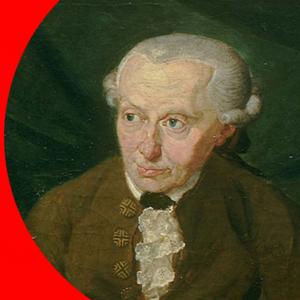
Kant's concept of freedom is often reduced to its importance for moral philosophy. It is however the maybe most important key to understand Kant's philosophical project and cause as a whole. In the center of Kant's thinking there is the insight that wild, untamed, ruleless freedom destroys itself, that freedom therefore, in order to be able to persist, must be brought under a law by reason. This law is, insofar as our acting is concerned, the moral law. Freedom, rationality and morality for Kant are reciproce concepts and none of the three is possible without both the others.
Quote: 0:08
Wild freedom and freedom under the law: 1:09
The laws under which freedom must be brought are the imperatives of reason: 22:44
Empirical and pure Will, heteronomy and autonomy: 25:23
All moral theories except Kant's are grounded in heteronomy of the Will and come down to eudaemonism: 32:32
Reason, freedom and morality are directly connected: 37:59
Reason:
- Selfishly seeking one's own benefit is not rational but on the contrary submission to irrationality: 39:21
- The arationalism and dishonesty of the egoistical naturalists: 51:33
- Most only know instrumental (technical-practical) reason: 53:37
Freedom:
- The reigning concept of freedom is that of liberalism which is prominent on both the left and the right: 59:23
- The freedom of a turnspit: 1:16:05
- Psychological and transcendental freedom: 1:26:16
Morality:
- Negative and positive freedom: 1:38:11
- By proving a pure practical reason Kant gave the reason for our duty: 1:41:57
- A reason is not needed for why we should do good but for why we'd want evil: 2:03:21
- Today morality is not associated with freedom but with force: 2:17:32
- Most don't want to be free: 2:42:44
The moral law is universal for all rational beings: 2:50:06
Freedom is not the ability to choose between Good and Evil but to do what has been understood to be good: 3:07:38
Thanks: 3:21:14
The imperatives according to Kant: https://jonathanivoloewer.de/wp-content/uploads/2025/04/imperatives-according-to-Kant.jpg
The thinking faculty according to Kant: https://jonathanivoloewer.de/wp-content/uploads/2024/09/faculty-of-thinking-according-to-Kant.jpg
On Kant's concept of freedom one can read the Groundworks to the Metaphysics of Morals, particularly the third section: https://www.earlymoderntexts.com/assets/pdfs/kant1785.pdf. The Critique of practical Reason also deals with freedom and it's connection with morality: https://www.bard.edu/library/arendt/pdfs/bc_Arendt_Kant_CritiquePracticalReason.pdf. I strongly recommend also reading the main part on the antinomies in the Critique of Pure Reason: https://www.gutenberg.org/files/4280/4280-h/4280-h.htm. The concept of freedom however is so central for Kant's thinking that almost all his metaphysical, moral-philosophical and political works are grounded in it and contain important additions and explanations.
Whoever wants to support my aufkläring work can do so via:
https://ko-fi.com/jonathanivoloewer
https://www.patreon.com/jonathanivoloewer
https://www.paypal.com/donate/?hosted_button_id=VDDT7T7XHR77U
Thumbnail: www.hotpot.ai