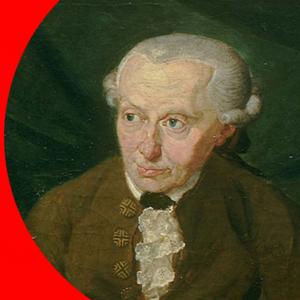
The pleasure taken in the beautiful is subjective, yet still universal to all humans. According to Kant it is a necessary pleasure, which isn't based on the reality of an object in which we have an interest, but which comes from the form of a representation which is purposive for our faculty of cognition and puts it into a free playing with itself.
Quote: 0:08
Introduction: 1:11
2) The quantity of the judgment of taste: 4:17
- Interest: 4:24
- The judgment of taste is a disinterested judgment: 21:10
- We can never be sure whether we're judging completely disinterestedly: 47:00
- The judgment of taste requires freedom from interest: 52:11
- The judgment of taste also requires freedom from interest in the good: 1:08:12
- The beautiful we judge as human beings as such: 1:16:19
3) The relation of the judgment of taste: 1:22:17
- Purposeiveness: 1:22:27
- The beautiful is liked for its mere form: 1:27:43
- The beautiful causes a free playing of the power of imagination and the intellect with one another: 1:40:24
- In the judgment of taste there is a free schematizing of the reflecting power of judgment: 1:58:05
- The connection between beauty and truth: 2:08:16
- The idealism of purposiveness: 2:12:09
- A representation is beautiful if we can play with it: 2:28:05
- The beautiful is liked because it vitalizes our faculty of cognition: 2:34:00
4) The modality of the judgment of taste: 2:41:40
- The beautiful is the object of a necessary pleasure: 2:42:35
- The power of judgment is heautonomous and constitutive for the feeling of pleasure and displeasure: 2:49:23
- The pleasure in the beautiful implies a common sense: 2:59:59
- How are (aesthetical) synthetic judgments a priori possible?: 3:20:41
Thanks: 3:27:51
Overview of the thinking faculty according to Kant: https://jonathanivoloewer.de/wp-content/uploads/2024/09/faculty-of-thinking-according-to-Kant.jpg
A philosophical discussion and explanation of the beautiful can be found in the critique of the aesthetical power of judgment in his Critique of the Power of Judgment: https://www.gutenberg.org/cache/epub/48433/pg48433-images.html. As an introduction one may read Kant's remarks in his Observations on the Feeling of the Beautiful and the Sublime: https://tcnjpainting.files.wordpress.com/2016/07/kantobservationsonthefeelingofthebeautifulandsublimeandotherwritingscambridge.pdf, which are easier to read and of less philosophical depth and wherein the beautiful may not get explained, but does get described. Lastly, valuable further remarks can be found wherever Kant speaks about anthropology, so in his Anthropology from a pragmatic point of view: http://korpora.org/kant/aa07/230.html, his lectures on anthropology: https://archive.org/details/kantsgesammeltes0000kant_a3n3 | https://archive.org/details/kantsgesammeltes0000kant_j8c0 and his handwritten estate on anthropology: http://korpora.org/kant/aa15/234.html. (I could not find any free
English translations online)
Whoever wants to support my aufkläring work can do so via:
https://ko-fi.com/jonathanivoloewer
https://www.patreon.com/jonathanivoloewer
https://www.paypal.com/donate/?hosted_button_id=VDDT7T7XHR77U