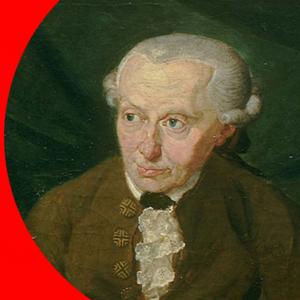
In the Critique of Pure Reason Kant presents a table of the categories of our intellect, according to which all thinking is happening. These categories have an important function in Kant’s epistemology. But their significance goes far beyond that: As elementary concepts of our thinking they form the basis of all possible thoughts. Therefore they are also the key to the architectonic of Kant’s system: Again and again Kant distinguishes his concepts according to these twelve categories, sometimes explicitly, sometimes without telling the reader. For that reason the inner composition of Kant’s system cannot possibly be understood without the table of categories. How Kant gets to these twelve categories specifically and also how he always thinks in these categories, is the topic of this lecture.
Quote: 0:08
Introduction: 01:00
The twelve categories spring from a twofold logical division and from a metaphysical division of the concept of connection: 2:42
The three categories of each title correspond with the intellect, power of judgment and reason: 32:12
One cannot understand and therefore also cannot criticize the categories without grasping their architectonic necessity: 44:07
The praedicabilia as pure intellectual concepts deduced from the categories: 51:15
All thinking is determined by the twelve categories: 57:59
The dismissal of the table of categories in today’s academic circles: 1:05:58
The table of categories is the fundament of ontology: 1:19:02
Examples for the usage of the table of categories by Kant as a fundament of his architectonic: 1:28:24
- The categories of freedom: 1:31:58
- The categories in mathematics: 1:38:44
- What a definition and a perfect concept are, according to the categories: 1:42:09
- The nothing according to the categories: 1:54:35
The table of categories ensures architectonic completeness of the system: 2:05:11
The concepts of division, attribution, the possible modes of philosophizing and the fields of pure metaphysics all are divided according to the categories by Kant: 2:09:17
Kant’s being systematic is untimely in a relativistic present: 2:28:38
The table of categories can also be applied, where Kant himself didn’t do so: 2:35:41
Through the table of categories, one can correct one’s own thinking: 3:09:39
Through the concepts synthetic judgments a priori are possible, but only if they are about possible experience: 3:16:25
The categories make pure natural science possible: 3:33:29
Thanks: 3:37:45
The table of categories according to Kant: https://jonathanivoloewer.de/wp-content/uploads/2024/10/table-of-categories-according-to-Kant.jpg
The table of categories can be found in the §s 10.-12. of the Critique of Pure Reason: https://www.gutenberg.org/files/4280/4280-h/4280-h.htm, the categories also get talked about in Kant's lectures on metaphysics: https://archive.org/details/kantsgesammeltes0028kant/mode/2up | https://archive.org/details/kantsgesammeltes0028kant_d7g2/mode/2up (I
could not find free English translations online.)
Whoever wants to support my aufkläring work can do so via:
https://ko-fi.com/jonathanivoloewerhttps://www.patreon.com/jonathanivoloewer
https://www.paypal.com/donate/?hosted_button_id=VDDT7T7XHR77U