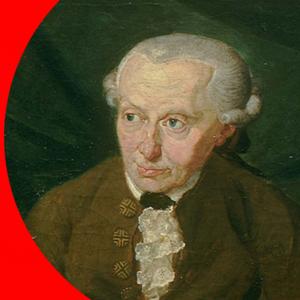
Kant's Philosophy

Kant's Philosophy

By The Voice of ReasonSociety & CulturePhilosophy
Download on the App Store

Kant's Philosophy episodes

  • Kant's philosophy - The result of the Critique of Pure reason: The regulative function of reason

    In the Critique of Pure Reason Kant asks the question what pure, i. e. free from any experience, reason can do. He shows: It is not constitutive for our cognition. That means: It cannot bring forth its own cognitions or open for us a new realm of cognition. When it tries to grasp the supersensual, when in pure metaphysics it asks about the immortality of the soul, about freedom, about God, then it becomes dialectical, i. e. it only creates illusions. Only the intellect is constitutive for our cognition, not for the cognition of the supersensual, but for the cognition of the sensual, for its elementary concepts, the twelve categories, are conditions of the possibility of experience, all of nature must function according to them. Reason and its ideas aren't useless or chimerical because of that however, they according to Kant have a regulative function: They serve as a touchstone for that which is and also as an example for the creation of something new. The principles of reason may not tell us, how the world of experience is made up, but they guide is in finding it out and grasping that world.

    Quote: 0:08
    Kant's aim in the Critique of Pure Reason and his solution of his question: 1:12
    The transcendental dialectic can only be solved through transcendental idealism: 32:49
    What remains of reason and its ideas: 39:08
    - Touchstone of judgment: 42:59
    - Example for creation: 58:50
    The regulative function of reason: 1:07:13
    Three regulative principles of reason: homogenity, specification, continuity: 1:08:52
    The three principles of reason spring from the categories or judgments of quantity: 1:16:15
    Reason is not constitutive for our faculty of cognition but regulative: 1:19:39
    The principles of reason aren't objective, but subjective: 1:45:24
    The thing in itself is also a regulative idea: 2:41:10
    Thanks: 2:46:15
    On the result of his critique of reason and on the regulative, rather than constitutive role of reason Kant talks in the appendix to the transcendental dialectic in the Critique of Pure Reason: https://www.gutenberg.org/files/4280/4280-h/4280-h.htm
    Whoever wants to support my aufkläring work can do so via:
    https://ko-fi.com/jonathanivoloewer
    https://www.patreon.com/jonathanivoloewer
    https://www.paypal.com/donate/?hosted_button_id=VDDT7T7XHR77U
    Thumbnail: www.hotpot.ai

    2 hr 47 min
  • Kant's philosophy - Rational theology: Is there a God?

    Part of 18th century metaphysics was the field of rational theology. Unlike in revelation theology, here ones doesn't start from a revelation like the Bible, rather one tries to understand God through mere reason, including trying to prove him through it. Kant however shows in the Critique of Pure Reason that human reason in this field, as in others, is dialectical: It creates illusory proofs by which it persuades itself, which however don't hold up under critical scrutiny. Knt concludes: The thought of a most real being of beings may be a necessary ideal of our reason, but it cannot be proven that this thing has any reality outside of our thinking.

    Quote: 0:08
    Reason is dialectical when trying to prove God: 2:05
    God is not only the reason of existence but also of possibility: 7:21
    God cannot be proven: 21:48
    God as the most real being: 24:13
    There can only be one single ideal of pure reason: 45:03
    Placing the ideal in the architectonic of Kant's system: 48:33
    Reminiscences of mysticism in Kant: 1:07:42
    The thought of God is necessary, but not necessarily a thing corresponding to that thought: 1:14:58
    Rational theology can prevent errors about God as a discipline but not bring cognitions about God as a doctrine: 1:20:40
    Thanks: 1:27:47
    The table of categories according to Kant:
    https://jonathanivoloewer.de/wp-content/uploads/2024/10/table-of-categories-according-to-Kant.jpg
    Though Kant deals with the dialectical ideal of God as the most real being in the Critique of Pure Reason, I recommend reading first and foremost his precritical text The Only Possible Argument in Support of a Demonstration of the Existence of God, for understanding it completely: https://archive.org/details/the-only-possible-argument-in-support-of-a-demonstration-of-the-existence-of-god
    Whoever wants to support my aufkläring work can do so via:
    https://ko-fi.com/jonathanivoloewer
    https://www.patreon.com/jonathanivoloewer
    https://www.paypal.com/donate/?hosted_button_id=VDDT7T7XHR77U
    Thumbnail: www.hotpot.ai

    1 hr 29 min
  • Kant's philosophy - Rational cosmology: How is the world made up and does freedom exist in it?

    According to Kant it is the most remarkable phenomenon of human reason, that in rational cosmology, that field of metaphysics which is dealing

    with the world as a whole, it gets tangled up in antinomies, that is a contradiction with itself. It here gets into various questions, not least among them whether there is freedom or just the causality of nature, where there is a thesis and an antithesis which both seem equally correct, but also seem to exclude one another. It is this antinomy in our reason, which first awakened Kant from his dogmatic slumber and convinced him that reason needs to undergo a critique. And it is the solving of this problem where the whole Critique of Pure Reason leads to.
    Quote: 0:08
    The dialectic in rational cosmology: 2:26
    In rational cosmology reason gets tangled up in antinomies: 7:30
    The significance of the cosmological antinomies: 15:14
    The four cosmological antinomies: 35:49
    The antinomies are grounded in an errorneous use of the principles of the intellect: 50:54
    Mathematical and dynamical antinomies: World and nature: 1:02:20
    The meaning of the third antinomy: Freedom: 1:12:24
    The meaning of the other three antinomies: 1:32:14
    In the antinomies there is an opposition of rationalism and empiricism: 1:40:06
    Solution of the antinomies: 1:49:16
    Solution of the mathematical antinomies: 1:58:43
    Solution of the dynamic antinomies: 2:11:31
    The removal of knowledge makes room for belief: 2:26:35
    Result of the critiqiue of reason in cosmology: 2:32:49
    Kant's aim in his critical inquiry of rational cosmology: 2:37:43
    Thanks: 2:49:18
    The cosmology and the antinomies of our reason in it, Kant deals with in the respective passages of his Critique of Pure Reason: https://www.gutenberg.org/files/4280/4280-h/4280-h.htm and his Prolegomena to Any Future Metaphysics That Will Be Able to Present Itself as a Science: https://www.gutenberg.org/files/52821/52821-h/52821-h.htm. Reading some of his reflections from his handwritten estate on metaphysics is also helpful: https://korpora.org/kant/aa17/ | https://korpora.org/kant/aa18/ (I don't know of any English translation.)
    Whoever wants to support my aufkläring work can do so via:
    https://ko-fi.com/jonathanivoloewer
    https://www.patreon.com/jonathanivoloewer
    https://www.paypal.com/donate/?hosted_button_id=VDDT7T7XHR77U
    Thumbnail: www.hotpot.ai

    2 hr 50 min
  • Kant's philosophy - Rational psychology: Do we have a spiritual soul or are we just our brains?

    Metaphysics, the science of the supersensual, has rational psychology as one of its fields according to Kant, a science which tries to understand our sole through mere reason. But in this field reason is dialectical, which means that it creates a certain illusion of truth: It brings forth four paralogisms, vier wrong arguments, according to which our soul is an immortal spirit. No matter however how much these arguments are grounded in the very nature of our reason and how true they seem to be, they still are false and the dissolving of this dialectic is a core concern of the Critique of Pure Reason.

    Quote: 0:08
    Reason is dialectical when it seeks cognition of the soul: 2:23
    The four supposed cognitions about the soul which reason tries to prove: 6:36
    The fundamental mistake in the four paralogisms on the soul: 43:44
    Rational psychology deals with two of the most important philosophical problems of modernity: 1:12:41
    1. Empirical idealism: Is the world only a dream?: 1:14:47
    2. Body-soul-problem: How are body and soul connected?: 1:26:08
    With his dogmatic opinions Kant is being inconsistent and left behind by his own critique: 2:08:14
    Rational psychology as a positive doctrine of the soul is not possible: 2:13:20
    Rational psychology can be a negative discipline in regards to the soul: 2:20:22
    Spiritualism and materialism are equally unprovable: 2:24:01
    Thanks: 2:44:31
    If one is interested in the way Kant deals with the dialectic in the rational doctrine of the soul, one should read not just the respective passage in the second edition of the Critique of Pure Reason: https://www.gutenberg.org/files/4280/4280-h/4280-h.htm#chap72, but also the one in the first edition (of which I could not find a free online version), since Kant reworked and shortened that part considerably and the original version is more clear. However, a complete picture of Kant's opinions on the soul, especially on the body-soul-problem, requires reading the passages on rational psychology in his lectures on metaphysics: https://archive.org/details/kantsgesammeltes0028kant/mode/2up | https://archive.org/details/kantsgesammeltes0028kant_d7g2/mode/2up (I am
    not aware of English translations.)
    Whoever wants to support my aufkläring work can do so via:
    https://ko-fi.com/jonathanivoloewer
    https://www.patreon.com/jonathanivoloewer
    https://www.paypal.com/donate/?hosted_button_id=VDDT7T7XHR77U
    Thumbnail: www.hotpot.ai

    2 hr 45 min
  • Kant's philosophy - What is dialectic?

    Human reason is dialectical according to Kant, i. e. by its very nature it gets tangled up in contradictions and illusionary proofs in a certain field - that is, when it transcends the sensual world and tries to do metaphysics, so when it seeks cognitions of the soul, the world as a whole or God. This dialectic of reason was what first awoke Kant and made him realize the errors of previous metaphysics. To explain and also lift it is his main goal in the Critique of Pure Reason, the rest is in a way just its preparation.

    Quote: 0:08
    It is in the nature of our reason, to not be satisfied with the sensual world and strive for the upersensual: 0:30
    Metaphysics, that is expension of our cognitions without experience, could only happen through synthetic judgments a priori: 4:26
    Dialectic: 11:16
    Reason's three dialectical ideas of the immortality of the soul, freedom and God arise out of the forms of its conclusions: 20:32
    The ideas are the basis of the three metaphysical sciences of rational psychology, cosmology and theology in the architectonic of Kant's system: 48:47
    The ideas are reason's totalizations of the three categories of relation or the three synthesises of the intellect in the process of experience: 54:36
    Reason mainly demands totality of conditions, not of the conditioned: 1:07:38
    Kant's goal and result in the Critique of Pure Reason: 1:10:58
    Thanks: 1:17:50
    The table of judgments according to Kant: https://jonathanivoloewer.de/wp-content/uploads/2024/10/table-of-judgments-according-to-Kant.jpg
    The table of categories according to Kant: https://jonathanivoloewer.de/wp-content/uploads/2024/10/table-of-categories-according-to-Kant.jpg
    What dialectic means, Kant explains in the introduction to the transcendental logic and in the transcendental dialectic in the Critique of Pure Reason: https://www.gutenberg.org/files/4280/4280-h/4280-h.htm
    Whoever wants to support my aufkläring work can do so via:
    https://ko-fi.com/jonathanivoloewer
    https://www.patreon.com/jonathanivoloewer
    https://www.paypal.com/donate/?hosted_button_id=VDDT7T7XHR77U
    Thumbnail: www.hotpot.ai

    1 hr 19 min
  • Kant's philosophy - What is reason?

    The highest of the three human thinking faculties is reason, according to Kant. With its desire for complete unity and conclusion in thinking, it is what characterizes man und makes him rise above everyday concerns to scientific thinking. With it is also reason, with its ideas, which elevates us fully above the sensual world and lets us strive for the supersensual. Whether this desire can be fulfilled and the ideas of reason can have reality, that is the central question which Kant’s Critique of Pure Reason examines.

    Quote: 0:08
    Most don’t know what reason is: 0:29
    Reason is a higher intellect: 4:35
    Formaly reason is the faculty of conclusions: 7:34
    Reason is the faculty of principles and thereby of justification: 23:01
    Our world now is still made up in completely irrational ways: 44:13
    Reason asks for the reason of things: 1:01:59
    Reasons develops last in life: 1:05:33
    Reason distinguishes man most clearly from animals: 1:16:10
    The disposition for reason shows itself in small children already, but it is usually suppressed instead of cultivated: 1:20:08
    The reasonableness of a person shows in the degree of his consistency: 1:38:21
    Reason is the faculty of ideas: 1:47:44
    Ideals: 2:05:50
    Chimeras: 2:12:40
    Kant’s problem: Without viewing, the reality of our ideas can’t be proven: 2:31:49
    Thanks: 2:45:19
    The thinking faculty according to Kant:
    https://jonathanivoloewer.de/wp-content/uploads/2024/09/faculty-of-thinking-according-to-Kant.jpg
    On reason as a faculty of cognition Kant talks in the respective part of the transcendental dialectic in the Critique of Pure Reason: https://www.gutenberg.org/files/4280/4280-h/4280-h.htm Many important remarks and comparisons with the other two thinking faculties can also be found in Kant’s handwritten estate on metaphysics: https://korpora.org/kant/aa17/ | https://korpora.org/kant/aa18/ (I could not find any free translations online) and on anthropology: https://korpora.org/kant/aa15/ (I could not find any free translations online).
    Whoever wants to support my aufkläring work can do so via:
    https://ko-fi.com/jonathanivoloewer
    https://www.patreon.com/jonathanivoloewer
    https://www.paypal.com/donate/?hosted_button_id=VDDT7T7XHR77U
    Thumbnail: www.hotpot.ai

    2 hr 46 min
  • Kant's philosophy - The limits of our cognition: The schematism and the principles of the intellect

    The proper philosophy is metaphysics to Kant, and it in turn deals mainly with the three ideas of reason of God, freedom and immortality of the soul according to him. If any cognition was possible of these three objects, it could only happen by synthetic judgments a priori, that is

    judgments which are not based on experience, but which at the same time expand our knowledge. That is why the question of the Critique of Pure Reason was: How are such synthetic judgments a priori possible? And the result of his inquiry of the faculty of cognition Kant presents in the sometimes unclear and often overlooked passages on the schematism and the principles of the intellect: We have twelve categories of our thinking, pure intellectual concepts, by which we actually can make synthetic judgments a priori – but they are empty concepts for us, unless we relate them to sensuality through a temporal schema, and therefore the synthetic judgments a priori which are based on them, the principles of the intellect, allow us to make predictions about the make-up of the sensual world and all our viewings, perceptions and experiences in it, but they don’t allow us to take even a single step beyond it and into the supersensual world.
    Quote: 0:08
    Concept and viewing cannot be connected just like that: 1:24
    The schemata of the power of imagination: 7:29
    The transcendental schemata: 16:47
    Explanation of the specific schemata: 23:23
    The categories are empty without the schemata: 39:02
    The schematism restricts the categories to sensuality: 1:00:40
    The principles of the intellect: 1:09:44
    I) The mathematical connections: 1:12:10
    - 1) Axiom of viewing: 1:15:09
    - 2) Anticipation of perception: 1:20:34
    - The commonality between the mathematical princples: 1:28:53
    II) The dynamical princples: 1:39:41
    - 3) Analogies of experience: 1:45:28
    - 4) Postulates of empirical thought in general: 2:10:54
    The result of the Critique of Pure Reason: 2:25:46
    Thanks: 2:28:56
    The table of categories according to Kant: https://jonathanivoloewer.de/wp-content/uploads/2024/10/table-of-categories-according-to-Kant.jpg
    As difficult as especially the passage on the schematism is, for this topic there is no getting around reading the analytic of the principles in the Critique of Pure Reason itself, since in other works of Kant's the schemata and the principles of the intellect hardly get discussed: https://www.gutenberg.org/files/4280/4280-h/4280-h.htm
    Whoever wants to support my aufkläring work can do so via:
    https://ko-fi.com/jonathanivoloewer
    https://www.patreon.com/jonathanivoloewer
    https://www.paypal.com/donate/?hosted_button_id=VDDT7T7XHR77U
    Thumbnail: www.hotpot.ai

    2 hr 30 min
  • Kant's philosophy - What is the power of judgment?

    The power of judgment is the second of the three faculties of thinking examined by Kant. It has a central function, because it connects the intellect and reason, thinking and sensuality, the general and the particular with each other. It is also specifically their own judgment,

    for which there cannot be given any rule, for it then would no longer be one’s own judgment and because then one would need to make a judgment about the application of the rule, which unaufkläred people constantly try to run from.
    Quote: 0:08
    The intellect: 0:52
    The power of judgment is an applied intellect: 3:38
    All error originates in wrong judgments: 12:05
    The power of judgment can only develop over time throughout life: 19:44
    Lack of the power of judgment is stupidity: 22:04
    Power of judgment cannot be learned: 24:37
    People without power of judgment tend to be pedantic: 29:28
    Power of judgment cannot be taught but it can be trained: 38:09
    Out of fear of judging themselves unaufkläred people place themselves under guardianship: 51:45
    Determining and reflecting power of judgment: 1:21:38
    The Critique of the Power of Judgment deals with the reflecting power of judgment: 1:25:10
    Purposiveness is the only concept, which originates in the power of judgment a priori: 1:33:38
    Digression: Nonpurposiveness as a fundament of horror: 1:49:25
    The technique of nature as a necessary reflective concept: 1:56:57
    Digression: Quantum physics as physics of nature where its technique ends?: 2:11:03
    Aesthetic and teleological power of judgment: 2:14:57
    Outlook: 2:16:13
    Thanks: 2:18:04
    The thinking faculty according to Kant: https://jonathanivoloewer.de/wp-content/uploads/2024/09/faculty-of-thinking-according-to-Kant.jpg
    On the power of judgment and its significance for the human being, Kant talks in his Anthropology from a Pragmatic Point of View: https://www.korpora.org/kant/aa07/196.html (English translations exist, but I could not find a free version online) and also his lectures on anthropology: https://archive.org/details/kantsgesammeltes0000kant_a3n3 | https://archive.org/details/kantsgesammeltes0000kant_j8c0.
    If someone is interested in the reflective power of judgment and its concept of purposiveness or a technique of nature speciically, he should read the introduction to the Power of Judgment:
    https://www.gutenberg.org/files/48433/48433-h/48433-h.htm or, better yet, the First Introduction to the Critique of the Power of Judgment: https://monoskop.org/images/7/77/Kant_Immanuel_Critique_of_Judgment_1987.pdf
    Whoever wants to support my aufkläring work can do so via:

    https://ko-fi.com/jonathanivoloewer

    https://www.patreon.com/jonathanivoloewer

    https://www.paypal.com/donate/?hosted_button_id=VDDT7T7XHR77U


    Thumbnail: www.hotpot.ai

    2 hr 19 min
  • Kant's philosophy - The table of categories as the key to Kant's whole philosophical system

    In the Critique of Pure Reason Kant presents a table of the categories of our intellect, according to which all thinking is happening. These categories have an important function in Kant’s epistemology. But their significance goes far beyond that: As elementary concepts of our thinking they form the basis of all possible thoughts. Therefore they are also the key to the architectonic of Kant’s system: Again and again Kant distinguishes his concepts according to these twelve categories, sometimes explicitly, sometimes without telling the reader. For that reason the inner composition of Kant’s system cannot possibly be understood without the table of categories. How Kant gets to these twelve categories specifically and also how he always thinks in these categories, is the topic of this lecture.

    Quote: 0:08
    Introduction: 01:00
    The twelve categories spring from a twofold logical division and from a metaphysical division of the concept of connection: 2:42
    The three categories of each title correspond with the intellect, power of judgment and reason: 32:12
    One cannot understand and therefore also cannot criticize the categories without grasping their architectonic necessity: 44:07
    The praedicabilia as pure intellectual concepts deduced from the categories: 51:15
    All thinking is determined by the twelve categories: 57:59
    The dismissal of the table of categories in today’s academic circles: 1:05:58
    The table of categories is the fundament of ontology: 1:19:02
    Examples for the usage of the table of categories by Kant as a fundament of his architectonic: 1:28:24
    - The categories of freedom: 1:31:58
    - The categories in mathematics: 1:38:44
    - What a definition and a perfect concept are, according to the categories: 1:42:09
    - The nothing according to the categories: 1:54:35
    The table of categories ensures architectonic completeness of the system: 2:05:11
    The concepts of division, attribution, the possible modes of philosophizing and the fields of pure metaphysics all are divided according to the categories by Kant: 2:09:17
    Kant’s being systematic is untimely in a relativistic present: 2:28:38
    The table of categories can also be applied, where Kant himself didn’t do so: 2:35:41
    Through the table of categories, one can correct one’s own thinking: 3:09:39
    Through the concepts synthetic judgments a priori are possible, but only if they are about possible experience: 3:16:25
    The categories make pure natural science possible: 3:33:29
    Thanks: 3:37:45
    The table of categories according to Kant: https://jonathanivoloewer.de/wp-content/uploads/2024/10/table-of-categories-according-to-Kant.jpg
    The table of categories can be found in the §s 10.-12. of the Critique of Pure Reason: https://www.gutenberg.org/files/4280/4280-h/4280-h.htm, the categories also get talked about in Kant's lectures on metaphysics: https://archive.org/details/kantsgesammeltes0028kant/mode/2up | https://archive.org/details/kantsgesammeltes0028kant_d7g2/mode/2up (I
    could not find free English translations online.)
    Whoever wants to support my aufkläring work can do so via:

    https://ko-fi.com/jonathanivoloewerhttps://www.patreon.com/jonathanivoloewer

    https://www.paypal.com/donate/?hosted_button_id=VDDT7T7XHR77U
    Thumbnail: www.hotpot.ai

    3 hr 39 min
  • Kant's philosophy - The table of categories fully explained

    In the table of categories, which Kant deduces from the table of judgments and presents in the Critique of Pure Reason, there ar elisted the twelve pure intellectual concepts, which determine all our thinking. It is at the core of Kant's philosophy. Not only do the categories play

    a crucial role in his epistemology, since according to him they are conditions of the possibility of experience, i. e. all our experience, which always is an act of connecting and synthesizing into a system the sensual perceptions through the intellect, is happening according to the categories. Rather they also are the framework of the architectonic of Kant's system and can be found again and again in all parts of his philosophy. Without understanding them, Kant's system can not be grasped. Therefore the meaning of each of the twelve categories shall get explained here.
    Quote: 0:08
    The significance of the table of categories: 00:48
    The table of categories: 5:06
    The two classes of categories: 5:46
    I) Mathematical categories: 10:00
    1) Quantity: 10:12
    2) Quality: 24:06
    - The thing in itself must be thought according to the category of limitation: 51:07
    II) Dynamical categories: 58:12
    3) Relation: 58:34
    - Substance and accident: 1:00:29
    - Causality: 1:41:36
    - Community: 1:44:35
    4) Modality: 2:20:24
    The difference between the mathematical and dynamical categories: 2:40:47
    The connection of things expressed by the categories is thought, not perceived: 2:46:41
    Thanks: 2:58:21
    The table of categories according to Kant:
    https://jonathanivoloewer.de/wp-content/uploads/2024/10/table-of-categories-according-to-Kant.jpg
    The table of categories can be found in the §s 10.-12. of the Critique of Pure Reason: https://www.gutenberg.org/files/4280/4280-h/4280-h.htm, the categories also get talked about in Kant's lectures on metaphysics: https://archive.org/details/kantsgesammeltes0028kant/mode/2up | https://archive.org/details/kantsgesammeltes0028kant_d7g2/mode/2up (I
    could not find free English translations online.)
    Whoever wants to support my aufkläring work can do so via:
    https://ko-fi.com/jonathanivoloewer
    https://www.patreon.com/jonathanivoloewer
    https://www.paypal.com/donate/?hosted_button_id=VDDT7T7XHR77U
    Thumbnail: www.hotpot.ai

    2 hr 59 min

About Kant's Philosophy

From the publisher's feed

300 years ago Immanuel Kant was born - and I want to dedicate an extensive series of lectures to his whole philosophy. I spent the past year studying the 29 volumes of Kant's collected works and…