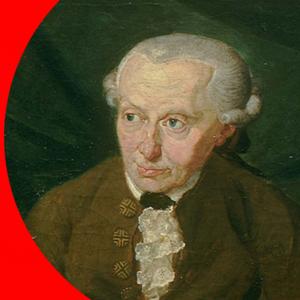
Kant's Philosophy

Kant's Philosophy

By The Voice of ReasonSociety & CulturePhilosophy
Download on the App Store

Kant's Philosophy episodes

  • Kant's philosophy - How are synthetic judgments a priori possible?

    The distinction of our judgments into analytic and synthetic ones is one of Immanuel Kant's greatest accomplishments. That metaphysics, the core of all philosophical science, was standing on a shaky foundation and was not yet a proper science, he had felt for a while. But now he could ground the attempt to turn it into a science on a single question, which was to become the central question of his project of a critique of pure reason: How are synthetic judgments a priori possible?

    Quote: 0:00
    The project of a critique of reason: 0:44
    What is a judgment?: 2:58
    Analytic and synthetic judgments: 7:06
    Judgments a priori and a posteriori: 17:15
    The importance of the distinction between analytic and synthetic judgments for metaphysics: 38:08
    How are analytic judgments possible?: 41:48
    How are synthetic judgments a posteriori possible?: 50:43
    The question of transcendental philosophy: How are synthetic judgments a priori possible?: 53:02
    The answer to this question must precede all metaphysics: 56:11
    Digression: The later doubt whether synthetic judgments a priori are possible at all, and what it means: 59:12
    Thanks: 1:10:35
    Overview over the types of judgments according to Kant:
    https://jonathanivoloewer.de/wp-content/uploads/2024/07/Types-of-judgments-according-to-Kant.jpg
    The best and most concise explanation by Kant of this topic might be the one in the introduction (IV. of the 2nd edition) to the Critique of Pure Reason: https://www.gutenberg.org/files/4280/4280-h/4280-h.htm
    Whoever wants to support my aufkläring work can do so via:
    https://ko-fi.com/jonathanivoloewer
    https://www.patreon.com/jonathanivoloewer
    https://www.paypal.com/donate/?hosted_button_id=VDDT7T7XHR77U
    Thumbnail: www.hotpot.ai

    1 hr 12 min
  • Kant's philosophy - Criticism as an answer to dogmatism and scepticism

    Kant’s critical philosophy is an answer to the philosophy that came before and can be properly understood only in this context. All pure philosophy, i. e. metaphysics, was done in a dogmatic or sceptical way before Kant: there was either a blind faith in or a blind distrust of pure reason and its ability to answer the big questions of metaphysics concerning God, freedom and immortality. With criticism Kant found a solution, by first examining reason itself, its abilities and its limits, before examining any metaphysical objects through reason.

    Quote: 0:08
    The critiques gave Kant importance and fame beyond his own day: 1:44
    Digression: Unaufkläred people are imprisoned in the moment: 6:02
    Kant’s copernican turn in philosophy and what came before it: 17:24
    Dogmatism: 21:41
    - The dogmatics: 26:12
    - Reason of dogmatism: 34:43
    - The conflict of different dogmatisms births scepticism: 43:20
    Scepticism: 59:36
    - The sceptics: 1:07:01
    - The role of the sceptics: 1:15:02
    - Misology as the result of the conflict between dogmatism and scepticism: 1:18:02
    Criticism: 1:30:03
    - Metaphysics and history are the sciences which need a critical propaedeutics: 1:57:56
    - The elements of the critique: 2:03:38
    - The betrayal of Kant’s critical project: 2:07:15
    The history of thought is now taken to be only a patchwork: 2:22:18
    Thanks: 2:31:20
    Overview of the sciences needing critique according to Kant:
    https://jonathanivoloewer.de/wp-content/uploads/2024/07/sciences-needing-critique-according-to-Kant.jpg
    Kant says some words about his view of pre-critica philosophy in various parts of his work wherever he’s speaking about the critical philosophy. As the most exhaustive description I recommend his What real progress has metaphysics made in Germany since the time of Leibniz and Wolff? http://korpora.org/kant/aa20/253.html (I could not find a free English translation online.)
    If someone is interested in Kant dealing in a polemical way with the dogmatism of his days, he should read his text On a discovery whereby any new critique of pure reason is to be made superfluous by an older one: https://archive.org/details/kanteberhardcont0000kant It is fit to get acquainted both with the disputed questions of that time as well as the state of academic philosophy back then. However it also deals with some metaphysical subtleties, which won’t interest someone seeking an introduction to Kant’s thinking; reading it is therefore only
    recommended as a supplement and a deeper dive after first reading other works.
    Whoever wants to support my aufkläring work can do so via:
    https://ko-fi.com/jonathanivoloewer
    https://www.patreon.com/jonathanivoloewer
    https://www.paypal.com/donate/?hosted_button_id=VDDT7T7XHR77U
    Thumbnail: www.hotpot.ai

    2 hr 32 min
  • Kant's philosophy - What and how should one read?

    Kant gives various pieces of advice, both on what to pick for reading and on how to read a book. In a time which is lost and not capable of telling the good from the bad, and in which reading as an art is taught almost nowhere and mastered by almost no one, such pieces of advice are more important than ever.

    Quote: : 0:08
    Introduction: 0:51
    What one should read: 4:50
    How one should read:
    - Changing what you read: 20:56
    - A scholarly work should be judged by the intellect, not by sensuality: 24:45
    - Always take something away from reading: 28:07
    - Sceptical, critical and most of all sympathetic reading and understanding the author better than he understood himself: 28:49
    - Most of all understanding the idea of an author: 51:54
    Thanks: 1:07:20
    Kant's advice on reading can be found scattered throughout his work. Mostly one can find it in his lecture on Philosophical Encyclopedia: https://archive.org/details/kantsgesammeltes0000kant/page/n9/mode/2up (I don't know of any English translation.) and his lectures on Logic: https://archive.org/details/kantsgesammeltes241imma | https://archive.org/details/kantsgesammeltes242imma/page/n7/mode/2up (I don't know of any English translation.) and in his handwritten estate on Logic: http://korpora.org/kant/aa16/ (I don't know of any English translation.) The ending of his On a discovery whereby any new critique of pure reason is to be made superfluous by an older one: http://korpora.org/kant/aa08/247.html (I don't know of any English translation.) and the appendix to the first section of his Conflict of Faculties: http://korpora.org/kant/aa07/036.html (I don't know of any English translation.) also give some insight and a concept of how he read texts like the writings of Leibniz or the Bible.
    Whoever wants to support my aufkläring work can do so via:
    https://ko-fi.com/jonathanivoloewer
    https://www.patreon.com/jonathanivoloewer
    https://www.paypal.com/donate/?hosted_button_id=VDDT7T7XHR77U
    Thumbnail: www.hotpot.ai

    1 hr 8 min
  • Kant's philosophy - Kant's methods of thinking: Sympathetic method

    Absolute error is not possible, for something absolutely wrong would not seem true to anyone. Every position must therefore contain at least a partial truth. Kant’s thinking was grounded in sympathy for his fellow human beings, even in their errors. Whoever disagreed with him was not considered an opponent by him but someone with whom he wanted to participate in the common search for truth. Because of this his sympathetic method came completely naturally to him, which led him, whenever there was a conflict between two position which both were supported by sharp-minded thinkers without any private interests in the matter, to always seek a middle path and unite both of them in a third position.

    Quote: 0:08
    The sympathetic method: 0:56
    Every error is only a partial one: 2:51
    One should with sympathy look for where the other is correct: 24:59
    How one can convince other people: 32:04
    One cannot heal the dead, but only what is alive through supporting the life within it: 37:51
    The conflict about truth should be a conflict amongst friends: 58:28
    The middle path between two opposing positions: 1:07:27
    The possible Chinese influence on Kant: 1:15:13
    The importance of the sympathetic method: 1:21:42
    The influence of Kant’s sympathetic method on following thinkers: 1:34:13
    Thanks: 1:38:31
    Kant has, like most philosophers, not written a proper methodological work. Remarks on the method can best be found in his Philosophical Encyclopedia: https://archive.org/details/kantsgesammeltes0000kant/page/n9/mode/2up (I am not aware of any English translation.) In his Logic: https://korpora.org/kant/aa09/001.html (English translations exist, but I couldn't find any for free on the internet.) And in the lectures on logic: https://archive.org/details/kantsgesammeltes241imma | https://archive.org/details/kantsgesammeltes242imma/page/n7/mode/2up (I am not aware of any English translation.) But also sprinkled throughout other, mostly theoretical works. The best advice I can give to those who are mostly interested in his methods however, is to not just demand a theory of method but to get to know the method through its application.
    Kant's first work, Thoughts on the true estimation of living forces and assessment of the demonstrations that Leibniz and other scholars of mechanics have made use of in this controversial subject, together with some prefatory considerations pertaining to the force of bodies in general: http://korpora.org/kant/aa01/001.html (English translations exist, but I could not find a free one online) and his essays On the use of teleological principles in philosophy: https://de.scribd.com/document/77984687/Kant-Onthe-Use-of-Teleological-Principles-in-Philosophy and Settlement of a Mathematical Dispute Founded on Misunderstanding:
    http://korpora.org/kant/aa08/407.html (English translations exist, but I could not find a free one online) can serve as an example for Kant's employment of the sympathetic method. Especially the first two texts, dealing with physical and biological questions rspectively, may nowdays not be read so much for their content regarding natural science, but they are still very much worth a read in order to better understand Kant and his method, for here especially he doesn't simply construct a philosophical system but is dealing with opposing position, and therefore one can get an understanding of in what manner he does so.
    Whoever wants to support my aufkläring work can do so via:
    https://ko-fi.com/jonathanivoloewer
    https://www.patreon.com/jonathanivoloewer
    https://www.paypal.com/donate/?hosted_button_id=VDDT7T7XHR77U
    Thumbnail: www.hotpot.ai
    #KantsPhilosophy #Kant #thinking #Aufklärung #philosophy #JonathanLöwer #SapereAude #courage #morality #SentireAude #historyofphilosophy #method #Bilfinger #daoism #dialectic

    1 hr 39 min
  • Kant's philosophy - Kant's methods of thinking: Critical method

    Arguments and alleged proofs can be found for any opinion, no matter how wrong. And the opposing side believes in its arguments as much as one does in one’s own. It’s therefore not enough to just refute the other position in a conflict about truth and to simply prove one’s own position. One should always also ask how the other opinion, if it was indeed wrong, can still seem correct to its adherents. The critical method is about seeking the principles behind an opinion and assuming the perspective from which it had to seem true, and seeks to block the sources of the illusion. It is this method which Kant employs in his critique of reason.

    Quote: 0:08
    The critical method: 1:33
    How is error possible?: 3:55
    Preliminary and determining judgments: 28:47
    Seeking and blocking the sources of the error: 41:51
    Arguments are overrated: 47:47
    There is a lack of self-criticism: 55:27
    The importance of the critical method: 1:09:24
    As an aufklärer I employ the critical method in particular: 1:21:07
    Thanks: 1:25:07
    Kant has, like most philosophers, not written a proper methodological work. Remarks on the method can best be found in his Philosophical Encyclopedia: https://archive.org/details/kantsgesammeltes0000kant/page/n9/mode/2up (I am not aware of any English translation.) In his Logic: https://korpora.org/kant/aa09/001.html (English translations exist, but I couldn't find any for free on the internet.) And in the lectures on logic: https://archive.org/details/kantsgesammeltes241imma | https://archive.org/details/kantsgesammeltes242imma/page/n7/mode/2up (I am not aware of any English translation.) But also sprinkled throughout other, mostly theoretical works. The best advice I can give to those who are mostly interested in his methods however, is to not just demand a theory of method but to get to know the method through its application.
    No better example can be studied when it comes to Kant’s use of the critical method than the Critique of Pure Reason: https://www.gutenberg.org/files/4280/4280-h/4280-h.htm
    Whoever wants to support my aufkläring work can do so via:
    https://ko-fi.com/jonathanivoloewer
    https://www.patreon.com/jonathanivoloewer
    https://www.paypal.com/donate/?hosted_button_id=VDDT7T7XHR77U
    Thumbnail: www.hotpot.ai

    1 hr 26 min
  • Kant's philosophy - Kant's methods of thinking: Skeptical method

    Kant’s sceptical method marks the beginning of his critical turn and his critique of reason sprang from it. It is about suspending one’s judgment until one has thoroughly looked at the pros and cons while making each side as strong as possible.

    Quote: 0:00
    The methods of truth finding: 0:56
    Suspending one’s judgment: 3:55
    Making both sides strong: 18:59
    Where to apply the sceptical method: 54:06
    Thanks: 57:12
    Kant has, like most philosophers, not written a proper methodological work. Remarks on the method can best be found in his Philosophical Encyclopedia: https://archive.org/details/kantsgesammeltes0000kant/page/n9/mode/2up (I am not aware of any English translation.) In his Logic: https://korpora.org/kant/aa09/001.html (English translations exist, but I couldn't find any for free on the internet.) And in the lectures on logic: https://archive.org/details/kantsgesammeltes241imma |
    https://archive.org/details/kantsgesammeltes242imma/page/n7/mode/2up (I am not aware of any English translation.) But also sprinkled throughout other, mostly theoretical works. The best advice I can give to those who are mostly interested in his methods however, is to not just demand a theory of method but to get to know the method through its application.
    The transcendental dialectic, especially in its antinomies, in the Critique of Pure Reason is the best example for the application of the sceptical method by Kant: https://www.gutenberg.org/files/4280/4280-h/4280-h.htm#chap73
    Whoever wants to support my aufkläring work can do so via:
    https://ko-fi.com/jonathanivoloewer
    https://www.patreon.com/jonathanivoloewer
    https://www.paypal.com/donate/?hosted_button_id=VDDT7T7XHR77U
    Thumbnail: www.hotpot.ai

    58 min
  • Kant's philosophy - Kant's scientific method: Architectonic

    The methods of a philosopher are, despite often being overlooked, of great importance for understanding his thoughts, which after all he arrived at only through those methods. Die architectonic method is described by Kant as the art of systems. And since according to him science is nothing but systematic cognition (https://youtu.be/5TmzPA8_qNE?si=ysx2fHXcjTzTpU9L), the architectonic is the method to create a science. As the masons and carpenters should build a house after the plan of an architect, so the scientists as technicians of reason should build their science after the plan of a philosopher as lawgiver of reason (https://youtu.be/YP2Dt6lILSA?si=MAu0cub-kBrJ3Gup). Kant himself is architectonic like hardly any other thinker, and can only be understood and also judged properly once one understands his architectonic.

    Quote: 0:00
    The importance of looking at the methods of a philosopher: 0:12
    Kant's methods: 8:21
    The architectonic method: 8:51
    The architectonic of a science needs an idea and is the task of the philosopher: 16:39
    The role of the architectonic in Kant's philosophy: 34:05
    The table of categories and the nature of man as keys to Kant's architectonic: 55:54
    Thanks: 58:31
    Kant has, like most philosophers, not written a proper methodological work. Remarks on the method can best be found in his Philosophical Encyclopedia: https://archive.org/details/kantsgesammeltes0000kant/page/n9/mode/2up (I am not aware of any English translation.) In his Logic: https://korpora.org/kant/aa09/001.html (English translations exist, but I couldn't find any for free on the internet.) And in the lectures on logic: https://archive.org/details/kantsgesammeltes241imma | https://archive.org/details/kantsgesammeltes242imma/page/n7/mode/2up (I am not aware of any English translation.) But also sprinkled throughout other, mostly theoretical works. The best advice I can give to those who are mostly interested in his methods however, is to not just demand a theory of method but to get to know the method through its application.
    A brief explanation of what the architectonic is, as well as an overview of the architectonic of philosophical ciences Kant gives in the corresponding section of the doctrine of methods in the Critique of Pure Reason: https://www.gutenberg.org/files/4280/4280-h/4280-h.htm#chap106
    Whoever wants to support my aufkläring work can do so via:
    https://ko-fi.com/jonathanivoloewer
    https://www.patreon.com/jonathanivoloewer
    https://www.paypal.com/donate/?hosted_button_id=VDDT7T7XHR77U
    Thumbnail: www.hotpot.ai

    1 hr
  • Kants philosophy - The philosopher and his conflict with the other faculties

    The philosopher is not simply a scholar among others to Kant, but has a very special position and plays a very special role in the state. Unlike the priest, state official or physician he doesn't serve the world that is but the world that ought to become; he isn't directly useful, has no function in society - but for that very reason he can take responsibility for the aufklärung and the progress of humankind. The conflict of the three higher faculties of university - theology, jurisprudence and medicine - with the philosophical one concerned Kant throughout many of his writings. It may often be ignored or treated as a side matter, but it is the key to understanding Kant's philosophical aim and project. On top of that it is also of great importance in today's world.

    Quote: 0:08
    Who is a philosopher according to Kant: 1:25
    Who isn't a philosopher according to Kant: 10:50
    One cannot learn philosophy, one can only learn to philosophise: 30:50
    The conflict of philosophy with the other faculties: 38:28
    1. Philosophy is rationalistic, the other faculties are empiricist and therefore positivistic: 46:25
    2. The teaching of philosophy is negative, that of the other faculties is positive: 1:15:21
    3. Philosophy is free to do parrhesia, the other faculties have authority and at the same time are subjected: 1:28:34
    4. Philosophy stands for morality, the other faculties hold that being good is not good enough: 2:15:43
    The four differences between the faculties follow the order of the table of categories: 2:21:57
    The conflict of faculties is an important topic: 2:26:10
    a) The conflict of faculties is a key to understanding Kant's philosophical aim: 2:26:25
    b) The conflict of faculties rages in our present time too: 2:32:46
    It is time for philosophers and laymen to take seriously the task set by Kant: 2:58:51
    Thanks: 3:03:57
    To understand how Kant characterises each of the four faculties and how he explains the conflict of the higher ones with the philosophical one, those who are interested should read the introduction and the I. part in the first section of the Conflict of Faculties: http://kant.korpora.org/Band7/017.html (English translations exist, but I couldn't find a free one on the net.) Reflection 430 from his handrwitten estate on anthropology is very illuminating as well: http://kant.korpora.org/Band15/172.html (I don't know of an English translation.)
    Whoever wants to support my aufkläring work can do so via:
    https://ko-fi.com/jonathanivoloewer
    https://www.patreon.com/jonathanivoloewer
    https://www.paypal.com/donate/?hosted_button_id=VDDT7T7XHR77U
    Thumbnail: www.hotpot.ai

    3 hr 5 min
  • Kant's philosophy - The philosopher as a healer

    Medicine and philosophy seem to have nothing to do with each other nowdays. But for Kant the philosopher can do healing work and his moral commandments can serve health at the same time. He himself dealt with his body which was sickly throughout all his life in a philosophical manner and thereby kept in good health, without needing a physician. His thoughts on health serve as an excellent example for what he understood by the philosopher in the world sense, that is by the wise lawgiver of reason. But the healing work of the philosopher is strictly separate from that of the physician, for the one is a salutologist, the other a pathologist.

    Quote: 0:08
    Kant’s thought on the philosophical art of healing serve as an example for his world concept of the philosopher as a wise lawgiver of reason: 0:28
    On the connection of medicine and philosophy: 3:45
    Kant’s two distinctions between the physician and the healing philosopher: 6:40
    1. The physician is concerned with therapeutics, the philosopher with dietetics: 10:14
    2. The physician heals through the body, the philosopher through the mind: 37:11
    Digression: The controversy between the mechanists and the animists in 18th century medicine: 45:03
    Die philosophical healing art is about dealing with the body and the sickness in an aufkläred manner: 51:15
    The connection of the two distinctions: The physician is a pathologist, the philosopher is a salutologist: 1:13:16
    A moral life is a healthy life: 1:18:25
    Kant's own health and the way he dealt with it: 1:26:40
    Thanks: 1:32:50
    Overiew of Hippocratics according to Kant: https://jonathanivoloewer.de/wp-content/uploads/2024/06/Hippocratics-according-to-Kant.jpg
    Whoever is interested in the topic of this lecture, can read the third part of the Conflict of Faculties: http://kant.korpora.org/Band7/095.html or Kant's De Medicina Corporis, quae Philosophorum est (in English translation On Philosopher's Medicine of the Body): http://kant.korpora.org/Band15/939.html (English translations to both exist, but unfortunately I couldn't find them for free on the internet).
    The latter text, though far less well-known, is probably more enlightening theoretically, on the other hand the former one is full of self observations and advice on a healthy lifestyle and therefore still interesting today from an aufkläring perspective - less so because one should slavishly follow it, but because of the inspiration to observe oneself and to deal with one's body as a perpetrator. The best would be to read both short texts together. On top one may read Kant's Handwritten Estate on medicine: http://kant.korpora.org/Band15/954.html
    (I am not aware of an English translation.)
    Whoever wants to support my aufkläring work can do so via:
    https://ko-fi.com/jonathanivoloewer
    https://www.patreon.com/jonathanivoloewer
    https://www.paypal.com/donate/?hosted_button_id=VDDT7T7XHR77U
    Thumbnail: www.hotpot.ai
    #KantsPhilosophy #Kant #thinking #Aufklärung #philosophy #JonathanLöwer #SapereAude #courage #morality #SentireAude #historyofphilosophy #wisdom #medicine #Nietzsche #stoicism #epicureanism

    1 hr 33 min
  • Kant's philosophy - What is wisdom?

    Philosophy is not fully characterised by its school concept according to Kant, it is more than just a science, more than mere metaphysics. The true philosopher must be wise. But wisdom is foremost practical, it is the idea of the necessary unity of all purposes. Through this the role of the philosopher is determined: He shall not just use reason as a technician of reason to reach various arbitrary purposes like the regular scientists, but he shall be a lawgiver of reason who sets his eyes on the purpose and vocation of humanity.

    Quote: 0:08
    Repition: 2:02
    The philosopher according to the world concept is the sage: 5:16
    Wisdom and foolishness: 12:12
    Unity of all purposes can only be achived through orientation on the highest good, that is through morality: 30:01
    Out of arationalism people today believe in neither wisdom nor morality: 41:22
    By lawgiver Kant doesn't mean the author of the laws but the author of the compulsion to follow the law: 49:48
    The technician of reason and the lawgiver of reason: 59:45
    Through the world concept of philosophy the central role of metaphysics in philosophy according to the school concept is explained: 1:09:15
    The horizon of our cognition and action must be set dynamically according to our abilities or teleologically according to our purposes: 1:14:43
    Every human ought to be a philosopher in the world sense: 1:34:42
    The three or four Kantian questions: 1:57:28
    Thanks: 2:10:04
    A complete overview of Kant's understanding of philosophy according to its school concept as well as its world concept can best be found in his lecture on philosophical encylopedia (Philosophische Enzyklopädie),
    which on top of that also outlines the basis of his critical philosophy and can be recommanded as a starting point, because it is both short and easy: https://archive.org/details/kantsgesammeltes0000kant/page/n9/mode/2up (I don't know of an English translation.)
    The third chapter of the transcendental doctrine of method in the Critique of pure Reason also speaks about the world concept of philosophy: https://www.gutenberg.org/files/4280/4280-h/4280-h.htm#chap106
    Finally Kant contrasts the world concept and the school concept in his lectures on logic, meant as an introduction to philosophy and scholarship: On logic you may read Kant's Logic: http://kant.korpora.org/Band9/001.html Since this was only published by his student Jäsche and is deficient, I rather recommend Kant's lextures on logic:
    https://archive.org/details/kantsgesammeltes241imma/page/n5/mode/2up | https://archive.org/details/kantsgesammeltes242imma/page/n7/mode/2up
    (English translations exist, but unfortunately I couldn't find them for free on the internet.)
    Whoever wants to support my aufkläring work can do so via:
    https://ko-fi.com/jonathanivoloewer
    https://www.patreon.com/jonathanivoloewer
    https://www.paypal.com/donate/?hosted_button_id=VDDT7T7XHR77U
    Thumbnail: www.hotpot.ai

    2 hr 11 min

About Kant's Philosophy

From the publisher's feed

300 years ago Immanuel Kant was born - and I want to dedicate an extensive series of lectures to his whole philosophy. I spent the past year studying the 29 volumes of Kant's collected works and…