
Sign up to save your podcasts
Or



Since antiquity metaphysics is considered the first philosophy and for Kant also it is the core of what he calls philosophy according to the school concept. It is pure rational cognition through concepts, a completely speculative and not empirical science.
By philosophy according to the school concept Kant understands a kind of rational science. Philosophical science is different from mathematics in that it is rational cognition from concepts, while the latter is rational cognition from the construction of concepts in intuition. It is further divided into a formal and material science, the latter in turn being made up of theoretical and practical part.
Overiew over philosophy according to Kant:
Philosophy can be understood according to the school concept and according to the world concept, Kant says. According to the school concept philosophy is a science. Before its concept can be explained in the three upcoming lectures, it therefore is necessary to first become clear about what science is. For Kant it is essentially: systematic cognition.
Overiew over science according to Kant: https://jonathanivoloewer.de/wp-content/uploads/2024/05/Science-according-to-Kant.jpg
I also want to repeate a remark that my very observant listener and supporter Garnau Klaufen made under the German video: I say that according to Kant there are three types of connections: Of a thing with its own attributes, subordination and coordination. This means that the concept of connection is divided into three concepts by Kant. Since in the same lecture I say that according to Kant logical divisions are always divisions into two (dichotomy), one could come to the wrong conclusion that this is an emperical division, as these, as I explain, can divide a thing or concept into more than two parts (polytomy). However, as I mention in the lecture, the three types of connections Kant bases on his table of categories where there are three types of relations (substance, causality, community). And these three categories are actually a result of a transcendental division - the type of division I didn't get into in this lecture but which actually always results in three parts (trichotomy). I well get further into the transcendental divisions and the categories in a later lectures but wanted to clear up possible misunderstandings right away: These three types of connection aren't a willful empirical division Kant makes, but a necessary transcendental one, meaning there can't be more or less.
Before I will speak about Kant's thinking in the upcoming lectures, I first want to give a frame for that and therefore say some words about his life. Private details however shall not be my focus as much as his intellectual development and an overview over his intellectual activities during the different periods of his life.
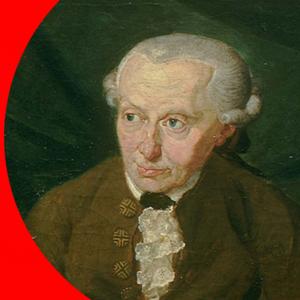
300 years ago today Immanuel Kant was born - and with this I'm announcing an extensive series of lectures which shall be dedicated to his whole philosophy. I spent the past year studying the 29 volumes of Kant's collected works and reading at least a 100 pages of Kant every day, in order to now provide the probably most comprehensive and most
From the publisher's feed