
Sign up to save your podcasts
Or

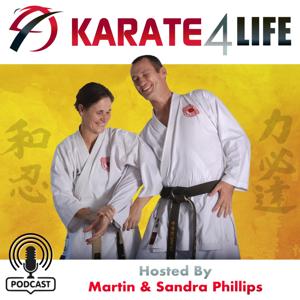


We're very excited to be introducing an incredibly deep topic in this episode, but to be honest we feel like we're only just scratching the surface.
It's a bit of a technical topic, but it's also a great metaphor for life.
In the dojo, we always ask the question, "What is it that I need to focus on the most that will have the biggest impact on what I'm trying to do?" In going as deep as you can on these concepts in this podcast you'll always find a good answer to this question.
Hopefully it is more than enough to get you curious and keen to learn more. This episode is just a start, in upcoming episodes we will go deeper and explore each of the elements of this concept in greater detail.
Sandra: Hey everyone, this is Martin & Sandra Phillips and welcome back to the Karate 4 Life Podcast.
Sandra: Today we want give you an introduction to the basics of karate and life.
Martin: Otherwise know as ichi gan, ni soku, san tan, shi riki.
We've noticed that everyone faces challenges in life, some big some small. But not everyone has a way to navigate these problems.
Sandra: It’s not always easy, but we’ve found that we always keep coming back to what we’ve learned from our years in the dojo.
Martin: And that’s what this podcast is about...
Sandra: Helping us all find the solutions to life’s problems...
Martin: Or even better yet, to remove the problems before they arise.
Sandra: This is Martin & Sandra Phillips and welcome to the Karate 4 Life Podcast.
Sandra: Wow, Martin I can't believe we're actually doing this one today. To be honest with you, when you first mentioned this, I thought, "You can't be serious." This is just--
Martin: It's a bit of a deep topic this one, isn't it?
Sandra: It's so deep. It's insanely deep. I don't know how to explain it. It's going to be a tough few episodes for us coming up, I think, because we're only going to be scratching on the surface, if that.
Martin: Yes, this is a bit like that. This really is the foundation for everything that we do in the dojo. We look at this concept, ichi gan, ni soku, san tan, shi riki, and it is the basis of all basics. It's the basis of everything that we do, not just in the dojo, but it's a fantastic metaphor for life as well, as we take these lessons outside of the dojo as well.
Sandra: Yes. Even, I guess, right now, you could say, "A long story made short," just really appreciate these concepts and really apply them and go deep as you possibly can.
Martin: We probably should explain what they are, shouldn't we?
Sandra: We really should do that, yes. Okay. In the intro, we mentioned ichi gan, ni soku, san tan, and shi riki. I'm going to hand it over to you, because you're our Japanese kanji expert. If you could please do a little bit of a quick meaning of these four.
Martin: Yes. Ichi gan, this first, is the eyes.
Sandra: Ichi means number one, right?
Martin: Number one. Ichi gan, yes. First, the eyes. Ni soku, the second, is legs or the stance.
Sandra: Ni is number two and Soku is legs.
Martin: San tan-- I'm going to pause here for a moment, because this one's often mistranslated and, to be honest, there's not really a great English version of this. San tan is often translated as tanden-- not really a translation, but just a Japanese word used. Tanden refers to the energy center in your body located in your lower abdomen. San tan is literally liver.
Sandra: Yes?
Martin: The liver. It kind of sounds a bit strange, but we'll get to that later.
Sandra: We'll get to that.
Martin: Shi riki, this fourth, is power. When you add these first three together, ichi gan, ni soku, san tan, shi riki-- because shi equals riki, that's the power.
Sandra: Like a birthday cake. There's your ingredients; 1 + 2 + 3 = your cake that you just baked in the oven.
Martin: That's the one. Yes. Good way to describe it.
Sandra: If you think of it like that, we're going to be all good to go. All right. Let's go just a little bit deep on this one. You've been to Japan many, many, many centuries ago.
[laughter]
Martin: Many times over the years, let’s say.
Sandra: I'm just playing. I'm just funny. I'm being a bit cheeky, sorry.
Martin: You do that, don't you?
Sandra: I do. I do play along. Okay. You did do some wonderful work with the help of many people to help to do some translating. Do you want to share a bit of that, what your translation was?
Martin: This was back when I spent nearly a year living in Japan and training full-time back in 97-98, over 20 years ago now. I was very fortunate to have the opportunity to do some translation work on Soke’s Kyohon. Soke is my teacher. He's the head of Chito-Ryu worldwide. His teaching manual, there was only a Japanese version of that, and I had the opportunity to translate, with the help of a lot of people-- I might actually hand over to you to read just a brief excerpt about the ichi gan, ni soku, san tan, shi riki.
Sandra: Yes, sure thing. Okay. Gan, which is the eyes, number one: "It is said that the spirit of a person is shown most through the eyes. In budo, gan represents the power of insight into the movements of the opponent's body, spirit, etc." Then, we have soku: "The legs are the basis of all movement and posture. Always take care to unconsciously have correct and smooth-stepping motion, stance, and way of evasion." Then we have tan, the one that you love to talk about so much, refers to the liver.
Martin: I'm going to butt in just really quickly just to--
Sandra: I knew you would.
Martin: Yes, you knew I would. Just a little bit of an aside. Although it refers to liver, I like to look at this one as referring to the gut, or the grit or determination. It also does tie in with the tanden, this all-encompassing thing, but the tanden alone is probably a little bit shallow.
Sandra: Yes. In some of my research, I've also learned that they refer to the tan in terms of bravery and determination.
Martin: It's that emotional element or the spirit-- You've probably heard of the saying, "It's not the size of the dog in the fight, but the size of the fight in the dog." This is kind of like that. It's that extra element that you bring in outside of the physical technique.
Sandra: I love it. We'll come back to that in the future, I'm sure. Then, we have--
Martin: Sorry, I’d better let you keep reading. I'm cutting in you there.
Sandra: Yes, thank you. Should I start again or we'll just go back to where I was up to?
Martin: Back to where you’re up to.
Sandra: Okay. "Tan power is the foundation for cultivating Ki power, will power, perseverance, and endurance. By cultivating Tan power, spirit sickness, known as Shikai, and other such weaknesses are gone. Correct judgment ability results and bold attacks are possible." It's so cool, isn't it?
Martin: That is really cool.
Sandra: Dig deep on that one everyone. Then, shi riki is technique. "Through diligent training of Kata and Kumite, technique will develop naturally."
Martin: The interesting one on this-- I'm just going to cut in on that one as well. Shi riki, although it says technique, the kanji character for riki is actually power. The way you do technique also adds to the power.
Sandra: Love it. All right. I know you want to do a little bit deeper, but we're running out of time, really, for today. Do you want to just quickly look at, maybe, a surface-level idea of your thoughts on how this works in life-- just really briefly?
Martin: Just a really brief one. A few months ago, we had a little bit of a brainstorming session. We might share this with everybody. We were looking at how do we apply this ichi gan, ni soku, san tan, shi riki to a business plan, and that was a really, really interesting process. It allowed us to really quickly give a snapshot of where we're at and where we're going.
Looking at the eyes, this is how you interpret what's going on around you and looking forward and how you take in the world, how you interact with people.
Ni soku, that's your grounding. What are the foundations that you have in your life, in your business, in whatever you're doing.
San tan that's the grit and determination, "Okay, let's just do this. Let's fight for this."
Shi riki, that's all the technical stuff. That's all the step-by-step processes, in a business context, that allows us to move forward and correct some powerful movement forwards.
Sandra: It's a very exciting topic, isn't it?
Martin: It really is. It really is.
Sandra: It really gets you excited. It's very hard to get you excited. Yes, I'm really excited to see where this one goes these next few episodes, and if we can help other people to, I guess, be inspired to learn more about ichi gan, ni soku, san tan and shi riki, because it's such a powerful way to not only enhance the training in the dojo, but also to put more life into their own lives as well, and their family.
Martin: Yes. It's a really exciting topic. I can't wait to get a little bit deeper into each of those different elements.
Sandra: Okay. Just so everybody knows, we'll be looking at one episode per idea here. Ichi gan will have its own episode, do you think? Or do you think we'll just do a couple of --
Martin: I think we'll try and give them one each, because, as you said, this is something you really can spend a lifetime studying, so we'll aim to give an episode each, I reckon.
Sandra: Fantastic. Very excited.
Martin: Thanks for listening to today's episode of the Karate 4 Life Podcast.
Sandra: If you found this episode useful, please comment on our website karate4life.com
Martin: Share it with your friends via social media and don't forget to tag us #karate4lifepodcast.
And if you've got a topic that you’d like us to cover in future episodes or questions about karate or life...
Sandra: Please send us a message, we'd be more than happy to share our thoughts.
Martin: Thanks again for joining us and stay tuned for the next episode which will look deeper at the first element of ichi gan, ni soku, san tan, shi riki - the eyes.
How good would it be if you could get a 1% return on investment?
Well… if you thinking 1% per annum like the banks give you, then it's probably not so attractive.
But what about if it’s 1% per week or even 1% per day, compounded?
Sounds too good to be true, but it's possible.
Full disclosure: This episode is about personal growth, not finances. But if properly applied, this could also have a very positive effect on your finances if that's your focus.
We want to help you make a shift in mindset that allows you to create this kind of growth through consistent effort and a push towards continual improvement.
Think about it, let's say there's something that you really like to do and you do it on a regular basis… like karate ;-)
Every time you train, you aim to improve by just 1%. If you can do that, how quickly do you think you could be twice as good compared to your starting point?
This is the basis of the rule of 1%, but it doesn't stop there.
Martin: Hey everyone, this is Martin & Sandra Phillips and welcome back to the Karate 4 Life Podcast.
Sandra: Today we want to talk about, ‘The Rule of 1%.’
Martin: We've noticed that everyone faces challenges in life, some big some small. But not everyone has a way to navigate these problems.
Sandra: It’s not always easy, but we’ve found that we always keep coming back to what we’ve learned from our years in the dojo.
Martin: And that’s what this podcast is about...
Sandra: Helping us all find the solutions to life’s problems...
Martin: Or even better yet, to remove the problems before they arise.
Sandra: This is Martin & Sandra Phillips and welcome to the Karate 4 Life Podcast.
Sandra: Okay, today, Martin, we wanted to look at one of the most powerful habits that we've come to learn over time. I guess initially in our journeys we didn't really realise we're even doing this when we're quite young, but I guess when you're teaching for a long time, you soon come to realise the power of this habit. I'm going to hand over to you to share a bit more about this habit.
Martin: All right. In one of the previous episodes, we've talked about the idea of a growth mindset and that the idea of seeking continual improvement. One of the really powerful ways to do that is through this "Power of 1%", we call it. This idea of growing just 1% every time you do something, and you just add a little bit better, a little bit better, a little bit better, and then over a period of time, you see a whole lot of change.
Sandra: Okay, so you've been training for how many years now?
Martin: Just a couple.
Sandra: Just a couple of years. How many years is a couple?
Martin: 36 years.
Sandra: Okay, so 36 years. In 36 years, is there any examples that come to mind where you can see this in your journey of practicing, striving to be 1% better?
Martin: It's one of those things. I wouldn't say that I've ever been a fast learner. I pick things up quickly, but I wouldn't say I've at any one stage, I've progressed through the ranks very quickly. It's always been a fairly constant, steady path forward for me. With that in mind, I guess my whole journey has been about little by little, step by step, going that little bit further.
Sandra: That's great. I think one of the things that you're most famous for in our dojo is "You just gotta turn up."
Martin: You just keep turning up.
Sandra: You gotta keep turning up. You keep on saying to everybody. When you keep turning up, do you think of it in terms of, "I'm going to keep turning up, but do it better this time?"
Martin: Oh, absolutely. Absolutely. That's the goal, that's the underlying thing. It's not just turn up and go through the motions and come back and do it all the same again. If you do it all the same again, you're going to end up in the same place in 10 years' time. In taking that small-- Even if it's the smallest step forward, whatever it is, if you see some kind of improvement in every lesson that you do, then you can't help but grow.
Sandra: Okay. As a student-- When you go to the dojo now as a student, just to help some other people think of this. When you go into the dojo, what are you thinking as far as-- What are you trying to focus on in terms of being 1% better? Is it the way you bow? Is it the way you speak? Is the way you interact with others? Is there something that comes to mind?
Martin: There's lots of things that could potentially be there. I think this is where a lot of people make a mistake with this 1% better thing. They focus too much on the results. Let's say, in the dojo, for example, they focus on "What's the next belt? I've got to get to the next belt. I've got to get to the next belt." Rather than focusing on "What are the things that are going to help me get to the next belt?"
If you focus on those things, as a beginner, you're focusing on just getting good form in your technique. You're focusing on improving the way that you step, so getting your feet in the right positions. Every time you do it, you think, "Okay, that didn't quite feel right," or my teacher came along and gave me a little bit of a push and I fell over really easily. I've gotta adjust something, I got to change something and make it a little bit different.
In those early stages, you get a lot of direct feedback from your teacher. As you progress through a little bit further, you start to become a little bit more self-active, and hopefully start to start to look at things yourself and start to make self-corrections because you've received feedback many times, over and over and over again, and you start to realise, "I can do this myself."
Sandra: That's fantastic. If we go back in time, just a little bit in time when you were a brown belt. I remember you sharing this story with some of our black belts quite a while ago now. You mentioned the time that you went to your first brown and black belt session. I'd love to know more about that.
Martin: Yes. I was quite young when I first got my brown belt, relatively young. I can't remember how old now. I think it was just before I hit high school, I got my brown belt.
I remember going to a brown and black belt training session, and there was all these brown and black belts from different dojos all over the place. In my memory, at least, there were 20 or 30 people there, and because I'd just recently graded to brown belt, I was the last one in line, and there's all these people in front of me lined up. I remember making this a goal for myself that I didn't want to be the last one in line.
Over time, my goal was to move forward through those ranks. That was my goal, but the thing that helped me do that was the day-to-day basis of turning up in class and finding this 1% improvement, this continual improvement, improvement, improvement, improvement, and through that process of, ONE to turn up, TWO to turn up with the view of improving. That's allowed me to overtime now be one of the seniors, one of the more senior people in Australia.
Sandra: That's awesome. That's fantastic. It's a really great story to share with our younger people coming through. If we look at, in the dojo now when we're teaching, we will often have little prompts for our students; our younger students, our little champions. We often don't say, "1% better," because it gets glazed over in their eyes...
Martin: What's 1%?
Sandra: ... what is 1%? We will often say to the little champions, "Let's try and do it a little bit better."
Martin: Just that little bit better.
Sandra: Just a little bit better, and it's amazing how you can say to a little champion, "Let's kiai a little bit louder--"
Martin: It goes from volume 2 to volume 10 in one step.
Sandra: Yes, and they just roar, don't they?
Martin: They do.
Sandra: It's amazing. If that's their "little bit better" on their kiai, can you imagine what a little bit better with cleaning their bedroom is? Seriously.
Martin: Imagine that.
Sandra: [chuckles] It'd be insane.
Martin: Do you think we can try that with our teenagers?
Sandra: Yes, they're pretty cool. They're good kids.
Martin: [laughs]
Sandra: Okay. When we get to the karate kids and the adults who are obviously looking at, as far as to help them use their minds in a way, we do, I'll just say "1% better" to those guys, but we also plant seeds of thought and we teach them how to think when they're training. Can you share a bit more about that when you're teaching?
Martin: Thinking about this "1% better, 1% better, 1% better." I guess it starts right from when you first walk into the dojo. You walk into the dojo, the first thing to do is to just to clear your mind and come in with a clear head. Let go of whatever's been going on in your day. When we get into the dojo, we start the class with a meditation (mokusou) and that's the time when you're sitting down to get that focal point for what is it that you want to improve on? You're getting that focal point. It might just be, "Okay, today, I remember in my last lesson, I had this lesson and my teacher said, I've got to relax." You've never heard that before, have you heard?
Sandra: I've never heard that in my life.
Martin: [chuckles] You've never heard that before. "I've got to relax just a little bit more. Today, I'm going to focus on trying to relax my body through breathing. I'm going to focus on my breathing, relaxing my shoulders, and sinking down into my stance." If I keep that thought in the forefront of my mind in just whatever we do throughout the class, that's the focal point.
Sandra: Yes. Rather than letting your mind think of anything it wants to think about, you're pretty well telling your mind what to think about.
Martin: You're directing your mind right from the start.
Sandra: Directing your mind from the start. That's fantastic. If we were to take this outside the dojo-- For example, I love watching you being a better father. It's great watching you the way you interact with our kids. Obviously, from day one to now, it just gets more and more interesting watching you guys play. Can you share-- They're teenagers now; 13 and 15. Can you share a few things that you think about being a better father in your mind?
Martin: Oh, man. You put me in the spot there.
Sandra: I did.
Martin: Yes, I love that. Number one is just to be present. I know it's really easy to get distracted by anything. You're distracted by technology, distracted by work, distracted by other thoughts that are running around your head. The first one is to be present. That's probably one for me, personally, is to aim, to just be present, be available and play, get involved in whatever's going on.
Sandra: Yes, and you're one of those big fans of Mario Kart, yes?
Martin: Oh, yes.
Sandra: Very competitive in that household with Mario Kart, especially in the school holidays?
Martin: [laughs] Yes.
Sandra: That's right. Okay, so getting back to the topic of being 1% better. If we got to wrap this up and to encourage people, just in all areas of their life to try and be 1% better, can we get your final thoughts on that?
Martin: Final thoughts on being 1% better. Like I said with getting to the dojo, is to direct your mind. Start with a focal point. It doesn't have necessarily be the goal, but what's taking you towards that goal. What are the actions that you can do that are going to take you towards that goal and look at how you're doing those things and how you can do those things just that little bit better.
Sandra: I love it. I guess even if you're at home and the first thing you're getting out in the morning, of course, you do that. It might be gratitude moments, being grateful for the day moving forward, but rather than letting the day happen and unfold, it could be as simple as saying, "Let's make today that little bit better than we did yesterday...
Martin: Simple, simple.
Sandra: ...and deliberately put that seed in your mind and move forward in that way.
Martin: Thanks for listening to today's episode of the Karate 4 Life Podcast.
Sandra: If you found this episode useful, please comment on our website karate4life.com
Martin: Share it with your friends via social media and don't forget to tag us #karate4lifepodcast.
And if you've got a topic that you’d like us to cover in future episodes or questions about karate or life...
Sandra: Please send us a message, we'd be more than happy to share our thoughts.
Martin: Thanks again for joining us and stay tuned for the next episode which will be an introduction to the basics of karate and life, otherwise known as ichi gan, ni soku, san tan, shi riki.
It's great to get in the dojo and train, but it's even better to do it with your family.
Nothing says quality time with your family better than the opportunity to kick your child in the head or having them throw you to the ground and punch you.
In all seriousness though, getting into the dojo as a family is a great way to spend quality time, but the benefits don't stop there.
Normal family hierarchies can be turned on their head. Especially when the kids start training first which is often the case. In this case, the parents are the juniors and the kids are their seniors.
I love the way karate helps us look at things in a different way.
Martin: Hey everyone, this is Martin & Sandra Phillips and welcome to the Karate 4 Life Podcast.
Sandra: Today we want to talk about, ‘family time with a purpose.’
Martin: We've noticed that everyone faces challenges in life, some big some small. But not everyone has a way to navigate these problems.
Sandra: It’s not always easy, but we’ve found that we always keep coming back to what we’ve learned from our years in the dojo.
Martin: And that’s what this podcast is about...
Sandra: Helping us all find the solutions to life’s problems...
Martin: Or even better yet, to remove the problems before they arise.
Sandra: This is Martin & Sandra Phillips and welcome to the Karate 4 Life Podcast.
Sandra: Hello everybody, Sandra here.
Martin: Hey, this is Martin. How are you doing today?
Sandra: Today, we wanted to celebrate some of our wonderful parents. I'm not sure if many of you know this, but at Sunshine Coast Karate, we have quite a few parents who are being brave and they're jumping into the dojo and they're training with the kids.
Martin: Yes, it's great to see parents jumping in and training with the kids. Not a lot of them do, but they certainly are some, and it always puts a bit of a smile on our face and in the faces of the parents and the kids too.
Sandra: Yes. One of the things that we'd like to look at with today's podcast is to share with you the reasons why we think it's a wonderful thing to have more parents in the dojo as far as not only helps the kids themselves but also to help the parents too.
Martin: There's so many benefits to doing this, like just that family time of kids and parents together. We see people in daily life just getting distracted by needing to focus on this, focus on that, and then the last thing is... oh the kids too.
Sandra: Yes, we can easily say, "Just wait five more minutes, and I'll be right with you," but doesn't always go down so well if we go too often with our kids, does it?
Martin: No, they don't tend to like that too much.
Sandra: Yes. That's one of the great things, is when you're in the dojo, you have driven to the dojo together, you are in a class together, and it's going to go for 40 minutes, that class, potentially or longer, so you have to get in that moment, don't you?
Martin: Yes, you certainly do. That's one of the benefits of training overall, is because it's such a difficult, challenging thing to do that you're forced to connect both your mind and your body to work together just as an individual a little and as a family. You're forced to focus on yourself because you can't get engaged without focusing both those two things together. Then when you bring the family on in it as well, it's a whole different story.
Sandra: Yes. You see parents, and me included, we have our kids training as well, and you get so caught up on really enjoying being with them. It's amazing how a smile can just come across that face so much faster when you've got the kids and they're training with you. It's so easy to get lost in those moments, and it really helps to relax you. Although you might be stepping in your comfort zone with something that you're doing there and then, just having that person there with you, it just seems to melt away any kind of anxiety, any sort of fears or hang-ups, and you just go with the flow.
Martin: Yes. I see that all the time, especially in the little champion’s class on Saturday morning, that seems to be quite popular with the families. You see these parents jumping in to train with their little champions, 4-7 year olds, and we teach the class to the kids. We teach it to that age group. There're jumping around, they’re playing games, and the parents are doing it right alongside with the kids. They're forced to be kids just by being in the class. As an adult, we don't really get opportunities to do that so much. Most of us don't, I know you like to do things like that. You've been known to get a little bit childish at times, but--
Sandra: There's a reason for it though. I have this belief, get this, I really think that, because I'm a very serious person, as you know, I take life-
Martin: You can be. You can be, yes.
Sandra: -way too seriously at times. I like to think about balancing my life, and I figure what's on the other side of that seriousness and focus and intensity and moving through with life is being a bit more childlike and having some fun and creating adventures. That's what keeps things really alive and full of energy for me, is when you're creating moments with families and with ourselves where we're looking forward to something in our life. It really helps you move through that moment there and then and get excited about something.
Martin: Yes. I guess in the dojo context, it really brings the parent into the child's world, doesn't it?
Sandra: Yes. It's pretty amazing watching them, isn't it? Another great benefit would be that on that car ride home, this is the chance for the parents to be that child's number one fan, and they've got something to talk about together and get excited about and work on together. It's a wonderful chance for parents to look at how they've balanced their feedback as far as to be encouraging and to help that child to move through possible challenges, but also to think about-- also to give some more constructive criticism as well, which is going to help that child get even better.
Martin: Yes. That's one of the things that we look at when we're talking about ourselves, is when we're giving feedback to ourselves, when we give feedback like we're giving it to a child. Quite often, it's really easy to get hard on yourself, and you give feedback in such a way where you just beat yourself down, but when you've got your own child, most parents I know wouldn't intentionally talk down at their children. They wouldn't give them a hard time and treat them badly with their words. I kind of causes you to reflect a little bit on how you do that with yourself, too.
Sandra: That's one of the greatest gifts of training with your kids, isn't it? It really brings to the surface. The extra bonus is that you become a mirror to your child and vice versa. If you see your child doing something in a certain way or you see them responding to things in a certain way, they get it from somewhere. If we are open enough, I think that that's a really beautiful thing because when we see things in our children, it's a chance for us to look back at ourselves and say, "Do I need to come back and work on that as well?"
Martin: Yes, that mirror, that can be a really good thing. It can be a really scary thing at times because you look at things that your children do and you think, "Well, they're really good kids, aren't they? They've got that from somewhere." Then at other times you look at them go, "Wow, where did that come from?"
Sandra: It's out of the blue.
Martin: Really, it's that mirror being held up, isn't it? a lot of the time.
Sandra: Yes, it's so true. What you're saying in that case aspect to going, "Okay, full circle. Let's take some responsibility for this and let's go, 'All right, so in my day, I'm going to make an effort as a parent to lead by example with that particular weakness, and I'm going to show my child another way of doing that or approaching that.'"
It's actually gold because, in the dojo, it's quite clearly a place where you are perfecting your technique and the way you use your mind and your body, and then when you have your children to train alongside of, you have another learning possibility of this is a mirror. This is young you next to you, watching you, copying you, and it just bounces back to you in a way where it's instant feedback, which says, "All right, I'm on the right track with this attitude or this characteristic about myself although this, I might need to do some work on."
Martin: Not only do you get that physical feedback of the mirror sitting at the front of the dojo so you can polish your technique, you get this mirror of a child standing next you mirroring back your behaviour and your attitudes and the way you interact with the world.
Sandra: Yes, because our kids are with us a lot more than we realise. Once they're at the dojo with us for that short 40, 50 minutes, they're actually with us a whole lot more time, and they model everything about us, which is exciting, but also maybe not so exciting-
Martin: At times. Sometimes-
Sandra: -and it just depends on your perspective. I love to learn, so I get excited about seeing all that in my children obviously. I think that's a wonderful thing, but I think the hardest part would be to be confronted to deal with yourself sometimes and take some personal responsibility there, I need to also grow up sometimes and challenge myself to become a better person.
Martin: It's certainly a really challenging thing, but this training with the family is one of the best things about being in the dojo. It does not only we're talking about our own kids, but in time as teachers, we get to see all members as family.
Sandra: Yes, it's a really beautiful thing, isn't it?
Martin: We get this benefit of this mirror being held up in so many ways because it is not just our own children, but a whole family. All of the students, so we get that mirror held back up to us all the time. We take that responsibility in a really big way because everything our students do is a reflection of something that we have done as teachers as well.
Sandra: That's right. Certainly ongoing learning for us. The more students we have to work with, the more mirrors we look into, and it's a beautiful thing in terms of what we can create within ourselves as we move forward. That's certainly very confronting at times.
Martin: It certainly is.
Sandra: What we're trying to get at is that having these wonderful parents step up, it's certainly been a wonderful thing, and we have much gratitude for all the parents who are stepping into this role of being a hands-on parent and working and training next to the kids.
Martin: Leading by example.
Sandra: Yes. It's certainly a beautiful way to really accelerate the idea of bringing out the best in our children, but the bonus though, it really brings out the best in ourselves as well if we are open to receiving those lessons of our wonderful mirror.
Martin: Thanks for listening to today's episode of the Karate 4 Life Podcast.
Sandra: If you found this episode useful, please comment on our website karate4life.com
Martin: Share it with your friends via social media and don't forget to tag us #karate4lifepodcast.
And if you've got a topic that you’d like us to cover in a future episode or questions about karate or life...
Sandra: Please send us a message, we'd be more than happy to share our thoughts.
Martin: Thanks again for joining us and stay tuned for the next episode which will be about 'seeking continual improvement with the rule of 1%'.
“There’s always somebody watching.” In everything that we do people see us. Whether we like to admit it or not, we are being judged. But even more importantly people are learning from us.
In the dojo, juniors look up to their seniors, but it also works the other way too.
Outside of the dojo, as parents our kids see everything we do and copy, our actions, attitudes & habits; both the good and the bad.
The same is true of everyone we come into contact with on a daily basis. Over time, we pick up the habits of the people with whom we spend the most time.
If there's always someone watching... maybe we need to ask, "What’s the example I am trying to set?"
Sandra: Hey everyone, this is Martin & Sandra Phillips, welcome back. to the Karate 4 Life Podcast.
Martin: Today we want to talk about, ‘the power of leading by example.’
Martin: We've noticed that everyone faces challenges in life, some big some small. But not everyone has a way to navigate these problems.
Sandra: It’s not always easy, but we’ve found that we always keep coming back to what we’ve learned from our years in the dojo.
Martin: And that’s what this podcast is about...
Sandra: Helping us all find the solutions to life’s problems...
Martin: Or even better yet, to remove the problems before they arise.
Sandra: This is Martin & Sandra Phillips and welcome to the Karate 4 Life Podcast.
Sandra: Good to see you back again, Martin. Are we enjoying the podcasts?
Martin: Yes, we're certainly getting there. It's a bit of a learning experience, but each time we do it, hopefully, we're getting a little bit better.
Sandra: I think we're getting better. I think it's great to watch you do a few mishaps with the technology.
Martin: Yes... Good for you. [chuckles]
Sandra: Good for me to watch on the sideline. Let's get straight into today's topic of the power of leading by example. This one is, I guess, for me personally, one thing that I practice most days and I have done for many years. Thanks to Soke Sensei. He pulled this one out of the bag many years ago when I first met him when our kids were very young and he came to the Sunshine Coast. I didn't speak very much to him. That was more so your place where you spoke mostly to Soke Sensei.
I had a brief chat every now and then, but it was so small and so few words, but I remember one occasion when he said to me, "Lead by example." I pondered that for years. Our kids are now teenagers and I still ponder that question every day. I look at the world around me and think, "Okay, I'm leading by example, but there's some things that are coming back at me, which I don't necessarily like," and I always come back to myself. I take 100% responsibility in that reflection. If I don't like what's coming back from our children or our students, I would go back to me first and think what am I putting out there.
Martin: It's a bit of reflection. Every person that you come into contact with that you spend time with on a daily basis, they start to take on your behaviors, your habits, your routines. It's like holding a mirror up to yourself and looking at the example that you're setting for them. I know this is something that, I guess, we both take very seriously, both in the dojo and as parents as is what's the example that we try to set. We say these habits mirrored back to us, some good, some not so good. Every time, it's an opportunity to learn and reset the course.
Sandra: If you're open to receiving that kind of learning. I know that in the past, I wasn't so open to receiving that because it was nothing to do with my problems. It wasn't all about me. It was all about the other person doing the wrong thing, but often we have to be humble enough and think, "Well, hang on, what can I do in this situation?" I guess, remain empowered as opposed to giving up your power. When you take responsibility for yourself and what comes to you and your life and empowers you to create change for the better. Have you got any examples of leading by example.
Martin: Well, I was actually going to throw it back to you because when we were talking about this before, you had a really good example with the kids and one of the habits that you have in your work situation.
Sandra: I'll try and be as brief as I can with this one. That can be drawn out. I think this one, but let's just put it in shorthand when my kids were younger and I was working, when they approached me during work time, I would close my laptop and I'd turn my body and I would face them and I would listen intently. Basically, if it was the right time to-- if I could get away from the work, I would do that. I would just stop work.
Martin: You had something really important.
Sandra: Something really important. Things like what comes to my mind are things like sock-sliding. You get your socks on and slide on those tiles around the house and chase the kids down.
Martin: So really important stuff.
Sandra: Really important stuff.
Martin: Like if they come to you with a scooter?
Sandra: Yes, they'd bring the scooters in and we go for a scooter ride around the house. These are really important things, or go on the trampoline together. They're important to me. I love connecting with the kids. There's also been times when I've been so caught up on work and I couldn't get off that laptop. I had to get something finished and I would simply say to the kids, "Hey, look, when that big hand moves down to whatever number it was, I will be all yours." They've never ever had an issue with that.
Martin: What's that got to do with leading by example?
Sandra: The great thing now they'd both teenagers and every time I go and approach them for something and I go into their room or I find them around the house, basically, every time I go and approach them, needing something from them, they always stop what they're doing. They would turn the devices off, take the headphones out and they'll listen to me with great intent and want to know what's going on.
Martin: That's mirror are coming back?
Sandra: Yes, it's amazing to have kids that want to listen to you. [chuckles]
Martin: That's a good thing, isn't it?
Sandra: Beautiful. Sometimes, it is just for a bit of a sock-slide or a scooter around the house or something fun like that, or just to have some time together, but it's to know that you can capture someone's attention in that way.
Martin: How about in the dojo because, I guess, the mirror being held up? How do you see that happening in the dojo?
Sandra: A great example would be we had a grading just yesterday. I guess, you often talk about this reflection on grading days. We always celebrate the students their grade, of course, but we also go back to the drawing board as teachers and ourselves. Maybe, I'll hand back to you on this one. You can share more about your processes that you go through after a grading.
Martin: On grading day, I'd like to look at students, obviously. Obviously, I'd like to look at students and assess how they're progressing in their own run, but it's also a chance for us to look at ourselves and how we're communicating things and how we're teaching things because, obviously, a certain habits come out at various levels. The students all will do things in a certain way. You'll see when it's one student, you think, "Okay, it's a personal habit." When it's multiple students are at that same level, all doing things in a certain way that you know aren't quite right, you go to ask the question, where's this coming from, and 9 times out of 10, they've learned that habit from somewhere, and it's normally from us.
Sandra: Usually from you.
Martin: Usually. [laughs]
Sandra: It's fun.
Martin: In the process of looking back and reflecting on what students are doing on grading day in particular, but it happens all the time. We talk about students all the time in the dojo about how they're progressing and what they're learning and what habits they're developing, that throws that light back on ourselves. We're going to look at what's that example that we're setting for them on the technical front, on the attitude front, on the way they interact with people, everything.
Sandra: Isn't it the most amazing journey though? There's a career path that we chose. We chose to do this as a career path. Are there any things we could have done? Every day, we are accountable to not only ourselves, but our students. We have to turn up, even on the bad days, we've got to keep on turning out and we have to keep on leading by example the best we can. Yes, we do make mistakes, but isn't it a wonderful thing when you humble yourself to receive that reflection in the mirror so beautifully and you go, "You know what? I'll take that. I'll own that. I'm going to make it better and raise the bar." Every day you do that, it just do you find that your life just elevate to whole new levels of energy?
Martin: Absolutely. It's a really powerful tool for learning. When you look at yourself in a critical way like that, you can't help the question every single thing that you do and forces you to lead by example.
Sandra: It's pretty amazing, isn't it? Just in this way of, I guess, leading by example and thinking and being humble enough to receive the feedback very indirectly through people around you, you're forced to grow and enhance your life. It's the most beautiful thing, isn't it?
Martin: Absolutely it is.
Sandra: I tell you what guys, if you are interested in really making some big change, powerful changes in your life, please ponder those words "lead by example" and just throw it out there, write about it, think about it. Just be aware of what people are doing around you, what they say to you, how they behave around you and then see if you can, through your own behaviour and habits and thoughts, words, everything about you, see if you can find a way to bring about a greater experience for yourself and everybody around you.
Martin: Thanks for listening to today's episode of the Karate 4 Life Podcast.
Sandra: If you found this episode useful, please comment on our website karate4life.com
Martin: Share it with your friends via social media and don't forget to tag us #karate4lifepodcast.
And if you've got a topic that you’d like us to cover in a future episode or questions about karate or life...
Sandra: Please send us a message, we'd be more than happy to share our thoughts.
Martin: Thanks again for joining us and stay tuned for the next episode which will be about 'family time with a purpose'.
Welcome back to the Karate 4 Life Podcast.
Episode 2 - What Makes A Good Student
In this episode, we explore what it is that makes a good student. This is something that we believe is a key ingredient to accelerate your karate journey and also help you to excel in all areas of life.
Martin: Hey everyone, this is Martin & Sandra Phillips, welcome to the Karate 4 Life Podcast.
Sandra: Today we want to talk about, ‘what makes a good student, both in the dojo and in life.’
Martin: We've noticed that everyone faces challenges in life, some big some small. But not everyone has a way to navigate these problems.
Sandra: It’s not always easy, but we’ve found that we always keep coming back to what we’ve learned from our years in the dojo.
Martin: And that’s what this podcast is about...
Sandra: Helping us all find the solutions to life’s problems...
Martin: Or even better yet, to remove the problems before they arise.
Sandra: This is Martin & Sandra Phillips and welcome to the Karate 4 Life Podcast.
Sandra: It's another wonderful day on the Sunshine Coast, and you've just been for a bike ride. How are you feeling?
Martin: Feeling pumped and ready to go.
Sandra: Have you got some good information for us this morning?
Martin: Oh, I hope so.
Sandra: I hope you do or we’d be in trouble if you don't. Just going to share with everybody that we tend to do a lot of discussion about our students. We like to keep in the loop with what's going on in the dojo. We don't teach every class together these days. We have one of us in, one of us out, and we, on the odd occasion, are in there together. We do a lot of chatting about students and we certainly have a lot of great students on the Sunshine Coast.
Martin: We certainly do, we have some really good students.
Sandra: Yes. We've been thinking about how to help people learn more about what makes a great student. We've been thinking deeply and looking for three things. Three things that stand out, which we believe make a great student. Of course, there are a lot of other things we could add to this list, but these are the top three things that we believe, if you do these three things and have the courage to step up, you will be a great student in any endeavor that you choose to do.
Martin, what have we got?
Martin: Oh, you put a lot of pressure on, just three things. First one, I guess, is to have a curious mind. This is what we see, particularly from beginners and the beginner mindset of being able to look at things with wide eyes and go, "Wow, I really want to learn about that. I really want to know how that works." Just the way how you look at things with your eyes wide open.
This is something, as a beginner, a lot of people are really good at, but then as you get further along, people want to aim to get back to that beginner mindset and look at things with curiosity.
Sandra: I love that. I've got to be truthful with you. That's how I feel when I go to Japan or have a chance to train with Soke Sensei. I just think there's so much more that I need to know, and I know there's much more I need to do, but you just look at what he does and the things that he shares, and it's just like, "Wow."
Martin: Mind-blowing.
Sandra: Mind-blowing what you can do. I think I celebrate 30 years in a dojo this year, I think you celebrate 60 years or so.
Martin: Steady on. [laughs]
Sandra: 35?
Martin: 36.
Sandra: 36 years in the dojo. I guess, to be so far on in our journey, we're still quite young really. It's certainly very wide-eyed for us. Isn't it? There's so much more we have to learn yet.
Martin: Oh, yes, there is. Yes. Absolutely.
Sandra: Curiosity. Let's keep moving on, shall we? What's the second thing in your mind?
Martin: As you get through the initial stages of practicing curiosity, we'll look at developing a growth mindset. Looking at how you're doing things as you're doing something, because you start over time, obviously, you need to repeat things again and again and again and again. Some people can look at that and go, "Oh, that same old thing doing that and getting bored with it," or other people staying right next to their mind they're just getting more curious and more curious and more curious, as by asking that question how can they do better.
Sandra: They're engaging their mind whilst they practice. They're not just doing things mindlessly, they're turning up with a purpose to improve themselves, and they know they need to get their mind turning over.
Martin: Yes, absolutely. That's a really good way to put it. Engaging the mind in the process so it becomes-- A few people I’ve spoken to, and I kind of look at this in the same way, --karate becomes more than just a physical exercise, it becomes a meditation in motion. As you're moving your body, your mind's being engaged in such a focused way that you can't figure out anything else that's going on around you.
Sandra: Yes. Isn't that an exciting thing that brings you into the moment, and we are all so caught up in our own lives sometimes, thinking about the past, thinking about the future, and what we're going to do next or getting our checklist all ticked off and that kind of thing. Yet in the dojo, you're forced to engage your mind in such a way where it takes you into the moment, that's the most beautiful, peaceful place to be, isn't it? You are there at that moment and you simply live fully.
Martin: I think that's one of the things that people love about coming into the dojo. No matter what they've been through in the day, whether they had a tough day at work or school. They get into the dojo and you can see within minutes that the stresses melt away, and they're just so engaged in what's happening right in front of them.
Sandra: That's fantastic. I guess you've got the curiosity, you've got the growth mindset, and they're two very powerful ideas, aren't they? Which, if you actively practice those two things, then you want to go back to the dojo more and more, don't you? Which comes to our third idea which would help you be a great student.
Martin: Which is, just to be consistent, just turn up. There are going to be times when you just feel rubbish, you just don't want to turn up like, say, there's things going on in life outside of the dojo that are taking your focus, or if you're just physically feeling in a low state or mentally in the low state, and the advice we would like to give him in this segment is just turn up. It's not just physically turn up, but turn up mentally as well. Turn up and bring your A-game.
Sandra: When you turn up, you see people who are on fire and moving, and some days you don't have that feeling within yourself, but you say to yourself, "You know what, if I focus on myself throughout this lesson, I'm going to get nowhere,". If you switch your focus across to those people with you in the dojo at that point in time and jump on their wave with them, that's another way to pull yourself out of those moments. You actually leave the dojo in a much better state with your energy than when you first arrived.
Martin: Yes, I guess one of the things I love about the dojo is the community element. When you're having a low state, you can feed off the positivity of others, feed off their energy, and then, in turn, when they are having a low state you can give back to them as well.
Sandra: It's always about helping each other. You just have to help each other and keep moving forward one day at a time, one lesson at a time.
Let's wrap up. Our top three things to be a great student one more time, please.
Martin: Curiosity, having a growth mindset and turning up.
Sandra: Awesome. We hope that this helps you all with your training in the dojo and also to apply to all areas of your life. These are three things that we also apply to our lives. Have a wonderful day everybody, and we'll see you in the dojo.
Martin: Thanks for listening to today's episode of the Karate 4 Life Podcast.
Sandra: If you found this episode useful, please comment on our website karate4life.com
Martin: Share it with your friends via social media and don't forget to tag us #karate4lifepodcast.
And if you've got a topic that you’d like us to cover in a future episode or questions about karate or life...
Sandra: Please send us a message, we'd be more than happy to share our thoughts.
Martin: Thanks again for joining us and stay tuned for the next episode which will be about 'The power of leading by example'.
Welcome to the Karate 4 Life Podcast, we're very excited to be sharing the first episode today and we want to jump right in and get started.
Although the topic for today's episode was inspired by a lesson with some of our karate kids, the topic is equally important for people of all ages.
Sandra: Hey everyone, this is Martin & Sandra Phillips, welcome to the Karate 4 Life Podcast. Today we want to talk about, ‘the importance of having a goal.’
Martin: We've noticed that everyone faces challenges in life, some big some small. But not everyone has a way to navigate these problems.
Sandra: It’s not always easy, but we’ve found that we always keep coming back to what we’ve learned from our years in the dojo.
Martin: And that’s what this podcast is about...
Sandra: Helping us all find the solutions to life’s problems...
Martin: Or even better yet, to remove the problems before they arise.
Sandra: This is Martin & Sandra Phillips and welcome to the Karate 4 Life Podcast.
Sandra: Let's say you wanted to help kids go back to school. I'm not talking about making their lunches and their beds. Not that kind of help. Let's say you became aware of some kids struggling to get back into a routine after their holidays. They went back to school for their first week, and just had their tail dragging between their legs. What would you tell them? What would you advise them to think about?
Martin: What I'd tell them? Well, I'm actually going to throw it right back at you because you've got some really good ideas. You were talking about the kids the other day at the dojo, about going to the airport.
Sandra: Yes. I was looking at it in terms of, if you've got some kids who were struggling to get focused, or motivated or want to quit everything, in one of those lower states, I liken that to you being at the airport, and sitting there watching life go by. Watching the airplanes come and go. Watching the people come and go. You're just sitting there and waiting. It was interesting to watch the kids' feedback on that. It was like, "Huh, you mean in not having a goal, or a target, or a destination you've just got to sit and wait?"
Martin: They're not getting on the airplanes, they're just sitting there waiting for the airplanes?
Sandra: That's right. They've started their school term. If they've got no actual destination, or goals in mind to achieve, they've pretty well just parked their butts on an airport lounge and just waiting for life to happen to them.
Martin: Waiting for something to happen.
Sandra: Yes, and getting very reactive about life. So when we go to an airport, we go there with a purpose. We go there with a destination in mind.
Martin: Normally you'd book the tickets before you even get there, and get a little bit ready.
Sandra: If it's anybody, except for you, I would say that would happen.
Martin: [laughs] Oh, come on now. [laughs]
Sandra: I think it's a thing where, yes, you'd want to know where you want to go. We were planting the seed in the kids' minds in terms of, "Okay you're at the airport, and we’ve got to get a destination, somewhere to go." We looked at that in terms of school. You're going back to school, you've got to be there, you've got no choice, it's just how life works at this point in time, if they go to school, of course, or even homeschooling.
For this schooling block, what are they going to do? Do they just sit at the airport, and wait, and watch? Watch their mates having all the fun, and all the learning, and growth and all the joy that comes with learning and growing. Getting more confident with themselves, or are they going to choose a destination for themselves? It was really amazing. There were so many kids that said, "I've got to get a destination, I want to go fly on an aeroplane."
Martin: How do you help somebody find a destination if they're so used to sitting at the airport watching the planes come and go, and they've never actually created a destination or a goal? How do you help them do that?
Sandra: I think that is something they need to find for themselves, and just get back to what they're curious about. What they want to learn. It might not be anything huge, it might be something just little for themselves.
I think that you had some ideas on that one before in terms of what motivates people to get into action and to get into the process of wanting to learn something.
Martin: Yes. I think everybody's got that. At the end of the day, there's two primary motivators here, you either want to move towards pleasure, or away from pain. If you've got something that is driving you nuts in life, most people want to move away from that. They want to move towards a place where they feel comfortable. They feel loved. They feel like they're enjoying what they're doing. Moving towards that pleasure, things that make you feel good, and moving away from those things that are painful. As you say, it's probably a good place to start.
Sandra: I guess the challenge would be for anyone that's listening today is to double-check, are you just sitting at the airport, waiting for life to happen around you, or have you got a clear destination?
Martin: Have you bought your ticket, packed your bags, and on your way?
Sandra: Yes, and get on that plane, and take actions, and just see where it takes you.
Martin: Thanks for listening to today's episode of the Karate 4 Life Podcast.
Sandra: If you found this episode useful, please comment on our website karate4life.com
Martin: Share it with your friends via social media and don't forget to tag us #karate4lifepodcast.
And if you've got a topic that you’d like us to cover in a future episode or questions about karate or life...
Sandra: Please send us a message, we'd be more than happy to share our thoughts.
Thanks again for joining us and stay tuned for the next episode which will be about 'What makes a good student, both in the dojo and in life'.
From the publisher's feed
0 Listeners