
Sign up to save your podcasts
Or

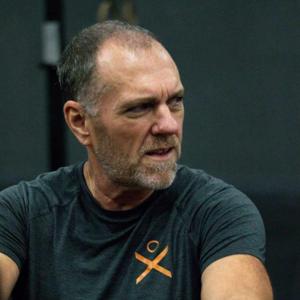


Walking backwards is a simple practice that helps improve balance and coordination for those managing neurological conditions.At NeuroMotor Training, we incorporate this movement to challenge the brain and body in new ways. Many individuals, particularly those living with Parkinson's, find that their standard gait patterns are disrupted. By intentionally stepping in reverse for just a few minutes, you engage different muscle groups and demand more attention from your nervous system than forward movement requires.This exercise serves as a practical tool for anyone looking to refine their motor skills or address stability concerns. If you have been struggling with consistent movement, adding this to your routine can provide a fresh perspective on how your body interacts with space. Focus on steady, controlled steps to maximize the benefits of this gait training approach.Subscribe for weekly nervous system health breakdowns, and let me know in the comments if you want more updates on practical movement tests.
Walking backwards is a simple practice that helps improve balance and coordination for those managing neurological conditions.
At NeuroMotor Training, we incorporate this movement to challenge the brain and body in new ways. Many individuals, particularly those living with Parkinson's, find that their standard gait patterns are disrupted. By intentionally stepping in reverse for just a few minutes, you engage different muscle groups and demand more attention from your nervous system than forward movement requires.
This exercise serves as a practical tool for anyone looking to refine their motor skills or address stability concerns. If you have been struggling with consistent movement, adding this to your routine can provide a fresh perspective on how your body interacts with space. Focus on steady, controlled steps to maximize the benefits of this gait training approach.
Subscribe for weekly nervous system health breakdowns, and let me know in the comments if you want more updates on practical movement tests.
Understanding the mouth-body connection is essential for addressing chronic tension in the neck and head.
In this episode, I sit down with Neel Bulchandani to discuss how oral restrictions impact your overall physical alignment. We explore the role of the mylohyoid muscles and how tension in the floor of the mouth can influence your posture and stability. This conversation is for anyone looking to understand how subtle structural issues in the jaw and oral cavity affect the inner ear and nervous system function.
By identifying these specific areas of rigidity, you gain a clearer path toward functional movement. We break down the mechanical link between your oral cavity and total body tension, providing insights into how these small, often overlooked areas dictate your movement patterns. Learning to release this tightness is a critical step in building a more resilient, well-integrated system.Follow Dr. Bulchandani:Instagram: @thedoctorneelWebsite: https://www.neelbulchandani.com/
¿Tu agarre puede predecir cuánto vas a vivir? 🤝En este episodio de The Karl Sterling Podcast hablamos de la fuerza de agarre, una de las medidas más honestas de cómo estás envejeciendo.Un gran estudio internacional (PURE) siguió a casi 140,000 adultos en 17 países. Cada caída de 5 kg en la fuerza de agarre se asoció con un riesgo aproximadamente 16% mayor de morir por cualquier causa. Además, la fuerza de agarre predijo la muerte cardiovascular mejor que la presión arterial sistólica.¿Por qué? Porque tu agarre refleja tu masa muscular, tu sistema nervioso, tu energía y qué tan activa ha sido tu vida. La fuerza es una habilidad neurológica, no solo muscular.La buena noticia: la fuerza de agarre se puede entrenar a cualquier edad.✅ 3 maneras de empezar hoy:1. Carga cosas: camina con dos bolsas pesadas o mancuernas durante 30 segundos.2. Cuélgate: de una barra firme, con los pies tocando el piso como apoyo.3. Aprieta con intención: usa una pelota antiestrés, sostén de 3 a 5 segundos, 10 veces con cada mano.Si tienes dolor, artritis o alguna condición médica, consulta primero con tu profesional de salud.Manos fuertes, cuerpo fuerte, cerebro fuerte. 💪🧠🔔 Suscríbete: KarlSterling.net🌐 NeuroMotor Training México: neuromotor.com.mx📚 Mis libros en español, "Cerebro, Cuerpo, Huesos" y "Entrenamiento de Regeneración del Parkinson (ERP)":amazon.com/stores/author/B08BHLL3XT/allbooks📖 Fuente: Leong DP, et al. "Prognostic value of grip strength: findings from the Prospective Urban Rural Epidemiology (PURE) study." The Lancet, 2015#FuerzaDeAgarre #Longevidad #EnvejecimientoSaludable #Neuroplasticidad #Parkinson #SaludCerebral #EntrenamientoDeFuerza #KarlSterling
Improving your grip strength is a more accurate way to measure your longevity than most medical scans or genetic testing.This video explains why your hand force acts as a vital health indicator for the entire body. We discuss how a simple, objective test provides a clearer picture of your internal status than complex diagnostics. Understanding this connection allows you to assess your baseline and focus on the physical markers that actually matter for your long-term wellness.While medical technology has its place, the most effective physical testing often relies on functional performance. By tracking how your body handles basic tasks, you gain actionable data on how you are aging. This conversation highlights the importance of monitoring these simple metrics to ensure you stay resilient as the years pass.Subscribe for weekly nervous system health breakdowns, and let me know in the comments if you want more updates on practical longevity tests.
Karl welcomes back longevity researchers Aubrey de Grey (LEV Foundation) and Kelsey Moody (Ichor), who first appeared on the show about two years ago.
LEV Foundation update: Aubrey says the longevity field is speeding up. LEV’s own work has stalled for now because its next large combination study, with thousands of mice, needs philanthropic money, and wealthy donors are being pulled toward AI safety and toward investing in longevity companies. The good news is that every new mouse result gives LEV more interventions to combine.
Ichor’s work: Kelsey runs two preclinical sites (Lafayette and Syracuse) and has added a clinical-trials arm in Syracuse that focuses on age-related disease. Ichor tests aging therapies in the eye first. The eye is small, so the drug costs less to make, and it’s immune-privileged, but the targets are meant for use across the whole body later. Its portfolio company Lento Bio has a small molecule that breaks protein crosslinks in the lens. In animal and cadaver lenses it restored about 50% of the lens’s flexibility. Human trials of an eye drop to replace reading glasses are expected in the second half of 2027. Ichor is recruiting trial participants in Central New York.
Crosslinking: Aubrey explains that there are “easy” crosslinks, which can be reversed, and “hard” ones, which the body can’t repair. Crosslinks contribute to wrinkles, stiff arteries and high blood pressure in older people, and possibly to problems in the brain. When he first published in 2002 he had one approach for each of seven types of damage. Now there are several for each, and the list of damage types hasn’t grown.
Brain and neuroplasticity: Late-life loss of neuroplasticity may come from fewer synapses, slower myelin repair and senescent astrocytes. In MS, the cells that rebuild myelin still exist but stop working as well, and the task is to restart them. In Parkinson’s, making dopamine is toxic to the neurons that produce it. Fetal cell transplants about 35 years ago sometimes left patients symptom-free for more than a decade. About five stem-cell trials are now underway. Aubrey couldn’t comment on DC electrical stimulation such as NEUBIE.
Lifestyle: A sensible lifestyle matters, but going beyond it adds little, because breathing oxygen itself drives the damage. Stress matters, mainly in how you react to it. The real fix is repairing damage, like maintaining a vintage car, without needing to understand everything that causes it.
Closing: Kelsey says Ichor’s startups grew out of Aubrey’s early work and urges listeners to give this holiday season. Aubrey explains that companies like Altos and Calico go after the easy, profitable targets. LEV’s combination studies produce nothing patentable, so they depend on donors. Donations go through LEVF.org.
Good morning, and welcome back to The Karl Sterling Podcast. I'm Karl Sterling.
Let me ask you something. When was the last time you were truly bad at something?
Not mildly challenged. I mean clumsy, frustrated, making mistakes, feeling like a beginner.
For most adults, especially as we get older, the honest answer is: a long time ago. We stick to what we know. We do the things we're already good at. And it feels comfortable.
But here's the problem. Comfort may be one of the worst things for an aging brain.
[THE BIG IDEA]
For a long time, people believed the adult brain was basically fixed. You got what you got, and after a certain age it was all downhill.
We now know that's not true. Your brain keeps changing throughout your life. That's called neuroplasticity. But here's the key: your brain changes when it's challenged, not when it's comfortable.
In one well-known study, researchers asked older adults to spend about three months learning a demanding new skill, like digital photography or quilting. Another group did activities that were social or relaxing but didn't require learning anything hard.
At the end, the people who learned the challenging new skill showed improvements in memory. The people doing easy, familiar activities didn't see the same benefit.
Other studies have shown that learning a new physical skill, like juggling, can produce measurable changes in the brain, and that includes older adults.
The lesson is simple. Doing crossword puzzles you're already good at is nice. But struggling to learn something new is what really drives change.
[WHY HARD MATTERS]
Here's why the struggle is the point.
When you do something familiar, your brain runs on autopilot. It uses pathways it already built years ago. Very little new wiring is needed.
But when you try something new and difficult, your brain has to pay attention. It has to make mistakes, notice them and adjust. That process of error and correction is exactly what builds new connections.
So that frustration you feel when you're learning something new? That's not failure. That's your brain under construction.
[PERSONAL STORY]
I played drums professionally for more than 35 years. And I can tell you, nothing humbles you like learning a new rhythm where your right hand, left hand, right foot and left foot are all doing something different.
At first, it feels impossible. Your limbs don't cooperate. Your brain feels like it's going to short-circuit. Then one day, it clicks. And what was impossible becomes automatic.
That moment when it clicks is your brain physically rewiring itself. I've felt it thousands of times. And today, in my work with people living with Parkinson's and other neurological conditions, I see the same thing happen at every age.
[WHAT TO DO ABOUT IT]
So here's your challenge. Pick something new, something a little hard, and commit to it. A few ideas:
1. Learn an instrument. Music trains timing, memory, coordination and listening all at once.
2. Learn a new language. Every new word and sentence builds new connections.
3. Learn to dance. It combines movement, rhythm, memory and balance, often with other people.
4. Learn a new physical skill. Juggling, tai chi, pickleball, swimming, anything that makes your body and brain work together in a new way.
5. Learn a hands-on craft. Painting, woodworking, knitting or photography all count, as long as it challenges you.
The rules are simple. It should be new. It should be hard enough that you make mistakes. And you should stick with it long enough to improve.
[CLOSE]
Here's what I want you to think about today. Getting older doesn't mean your brain has stopped growing. It may just mean you've stopped asking it to.
So be a beginner again. Be clumsy. Make mistakes. Laugh at yourself. That's what a growing brain looks like.
What's one hard thing you've always wanted to learn? Start it this week.
I'm Karl Sterling. Keep moving, and I'll see you tomorrow.
Did you know your feet are connected to your brain? Understanding this neural link is key to improving your physical control.Most people view walking as a simple leg activity, but it is actually a complex function of your nervous system. Every step requires your brain, spinal cord, and sensory nerves to communicate in real time. When you practice motor control, you are essentially training your brain to manage your body more efficiently. This video breaks down why the connection between your feet and your brain is the foundation for lasting mobility.By focusing on neuroplasticity, you can refine how your nervous system processes movement. If you want to maintain your independence, you must prioritize your balance training and coordination today. We discuss how simple, intentional movements can help you rewire these pathways, regardless of your current fitness level.Subscribe for weekly nervous system health breakdowns, and let me know in the comments if you want more exercises to improve your gait.http://www.karlsterling.comhttp://www.brainbodybones.com
When was the last time a doctor timed how fast you walk?They check your blood pressure, your heart rate, your weight and your cholesterol. But almost nobody puts a stopwatch on your walk. That's a shame, because researchers have been calling walking speed "the sixth vital sign." It may tell us more about how you're aging than most of the numbers on your chart.Today we're going to talk about why, and I'm going to show you how to test yourself at home in under a minute.A large analysis published in JAMA followed tens of thousands of older adults. One of the strongest predictors of who lived longer was simple: how fast they walked at their normal, comfortable pace.It wasn't how much they bench pressed or what their diet looked like. It was walking speed.Why would something so ordinary be so powerful? Because walking isn't just a leg activity. It's one of the most complex things your brain does.Every step needs your brain, your spinal cord, your muscles, your joints, your inner ear, your eyes and the nerves in the bottoms of your feet, all talking to each other in real time. Your heart and lungs have to keep up, and so does your confidence.So when walking speed drops, it's rarely just about your legs. It's often an early signal that something in that whole system is starting to slip.I spent more than 35 years behind a drum kit. What drumming taught me is that timing lives in the brain. Your hands and feet only express it.Walking is the same. It has a rhythm, a tempo. When I see a client's gait start to slow, shorten or lose its arm swing, I'm not just watching their legs. I'm watching their nervous system keep time. And just like with a drummer, that timing can be trained.Here's your challenge for today. It's simple.Measure out about 13 feet, which is 4 meters, in a hallway or on your driveway. Mark the start and the finish.Start a few steps before the start line so you're already moving.Walk at your normal, everyday pace. Don't race. Just walk.Have someone time you from the start line to the finish line, or time yourself with your phone.Here's how to read it. If you cover those 4 meters in about 4 seconds or less, that's roughly one meter per second, which is a healthy, strong pace. If it takes you 5 seconds or more, that's a signal worth paying attention to. It doesn't mean something is wrong. It means it's time to get to work.The good news is that walking speed is not fixed. It responds to training, at any age.Walk with purpose. Every day, add a few short stretches where you walk a little faster than comfortable.Get stronger. Your calves, hips and thighs are your engine. Sit-to-stands from a chair are a great place to start.Train your balance. If you feel unsteady, your brain slows you down to protect you. Improve the balance and the speed follows.Challenge your brain while you walk. Talk, count backward or change direction. Real life isn't a straight hallway.Swing your arms. It's not decoration. It drives rhythm and momentum.Here's what I want you to think about today. We don't stop moving because we get old. Very often, we get old because we stop moving.Your walk is telling a story about your brain, your body and your future. So go measure it. Write the number down, and test it again in a month.And when was the last time you walked fast just because you could? Go do it today.http://www.karlsterling.comhttp://[email protected]
What was fascinating is that, as I mentioned, 58% of participants, the people who had these carotid artery plaques removed, had plastic in them. And people who had plastic in their plaques had a 4.5-fold rise in the risk of a very bad outcome, like a heart attack, a stroke, or just all-cause mortality in the follow-up. So basically, if plastic was present, there was a 4.5-fold higher chance of having a very bad cardiovascular outcome.
So we've got to take this seriously. That's especially true because, like processed food, which we talked about, plastic is a brand-new invention in human history. We've normalized it, but it's really new. Plastic was actually invented in 1907, just over a hundred years ago. And since then, we have produced 8.3 billion metric tons of plastic, and we are producing 350 million metric tons per year at an increasing rate. I mean, just think about that for two seconds.
Here's just a real example of what plastic is in. It's in all of our polyester clothing. It's in any of our non-polyester clothing that has stretch in it, because that's a stretchy plastic material. It's in our sheets if they're synthetic. It's our water bottles, our food storage containers, the coffee cups we're using. Um, it's… it's everywhere.
And aside from it depositing in our tissues, the other wild thing is that these plastics actually act as estrogen mimics in the body, what are called xenoestrogens. They contain chemicals like bisphenols and dioxins, and these are actually hormone-disrupting chemicals, some of which can bind to things like our estrogen receptors in men and women. And so you're seeing things like sperm counts plummeting. Sperm counts are down 50% since the 1970s. Infertility in both men and women is skyrocketing. Fertility rates are going down 1% per year. And it kind of makes sense when you think about this ubiquitous toxic stew that we're sitting in.