
Sign up to save your podcasts
Or

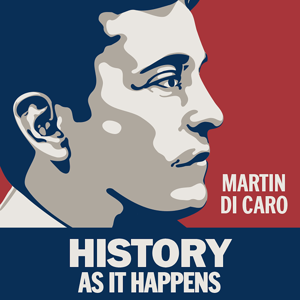

Russian president Vladimir Putin, who sees himself as an astute student of history, once more exploited his nation's victory over Nazi Germany to justify his unprovoked invasion of Ukraine. In his annual speech on May 9 – Victory Day in 1945 – Mr. Putin said Russia would continue its war against "torturers, death squads, and Nazis," repeating his fantasy version of reality. "Once again, we see war that is afoot, but we have been pushing back, fighting against international terrorism to protect the people in the Donbas region and to protect our country." Russia's autocrat is overlooking a more important, accurate history lesson. In the Cuban Missile Crisis of 1962, a Soviet leader impulsively gambled, brought the world to the brink of nuclear war, but then stepped back from the precipice by compromising a peaceful way out. In this episode, historians Sergey Radchenko and Vladislav Zubok discuss the origins of Nikita Khrushchev's move to send nuclear missiles to Cuba. They unearthed astonishing accounts of mishaps and miscalculations in recently declassified Soviet documents, which they detailed in an essay for Foreign Affairs, the official publication of the Council on Foreign Relations. Radchenko and Zubok say the "unlearned lessons" of the Cuban Missile Crisis include the roles of misperception, miscalculation, chance, and other unpredictable factors that influence the outcome of events. In 1962, they contend, the world got lucky.
 View all episodes
 By Martin Di Caro

4.4
6262 ratings
Russian president Vladimir Putin, who sees himself as an astute student of history, once more exploited his nation's victory over Nazi Germany to justify his unprovoked invasion of Ukraine. In his annual speech on May 9 – Victory Day in 1945 – Mr. Putin said Russia would continue its war against "torturers, death squads, and Nazis," repeating his fantasy version of reality. "Once again, we see war that is afoot, but we have been pushing back, fighting against international terrorism to protect the people in the Donbas region and to protect our country." Russia's autocrat is overlooking a more important, accurate history lesson. In the Cuban Missile Crisis of 1962, a Soviet leader impulsively gambled, brought the world to the brink of nuclear war, but then stepped back from the precipice by compromising a peaceful way out. In this episode, historians Sergey Radchenko and Vladislav Zubok discuss the origins of Nikita Khrushchev's move to send nuclear missiles to Cuba. They unearthed astonishing accounts of mishaps and miscalculations in recently declassified Soviet documents, which they detailed in an essay for Foreign Affairs, the official publication of the Council on Foreign Relations. Radchenko and Zubok say the "unlearned lessons" of the Cuban Missile Crisis include the roles of misperception, miscalculation, chance, and other unpredictable factors that influence the outcome of events. In 1962, they contend, the world got lucky.

8,474 Listeners

1,110 Listeners
743 Listeners

6,304 Listeners

724 Listeners

907 Listeners

14 Listeners

2,039 Listeners

7,244 Listeners

2,405 Listeners

16,525 Listeners

208 Listeners
385 Listeners
500 Listeners
496 Listeners