
Sign up to save your podcasts
Or

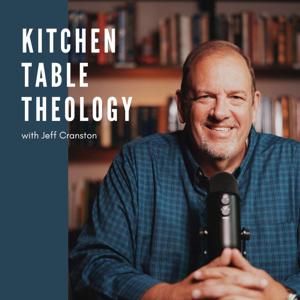


After six and a half years, 300 episodes, and more than 133,000 downloads across 170 countries, what’s next for Kitchen Table Theology?
Tiffany and Pastor Jeff look back at how the podcast began, celebrate how far it has reached, and share an important update about its future.
Chapters
00:00 How Kitchen Table Theology Began
Pastor Jeff shares how the disruption of 2020 gave him the opportunity to finally begin the theology podcast he had been considering for several years. What started with the hope of reaching 25 episodes eventually grew into a six-year journey.
05:28 Celebrating 300 Episodes and a Global Community
Tiffany and Pastor Jeff look back at the many topics covered throughout the podcast and celebrate more than 133,000 downloads across 170 countries. They also discuss the unexpected success of their episode about the book of Obadiah.
09:28 What’s Next for Kitchen Table Theology?
After six and a half years of weekly episodes, Pastor Jeff explains why the podcast is taking a break until January 2027. He encourages listeners to stay subscribed, explore previous episodes, and return with them refreshed for the next chapter.
👉 Visit Pastor Jeff Cranston on Amazon or his website to explore his books and booklets written to support believers in their walk with Christ.
We love your feedback! If you enjoyed this episode, leave us a review. If you have any questions or comments on today's episode, email me at [email protected]
Visit my website https://www.jeffcranston.com and subscribe to my newsletter.
Join me on Sunday mornings at LowCountry Community Church.
Check in with us on Facebook or Instagram @pastorjeffcranston
Remember, the real power of theology is not only knowing it but applying it. Thanks for listening!
Why isn’t the Gospel of Thomas in the Bible?
The Gospel of Thomas includes sayings attributed to Jesus, but it wasn’t included alongside Matthew, Mark, Luke, and John. What criteria did the early church fathers use when recognizing the closed canon, and why didn’t this text meet those standards?
In this episode, Tiffany Coker and Pastor Jeff Cranston examine the Gospel of Thomas through the questions the early church used to evaluate Christian writings. They discuss theological consistency, early origins, and widespread acceptance among churches.
Chapters:
01:19 Why Isn’t the Gospel of Thomas in the Bible?
The Gospel of Thomas contains sayings attributed to Jesus, some of which resemble passages in the New Testament. However, it doesn’t present the life, death, and resurrection of Jesus in the same way as the four canonical Gospels.
03:21 How Did the Early Church Recognize Scripture?
The early church considered whether a writing had an apostolic connection, agreed with the faith passed down by the apostles, was widely accepted among churches, and belonged to the earliest Christian testimony.
04:26 When Was the Gospel of Thomas Discovered?
The complete text was discovered near Nag Hammadi, Egypt, in 1945. Although some sayings may preserve earlier traditions, most scholars date the document’s original composition to the second century, long after the time of the Apostle Thomas.
07:09 How Does the Gospel of Thomas Differ from the Biblical Gospel?
The Gospel of Thomas emphasizes hidden knowledge and secret truth as the path to salvation. The New Testament presents the gospel as the public announcement that Jesus died for sin, was buried, rose again, and appeared to witnesses.
12:19 Did the Church Choose Which Books Belonged in the Bible?
The church didn’t create the authority of the New Testament books. Matthew, Mark, Luke, and John were already being read, taught, copied, and recognized as authoritative across Christian communities before later canon lists documented them together.
15:57 Was the Gospel of Thomas Suppressed by the Church?
There is no strong historical evidence that the Gospel of Thomas was an apostolic text deliberately hidden by church leaders. It wasn’t recognized as Scripture because it lacked apostolic authority, widespread early acceptance, and theological consistency with the New Testament.
“The church was recognizing which writings carried apostolic authority and which writings faithfully communicated the apostolic gospel.” — Pastor Jeff Cranston
👉 Visit Pastor Jeff Cranston on Amazon or his website to explore his books and booklets written to support believers in their walk with Christ.
We love your feedback! If you enjoyed this episode, leave us a review. If you have any questions or comments on today's episode, email me at [email protected]
Visit my website https://www.jeffcranston.com and subscribe to my newsletter.
Join me on Sunday mornings at LowCountry Community Church.
Check in with us on Facebook or Instagram @pastorjeffcranston
Remember, the real power of theology is not only knowing it but applying it. Thanks for listening!
Who added chapters and verses to the Bible?
Imagine trying to find a Bible passage without chapter or verse numbers. The Bible wasn’t originally written with the numbered divisions we use today. So who added them, why were they created, and could they sometimes affect how we interpret Scripture?
In this episode, Tiffany Coker and Pastor Jeff Cranston uncover the history behind Bible chapters and verses. They explain why these numbers are useful but not inspired, how chapter breaks can interrupt an author’s original thought, and why familiar verses like Philippians 4:13 must be read within their surrounding context.
Chapters:
00:24 Who Added Chapters and Verses to the Bible?
The biblical authors didn’t divide Scripture into numbered chapters and verses. These numbers were added centuries later to help readers locate and reference specific passages.
03:14 Why Were Bible Chapters Created?
As universities grew during the 13th century, teachers and students needed a consistent way to find passages. Standardized chapter divisions became a navigation system that made studying and teaching the Bible easier.
06:21 Who Created the Bible’s Chapter Divisions?
Stephen Langton, a theologian and later Archbishop of Canterbury, helped develop and standardize the chapter system used in most Bibles today. He built upon earlier methods rather than creating the entire system from scratch.
08:01 Are Chapter and Verse Numbers Inspired by God?
The words of Scripture are inspired by God, but chapter numbers, verse numbers, section headings, cross-references, and study notes are human-created tools that can help us study the Bible but may also influence how we interpret it.
10:28 When Were Verse Numbers Added to the Bible?
Verse divisions became standardized after chapter divisions. Over time, these systems were adopted in printed Bibles, allowing pastors, teachers, and readers to locate the same passage within seconds.
12:17 Why Should We Read Beyond Individual Verses?
The Bible is not a collection of disconnected inspirational statements. Reading the surrounding passage helps us understand verses like Philippians 4:13 and Romans 8:28 within their proper context and follow the biblical author’s complete message.
“ The modern chapter system emerged in the early 13th century as universities grew and theology began to move into classrooms; Students and teachers needed a consistent way to locate passages.” – Pastor Jeff Cranston
👉 Visit Pastor Jeff Cranston on Amazon or his website to explore his books and booklets written to support believers in their walk with Christ.
We love your feedback! If you enjoyed this episode, leave us a review. If you have any questions or comments on today's episode, email me at [email protected]
Visit my website https://www.jeffcranston.com and subscribe to my newsletter.
Join me on Sunday mornings at LowCountry Community Church.
Check in with us on Facebook or Instagram @pastorjeffcranston
Remember, the real power of theology is not only knowing it but applying it. Thanks for listening!
What does it mean to say that God is the author of Scripture? Did He dictate every word? Can new books ever be added to Scripture? Ready to test how well you know the Bible?
In this bonus throwback episode, Pastor Jeff and Jen Denton put their knowledge to the test with a 12-question true-or-false quiz on the doctrine of Scripture. Listen along, keep track of your score and let’s see how many you can get right!
Chapters:
04:00 Is God the Author of the Bible? TRUE
All Scripture is God-breathed, so it is appropriate to describe God as the author of Scripture. The Bible communicates God’s words to His people.
05:00 The Books Do Not Have Human Authors. FALSE
Although God is the ultimate author of Scripture, human beings truly wrote the biblical books. The Holy Spirit governed their writing while still working through their personalities, vocabulary, and individual styles.
09:00 Did God Dictate Every Word of Scripture? FALSE
Biblical inspiration did not mean the writers simply took dictation or wrote in a trance.
10:00 Was the Inspiration of Scripture the Particular Work of God the Father? FALSE
The transcript identifies inspiration as a particular work of the Holy Spirit, pointing to 2 Peter 1:21 and describing the biblical authors as being carried along by the Spirit.
12:00 Do Jesus’ Words Have More Authority Than the Rest of Scripture? FALSE
Because all Scripture is God-breathed, all of Scripture carries divine authority. The red-letter words of Jesus are not more authoritative than the rest of God’s written Word.
13:00 Is the Complete List of Biblical Books Called the Covenant? FALSE
The correct term is canon. The biblical canon refers to the books recognized as God-inspired and authoritative for Christian faith and practice.
19:00 Are There 64 Books in the Biblical Canon? FALSE
The Protestant Bible contains 66 books, with 39 books in the Old Testament and 27 books in the New Testament.
20:00 Is Everything God Requires of Christians Found in Scripture? TRUE
Everything necessary for Christian faith and life is contained in Scripture either explicitly or by necessary implication.
21:00 Is Every Passage of Scripture Easy to Understand Perfectly? FALSE
Not every biblical passage is equally easy to understand. Even Peter acknowledged that some of Paul’s writings contained things that were difficult to understand.
23:00 Is Scripture the Only Way God Reveals Truth About Himself? FALSE
God also reveals truth about Himself through creation. Romans 1 and Psalm 19 are used to explain how the created world testifies to God’s existence, nature, and glory.
24:00 Will One Passage of Scripture Never Actually Contradict Another? TRUE
Scripture is internally consistent because it comes from an unchanging God who cannot lie.
30:00 Could God Add New Books to the Bible? FALSE
The Bible is God’s full and final revelation for this period of redemptive history, so Christians should not expect additional books to be added to Scripture.
👉 Visit Pastor Jeff Cranston on Amazon or his website to explore his books and booklets written to support believers in their walk with Christ.
We love your feedback! If you enjoyed this episode, leave us a review. If you have any questions or comments on today's episode, email me at [email protected]
Visit my website https://www.jeffcranston.com and subscribe to my newsletter.
Join me on Sunday mornings at LowCountry Community Church.
Check in with us on Facebook or Instagram @pastorjeffcranston
Remember, the real power of theology is not only knowing it but applying it. Thanks for listening!
Did church leaders decide which books belong in the Bible, or did they simply recognize what God had already inspired?
Tiffany and Pastor Jeff explore how the 66 books of the Bible became recognized as Scripture. They explain what the biblical canon is, the principles the early church used to identify inspired writings, and why church councils didn’t create the Bible. They address common claims that powerful men edited Scripture or that its authors were seeking fame, revealing why Christians can confidently trust the Bible as God’s faithfully preserved Word.
Chapters:
01:18 Who Decided Which Books Belong in the Bible?
Claims that church leaders changed the Bible or selected only the books they preferred raise an important question: How did Christians end up with these 66 books, and who determined that they belonged in Scripture?
03:24 Did the Church Invent the Bible?
God chose the authors and inspired their writings through the Holy Spirit. The church did not make these books Scripture but recognized the authority they already possessed.
04:43 What Is the Biblical Canon?
The word “canon” means a measuring rod or standard. The biblical canon is the collection of writings recognized as the inspired Word of God, not a list of books selected according to the personal preferences of church leaders.
05:35 How Did the Church Recognize Scripture?
Like experts authenticating a work of art, the early church examined evidence and recognized authenticity that already existed.
07:38 How Were the Old and New Testaments Recognized?
The Jewish people had already preserved and recognized the Old Testament by the time of Jesus, who repeatedly affirmed its authority. The apostles’ writings were later read publicly, carefully copied, and circulated among early churches.
08:53 What Happened at the Council of Carthage?
By the Council of Carthage in AD 397, the 27 books of the New Testament had already been widely recognized. The council formally confirmed the writings Christians had been reading, teaching, copying, and obeying for generations.
11:52 How Did God Preserve His Word?
God worked through ordinary and imperfect people to preserve Scripture under His providential care. The church identified and protected what God had already inspired rather than creating something new.
13:13 Were the Biblical Authors Seeking Fame?
The Bible honestly records the anger, doubt, failure, and sin of its human figures. Rather than presenting its authors and heroes as flawless, Scripture points to humanity’s need for grace and presents Jesus as its only perfect hero.
15:09 Why Can Christians Trust the Bible Today?
Trust the faithful God who inspired His Word and preserved it for every generation. We don’t ultimately place their confidence in councils, scholars, translators, or publishers.
“ God didn't wait for a committee to decide His Word. He chose His Word before it was ever even written.” – Pastor Jeff Cranston
👉 Visit Pastor Jeff Cranston on Amazon or his website to explore his books and booklets written to support believers in their walk with Christ.
We love your feedback! If you enjoyed this episode, leave us a review. If you have any questions or comments on today's episode, email me at [email protected]
Visit my website https://www.jeffcranston.com and subscribe to my newsletter.
Join me on Sunday mornings at LowCountry Community Church.
Check in with us on Facebook or Instagram @pastorjeffcranston
Remember, the real power of theology is not only knowing it but applying it. Thanks for listening!
The Bible contains 66 books written by around 40 authors across 1,500 years, yet it tells one unified story centered on Jesus Christ.
Tiffany and Pastor Jeff explore how God inspired human authors to write Scripture and how the early church recognized which books belonged in the biblical canon. They address the “lost books” of the Bible, explain how Scripture was faithfully preserved, and show why Christians can confidently trust the Bible we hold today.
Chapters:
02:03 Where Did Our Bible Come From?
The Bible contains 66 books written by around 40 authors across approximately 1,500 years. Despite its many contributors, Scripture tells one unified story of creation, fall, redemption, and restoration centered on Jesus Christ.
06:18 Who Actually Wrote the Bible?
God is the primary author of Scripture, but He worked through real human writers with distinct personalities, backgrounds, and writing styles. The Holy Spirit guided these authors without turning them into passive scribes or removing their individuality.
09:38 How Did Moses Write About Creation?
Biblical events were sometimes preserved and passed down before being written. Whether information was revealed directly by God or collected from faithful witnesses, Christians trust that Scripture records exactly what God intended.
11:48 Who Chose the 66 Books of the Bible?
The biblical canon is the recognized collection of writings inspired by God. The church did not give these books their authority but recognized the divine authority they already possessed.
13:50 How Was the New Testament Recognized?
The apostles’ writings were treasured, publicly read, carefully copied, and shared among early churches. The apostles also recognized one another’s writings as Scripture, demonstrating that this process began during the first century.
15:02 How Was God’s Word Preserved?
The format of the Bible has changed from handwritten manuscripts to printed, digital, and audio editions, but its message has remained the same. Generations of believers carefully preserved and passed down the truth God had given.
17:35 Why Wasn’t the Bible Compiled Immediately?
Early churches were scattered throughout the Roman Empire, and every letter or book had to be copied by hand and physically circulated. By AD 367, Athanasius recorded all 27 New Testament books already recognized by churches.
19:18 What About the “Lost Books” of the Bible?
Writings such as the Gospel of Thomas and the Gospel of Judas appeared later and contradicted apostolic teaching. They were excluded because they were neither connected to the apostles nor recognized as inspired Scripture.
21:27 Why Can Christians Trust the Bible Today?
God has faithfully preserved His Word through centuries of copying, persecution, translation, and criticism. The Bible remains God’s living Word and one unified story pointing to Jesus Christ.
“ Understanding how God gave us the Bible doesn't weaken our confidence; it strengthens it. Once you see and understand the incredible story behind how we got our Bible, you'll treasure it even more.” – Pastor Jeff Cranston
👉 Visit Pastor Jeff Cranston on Amazon or his website to explore his books and booklets written to support believers in their walk with Christ.
We love your feedback! If you enjoyed this episode, leave us a review. If you have any questions or comments on today's episode, email me at [email protected]
Visit my website https://www.jeffcranston.com and subscribe to my newsletter.
Join me on Sunday mornings at LowCountry Community Church.
Check in with us on Facebook or Instagram @pastorjeffcranston
Remember, the real power of theology is not only knowing it but applying it. Thanks for listening!
Through our study of the Patristic Period, we’ve seen how the earliest Christians followed Jesus, defended the truth, structured the church, and lived out Scripture.
Tiffany and Pastor Jeff reflect on the most important themes from the historical theology series and how the faith of the early church continues to speak to Christians today.
They also introduce the questions that will guide the next series: Where did Scripture come from? How were the books of the Bible recognized? Why were some writings excluded? And why can we confidently trust the Bible we hold today?
Chapters:
01:40 People and Writings from the Patristic Period
We revisit early church fathers such as Clement, Ignatius, Polycarp, Papias, and Irenaeus, along with writings including the Didache and the Shepherd of Hermas.
03:45 Why Church History Still Matters
The earliest Christian writings reveal how believers wrestled with questions about following Christ, worship, evangelism, caring for one another, and defending the truth.
05:00 Church History as the Blueprints of the Christian Faith
The New Testament provides the foundation, while early Christian writings help us understand how believers first put biblical truth into practice.
06:05 The Early Church’s Focus on Jesus Christ
Despite suffering and theological challenges, early Christians continually returned to Christ’s death, resurrection, return, and the hope believers have in Him.
09:05 The Unchanging Mission of the Church
Cultures, buildings, technology, and methods change, but the church’s calling to preach Christ, teach Scripture, proclaim the gospel, and care for God’s people remains the same.
11:05 Did the Church Decide Which Books Belonged in the Bible?
Tiffany and Pastor Jeff explain the important distinction between creating Scripture and recognizing the authority Scripture already possessed.
13:25 What Today’s Christians Can Learn from the Early Church
The challenges faced by early believers remind Christians to remain rooted in Christ, grounded in Scripture, and faithful amid persecution, false teaching, and cultural change.
14:30 Introducing the Next Series: How Did We Get the Bible?
The next series will explore the canon of Scripture, lost books, the Gospel of Thomas, the Apocrypha, early church councils, and why Christians can trust the Bible.
“ Christianity isn’t built on myths or legends. It's rooted in historical events, faithful witness, and above all, the revelation of God to mankind.” – Pastor Jeff Cranston
👉 Visit Pastor Jeff Cranston on Amazon or his website to explore his books and booklets written to support believers in their walk with Christ.
We love your feedback! If you enjoyed this episode, leave us a review. If you have any questions or comments on today's episode, email me at [email protected]
Visit my website https://www.jeffcranston.com and subscribe to my newsletter.
Join me on Sunday mornings at LowCountry Community Church.
Check in with us on Facebook or Instagram @pastorjeffcranston
Remember, the real power of theology is not only knowing it but applying it. Thanks for listening!
The Roman world couldn’t figure Christians out. They weren’t pagans, they weren’t exactly Jews, and although they lived ordinary lives, there was something remarkably different about them. So, who were these early Christians, and what did they actually believe?
In this episode, Tiffany Coker and Pastor Jeff Cranston discuss the Letter to Diognetus, one of the earliest Christian writings addressed to a nonbeliever. They discuss how the letter defended Christianity in the Roman world, challenged pagan idolatry, distinguished Christianity from Judaism, and described believers as ordinary people whose lives were transformed by their heavenly citizenship.
Chapters:
00:00 Introduction: Who Were the Early Christians?
The Roman world struggled to categorize Christians because they weren’t pagans or simply another Jewish group, yet their lives were noticeably different.
03:00 Christianity in the Roman World
By approximately AD 130, Christianity had become distinct enough within Roman society that people were asking who Christians were and what they believed.
04:15 What Is the Letter to Diognetus?
This anonymous early Christian document was written to explain and defend Christianity to a pagan audience unfamiliar with the Bible.
07:05 Three Questions About the Christian Faith
The writer addresses who Christians worship, why they demonstrate remarkable love, and why the Christian way of life appeared when it did.
08:00 Defending Christianity Without Quoting Scripture
Because Scripture held no authority for his pagan audience, the apologist appealed to reason, observation, and the lives of Christians.
09:35 The Letter’s Challenge to Pagan Idolatry
The writer exposes the irrationality of creating an idol with human hands and then worshiping it as a source of meaning and direction.
13:35 How Christianity Differs From Jewish Ritualism
The writer explains that Israel’s sacrifices and covenant markers find their fulfillment in Jesus Christ, the ultimate sacrifice for sin.
16:05 Christians as the Soul of the World
The writer compares Christians to the soul within the body, describing how faithful believers can serve as a conscience to the surrounding world.
17:35 How Christian Living Challenges Culture
Generosity confronts greed, forgiveness challenges revenge, humility confronts pride, and love demonstrates that another way of life is possible.
18:35 Final Thoughts and a Challenge to Read Diognetus
Tiffany and Pastor Jeff encourage listeners to read the Letter to Diognetus before returning for the second part of their discussion.
“ Here's the question the letter to Diognetus forces us to consider: what are we becoming because of what we worship? Because worship always shapes the worshiper.” – Pastor Jeff Cranston
Sources:
👉 Visit Pastor Jeff Cranston on Amazon or his website to explore his books and booklets written to support believers in their walk with Christ.
We love your feedback! If you enjoyed this episode, leave us a review. If you have any questions or comments on today's episode, email me at [email protected]
Visit my website https://www.jeffcranston.com and subscribe to my newsletter.
Join me on Sunday mornings at LowCountry Community Church.
Check in with us on Facebook or Instagram @pastorjeffcranston
Remember, the real power of theology is not only knowing it but applying it. Thanks for listening!
How should Christians approach an early church writing that is valuable, influential, and sometimes theologically troubling?
The Shepherd of Hermas was one of the most widely read Christian writings of the 2nd century. Through visions, commandments, and parables, it called believers to repentance, holiness, generosity, and faithfulness in a culture that often pulled them in the opposite direction.
But the book also raises serious Theological questions. Today, we examine the background, message, strengths, and weaknesses of The Shepherd of Hermas. We learn how studying it can deepen our understanding of the early church while strengthening our confidence in the authority of God’s Word.
Chapters:
00:00 Introduction to The Shepherd of Hermas
The Shepherd of Hermas is one of the most unusual writings from the Apostolic Fathers and offers a window into the beliefs, struggles, and priorities of second-century Christians.
03:05 What Is The Shepherd of Hermas?
The book presents the first-person account of a Christian named Hermas and combines visions, commandments, warnings, promises, and symbolic parables.
06:05 Who Was Hermas?
Hermas was likely a real Christian living in Rome, although parts of the work may have been written or edited over time by others.
07:00 Why The Shepherd of Hermas Was Not Scripture
The Muratorian Fragment describes the book as valuable for Christians to read while clearly distinguishing it from the inspired books of the New Testament.
08:10 The Popularity and Strengths of Hermas
The Shepherd of Hermas was widely read in the early church and strongly emphasized holiness, generosity, repentance, and living for God’s kingdom.
10:50 When Holiness Becomes Legalism
Hermas’ strict teaching about sin after baptism and his restrictive view of repentance can turn a healthy call to holiness into legalism and perfectionism.
13:35 The Limited Focus on Jesus and the Gospel
Although Christ appears under titles such as the Son of God, the book gives little attention to Jesus’ earthly ministry, death, resurrection, or the work of the Holy Spirit.
15:35 Measuring Every Teaching Against Scripture
Church history and early Christian writings can be helpful, but every book, sermon, tradition, and podcast must ultimately be tested against the final authority of God’s Word.
17:10 Why Christians Should Read The Shepherd of Hermas
The book helps modern believers understand how early Christians wrestled with holiness, temptation, repentance, and faithful living, even when some of their conclusions were flawed.
“Hermas refuses to let comfortable Christianity exist.” – Pastor Jeff Cranston
Sources:
👉 Visit Pastor Jeff Cranston on Amazon or his website to explore his books and booklets written to support believers in their walk with Christ.
We love your feedback! If you enjoyed this episode, leave us a review. If you have any questions or comments on today's episode, email me at [email protected]
Visit my website https://www.jeffcranston.com and subscribe to my newsletter.
Join me on Sunday mornings at LowCountry Community Church.
Check in with us on Facebook or Instagram @pastorjeffcranston
Remember, the real power of theology is not only knowing it but applying it. Thanks for listening!
When you think about what you believe as a Christian… where did those beliefs come from?
For many, the trail leads back to the apostles, the earliest followers of Jesus, and church leaders like Papias of Hierapolis.
Papias was connected to the Apostle John, knew Polycarp, and helped preserve early Christian teaching during the generation after the apostles. Though most of his writings have been lost, what remains gives us valuable insight into the origins of the Gospels, the importance of eyewitness testimony, and the early church’s commitment to passing down the truth about Jesus.
This episode explores Papias’ life, writings, and lasting influence on Christian theology.
Chapters:
00:00 Introduction to Papias of Hierapolis
Papias of Hierapolis was one of the earliest church fathers in the Patristic Period and a significant link between the Apostolic Era and the generation that followed.
02:00 Papias and His Connection to the Apostle John
Irenaeus described Papias as a hearer of the Apostle John, and Papias was also known as a companion of Polycarp.
03:15 Why Papias Matters
Papias was deeply concerned with preserving what the apostles actually taught about Jesus and passing that truth along faithfully.
04:30 The Lost Writings of Papias
Papias wrote a five-volume work called The Exposition of the Sayings of the Lord, but only fragments remain through later writers like Eusebius and Irenaeus.
05:30 Papias and the Origins of the Gospels
The surviving fragments of Papias give early insight into the origins of the Gospels, including Mark’s connection to Peter’s teaching and Matthew’s original composition.
08:10 Apostolic Tradition and Eyewitness Testimony
Papias placed strong value on the oral testimony of those who knew the apostles, emphasizing the reliability of eyewitnesses in preserving the truth about Jesus.
11:40 Papias’ Focus on Jesus’ Teachings
Papias sought to compile and interpret the sayings of Jesus while relying on apostolic sources, helping later Christians understand the early transmission of Christ’s teaching.
13:00 Papias’ Theology and Lasting Influence
Papias taught a premillennial view of Christ’s return and preserved early Christian traditions that continue to shape how believers understand the apostles, the Gospels, and early church theology.
“Papias gives us a solid historical testimony for the formation of our Christian theology. His story reminds us that the early church wasn't built on rumors or legends that developed some centuries after Jesus ascended into heaven.” – Pastor Jeff Cranston
Sources:
👉 Visit Pastor Jeff Cranston on Amazon or his website to explore his books and booklets written to support believers in their walk with Christ.
We love your feedback! If you enjoyed this episode, leave us a review. If you have any questions or comments on today's episode, email me at [email protected]
Visit my website https://www.jeffcranston.com and subscribe to my newsletter.
Join me on Sunday mornings at LowCountry Community Church.
Check in with us on Facebook or Instagram @pastorjeffcranston
Remember, the real power of theology is not only knowing it but applying it. Thanks for listening!
From the publisher's feed
Where Coffee, Conversation, and Theology Meet. During my 40 years in ministry, I’ve developed an increasing burden for what I sense to be an increase in biblical illiteracy, not only among those in…

9,190 Listeners
5,184 Listeners
7,452 Listeners
19,459 Listeners
445 Listeners

12,600 Listeners

28,250 Listeners
5,399 Listeners

35,874 Listeners

65,339 Listeners

46,014 Listeners
39,359 Listeners
61,786 Listeners

26,558 Listeners
15,919 Listeners