
Sign up to save your podcasts
Or

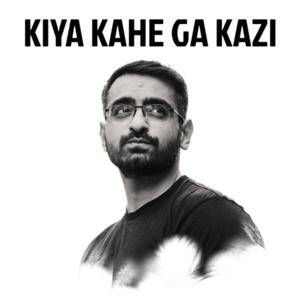


Ushah Kazi is a writer who specializes in cultural commentary and the economic ramifications of pop cultural trends, she is also someone who is deeply influenced by her Sindhi heritage and the writings of the great Sufi mystics. We speak about the widespread assimilation of Sufi poetry into pop music, about the message of Shah Abdul Latif Bhitai, about the potency of the female narrative as an apparatus to understand the human experience, and about her book 'The pop culture junkies guide to Pakistani cinema.'
Zain Jafar is the owner of an advertising agency, a car enthusiast, and is fast becoming one of the best photographers in Karachi. We speak about the discontentment that an existence linked to social media breeds, about entitlement and existential angst, and about why it is essential to be anchored in something immaterial.
Faisal Sheikh is a long-standing member of the digital ad space in Karachi who admittedly understands his job to be 'to stand on the precipice of technological determinism, to jump in, and to let everyone know if it's safe to go in after him. We speak about the new era of media policing, about the myriads of problems that have surfaced in the pandemic and the potency of social media in these uncertain times.
Isma Khan is a behavioural analyst who specialises in dealing with autistic children. We speak about the myths around what it means for a child to be 'cursed' with a developmental disorder, about how her work involves the parents of the children as much as it does the children themselves and about the colloquialisms that exist in the context of mental health.
Hamza returns to the podcast with news of his multiple rap projects, a slew of Mirzapur references and as always with more poetry. We speak on what inspired his move towards rap music, about when we might witness productions such as Mirzapur in Pakistan, and about what it is that young people in Pakistan don't understand about love.
Sabahat Sarhandi is an actress and an aspiring CSS officer. We speak about the issues that plague the film industry in Pakistan, how to combat nepotism, her understanding of where the conversation concerning gender roles needs to be directed towards and the expressive ability of the urdu language.
Areej Jaffrani is a child and adolescent psychologist with a specialization in play therapy. She works with schools to upgrade their existing apparatuses to include mental health departments and considerations for students who might have special needs. Areej also operates her personal therapy center, Lumos counseling in Karachi. Our conversation begins with Areej's decision to pursue psychology, the challenges she's faced, what she wishes she knew when making these decisions, it then moves into the taboos around mental healthcare in Pakistan, the factors that have lead to our fractured societal psyche, and we end with a brief segment on the nature of our relationship with mental health generally.
Nida Khan is a journalist, psychotherapist, and former actor. With a short film on Amazon Prime and her acting career essentially behind her, Nida now writes for one of the premier publications in Pakistan and takes on clients for therapy in Karachi. We speak about the taboos surrounding mental health, therapy, and asking for help. The conversation flows into the power of neutral language, the need for less judgement, less antagonism and more open dialogue. We speak on some of the trauma that we carry to this day and what could've been had we received an education in psychology earlier.
Ameer Ali is an illustrator, an artist, and a member of the faculty at the Indus Valley School of Arts. Known for his caricatures and storyboards, Ameer and I speak about how the modern artist in Pakistan can begin to capitalize on their skill, create leverage, and be gainfully employed by their passion. The conversation continues into the taboos around marketability and the conventions that contemporary artists must move away from to establish themselves in the local market.
Bilal Tariq is the multiple time fittest man in Pakistan as ascertained by the Crossfit open. He is also the creator, proprietor, and head coach at MatrixFit, a strength, and conditioning facility located in Clifton. His gym is presently the only one of it's kind in Karachi. Bilal is also one half of the team behind MatrixFit equipment, a fitness equipment company that specializes in producing international standard strength and conditioning equipment. The conversation revolves around the taboos that society places around the pursuit of passion, the strength to be found in a community, and the importance of having a student mindset.
From the publisher's feed