"Blijven de witte mannen?" vraagt Kimia. "Ze blijven," zegt haar moeder. Niets zal nog zijn zoals vroeger. Kimia is zes jaar wanneer de kolonisatoren aankomen in haar dorp. In Kimia in het hart van Congo volgen we haar leven in de koloniale tijd, afgewisseld met historische weetjes over Congo voor, tijdens en na de kolonisatie. Het is een kinderboek dat een groot en beladen historisch verhaal toegankelijk maakt voor jonge lezers — en dat tot nu toe simpelweg niet bestond.
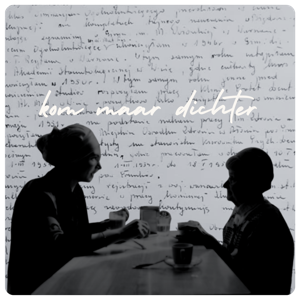
In deze vijfde aflevering van Kom Maar Dichter zijn twee auteurs te gast: Sandrine Ekofo (beleidsmedewerker Congo, columnist) en Benjamin Goyvaerts (historicus en leerkracht geschiedenis). We gaan voorbij de flaptekst — naar het proces, de twijfels en de inzichten die blijven hangen.
Het idee ontstond bij Benjamin, die zich als leerkracht geschiedenis afvroeg waarom er voor kinderen niets bestond over de kolonisatie. Voor beiden was het belangrijk om het samen te doen, vanuit een gedeelde geschiedenis en met iemand met Congolese roots. Sandrine en Benjamin kenden elkaar amper, maar hun paden hadden elkaar jaren eerder al gekruist rond een column over koloniale monumenten. Ze openden een Google Doc, verdeelden de hoofdstukken, en werden elkaars partners in accountability — met als stip op de horizon 30 juni 2025, de verjaardag van de Congolese onafhankelijkheid.
We praten over de balans tussen eerlijk zijn en kinderen niet overdonderen (passages over gruwelijkheden sneuvelden soms, maar niets werd vergoelijkt), en over de mooie vondst om het verhaal en de historische context apart te zetten. Over de illustraties van Shamisa Debroey, bewust zonder koloniale clichés. En over multiperspectiviteit en agency: de keuze om de geschiedenis te vertellen vanuit de ogen van een Congolees meisje — moeilijk, omdat er over meisjes in die periode vrijwel geen bronnen bestaan.
We hebben het ook over wat het schrijven met hen deed: voor Benjamin het moeilijkste boek dat hij maakte (een historicus die plots fictie moet schrijven), voor Sandrine een emotioneel zwaar onderzoeksproces dat bevestigde wat ze al wist — dat kolonisatie als systeem niet goed te praten valt. Over hun grote verantwoordelijkheidsgevoel en hun strengheid voor zichzelf, de vrees voor een backlash die nooit kwam, en het besef dat kolonialisme geen afgesloten hoofdstuk is — ook veel hedendaagse conflicten draaien om grondstoffen.
Tot slot lezen ze de openingspassage voor, "Feest in het dorp", waarin de avontuurlijke Kimia ongeduldig heen en weer schuift terwijl haar moeder haar haar vlecht.
Kimia in het hart van Congo van Sandrine Ekofo, Benjamin Goyvaerts en illustratrice Shamisa Debroey was de aanleiding voor dit gesprek.
Wil je geen enkele aflevering missen? Abonneer je op Kom Maar Dichter via je favoriete podcastkanaal, en schrijf je in op The Conversation Layer— dan belanden de gesprekken, transcripties en extra reflecties meteen in je inbox.
Kom maar dichter. We luisteren samen verder.
"Are the white men staying?" Kimia asks. "They're staying," says her mother. Nothing will be as it was before. Kimia is six years old when the colonisers arrive in her village. In Kimia in het hart van Congo ("Kimia in the Heart of Congo"), we follow her life during the colonial era, interspersed with historical facts about Congo before, during and after colonisation. It's a children's book that makes a large and loaded historical story accessible to young readers — and that, until now, simply did not exist.
In this fifth episode of Kom Maar Dichter, the two authors are our guests: Sandrine Ekofo (Congo policy officer and columnist) and Benjamin Goyvaerts (historian and history teacher). We move past the back-cover blurb — toward the process, the doubts, and the insights that linger.
The idea began with Benjamin, who as a history teacher wondered why nothing existed for children about colonisation. For both, it was important to do it together, from a shared history and with someone of Congolese heritage. Sandrine and Benjamin barely knew each other, but their paths had crossed years earlier around a column about colonial monuments. They opened a Google Doc, divided the chapters, and became each other's partners in accountability — with a deadline on the horizon: 30 June 2025, the anniversary of Congolese independence.
We talk about the balance between being honest and not overwhelming children (passages about atrocities sometimes didn't make the cut, but nothing was glossed over), and about the fine device of keeping the story and the historical context apart. About the illustrations by Shamisa Debroey, deliberately without colonial clichés. And about multiperspectivity and agency: the choice to tell the history through the eyes of a Congolese girl — difficult, because there are virtually no sources about girls of that period.
We also discuss what the writing did to them: for Benjamin the hardest book he has made (a historian who suddenly has to write fiction), for Sandrine an emotionally heavy research process that confirmed what she already knew — that colonisation, as a system, cannot be excused. About their strong sense of responsibility and their strictness with themselves, the fear of a backlash that never came, and the awareness that colonialism is not a closed chapter — many of today's conflicts, too, revolve around raw materials.
To close, they read the opening passage aloud, "A Feast in the Village", in which the adventurous Kimia shifts impatiently back and forth while her mother braids her hair.
Kimia in het hart van Congo by Sandrine Ekofo, Benjamin Goyvaerts and illustrator Shamisa Debroey was the starting point for this conversation.
Don't want to miss an episode? Subscribe to Kom Maar Dichter on your favourite podcast platform, and join The Conversation Layer — and each conversation, transcript and extra reflection will land straight in your inbox.
Come closer. Let's listen carefully.