
Sign up to save your podcasts
Or

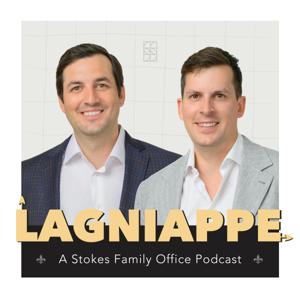


What are the narratives in the market? Bullish or bearish? This is a question that is always on the mind of investors. The stock market is constantly bombarding investors with news, analysis, and commentary, and it can be overwhelming to try to make sense of it all. However, looking at the market narratives from a different perspective can give you a better understanding of what is happening in the market.
In today's episode, Greg and Doug debunk market myths. They explore the market narratives through a different lens by looking at the news, analyst opinions, and price action.
Key Takeaways
Quotes
[06:57] - "Things are better now than they've ever been. From a short-term perspective, things have been looking a lot better. Inflation seems to have chilled out, and the latest inflation numbers were flat monthly." - Greg Stokes
[07:51] - "Consumers are tapping into savings to fight inflation. On top of that, debt levels and delinquencies are rising." - Doug Stokes
[15:23] - "Historically, a yield curve leads to a recession. And a recession is always accompanied by a negative market experience." - Doug Stokes
[21:20] - "Invest early, invest often, be aggressive, and stick with the plan. If you do that for many decades, it will work out in your favor." - Greg Stokes
Links
Connect with our hosts
Subscribe and stay in touch
Disclosure
The information in this podcast is educational and general in nature and does not take into consideration the listener's personal circumstances. Therefore, it is not intended to be a substitute for specific, individualized financial, legal, or tax advice. To determine which strategies or investments may be suitable for you, consult the appropriate qualified professional prior to making a final decision.
In this episode, Jamaul Ford, a serial entrepreneur in New Orleans who runs High Level Speech and Hearing Center with his wife, Dr. Lana Joseph-Ford, talks with Greg and Doug about launching a product-based business alongside a service-based venture, the R&D behind Jamaul and Lana’s product Jrumz, why culture is invaluable within big and small operations, and the challenges and opportunities associated with launching a business in New Orleans.
Key Takeaways
Quotes
[06:55] - “Most people don’t know this: as an entrepreneur, what we are, we are problem solvers, we typically identify what the problem is and try to come up with a solution.” ~ Jamaul Ford
[15:21] - “Being product-based is really about building community. And when you’re trying to build community, it’s more or less like building people [who] are zealots of your product that are going to go out and tell other people. As much marketing, Facebook advertisement, these things you can do, still word of mouth is always going to be the thing that’s really going to push your product to the next level.” ~ Jamaul Ford
[23:32] - “When it comes to building businesses in New Orleans, I really believe that you have to know the city, you have to know the needs of the city, know the people of the city, to know what to provide for the people of the city.” ~ Jamaul Ford
[24:04] - “I do believe personally that it is important to master something in New Orleans and then transition it to the masses.” ~ Jamaul Ford
Links
Connect with our hosts
Subscribe and stay in touch
Disclosure
The information in this podcast is educational and general in nature and does not take into consideration the listener’s personal circumstances. Therefore, it is not intended to be a substitute for specific, individualized financial, legal, or tax advice. To determine which strategies or investments may be suitable for you, consult the appropriate qualified professional prior to making a final decision.
This week, Doug and Greg discuss the confusing state of today’s economy, their predictions for economic growth and recovery years down the line, how the Feds can successfully avoid an economic recession, which parts of today’s inflation might stick around, and what you can control financially in a time of mass financial uncertainty.
Key Takeaways
Quotes
[04:45] - “The economy and the markets are two distinct things. The economy might be in a situation where it’s in a recession but the markets typically are forward-looking.” ~ Greg Stokes
[15:20] - “If [the Feds] can somehow figure out a way to have a soft landing, which is what they’re trying to do by slowing down the economy, slowing down spending without causing a recession, I think that would be a pretty admirable result.” ~ Greg Stokes
[19:51] - “If you’re not confused about what’s going on in the economy right now, then you really don’t know anything about economics is a way to think about it. Because this is a completely unprecedented period.” ~ Doug Stokes
Links
Connect with our hosts
Subscribe and stay in touch
Disclosure
The information in this podcast is educational and general in nature and does not take into consideration the listener’s personal circumstances. Therefore, it is not intended to be a substitute for specific, individualized financial, legal, or tax advice. To determine which strategies or investments may be suitable for you, consult the appropriate qualified professional prior to making a final decision.
This week, Doug and Greg discuss how consumers and big business are responding to sky-high inflation, which income bracket is struggling the hardest and which brands are selling out faster, the bright side to a recession in vibes, why midterms matter, and why despite it all, the market is up.
Key Takeaways
Quotes
[10:00] - “Things are bad, but the market ebbs and flows and generally overcorrects on the downside and overcorrects on the upside, and people that stick with a game plan end up working out.” ~ Doug Stokes
[10:16] - “One of our clients told me one time that things are never as good or as bad as they seem. And you’re right, things have seemed very bad lately.” ~ Greg Stokes
[13:39] - “I’m optimistic on the future and I think that if you extend your time or horizon long enough and if you look at prior data after the declines that we’ve seen recently, usually it’s a setup for a positive outlook going forward.” ~ Doug Stokes
Links
Connect with our hosts
Subscribe and stay in touch
Disclosure
The information in this podcast is educational and general in nature and does not take into consideration the listener’s personal circumstances. Therefore, it is not intended to be a substitute for specific, individualized financial, legal, or tax advice. To determine which strategies or investments may be suitable for you, consult the appropriate qualified professional prior to making a final decision.
This week, Richard Chen talks with Doug and Greg Stokes about overcoming obstacles and becoming a successful attorney, what the ultimate value-add is for both Rich and the advisors he serves, what prompted Rich to launch his own firm, and how Rich experiences life to the fullest without eyesight.
Key Takeaways
Quotes
[03:34] - “It’s a real privilege to be able to serve RIAs and to really help them grow their business.” ~ Richard Chen
[07:11] - “To this day I can’t recall ever thinking, ‘I can’t do this.’” ~ Richard Chen
[15:42] - “Life is too short to focus on what you can’t do and what you can’t experience. There are so many things out there to experience that it’s better just to look forward to what you can do and the possibilities out there.” ~ Richard Chen
[20:11] - “Humility is so important because there’s always something we can learn from everybody. I always try to take that attitude.”~ Richard Chen
Links
Connect with our hosts
Subscribe and stay in touch
Disclosure
The information in this podcast is educational and general in nature and does not take into consideration the listener’s personal circumstances. Therefore, it is not intended to be a substitute for specific, individualized financial, legal, or tax advice. To determine which strategies or investments may be suitable for you, consult the appropriate qualified professional prior to making a final decision.
This week, Doug Stokes and Greg Stokes discuss the state of corporate America, why stock-based investors should treat dividends like rent, the fluctuation of global currency, and why the Federal Reserve is stoking your recession-based fears.
Key Takeaways
Quotes
[02:06] - “If you were a real estate investor, even though the value of your property was down you probably didn’t know it. If your rents were up 14% over the last twelve months – you wouldn’t really care what the actual value of the property was. The same thing should apply to stock-based investing. In the case of dividends appreciating by 14%, even though the value has fluctuated, and fluctuated negatively, over the last twelve months, your ‘rents’ or your dividends are up 14%. ” ~ Greg Stokes
[04:45] - “In essence, if you buy in great companies that have pricing power and are able to pass through increased costs to their customers and then increase the dividends paid to you, that’s something to treat like a piece of property and collect your rents, your increased rents, year over year.” ~ Doug Stokes
[11:29] - “Whether there’s a recession or not, it seems like the best place to be is in the U.S. markets currently. We’re actually seeing that in currency movements.” ~ Doug Stokes
Links
Connect with our hosts
Subscribe and stay in touch
Disclosure
The information in this podcast is educational and general in nature and does not take into consideration the listener’s personal circumstances. Therefore, it is not intended to be a substitute for specific, individualized financial, legal, or tax advice. To determine which strategies or investments may be suitable for you, consult the appropriate qualified professional prior to making a final decision.
This week, Doug Stokes and Greg Stokes discuss the unique and successful American experiment, what’s going on with the U.S. housing market, when inflation will eventually end, and what they believe is an even bigger issue than inflation itself.
Key Takeaways
Quotes
[13:18] - “The last major recession was a housing-led recession and a housing crisis which led to a global financial crisis. And I think people are looking for the same signs of cracks in the system in housing and I don’t think that’s necessarily the case. I think this is probably a manufactured slowdown in housing.” ~ Doug Stokes
[17:29] “I really don’t see high inflation for long periods of time. I’m not considering that as a high probability outcome although it could be the case. I think the more scary situation is that the federal reserve overshoots its raising rates to the point where it pushes the economy into a recession.” ~ Doug Stokes
[18:55] ~ “The comforting thing to me is that it will eventually end. This market will eventually turn into a bull market and I think that there are some psychological aspects to it as well that I think are promising. But also from just a historical timing standpoint, the average bear market lasts about six months.” ~ Greg Stokes
Links
Connect with our hosts
Subscribe and stay in touch
Disclosure
The information in this podcast is educational and general in nature and does not take into consideration the listener’s personal circumstances. Therefore, it is not intended to be a substitute for specific, individualized financial, legal, or tax advice. To determine which strategies or investments may be suitable for you, consult the appropriate qualified professional prior to making a final decision.
In 2008, as a recession raged on in America, Jonathan Shafer believed it was time to make a difference elsewhere. After meeting a family searching for someone to launch an investment strategy company in West Africa, Jonathan jumped on the opportunity. Planning to be in Africa for only one year, Jonathan and his family ended up staying for seven years.
Despite its challenges, Jonathan saw tremendous opportunity in Africa, both financially and through humanitarian work. Given that 600 million people in Africa don’t have access to power, investing in renewable energy became Jonathan’s primary focus, creating flourishing financial returns as well as a powerful impact on the lives of native civilians.
Today, Jonathan’s efforts in Africa total more than $215 million of invested capital, and include ventures such as Fortis Green Renewables, a firm investing in renewable energy assets throughout Sub-Saharan Africa, and CommonGood Capital, a financial services company focused on global values-based investments.
In this episode, Jonathan talks with Doug and Greg about why Africa has incredible opportunities for both financial investments and powerful humanitarian change, the impact alternative power sources can have on the quality of life in Africa, the risks of developing hydropower in Africa versus elsewhere, and what life is like in Kigali, Rwanda.
Key Takeaways
Quotes
[04:05] - “It was really this desire back in 2008 to use my skill set to make a difference in the world. How do I use the talents that I have and the skills that I’ve acquired to not just go build orphanages and not just go build schools, but how do we use business as a tool to really make an impact on people’s lives?” ~ Jonathan Shafer
[32:43] - “When we look at the world, when we look at emerging markets in terms of where do we think the most potential for long-term growth is, we look at Africa. I think the challenge is you have to pick those segments of the market at the right time.” ~ Jonathan Shafer
[34:48] - “I have very little, let’s just say no interest, in making money for the sake of making money. Money is important. Money matters. But, for me personally, I only want to be involved with things that a) make money, that’s a given, but then have the potential to have a positive impact on people’s lives.” ~ Jonathan Shafer
Links
Connect with our hosts
Subscribe and stay in touch
Disclosure
The information in this podcast is educational and general in nature and does not take into consideration the listener’s personal circumstances. Therefore, it is not intended to be a substitute for specific, individualized financial, legal, or tax advice. To determine which strategies or investments may be suitable for you, consult the appropriate qualified professional prior to making a final decision.
The happiness and contentment we feel surrounding money doesn’t end with the number in our bank account. Take it from Brian Portnoy, founder of Shaping Wealth, a financial wellness company that helps clients make smarter financial moves. Brian understands the psychology behind financial decisions as much as he does the strategy behind investment.
For instance, as human beings, we instinctively compare ourselves to others, seeking comfort in status and discomfort when our social media is flooded with 18-year-old billionaires rich off crypto. But how can we learn to mute the comparison triggers all around us? And why do growth-focused goals keep us grounded?
Brian talks with Doug and Greg about navigating the comparison landscape, why money is still taboo, why unlimited freedom has led to increased paralysis, and the difference between being rich and being wealthy.
Key Takeaways
Quotes
[06:12] - “There’s a quote I love from J.P. Morgan, the original John Pierpont Morgan from whatever it was 100 years ago, where he said, ‘Nothing corrupts your financial judgment more than the sight of your neighbor getting rich.’ It wasn’t that long ago that your neighbor was the guy across the street. Now your neighbor is every person on Facebook and TikTok and Snap and LinkedIn and Twitter. Everybody is everybody’s neighbor and we’re going a little bit bonkers with it.” ~ @brianportnoy
[16:26] - “What goals do from a negative perspective is they tee us up for emotional disappointment. Because no matter how good, or frankly how bad, a particular outcome is, we tend to revert to type, and then we say, ‘what’s next?’ Because we are foundationally growth-oriented creatures. And wherever we get, we want to get further.” ~ @brianportnoy
[22:21] - “I think what anyone can do to figure out where money fits into a meaningful life and have those goals be more emotionally resonant, is to think about purpose, is to think about meaning.” ~ @brianportnoy
Links
Connect with our hosts
Subscribe and stay in touch
Disclosure
The information in this podcast is educational and general in nature and does not take into consideration the listener’s personal circumstances. Therefore, it is not intended to be a substitute for specific, individualized financial, legal, or tax advice. To determine which strategies or investments may be suitable for you, consult the appropriate qualified professional prior to making a final decision.
After spending years going through a tough academic program, one dissertation away from achieving a degree, Wes Gray chose to take a step back and join the Marine Corps. Following five years of service, Wes finished his degree at The University of Chicago, studying under the acclaimed Eugene Fama.
While working as a professor, a cold call from a billionaire in New York prompted Wes to begin moonlighting as an internal due diligence agent. That decision to take on a second job became his inspiration for Alpha Architect – an asset management firm committed to empowering investors through education.
In this episode, Wes talks with Doug and Greg about why Alpha Architect is abnormal, the method to their madness, how Wes challenged Eugene Fama (and nearly won), how Alpha Architect is responding to today’s volatile markets, and what the future looks like for value investors.
Key Takeaways
Quotes
[27:14] - “One of the problems with the financial services industry is, the best idea, the best strategy in the world, can always be ruined by fees and taxes. And so, you can have a lot of excess returns, but if you give it all up in fees and taxes, what was the point?” ~ Wes Gray
[31:08] - “No matter how you cut it, the valuation of value stocks is the cheapest it’s ever been relative to the valuation of the market or gross stocks more particularly. And so the problem is timing. I have to survive the potential issue of, I go buy value stocks and then all the sudden all the crazy maniac stocks beat me and crush my soul by ten percent a year for the next ten years again.” ~ Wes Gray
[31:57] - “The problem is, if there is a risk that you give up on fundamentals and the weighing machine in the short run, that means you will not get to extract the benefits of the long run. And I always tell people, you really need to sit down and think about your own brain psychology, and if you can’t deal with the heat in the kitchen, get out of the kitchen and just go buy the Vanguard fund.” ~ Wes Gray
Links
Connect with our hosts
Subscribe and stay in touch
Disclosure
The information in this podcast is educational and general in nature and does not take into consideration the listener’s personal circumstances. Therefore, it is not intended to be a substitute for specific, individualized financial, legal, or tax advice. To determine which strategies or investments may be suitable for you, consult the appropriate qualified professional prior to making a final decision.
From the publisher's feed

10,186 Listeners