
Sign up to save your podcasts
Or

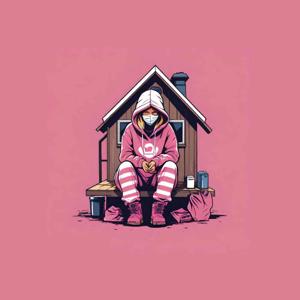


Solve homelessness
1. House person/family
2. Don’t evict*
3. Repeat
*important
In under five years, the City of Los Angeles has gotten fantastic at getting unhoused people to move into motel shelters quickly*.
Thanks for reading roofless! Subscribe for free to receive new posts and support my work.
(I don’t think anyone has ever made the claim that moving unhoused people into prepaid motel rooms would be particularly difficult).
Unfortunately, the City has become even better at kicking people out of motels and interim housing without getting their hands dirty by withholding payments to motel owners, landlords and service providers.
Owners eventually grow tired of waiting for promised payments and begin to remove formerly homeless occupants in one way or another, usually with the help of the service provider (until they stop getting paid, too)—activating a series of lockouts, botched “transfers”, and allegations of behavioral violations designed to make people abandon or abscond from their doomed accommodations.
The chaotic cycle of interim shelter stays punctuated by inevitable terminations is a chronic state of displacement that many unhoused people have been stuck in for several years.
The ones who have remained in motel accommodations through multiple program transfers consider themselves the “lucky” ones to still be indoors. We don’t hear too much from the “unlucky” ones, who also consider themselves “lucky” not to be living under the trauma-triggering threat of “termination” any longer…but are now facing exposure to the elements again.
Back-to-back one-time grants propel a shelter placement-displacement cycle.
Emergency money always runs out eventually because interim shelter is so much more expensive than permanent homes, but permanent housing requires the commitment of secure, ongoing funding—not bursts of emergency aid.
Chronic homelessness isn’t like a closed highway or a wildfire. Chronic homelessness is an ongoing economic circumstance that manifests as visible encampments of unsheltered people who find creative ways to live within the same parameters that apply to all of us under capitalism.
Living outdoors long-term is a logical solution for people who can’t afford rent.
If the economy were better, there would be fewer people who find themselves in that situation, but not necessarily fewer homeless people than there are today. Many chronically homeless people (like me) have jobs and incomes that provide more than enough money to sustain our needs outside, but without a federal housing voucher, we won’t be able to afford to market rents for more than a few months in a row.
One-time grants without ongoing economic investment in keeping individuals out of homelessness is just throwing money on a fire to keep warm.
The government provides ongoing federal funding for permanently subsidized housing in the form of grants and vouchers for use on the private rental market. This is ongoing economic investment into getting and keeping individuals off the streets. But L.A. returns those grants and allows valuable housing vouchers to expire, unused. Meanwhile, a person perishes outdoors in L.A. every few hours.
After returning all those resources, our Mayor has the nerve to ask for more federal funding (more money to not spend) and our Councilpeople apply for one-time State ERF grants to implement more temporary shelter programs. Infuriatingly, those grants start with displacement of an “encampment” and terminate within months, usually just 30 days, long before permanent housing can be secured for anyone. Each State grant funds a full 360-degree revolution in the displacement cycle for everyone impacted. We saw this play out multiple times in 2021 in Venice with people cycling from Penmar to motel to Ocean Front Walk to motel and back outside. There were at least two ERF grants involved in those operations.
Let’s have a look at how some of this motel spending “checks out”. We know motels tend to be more expensive per night than renting, but they can be the only option for people who don’t have the qualifications to submit a winning rental application.
Shelter programs
All hotel/motel interim shelter programs operate in basically the same way. The main costs are for the shelter and the services provided by nonprofit service providers, who are sometimes aided by City and County agencies.
Variables:
• Rooms
• Nights
• Room rate
Budget:
Motel nights multiplied by program rate
• Motel nights:
Rooms multiplied by nights
• Shelter cost:
Motel nights multiplied by room rate
or
Budget minus services
• Program rate:
Budget divided by motel nights
or
Room rate plus services per diem
• Services:
Budget minus shelter cost
• Services per diem:
Program rate minus room rate
By analyzing the proportion between shelter cost and services, we can see where the bulk of the money is going whenever one of these “solutions” is initiated.
Encampment to Home (CD4 ERF grant)
Current budget (obtained from CAO via CPRA) 👇
Budget = $1,750,000
• Rooms = 60
• Nights = 90
• Room rate = $120/night NOT including food
✍️ Determine the number of motel nights.
Motel nights = Rooms * nights
60 rooms * 90 nights = 5,400 motel nights
✍️ What is the shelter cost?
Shelter cost = Motel nights * room rate
5,400 * $120 = $648,000
✍️ Calculate the program rate.
Program rate = Budget / motel nights
$1,750,000 / 5,400 = $324
✍️ What portion of the budget is for services?
Services = Program rate - room rate
$324 - $120 = $204
$204 / $324 = 63%
💰The nonprofit operator of the E2H motel shelter program gets $204/day per room for providing “services”, or 63% of the program cost, while the motel gets 37% for providing the temporary shelter.
Inside Safe
Spending report #2 5/16/23
Budget* = $43,684,303.16
(*projected spending through end of FY23)
Note: Calculations assume the rate the City paid private motels is the same as the L.A. Grand rate ($154)
L.A. Grand Hotel + Private Motels
• Rooms = 481 + private motel rooms
• Nights = 150 (February 1st to June 30th)
• Room Rate = $154*/night including food
(*Room rate for L.A. Grand applied to private motels but could vary)
✍️ Determine the number of motel nights.
Motel nights = Rooms * nights
481 * 150 = 72,150 motel nights for L.A. Grand
22,437 (2/1 – 4/28) + 22,142 (4/29 – 6/30) = 44,579 in private motels
Total motel nights = 116,729
✍️ What is the shelter cost?
Shelter Cost = Motel nights * room rate
72,150 * $154 = $11,111,100 for L.A. Grand
44,579 * $154 = $6,865,166 for private motels
Total shelter cost = $17,976,266
✍️ Calculate the program rate.
Program rate = Budget / motel nights
$43,684,303.16 / 116,729 = $374
✍️ What portion of the budget is for services?
Services = Program rate - room rate
$374 - $154 = $220
$220 / 374 = 59%
💰At $374/room/night, with 59% going to the nonprofit and 41% going to food and shelter, Inside Safe at the LA Grand seems to pay slightly more for shelter ($154) than Encampment to Home ($120). However, this Inside Safe rate includes three meals/day, whereas E2H included $150/week for gift cards in the “services” rate. Participants at E2H reported only getting $50 food cards some weeks and not others, and towards the end of the program, they were told the nonprofit “ran out”.
How many rooms are in use right now?
So far, at least 1,590 people have entered Inside Safe. 1,043 people, or 66% were currently in motel rooms and participating in the shelter program, as of a September CAO report obtained via CPRA.
It’s unclear at this point whether the number of rooms is the same as the number of participants because there are probably couples in some rooms with one bed and there may also be families or friends sharing rooms with two beds. For simplicity, I am figuring 1 participant = 1 room.
The L.A. Grand Hotel has 487 rooms but six are reserved. There is a total of 671 beds in the Hotel. The rest of the Inside Safe rooms are being rented from private motels all around the City.
If you’re curious to know which motels, you can view the CAO’s Homeless Emergency Account in the City’s open checkbook. I made a Google Map of 25 motel shelter locations using the names on the paid invoices in the checkbook, but it’s possible it is not 100% accurate if there were missing invoices and/or multiple hotels in L.A. with similar names.
What is the average duration of stay in Inside Safe?
Since most people haven’t checked out yet, we can only calculate the average length of time people have been staying there so far. The average duration of Inside Safe participants’ stays so far is currently over 200* nights as of November. There hasn’t been a status report since September so unfortunately I can’t give more updated information.
206 nights = average duration of motel stay so far for nearly 1,000 Inside Safe participants who remain in motel rooms, including 35 L.A. Grand hotel legacy guests beginning 2/1/23; as calculated on 11/6/23. 99 participants that came from Winter Shelter Programs or outreach referrals were excluded from estimation because their specific check-in dates were unknown.
Please feel free to check my work!
Services
Services in both the State-funded E2H motel shelter program and the City-funded Inside Safe cost around $200/day, and they tend to be roughly twice as costly per diem as the motel room rate (but they don’t have to be).
ERF grants do not allow for any spending by municipal departments because the State won’t fund City services and execution of the operation should not require City employees to do additional work outside of the normal scope of their jobs. Since the City can add things like “extra work” by LASan, LAPD, and LADOT to their operations, because they are the ones paying for it, they usually do.
Unhoused Whistleblowers
I started a hotline on Google Voice at (818) 600-1846
If someone has an Inside Safe or interim hotel/motel shelter concern or grievance, they can tell me by texting or leaving a message.
I am NOT mobile and I AM POWERLESS TO HELP THEM.
My phone is not always charged and I have no influence with the City or nonprofits.
But I will try to advocate for them not to be evicted to congregate shelter or the streets.
The City should be doing this (and allowing phone-in comments on Homelessness and Housing Committee meetings) and hopefully the City Controller will take over it soon.
Thanks for reading roofless! Subscribe for free to receive new posts and support my work.
🔔 L.A. Alliance for Human Rights v City of Los Angeles had a compliance hearing with Judge Carter at Courtroom 1 in the First Street Federal Court House at 9am Thursday, March 7th, 2024.
This is a map of the public places where you aren’t allowed to sit, sleep, lie, or have possessions in L.A. 👇
LAMC § 41.18 is the municipal ordinance that makes it illegal to sit, sleep, lie, keep, maintain, place or possess personal property in THOUSANDS of public “Zones” in the City of Los Angeles.
Click for interactive 41.18 ArcGIS Map from LADCP (Dept. of City Planning)
Created and enforced by LAPD, LAMC § 41.18 makes sitting, sleeping, lying, keeping, storing, placing or maintaining personal property in the public “right-of-way” punishable by fine (up to $2,500, starting at $237) and/or jail (up to 6 months).
Thanks for reading roofless! Subscribe for free to receive new posts and support my work.
LAMC § 41.18 has evolved at least three separate times after being rendered unenforceable by SCOTUS decisions.
The main targets of LAPD’s 41.18 enforcements have been:
* Vagrants/poor migrants from other states during the 1930s
* “Hippies”/Black civil rights activists in the 1960s
* Homeless peoples’ “camps” and tents, RVs/“campers” in the 2000s
* Unhoused people perceived to have mental illness and/or substance use disorder in the 2020s
Higher courts have invalidated each 4118 incarnation for being unconstitutional. Still, LAPD continues to tweak its favorite “rousting” law with help from their advocates in City Hall and the support of businesses.
Anti-“Okie”/“Arkie”
There are earlier records of LAPD criminalizing “vagrancy” and “resorting”, including reformer CD13 Councilman Carl “Jake” Jacobson being charged (in a scandalous LAPD set-up), but the oldest official version I have found of “4118/41.18” is in City council’s archived files from 1935.
The 1930s version of 4118 was called the “Bum Blockade”, and it was used to deny poor dust bowl migrants the right to travel into L.A. during the Great Depression, when 136 LAPD “Border Patrol” officers would station themselves by railroads at State borders to try to convince poor people to turn around instead. On 3/15/1936, L.A. Times reported that LAPD Border Patrol offered migrants a free sandwich for traveling back east. An additional 75 LAPD officers in the City formed the “vag(rant) detail”.
One main purpose of these LAPD assignments was surveillance, as “vagrants” were fingerprinted and recorded. Then their records could be used to label them habitual criminals next time they encountered LAPD. Another function “vag”/transient patrols served was the extraction of essentially unlimited free labor, which was typically done at a rock quarry.
The Bum Blockade didn’t last very long. The City’s main objection was not wanting to pay for “work” done outside L.A. City limits. Also, there’s no state law prohibiting migration, and if there were, it would be unconstitutional.
Although it was made to be used against poor migrants, young American-born citizens with legal Mexican immigrant parents were being “deported” or “repatriated” (those words aren’t really accurate because these Mexican-American families were legal American citizens who were being forcibly transported to Mexico by train) by the thousands between 1929 and 1939, so 4118’s tactics were utilized for racial terror back then as they still are today.
SCOTUS deemed it legal for paupers to migrate to California from other states in 1941:
Whatever may have been the notion then prevailing, we do not think that it will now be seriously contended that, because a person is without any employment and without funds, he constitutes a “moral pestilence.”
Poverty and immorality are not synonymous.
— Edwards v CA 314 US 160 (1941)
Anti-“Hippie”
LAMC § 41.18 wasn’t codified as an ordinance until the 1960s, when it was used against “hippies”, “loiterers” and civil rights protesters. Basically, 41.18 was LAPD’s multipurpose tool, used in this context specifically to segregate public spaces and suppress the advancement of civil rights.
Since its codification, 41.18 has been an instrument for anti-Black racism.
41.18 has been re-worked and re-worded several times over the past century, failing Constitutional challenges with each edition. Kind of like what eventually happened with the Bum Blockade, SCOTUS struck loitering ordinances as “unconstitutionally vague” in the 1972 case Papachristou v Jacksonville.
Jacksonville, Florida’s municipal vagrancy ordinance criminalized dozens of types of vagrants, including:
* rogues and vagabonds, or dissolute persons who go about begging
* common gamblers
* persons who use juggling or unlawful games or plays 🤹
* common drunkards
* common night walkers
* thieves, pilferers or pickpockets
* traders in stolen property
* lewd, wanton and lascivious persons 👯
* keepers of gambling places
* common railers and brawlers
* persons wandering or strolling around from place to place without any lawful purpose or object 🚶♀️
* habitual loafers
* disorderly persons
* persons neglecting all lawful business and habitually spending their time by frequenting houses of ill fame, gaming houses, or places where alcoholic beverages are sold or served
* persons able to work but habitually living upon the earnings of their wives or minor children
It was used to arrest two white women and two Black men who were all riding together in the same car under the premise that they were vagrants who were “prowling by auto”. They had drove near a used car lot which had been the subject of burglary.
Margaret “Lorainne” Papachristou, one of the white women, had one municipal violation on her record. The other three suspects’ records were clean. They were each facing 10 days in jail.
SCOTUS’ 7–0 opinion of the unconstitutional vagrancy ordinance said:
* it ‘fails to give a person of ordinary intelligence fair notice that his contemplated conduct is forbidden by the statute,’
* it encourages arbitrary and erratic arrests and convictions,
* it makes criminal activities that, by modern standards, are normally innocent, and
* it places almost unfettered discretion in the hands of the police.
— Papachristou v City of Jacksonville, 405 U.S. 156 (1972)
41.18 continues to transform in response to SCOTUS opinion in the new millennium. The modern 41.18(d) banned “camping” and the newer “Sit/Lie” 41.18 still disproportionately oppress Black people in public at the whims of LAPD and business owners.
Anti-“camping”
LAPD still can and will hassle you for sitting literally anywhere, place you under arrest, or on a W & I § 5150 hold, and fine you up to $2,500, which will be sent to collections if you can’t pay. If you’re lucky, you might only get a warning, as long as you “move along” and aren’t caught again. If you won’t take a plea, you could sit in jail for weeks or even months until you can get a jury trial. At that point, twelve members of the public will likely be too annoyed their lives were interrupted to charge you with such a petty “crime”.
The odds of a 41.18 case getting dropped, vacated or being found “not guilty” are around 90% if taken to trial.
Great Read: On L.A.'s skid row, homeless woman stands her ground to stay putAnnie Moody has been arrested 59 times in six years, as L.A. officers try to get her off the streets of skid row. But to…www.latimes.com
You can ask Annie Moody, LAPD’s #1 most arrested person, about 41.18(d). She accumulated around 100 violations of LAMC § 41.18(d), the “anti-camping” edition that became before the current “sit/lie” version.
We’re human beings…
We have a right to be stationary.
— Annie Moody
But Ms. Moody wasn’t “camping”. She lives on a sidewalk on Skid Row in a tent. If she were camping, she’d have a home to return to, once her vacation was over, according to the Oxford dictionary definition:
camp·ing
noun
the activity of spending a vacation living in a camp, tent, or camper.
“camping attracts people of all ages”
— Oxford Languages
This prior version, LAMC § 41.18(d), L.A.’s “anti-camping ordinance” was made unenforceable by a settlement in the lawsuit Jones v City of Los Angeles.
Jones argues that LAMC § 41.18(d) makes criminal what biology and circumstance make necessary, that is, sitting, lying, and sleeping on the streets…
By enforcing the ordinance, Jones contends, the City subjects homeless persons to a cycle of citation, arrest, and punishment for the involuntary and harmless conduct of sitting or lying in the street.
— Jones v City of Los Angeles, 444 F.3d 1118 (9th Cir. 2006)
The Jones settlement required the creation of 1,250 new permanent supportive housing units with half located in Skid Row before the ordinance could be reworked, but then Martin v Boise was decided and held by SCOTUS.
…does the Cruel and Unusual Punishments Clause of the Eighth Amendment preclude the enforcement of a statute prohibiting sleeping outside against homeless individuals with no access to alternative shelter?
We hold that it does, for essentially the same reasons articulated in the now-vacated Jones opinion…
— Martin v City of Boise, No. 15-35845 (9th Cir. 2018)
Sit/Lie
Most recently, L.A. City Council resurrected 41.18 as a “sit/lie” law in hundreds of Sensitive Zones in 2021 and expanded it to thousands of additional Enforcement Zones in 2022 with lots of local support and plenty of disappointing silence from designated “homeless advocates”.
Following in the footsteps of San Francisco’s Mayor Gavin Newsom (now Governor) and SFPD Chief George Gascón, (now Los Angeles County District Attorney) the City of L.A. implemented a law against sitting on a sidewalk. The argument in SF for why a sit/lie law was “necessary” was because the other laws against blocking sidewalks and disorderly typically required a complaint to be made before enforcement could occur.
Support
LAUSD & City Hall
The updated 41.18 was championed by LAUSD’s legislative affairs department and Superintendent Alberto M. Carvallo of Miami-Dade County, as well as Mayor Eric Garcetti, City Attorney Mike Feuer, LAPD, and most of L.A. City Council. There was also a lawsuit filed by DTLA developers under the name “L.A. Alliance for Human Rights” overseen by federal judge David O. Carter. Judge Carter implemented anti-camping ordinances in an OC lawsuit, Orange County Catholic Worker “OCCW” v Orange County.
Most of 41.18’s advocates in City Hall are already gone, but Enforcement Zones remain.
* Spineless ex-Mayor Eric Garcetti termed out and absconded to India.
* Mustached ex-City Attorney Mike Feuer’s mayoral campaign failed, and he just came in 4th in the primary for CA-30.
* CD1's disgraced Gil Cedillo termed out.
* CD5's potato Paul Koretz termed out and lost a campaign for City Controller.
* CD6/disgraced City Council President Nury Martinez resigned under Presidential direction after the Fed Tape leaks exposed her racism.
* CD10's 41.18 apologist Mark Ridley-Thomas (author of the 41.18 SOP “Street Engagement Strategy”) lost his seat after being found guilty of a nepotistic bribe with USC.
* CD13 Echo Park Lake villain Mitch O’Farrell thought he had another term left, but voters were done with him.
* CD15 ex-LAPD Joe “Buckets” Busciano, ran a miserable mayoral campaign, and didn’t even get endorsed by LAPD.
* Even LAPD Chief Michel Moore was forced into retirement last week, allegedly for investigating Mayor Karen Bass.
Their replacements oppose 41.18.
* Eunisses Hernandez, who has voted against the creation of new 41.18 Zones, impressively won in the primary for CD1.
* CD5's Katy Young-Yarlslovsky has voted against the creation of new 41.18 Zones and ordered a report about 41.18's effectiveness.
* Paul Koretz lost the Controller race to Kenneth Mejia, who campaigned on opposing 41.18 and challenging LAPD’s budget.
* Hugo Soto-Martinez (opposes 41.18) cut Mitch O’Farrell’s term short in CD13.
Other supporters losing to candidates who oppose 41.18:
* Jillian Burgos (opposes 41.18) is running for CD2. CD2 Paul Krekorianascended to the Council’s Presidential throne after Nury Martinez resigned, but he’s termed out.
* CD10 Candidate Aura Vasquez calls 41.18 “a failed policy”. CD10’s appointee Heather Hutt is facing Vasquez and other promising challengers in the primary.
* Ysabel Jurado (opposes 41.18) is running in CD14 against embattled incumbent KDL. Kevin De León designated 41.18 Enforcement Zones at City Hall and around DTLA. He did not resign after he was exposed making racist and homophobic statements in the Fed Tapes, even when POTUS instructed him to do so. A recall attempt against him was unsuccessful, just like his Mayoral campaign (in which he tied with abolitionist Gina Viola for 3rd and 4th place after Rick Caruso and Karen Bass. Joe Busciano and Mike Feuer came in 5th and 6th).
Opposition
CD11's Mike Bonin (didn’t run for re-election in 2022) and CD4’s Nithya Raman were 41.18's dissenters, with CD8’s Marqueece Harris-Dawson occasionally joining. CD1's Eunisses Hernandez and CD13 Hugo Soto-Martinez and sometimes CD5 Katy Yarlslovsky also vote against the creation of new 41.18 Zones. Yarlslovsky also ordered a report about 41.18’s effectiveness that was apparently suppressed.
City Controller Kenneth Mejia, who boldly opposed 41.18 in his campaign and still won more votes than Mayor Karen Bass, released data on 41.18 arrests last October, revealing that the most enforcements occur in John Lee’s CD12 (Chatsworth).
41.18 Arrests by TypeThis map and analysis show details of arrests under LA Municipal Code 41.18, which criminalizes sitting, lying, and…controller.lacity.gov
Nonprofits
PATH (“People Assisting The Homeless”) and United Way of Greater Los Angeles “UWGLA” actually registered as lobbyists to speak against LAMC § 41.18 during public comment at City Council’s Homelessness and Poverty Committee. Confusingly, their lobbyist registrations only say “41.18”, without clarifying that they were part of the opposition.
LAHSA silence
Not to give too much credit to these giant 501(c)s, which often act in ways that are harmful to unsheltered and unhoused people, but it was pretty impressive that they took their issue with the policy into the public forum.
It was also revealing that even the United Way, a philanthropic fundraiser, felt like public comment was their best chance at being heard. UWGLA must have contacts in City government and influence considering the huge contracts they hold, but they were limited to speaking for 1–2 minutes, just like the rest of the general public.
Los Angeles Homeless Services Authority (LAHSA), the joint-powers authority between L.A. City and County was disappointingly silent on the issue, despite having a power legislative affairs department of their own that could have challenged LAUSD and the City. LAHSA have said that “sweeps” and criminalization make it difficult form them to do their jobs because they create distrust, destroy survival supplies and documents and break connections between clients and caseworkers.
LAHSA are supposed to be “homeless advocates”, but if they were, they would have objected to 41.18’s passage and expansion at City Hall.
Luckily, real activists and advocates for the unhoused put up a fight in the council chambers, showing up in hundreds, challenging City Council’s CF20-1376 motions, which would end up becoming CF21-4118, and sometimes getting arrested by LAPD for it.
LAPD Metro & DTLA BIDs
If it seems like no one really likes LAMC § 41.18 except LAPD, who created it nearly 100 years ago and maybe some of their friends, like downtown business interests, because most civilians don’t actually support it. The lawyers enlisted by DTLA developer Izek Shomof and maverick federal Judge Carter presiding over their lawsuit are probably 41.18’s biggest fans outside LAPD.
Shomof and Carter feel comfortable embracing the designation “homeless advocate” while actively oppressing homeless people by re-implementing 41.18.
They are LAPD advocates, not homeless advocates.
The new 41.18 is designed to be so convoluted that the entire City of Los Angeles is turned into a giant “NO PARKING ZONE”.
Listen to “Judge Carter” pitch this idea to LAPD and the court in transcripts:
…Okay. Now, let’s go on for just a moment. Okay. I think I’ve got — I’m going to show you a sign just to leave you with kind of a smile on your face for law enforcement and for our folks out there.
Could you find that last sign that the community introduced me to. It’s a parking sign. Yes, right there. Right there. Okay. This is great.
If you ever want to see a parking infraction, here it is. I want you to try to park your car and read this sign sometime. I can give you a ticket under any circumstances because this is so convoluted, and I want to keep this sign here for a second. I just chuckled. The City might want to clean that up. Clean it up…
— U.S. Judge David O. Carter speaking in a transcript from the L.A. Alliance for Human Rights v. City and County of L.A. Court proceedings
Judge Carter continues by telling an L.A. City Engineer,
We’re all trying to get to the same places. So we’re going to have huge arguments between all of the parties, but we’ll try to get to the same place just maybe in different ways.
Despite not working for LAPD, Judge Carter urgently wanted to hash out LAPD’s right to criminalize people for sleeping outside, which is why I say he’s their advocate, not the advocate of unhoused people like me.
The planned result of the L.A. Alliance lawsuit was the implementation and enforcement of LAMC § 41.18
Judge Carter presided over a somewhat similar lawsuit, Orange County Catholic Worker (“OCCW”) v Orange County in which anti-camping ordinances were implemented as a result of the settlement agreement, as well.
The OCCW lawsuit resulted in roughly 1,000 unhoused people being displaced from the Santa Ana Riverbed. Anti-camping ordinances were implemented. Many unhoused people were forcibly hospitalized under W & I § 5150 and their pets were impounded.
Why is it so important to Judge Carter to have regional cohesion specifically on “the sufficiency of number of beds needed to resume enforcement of certain quality of life laws under Martin v. City of Boise”?
Doesn’t having a predetermined outcome of any lawsuit make the judicial process empty and meaningless?
…having separate judges within the same district deciding the same issue may result in inconsistent rulings on crucial issues, such as the sufficiency of number of beds needed to resume enforcement of certain quality of life laws under Martin v. City of Boise, as well as the intricacies involved in siting constitutionally appropriate shelters for those experiencing homelessness. Accordingly, relating these two cases is appropriate under Local Rule 83–1.3.1.
Dated: March 11, 2020. /s/ Elizabeth A. Mitchell SPERTUS, LANDES & UMHOFER, LLP • Matthew Donald Umhofer (SBN 206607) • Elizabeth A. Mitchell (SBN 251139)
Thanks for reading roofless! Subscribe for free to receive new posts and support my work.
Olympiad Los Angeles 1932
~Olympic Motto~
“The Important Thing In The Olympic Games Is Not To Win, But To Take Part;
The Important Thing In Life Is Not The Triumph, But The Struggle;
The Essential Thing Is Not To Have Conquered, But To Have Fought Well.
To Spread These Precepts Is To Build Up A Stronger And More Valiant And,
Above All, More Scrupulous And More Generous Humanity.”
—Baron PIERRE De COUBERTIN
Founder and Life Honorary President of the Olympic Games
At the most distressing depths of the Great Depression, Los Angeles built 600 homes for visiting Olympic athletes, while struggling L.A. residents’ makeshift dwellings got leveled, burned and raided by authorities.
“NY32” III Winter Olympics
Feb 2nd—14th, 1932
After a disappointing turnout of only twelve countries—including U.S.A. and Canada, followed next by Germany—showing up in Missouri for “St. Louis 1904”/the Games of the III Olympiad, and then problems drawing people to New York (where future President Franklin D. Roosevelt was Governor) for Lake Placid’s III Winter Games in February, 1932, the Olympic Organizing Committee desperately needed to attract athletes from far and wide to Los Angeles, California by the end of July.
In 1904, 1908 and 1912, Olympic gold medals were actually solid gold, a universally attractive prize, but the cost of medals went up in World War I, and Olympic medals’ compositions were changed to be more affordable. Today, gold medals have around six grams of gold.
17 total countries competed in “NY32”, with the most coming from Canada and Germany, just like it was in St. Louis 1904. Germany’s enthusiastic cooperation may be why FDR declined to join in the popular 1935 boycott of Adolf Hitler’s XI Olympiad, which had been rescheduled after Berlin’s VI Olympiad in 1916 was cancelled due to WWI. Canada and Germany were followed by (in order) Norway, Japan, Poland, Italy and Sweden.
Mexico
Mexico did not participate in St. Louis 1904 or NY32, but sent 73 athletes to LA32, winning two silver medals: one in shooting and one in boxing. In 1933, Mexico gave a Los Angeles vendor an unforgettable and iconic LA32 souvenir that is still standing on Olvera Street near Union Station. It’s a two-bedroom cottage—one of the last remaining out of around 600 identical abodes from the first-ever* Olympic Village.
The United States was carrying out “repatriation” of Mexican-Americans at this same time, a glaring Constitutional violation, then selling a fantastical version of American history about the original Missions, meant to draw vehicular tourism. From 1929 to 1939, hundreds of thousands or possibly over a million people were “deported” to Mexico, with around half of them being young Mexican-American citizens (the children of legal immigrants).
Six months before the 1932 “Summer Games” were to begin in Los Angeles, when the 1932 III Winter Games were about to be underway in Lake Placid, only a dozen countries had committed to sending athletes to “LA32”. They’d need at least triple or quadruple to have a decent event. The Games no longer offered huge lumps of solid gold as prizes — they only did that for eight years (1904-1912).
*France had somewhat of an IX Olympiad Olympic Village in 1928, but it wasn’t as planned or centrally located as LA32’s and was less of a media spectacle.
Los Angeles Memorial Coliseum
Located near USC in Expo Park, Los Angeles Memorial Coliseum was supposed to be dedicated to World War I veterans:
“The Los Angeles Memorial Coliseum was originally constructed between 1921 and 1923 as a tribute to local World War I veterans.”
—L.A. Conservacy
But the real reason for constructing the stadium was because an impressive venue was a prerequisite for seriously bidding to host X Olympiad. Not that there were any other takers. No one else applied. Still, the 100,000-seat venue was erected and the bid for LA32 was officiated at an IOC meeting in Rome the same year the Coliseum was completed—1923.
Also in 1923, Pasadena’s Rose Bowl (capacity 52,250) was constructed for $325k (not including land). It would host Olympic events during LA32, as well, along with about 18 other venues in L.A.
Over the next 9 years, the stock market would crash and the entire world would fall into an economic recession. The financial catastrophe would allow fascism to take hold in Europe, setting in motion the events that would lead the U.S.A. to enter another World War.
Bonus Army
Widespread poverty and homelessness would be exasperated by a massive dust storm in the middle of the country, and World War I veterans would start losing their jobs and growing impatient about cashing in their pensions, which wasn’t supposed to be possible until 1945.
The veterans’ situation came to a head around May, when tens of thousands of veterans, along with their hungry families and supporters known as the Bonus Army descended on Washington D.C. and demanded their early pay ($1.25/day overseas or $1/day domestically).
The Bonus Army set up a protest encampment called Mark’s Camp in D.C. and a bill to pay them passed the House on 6/15 but failed in the Senate on 6/17. The protests continued and on July 28th, D.C. police shot and killed two WWI veterans, injured dozens more and the encampment was burned to the ground by the military and police.
Considering U.S.A. would enter and exit a second World War before the original WW1 bonuses matured, settling debts with the veterans who fought the first one would seem wise. But they’d be told “no” many times before that would happen, and two of them killed—shot dead by militarized D.C. police (and then buried at Arlington) in the battle for their own bonuses.
Neither President Hoover, nor future President FDR would be very receptive to the demands of the Bonus Army. Eventually, Congress was able to override FDR’s veto of the Adjusted Payment Compensation Act. In the end, the WWI veterans got their money nine years early, starting in 1936.
Unfazed and insulated, L.A.’s Olympic boosters kept planning for their extravagant show-and-tell. The only way it may have failed would have been if no one showed up.
1932
2/2-13 III Winter Games Lake Placid, New York
6/15 • Bonus Army WWI veterans demand early pay, House passes Bonus Bill
6/17 • 6,000 march in D.C. and set up a camp, Senate kills Bonus Bill
7/28 • D.C. cops kill 2 WWI vets, level/“sweep” protest encampment
7/30 • X Olympiad opening ceremony fills Los Angeles Memorial (for WWI veterans) Coliseum (which was built to host LA32*), President Hoover does not attend.
7/30-8/14 • Summer Games**, Olympic torch burns, Olympic Village operational
8/14 • LA32 closing ceremony, protest
11/8 • Voters elect NY Gov FDR as POTUS
*LA32 is shorthand for X Olympiad, which took place in Los Angeles, California in July-August 1932, and NY32 refers to III Winter Games, which took place in Lake Placid, New York in February 1932.
**In a way, it could be said that LA32 was the first “Summer Games” because U.S.A. hosted both winter and summer Olympics in 1932. There was a need to differentiate the two events because they were held only a few months apart. Although France and Switzerland had hosted I & II Winter Games and VIII & IX Olympiad events in 1924 & 1928, it doesn’t seem like they used the phrase “Summer Games” to distinguish between the two events in either country.
Thanks for reading roofless! Subscribe for free to receive new posts and support my work.
“LA32” X Olympiad
July 30th—Aug. 14th, 1932
Olympic Village in Baldwin Hills
The first-ever Olympic Village was:
* a neoliberal Planning utopia.
* on private land that was to be returned to Olympic Planner William May Garland in its original condition after the Summer Games.
* a subsidized portable interim housing development ($2/day, all-inclusive).
* an affordable homeownership program (Starting at $140).
* available only to male athletes, coaches and VIPs attending the Games.
* fenced and guarded by “cowboys” on horseback.
* the protagonist in the widely-reported-on “success story” of LA32.
* origin of the International Organizing Committee mandate for Olympic Villages in future host cities.
* subject of a 1932 Los Angeles County Health Department (Housing Division) report.
The 1932 Summer Games in Los Angeles critically depended on skilled and diverse competitors attending to challenge USA teams. But the global economic depression which followed the 1929 stock market crash made overseas travel out-of-the-question for most serious athletes and spectators, and even domestic treks out west put a serious stress on athletes that attended from other states.
Village
It turned out, guaranteeing internationally traveling athletes comfortable and affordable accommodations and addressing their logistical concerns was the secret to drawing them to the remote, obscure place known only as a “suburb of Hollywood”. But convincing people to want to cross oceans and deserts in the middle of the summer during the Great Depression to the remote budding metropolis of Los Angeles wasn’t going to be easy. So an elusive village perched in the hills between the desert and the ocean was invented for the purpose of offering an accommodation they couldn’t resist.
The Olympic Village itself consisted of 500-600 two-bedroom cottages complete with toilets and showers, kitchenettes, bathhouses, chef’s kitchens, dining rooms, an LAFD fire station, a post office, a bank, a hospital, a radio station, a dentist, dry cleaning, laundry, a press box, and more — all temporary construction.
The village was built on 250 acres of private property in Baldwin Hills for a reported expense of $400,000, for the purpose of hosting international athletes for two weeks, and then the structures were to be sold or destroyed.
$100,000 worth of palm trees were planted, which outraged many citizens who felt that this expense was particularly frivolous. The invasive trees still stand today.
Two were never occupied, standing empty as models for the press and people who were interested in purchasing the cottages after the games. Furnished, they were $215 or $140 plain, with free international shipping included.
Athletes could stay in the village for an all-inclusive rate of $2/day, including all-you-can-eat catering and seamless taxi services to competitive events within the City.
Even with athletes’ travel discounted by the Organizing Committee, such as 50% off domestic train tickets and 20% off steamships from Europe, the cost was just low enough to accept. Still, several major countries only sent one athlete. China, the largest country in the world, only managed to send one sprinter. Chinese immigration had been banned by the Chinese Exclusion Act of 1882, and was not allowed again until 1943’s Magnuson Act passed.
While it felt to the athletes and their coaches like they were getting the deal of a lifetime on the experience of a lifetime—and they probably were, many still struggled to afford the journey.
A female runner recalls boarding a train from Chicago with her teammates and only having $5 to her name. A gold medalist hitchhiked home to East Hollywood after sneaking food out of the Olympic Village to feed his family.
More athletes from Brazil and Cuba’s teams didn’t even complete the journey due to running out of funds. 60 athletes from Brazil sold 50,000 pounds of coffee along the way but also encountered unmitigated expenses like a fare for crossing the Panama Canal. $1/person port taxes ultimately prevented around half of Brazil’s 60-athlete team from disembarking.
Cuba arrived to a port in Texas with a boat full of sugar, which was reportedly less valuable than coffee and they were also turned away. Note: I suspect it may have been more political than that, but that’s the story on record.
And yet, without China, Cuba and Brazil’s interest and participation, LA32 could have been a repeat of the disastrous and problematic 1904 Olympics.
Los Angeles County Health Department - Housing Division’s 1932 report, “Xth Olympiad 1932 Olympic Village” consists mostly of uncaptioned black-and-white photographs, with few words besides the Olympic “motto” (which appears on a postcard on page 2).
When observed with the same Department’s Habitations of Unemployed in Los Angeles County report (also from 1932), stunning juxtapositions illustrate “the Los Angeles way of doing things”: How did the same County Department document deplorable outhouses at Depression hovels and photograph ephemeral subsidized housing without committing to bringing the former on par with the latter?
For the County to publish both 1932 reports without relating the problem of its own impoverished residents living in unsanitary conditions with the ceremonious building and demolishing/liquidating of hundreds of decent 4-person homes seems incongruous. It illustrates Los Angeles’ commitment to corruption, a deliberate indifference for actual health, and its competitive prioritization of image above all.
One report should have answered the other, but it instead serves as a retrospective explanation of how such a situation came to exist in the first place. “The Los Angeles way of doing things” seems to be the (ongoing) problem, and people living in substandard shelters are a persistent symptom we still see today, aggravated by subsidized sports projects.
Within about six weeks after the Olympics, the remaining houses had been scrapped or shipped—free of charge, another Organizing Committee subsidy—around the globe. Since some of them remain standing today, we can see who benefited from “the Los Angeles way of doing things”—particularly, Los Angeles’ take on Depression-era subsidized housing and home ownership. It was real-estate speculators that already had land and wanted to start colonies of their own in Laguna’s Bluebird Canyon and Palm Springs who reaped the rewards of this affordable homeownership opportunity. (There is one exception below.) You can still stay in the last one in Palm Springs for $400-600/night.
President Hoover didn’t trouble himself too much with LA32 because he was preoccupied with the Bonus Army’s protest encampment in Washington.
After these 1932 Health Department Reports but before the 1933 statewide one-day homeless census (that I discussed in When will we finally know how many homeless people there are?), the United States elected a new leader in NY Governor FDR, who personally boosted the 1932 Winter Games in Lake Placid. It is thought that President Hoover’s mishandling of the Bonus Army’s protest encampment/“Hooverville” that resulted in two WWI veterans being killed by D.C. police caused people to lose faith in their leader. Unfortunately, like Hoover’s Senate in mid-June 1932, JFK would go on to veto a similar bill in 193
A decade later, we would see visually similar “villages” erected as WW2 internment sites for mostly Japanese-Americans in a shameful violation of the principles of the American Constitution. Japan sent 157 athletes to LA32 and won 18 medals—making them the fifth-ranking participating nation.
Laguna Hills artist community
Several of the cabins were shipped to Laguna Hills, where a village was constructed with streets named after medal winners. The first cabin sold for $400. Most have been altered to the point of no longer being recognizable.
A village maintainedCHERRIL DOTY In celebration and homage to a wonderful summer, the onset of autumn and more, residents of the small…www.latimes.com
Palm Springs short-term vacation rental
You can still rent an Olympic cottage in Palm Springs for several hundreds of dollars per night.
Plaza Cultura y Artes
The most accessible original Olympic cottage is still in use by one Olvera Street Vendor!
You can visit an original 1932 Olympic Village Cottage for free because there’s one on public display right by Metro’s Union Station in LA Plaza Cultura y Artes near the El Pueblo monument. The painted cabin even has an address: E-19 Olvera Street.
L.A. TACO noted in 2010 that this original cottage has been in use by the same vendor ever since its donation to a street vendor in Los Angeles from the LA32 Mexican Olympic Rotarians in 1933, as commemorated by a hand-painted tile plaque:
1932—1984
Built to house athletes during the 1932 Olympic Games in Los Angeles, this cabin was used by Mexican team members.
Donated by the Rotarians to Olvera Street in 1933, it has been used by the same merchant ever since.
* Why didn’t Los Angeles use any Olympic Village cottages to benefit the working public?
* Why was only remaining cabin in L.A. that is publicly accessible the one that was gifted back to a vendor in the U.S.A. from Mexico?
* What if all 600 Olympic cottages had been as accessible to the public and remained in Los Angeles?
* What if they had been used to replace the Hooverville sheds and shacks in Florence-Graham, the L.A. River Wash and elsewhere, as pictured in the Health Department’s 1932 report?
Note: If I recall correctly, there’s also a public outlet right near the original 1932 Olympic Village cottage where you can charge a phone early in the morning, without being bothered (as long as you try to wrap it up once people start going to work around the Plaza).
Records:
* Supreme Court of California • 1935 • XTH OLYMPIAD COMMITTEE OF THE GAMES OF LOS ANGELES 1932 v. AMERICAN OLYMPIC ASS STATE
Reports:
* Los Angeles County Health Department Housing Division Report X Olympiad 1932 Olympic Village
* Xth Olympiade Committee of the games of Los Angeles, U.S.A. Official Report 1932 Xth Olympiad
Papers:
* Sean Dinces Padres on Mount Olympus: Los Angeles and the Production of the 1932 Olympic Mega-Event
* David B. Welky Viking Girls, Mermaids, and Little Brown Men: U.S. Journalism and the 1932 Olympics
* Jeremy White The Los Angeles Way of Doing Things: The Olympic Village and the Practice of Boosterism in 1932
Thanks for reading roofless! Subscribe for free to receive new posts and support my work.
Olympiad Los Angeles 1932
~Olympic Motto~
“The Important Thing In The Olympic Games Is Not To Win, But To Take Part;
The Important Thing In Life Is Not The Triumph, But The Struggle;
The Essential Thing Is Not To Have Conquered, But To Have Fought Well.
To Spread These Precepts Is To Build Up A Stronger And More Valiant And,
Above All, More Scrupulous And More Generous Humanity.”
—Baron PIERRE De COUBERTIN
Founder and Life Honorary President of the Olympic Games
At the most distressing depths of the Great Depression, Los Angeles built 600 homes for visiting Olympic athletes, while struggling L.A. residents’ makeshift dwellings got leveled, burned and raided by authorities.
“NY32” III Winter Olympics
Feb 2nd—14th, 1932
After a disappointing turnout of only twelve countries—including U.S.A. and Canada, followed next by Germany—showing up in Missouri for “St. Louis 1904”/the Games of the III Olympiad, and then problems drawing people to New York (where future President Franklin D. Roosevelt was Governor) for Lake Placid’s III Winter Games in February, 1932, the Olympic Organizing Committee desperately needed to attract athletes from far and wide to Los Angeles, California by the end of July.
In 1904, 1908 and 1912, Olympic gold medals were actually solid gold, a universally attractive prize, but the cost of medals went up in World War I, and Olympic medals’ compositions were changed to be more affordable. Today, gold medals have around six grams of gold.
17 total countries competed in “NY32”, with the most coming from Canada and Germany, just like it was in St. Louis 1904. Germany’s enthusiastic cooperation may be why FDR declined to join in the popular 1935 boycott of Adolf Hitler’s XI Olympiad, which had been rescheduled after Berlin’s VI Olympiad in 1916 was cancelled due to WWI. Canada and Germany were followed by (in order) Norway, Japan, Poland, Italy and Sweden.
Mexico
Mexico did not participate in St. Louis 1904 or NY32, but sent 73 athletes to LA32, winning two silver medals: one in shooting and one in boxing. In 1933, Mexico gave a Los Angeles vendor an unforgettable and iconic LA32 souvenir that is still standing on Olvera Street near Union Station. It’s a two-bedroom cottage—one of the last remaining out of around 600 identical abodes from the first-ever* Olympic Village.
The United States was carrying out “repatriation” of Mexican-Americans at this same time, a glaring Constitutional violation, then selling a fantastical version of American history about the original Missions, meant to draw vehicular tourism. From 1929 to 1939, hundreds of thousands or possibly over a million people were “deported” to Mexico, with around half of them being young Mexican-American citizens (the children of legal immigrants).
Six months before the 1932 “Summer Games” were to begin in Los Angeles, when the 1932 III Winter Games were about to be underway in Lake Placid, only a dozen countries had committed to sending athletes to “LA32”. They’d need at least triple or quadruple to have a decent event. The Games no longer offered huge lumps of solid gold as prizes — they only did that for eight years (1904-1912).
*France had somewhat of an IX Olympiad Olympic Village in 1928, but it wasn’t as planned or centrally located as LA32’s and was less of a media spectacle.
Los Angeles Memorial Coliseum
Located near USC in Expo Park, Los Angeles Memorial Coliseum was supposed to be dedicated to World War I veterans:
“The Los Angeles Memorial Coliseum was originally constructed between 1921 and 1923 as a tribute to local World War I veterans.”
—L.A. Conservacy
But the real reason for constructing the stadium was because an impressive venue was a prerequisite for seriously bidding to host X Olympiad. Not that there were any other takers. No one else applied. Still, the 100,000-seat venue was erected and the bid for LA32 was officiated at an IOC meeting in Rome the same year the Coliseum was completed—1923.
Also in 1923, Pasadena’s Rose Bowl (capacity 52,250) was constructed for $325k (not including land). It would host Olympic events during LA32, as well, along with about 18 other venues in L.A.
Over the next 9 years, the stock market would crash and the entire world would fall into an economic recession. The financial catastrophe would allow fascism to take hold in Europe, setting in motion the events that would lead the U.S.A. to enter another World War.
Bonus Army
Widespread poverty and homelessness would be exasperated by a massive dust storm in the middle of the country, and World War I veterans would start losing their jobs and growing impatient about cashing in their pensions, which wasn’t supposed to be possible until 1945.
The veterans’ situation came to a head around May, when tens of thousands of veterans, along with their hungry families and supporters known as the Bonus Army descended on Washington D.C. and demanded their early pay ($1.25/day overseas or $1/day domestically).
The Bonus Army set up a protest encampment called Mark’s Camp in D.C. and a bill to pay them passed the House on 6/15 but failed in the Senate on 6/17. The protests continued and on July 28th, D.C. police shot and killed two WWI veterans, injured dozens more and the encampment was burned to the ground by the military and police.
Considering U.S.A. would enter and exit a second World War before the original WW1 bonuses matured, settling debts with the veterans who fought the first one would seem wise. But they’d be told “no” many times before that would happen, and two of them killed—shot dead by militarized D.C. police (and then buried at Arlington) in the battle for their own bonuses.
Neither President Hoover, nor future President FDR would be very receptive to the demands of the Bonus Army. Eventually, Congress was able to override FDR’s veto of the Adjusted Payment Compensation Act. In the end, the WWI veterans got their money nine years early, starting in 1936.
Unfazed and insulated, L.A.’s Olympic boosters kept planning for their extravagant show-and-tell. The only way it may have failed would have been if no one showed up.
1932
2/2-13 III Winter Games Lake Placid, New York
6/15 • Bonus Army WWI veterans demand early pay, House passes Bonus Bill
6/17 • 6,000 march in D.C. and set up a camp, Senate kills Bonus Bill
7/28 • D.C. cops kill 2 WWI vets, level/“sweep” protest encampment
7/30 • X Olympiad opening ceremony fills Los Angeles Memorial (for WWI veterans) Coliseum (which was built to host LA32*), President Hoover does not attend.
7/30-8/14 • Summer Games**, Olympic torch burns, Olympic Village operational
8/14 • LA32 closing ceremony, protest
11/8 • Voters elect NY Gov FDR as POTUS
*LA32 is shorthand for X Olympiad, which took place in Los Angeles, California in July-August 1932, and NY32 refers to III Winter Games, which took place in Lake Placid, New York in February 1932.
**In a way, it could be said that LA32 was the first “Summer Games” because U.S.A. hosted both winter and summer Olympics in 1932. There was a need to differentiate the two events because they were held only a few months apart. Although France and Switzerland had hosted I & II Winter Games and VIII & IX Olympiad events in 1924 & 1928, it doesn’t seem like they used the phrase “Summer Games” to distinguish between the two events in either country.
Thanks for reading roofless! Subscribe for free to receive new posts and support my work.
“LA32” X Olympiad
July 30th—Aug. 14th, 1932
Olympic Village in Baldwin Hills
The first-ever Olympic Village was:
* a neoliberal Planning utopia.
* on private land that was to be returned to Olympic Planner William May Garland in its original condition after the Summer Games.
* a subsidized portable interim housing development ($2/day, all-inclusive).
* an affordable homeownership program (Starting at $140).
* available only to male athletes, coaches and VIPs attending the Games.
* fenced and guarded by “cowboys” on horseback.
* the protagonist in the widely-reported-on “success story” of LA32.
* origin of the International Organizing Committee mandate for Olympic Villages in future host cities.
* subject of a 1932 Los Angeles County Health Department (Housing Division) report.
The 1932 Summer Games in Los Angeles critically depended on skilled and diverse competitors attending to challenge USA teams. But the global economic depression which followed the 1929 stock market crash made overseas travel out-of-the-question for most serious athletes and spectators, and even domestic treks out west put a serious stress on athletes that attended from other states.
Village
It turned out, guaranteeing internationally traveling athletes comfortable and affordable accommodations and addressing their logistical concerns was the secret to drawing them to the remote, obscure place known only as a “suburb of Hollywood”. But convincing people to want to cross oceans and deserts in the middle of the summer during the Great Depression to the remote budding metropolis of Los Angeles wasn’t going to be easy. So an elusive village perched in the hills between the desert and the ocean was invented for the purpose of offering an accommodation they couldn’t resist.
The Olympic Village itself consisted of 500-600 two-bedroom cottages complete with toilets and showers, kitchenettes, bathhouses, chef’s kitchens, dining rooms, an LAFD fire station, a post office, a bank, a hospital, a radio station, a dentist, dry cleaning, laundry, a press box, and more — all temporary construction.
The village was built on 250 acres of private property in Baldwin Hills for a reported expense of $400,000, for the purpose of hosting international athletes for two weeks, and then the structures were to be sold or destroyed.
$100,000 worth of palm trees were planted, which outraged many citizens who felt that this expense was particularly frivolous. The invasive trees still stand today.
Two were never occupied, standing empty as models for the press and people who were interested in purchasing the cottages after the games. Furnished, they were $215 or $140 plain, with free international shipping included.
Athletes could stay in the village for an all-inclusive rate of $2/day, including all-you-can-eat catering and seamless taxi services to competitive events within the City.
Even with athletes’ travel discounted by the Organizing Committee, such as 50% off domestic train tickets and 20% off steamships from Europe, the cost was just low enough to accept. Still, several major countries only sent one athlete. China, the largest country in the world, only managed to send one sprinter. Chinese immigration had been banned by the Chinese Exclusion Act of 1882, and was not allowed again until 1943’s Magnuson Act passed.
While it felt to the athletes and their coaches like they were getting the deal of a lifetime on the experience of a lifetime—and they probably were, many still struggled to afford the journey.
A female runner recalls boarding a train from Chicago with her teammates and only having $5 to her name. A gold medalist hitchhiked home to East Hollywood after sneaking food out of the Olympic Village to feed his family.
More athletes from Brazil and Cuba’s teams didn’t even complete the journey due to running out of funds. 60 athletes from Brazil sold 50,000 pounds of coffee along the way but also encountered unmitigated expenses like a fare for crossing the Panama Canal. $1/person port taxes ultimately prevented around half of Brazil’s 60-athlete team from disembarking.
Cuba arrived to a port in Texas with a boat full of sugar, which was reportedly less valuable than coffee and they were also turned away. Note: I suspect it may have been more political than that, but that’s the story on record.
And yet, without China, Cuba and Brazil’s interest and participation, LA32 could have been a repeat of the disastrous and problematic 1904 Olympics.
Los Angeles County Health Department - Housing Division’s 1932 report, “Xth Olympiad 1932 Olympic Village” consists mostly of uncaptioned black-and-white photographs, with few words besides the Olympic “motto” (which appears on a postcard on page 2).
When observed with the same Department’s Habitations of Unemployed in Los Angeles County report (also from 1932), stunning juxtapositions illustrate “the Los Angeles way of doing things”: How did the same County Department document deplorable outhouses at Depression hovels and photograph ephemeral subsidized housing without committing to bringing the former on par with the latter?
For the County to publish both 1932 reports without relating the problem of its own impoverished residents living in unsanitary conditions with the ceremonious building and demolishing/liquidating of hundreds of decent 4-person homes seems incongruous. It illustrates Los Angeles’ commitment to corruption, a deliberate indifference for actual health, and its competitive prioritization of image above all.
One report should have answered the other, but it instead serves as a retrospective explanation of how such a situation came to exist in the first place. “The Los Angeles way of doing things” seems to be the (ongoing) problem, and people living in substandard shelters are a persistent symptom we still see today, aggravated by subsidized sports projects.
Within about six weeks after the Olympics, the remaining houses had been scrapped or shipped—free of charge, another Organizing Committee subsidy—around the globe. Since some of them remain standing today, we can see who benefited from “the Los Angeles way of doing things”—particularly, Los Angeles’ take on Depression-era subsidized housing and home ownership. It was real-estate speculators that already had land and wanted to start colonies of their own in Laguna’s Bluebird Canyon and Palm Springs who reaped the rewards of this affordable homeownership opportunity. (There is one exception below.) You can still stay in the last one in Palm Springs for $400-600/night.
President Hoover didn’t trouble himself too much with LA32 because he was preoccupied with the Bonus Army’s protest encampment in Washington.
After these 1932 Health Department Reports but before the 1933 statewide one-day homeless census (that I discussed in When will we finally know how many homeless people there are?), the United States elected a new leader in NY Governor FDR, who personally boosted the 1932 Winter Games in Lake Placid. It is thought that President Hoover’s mishandling of the Bonus Army’s protest encampment/“Hooverville” that resulted in two WWI veterans being killed by D.C. police caused people to lose faith in their leader. Unfortunately, like Hoover’s Senate in mid-June 1932, JFK would go on to veto a similar bill in 193
A decade later, we would see visually similar “villages” erected as WW2 internment sites for mostly Japanese-Americans in a shameful violation of the principles of the American Constitution. Japan sent 157 athletes to LA32 and won 18 medals—making them the fifth-ranking participating nation.
Laguna Hills artist community
Several of the cabins were shipped to Laguna Hills, where a village was constructed with streets named after medal winners. The first cabin sold for $400. Most have been altered to the point of no longer being recognizable.
A village maintainedCHERRIL DOTY In celebration and homage to a wonderful summer, the onset of autumn and more, residents of the small…www.latimes.com
Palm Springs short-term vacation rental
You can still rent an Olympic cottage in Palm Springs for several hundreds of dollars per night.
Plaza Cultura y Artes
The most accessible original Olympic cottage is still in use by one Olvera Street Vendor!
You can visit an original 1932 Olympic Village Cottage for free because there’s one on public display right by Metro’s Union Station in LA Plaza Cultura y Artes near the El Pueblo monument. The painted cabin even has an address: E-19 Olvera Street.
L.A. TACO noted in 2010 that this original cottage has been in use by the same vendor ever since its donation to a street vendor in Los Angeles from the LA32 Mexican Olympic Rotarians in 1933, as commemorated by a hand-painted tile plaque:
1932—1984
Built to house athletes during the 1932 Olympic Games in Los Angeles, this cabin was used by Mexican team members.
Donated by the Rotarians to Olvera Street in 1933, it has been used by the same merchant ever since.
* Why didn’t Los Angeles use any Olympic Village cottages to benefit the working public?
* Why was only remaining cabin in L.A. that is publicly accessible the one that was gifted back to a vendor in the U.S.A. from Mexico?
* What if all 600 Olympic cottages had been as accessible to the public and remained in Los Angeles?
* What if they had been used to replace the Hooverville sheds and shacks in Florence-Graham, the L.A. River Wash and elsewhere, as pictured in the Health Department’s 1932 report?
Note: If I recall correctly, there’s also a public outlet right near the original 1932 Olympic Village cottage where you can charge a phone early in the morning, without being bothered (as long as you try to wrap it up once people start going to work around the Plaza).
Records:
* Supreme Court of California • 1935 • XTH OLYMPIAD COMMITTEE OF THE GAMES OF LOS ANGELES 1932 v. AMERICAN OLYMPIC ASS STATE
Reports:
* Los Angeles County Health Department Housing Division Report X Olympiad 1932 Olympic Village
* Xth Olympiade Committee of the games of Los Angeles, U.S.A. Official Report 1932 Xth Olympiad
Papers:
* Sean Dinces Padres on Mount Olympus: Los Angeles and the Production of the 1932 Olympic Mega-Event
* David B. Welky Viking Girls, Mermaids, and Little Brown Men: U.S. Journalism and the 1932 Olympics
* Jeremy White The Los Angeles Way of Doing Things: The Olympic Village and the Practice of Boosterism in 1932
Thanks for reading roofless! Subscribe for free to receive new posts and support my work.
Three looming stalagmites quietly grew from many years’ worth of deposits left behind by leaky budgets and diverted material resources, and no one seemed to notice or care…until the people of the City of Los Angeles started moving in, decorating, and BASE jumping like they owned the place.
Untouchable even to its own investors and contractors due to American corruption, and located appropriately between Skid Row’s concentrated homelessness and the Grammy Museum, the now-infamous Oceanwide Plaza stands unfinished at 55 floors.
Thanks for reading roofless! Subscribe for free to receive new posts and support my work.
Oceanwide Plaza
Roughly 75% complete, but abandoned since 2019, Oceanwide Plaza is two vacant, unfinished condominiums and a 55-level husk of a Hyatt hotel with a would-be retail mall situated within South Park’s L.A. Live at 1101 S. Flower St.
Construction on the project began in 2015 (Click here for a paywalled article about an Oceanwide presentation that took place at a 2016 DTLA real estate convention. It didn’t age well) but Oceanwide’s three tall, empty shells have most recently drawn international attention thanks to their gravity-defying graffiti makeover. It would appear that members of the public, perturbed by the unfinished state of the plaza, took it upon themselves to paint the unpainted towers.
The uncommissioned artworks lent DTLA a fitting apocalyptic aesthetic on Groundhog’s Day, just in time for the Grammys. Original Oceanwide Plaza renderings contain an installation of ribbon-like LED screens glowing garish neon advertising content toward “the Crypt” (Crypto.com arena, formerly Staples Center). It’s kind of like Santa Monica’s Promenade mixed with Hollywood/Highland and New York City’s Time Square.
It’s hard to imagine 700-foot LED panels–which were supposed to be thee largest on the West coast–looking any more attractive than the new blocky, fluorescent “bombs”, which came at a much lower price and are probably much less hazardous to migrating birds, bees, etc. I don’t think removing the paint should be a priority when there are far more pressing issues in Los Angeles right now, like evictions, the weather, and traffic deaths.
The 688-unit, mixed-use project was previously a parking lot, and before that, it was affordable housing which got condemned and cleared using eminent domain in the late 1980s, displacing 600 families. Oceanwide’s three towers, like the nearby J.W. Marriott/Ritz Carlton, were funded by dozens of upper-, upper-middle-, and middle-class Chinese citizens through the U.S. Department of Homeland Security’s EB-5 program.
But something happened the funds, construction ground to a halt and the loan defaulted.
The three Americans responsible have scammed investors before, and are still scamming today.
Allow me to introduce you to Edward, Jean and Mickey.
Hustling “Golden Visas”
EB-5 grants citizenship to the families of immigrants who invest a minimum of $500,000 (now $800k) into a new job-creating, for-profit commercial enterprise. Hopeful investors can even use funds loaned to them and/or combine or “pool” their money with others’. Some people sell their only home in order to participate, with the hopes of moving their families into the USA.
“Alien entrepreneurs” make their investments through “regional centers” that act as middlemen between the project and the investors. Regional centers are supposed to pay into the project so the developer offset a portion of their high-interest bank loan. The developer is supposed to pay contractors and make loan repayments.
Fraud occurs when the funds can be diverted elsewhere without detection, which is what three Chinese-Americans: Edward and Jean Chen of Arcadia, and “Mickey” Cheng of Thousand Oaks were apparently able to pull off. Edward and Jean Chen were supposed to be under federal surveillance because they did the same scam just a few years ago. In fact, the Chens were banned from the whole EB-5 program in 2018.
Dozens of Chinese immigrant families who invested in Oceanwide Plaza are the victims of three Chinese-American scammers, Edward and Jianqiao “Jean” of Arcadia and “Mickey” of Thousand Oaks.
In the scam, basically the Investment Company, Manager and Regional Center are Edward, Jean and Mickey, and the investments don’t make it to the developer’s project. Instead, they buy more houses for the Chens. Flowchart
EB-5
EB-5 investments must directly or indirectly create (or preserve, in some cases) at least 10 “permanent” jobs. A construction job may qualify if it lasts two years.
At the cost of up to 50,000 employment visas annually, over 80% of which are granted to Chinese people seeking legal American citizenship, the EB-5 program brings in at least $8B/year in the form of foreign investments in new developments, leading to half-a-million permanent jobs. EB-5 has been used to finance infrastructure projects like highways in other states, but it can’t fund a nonprofit so housing produced with foreign investment tends to be market rate or luxury condos or hotels.
An example of a successful Los Angeles project produced with EB-5 is the expansion of Molina Healthcare in Long Beach, which was sponsored by the Los Angeles Economic Development Corporation’s EB-5 regional center. LAEDC’s partner CanAm Enterprises claims to have successfully financed 60 EB-5 projects financed by 2,600 immigrant families, illustrating EB-5’a mutually beneficial potential.
EB-5 investments are not guaranteed, but also important to funders is the opportunity to secure legal citizenship, which also is not a guarantee.
It is believed that international lenders may be willing to lend with lower interest rates (IE 1% instead of 10%) because they value the citizenship opportunity, but that leaves them vulnerable to being defrauded out of their money and visa completely.
EB-5 scams are quite common, which is why CA Senator Diane Feinstein called to allow the program to expire in 2017, but it was renewed by President Trump and again by President Biden. In 2022, some important steps were taken to repair the flawed EB-5 program, but fees were increased that get passed onto the investors. One of the important EB-5 changes made in 2022 allows investors who got ripped off to still apply for visas. This is good because then it’s not like the U.S. Department of Homeland Security is harboring and protecting scammers while rejecting good-faith foreign investors who were victims of fraud.
In 2017, President Trump’s son-in-law and senior advisor, Jared Kushner’s sister, Nicole Meyer, financed New Jersey developments by presenting EB-5 opportunities herself at events in Bejing. One presentation hosted by Chinese company Qiaowai was held in a Ritz-Carlton ballroom on May 7th, 2017.
But Nicole Meyer’s presentation is not the only government endorsement of EB-5. There are several layers of the program that seem licensed, guaranteed or legitimate but while they are “licensed” and “official government business”, they are not guaranteed or legitimate.
Don’t blame China.
While Chinese investors are aware that investing is a risk, I can’t fault or blame them for thinking they were making a good investment. Unfortunately “blame China” is a refrain we are hearing repeated in the media. First of all, we can’t be serious in faulting another country for a domestic problem, even if it’s convenient.
Can you really blame Chinese investors who were told by a relative of our President that their investments would return profits and visas? I think that’s probably as good of a testimonial as there is. Most of the money to build Oceanwide came from a bank loan, but a portion was invested through a regional center. The investment company, Downtown L.A. Investments is where Arcadia residents Edward and Jean Chen and “Mickey” from Thousand Oaks came in and diverted the invested EB-5 funds to enrich themselves.
The Chens did this before by soliciting investments for an 80-unit Koreatown condo “Golden Galaxy”, which was a legitimate development, although 91% of the solicited investments were spent on residential real estate by Jianqiao “Jean” and Edward, and “Home Paradise”, an interior design company which was fraudulently presented to the government and investors as being five times larger and offering many more jobs than it did (it only had a receptionist).
Despite USCIS’ freezing their assets, the U.S. Department of Homeland Security has streamlined the process of scamming foreign investors and protecting American scams by continuing to list the Chens’ Home Paradise on their official government DHS website.
To this day, DHS still endorses the scammers it prosecuted and banned back in 2017-18 by promoting Home Paradise as a licensed regional EB-5 center.
Edward “Eddie” and his wife”Jean” Jianqiao are a Chinese American couple known to live in Arcadia, which is in L.A. County. They have registered a LOT of corporate entities, with many registered at two addresses: one in Commerce and another in South El Monte. Edward may have attended USC and Arcadia High School (based on a Facebook profile with an avatar of mountains).
They are central to the fall of the doomed Oceanwide Plaza husks, which is why I propose referring to the three towers as Edward, Jean/Jianqiao and their partner “Mickey” Cheng.
Incorporations
Oceanwides
California’s Secretary of State lists 38 entities called “Oceanwide”, with 11 of them including the word “Plaza”. Seven of those are just “Name Reservations”. Of the four remaining, only one is in California. The other three are in Delaware with the agent “Registered Agents Inc”. The California one is for the Park Hayat Los Angeles Residences at Oceanwide Plaza LLC.
Edward Chen
Oceanwide’s EB-5 lending was managed by L.A. Downtown Investment, LP. LADI was run by American Edward Chen starting on July 28, 2014 at the address of Oceanwide Plaza (1101 S. Flower St.)
LA Downtown Investment LP, Homewin Management, LLC & Loyal Colour Company Limited
Homewin Management, LLC is listed as a general partner to L.A. Downtown Investment LP on LADI’s original filing by Edward Chen. Homewin was formed by Edward Chen on July 23, 2014, five days before LADI was formed. On May 12, 2021, Kwok Yue “Mickey” Cheng was made Homewin’s agent.
YICHEN ZHOU, ET AL. VS HOMEWIN MANAGEMENT, LLC, A CALIFORNIA LIMITED LIABILITY COMPANY, ET AL.On 02/03/2021 YICHEN ZHOU, filed a Contract - Business Governance court case against HOMEWIN MANAGEMENT, LLC, A…unicourt.com
Kwok Yue “Mikey” Cheng
LADI is named as a defendant along with Homewin Management, LLC, Kwok Yue “Mickey” Chen and Loyal Colour Company, Ltd. in the 109-page complaint about Oceanwide Plaza dated February 3rd, 2021.
Defendants:
* Oceanwide Plaza LLC
* Kwok Yue “Mickey” Cheng
* LA Downtown Investment LP
* Homewin Management LLC • 7000 E. Slauson Ave. in Commerce • Agent: Kwok Yue “Mickey” Chen (as of 5/12/21), Edward Chen (7/23/14 — 5/12/21)
* Loyal Colour Company Limited • 34485 Valley Oaks Loop in Union City, also British Virgin Islands and Hong Kong • Agent: Kwok Yue “Mickey” Chen (as of 10/22/21 formation)
Home Paradise
Edward Chen’s previous lending group, Home Paradise Investment Center, LLC, managed to scam at least 45 people in China out of their cash in 2017. A “Home Paradise Investment Center, LLC” was filed by Edward Chen in 2010, and may still be scamming people.
Jianqiao “Jean”
The Home Paradise scam was unusual in that somehow nearly all (over 90%) of the immigrants’ invested funds were spent before the fraud was detected. In the 2017 complaint, the United States Securitites and Exchange Commission said of Chen and his wife, “Jean”/Jianqiao:
…there are millions of dollars of investor funds still under the Chens’ control. Given their past conduct, there is every reason to believe that the Chens, unless immediately enjoined, will continue to misuse and misappropriate investor funds.
Despite those words, the Department of Homeland Securitycontinues to list Home Paradise Regional Center, LLC (ID1031910071) on their government website, which is also translated into Chinese, as an approved regional EB-5 center:
Home Paradises*
A search thorough the California Secretary of State’s website shows five “Home Paradise” entities sharing two addresses (Commerce, which is also Homewin’s address, and El Monte), all with Edward and Jianqiao Chen as agents:
* Home Paradise Investment Center LLC • 10932 Klingerman St. Unit C in South El Monte • Agent: Lide Chen (as of 11/21/23), Jianqiao Chen (4/29/22), Edward Chen (6/8/10)
* Home Paradise Investment Center LP • 7000 E. Slauson Ave. in Commerce • Agent: Edward Chen (as of formation on 9/21/11)
* Home Paradise Realty Group, Inc. • El Monte • Agent: Jeff Chen • Officer & Director: Edward Chen (as of 3/9/23)
* INACTIVE Home Paradise, Inc. • Commerce • Agent: Jianqiao Chen (12/24/07 — 2/3/15 termination)
* Home Paradises LLC • El Monte • Agent: Wanxin Tong (as of 8/16/23), Lide Chen (12/13/21), Jianqiao Chen (5/26/10)
Home Paradises, LLC was formed by Jianqiao Chen on May 26th, 2010, just two weeks before Edward Chen formed Home Paradise Investment Center, LLC on June 8th, 2010. They were both formed at the same Monterey Park address:
The first “Home Paradise”, Home Paradise, Inc., existed under other names prior to 2007 and seems to have terminated in 2015 (probably because of the events that led to the 2017 complaint). But that leaves four other active “Home Paradises” controlled by Edward and Jianqiao Chen, and which are practically endorsed by Homeland Security, since Home Paradise Regional Center has not been removed from their list of licensed EB-5 centers, that could potentially be scamming more people and erecting more doomed husks.
Part 2 coming soon…
Ruth is an unhoused woman who has been living in public in the City of L.A. for over five years continuously. She is known for taking up space for homeless people in pubic meetings and on social media. Listen to her correspondences on SMOGLAND Radio and catch up on Twitter @rooflesser
Thanks for reading roofless! Subscribe for free to receive new posts and support my work.
Three looming stalagmites quietly grew from many years’ worth of deposits left behind by leaky budgets and diverted material resources, and no one seemed to notice or care…until the people of the City of Los Angeles started moving in, decorating, and BASE jumping like they owned the place.
Untouchable even to its own investors and contractors due to American corruption, and located appropriately between Skid Row’s concentrated homelessness and the Grammy Museum, the now-infamous Oceanwide Plaza stands unfinished at 55 floors.
Thanks for reading roofless! Subscribe for free to receive new posts and support my work.
Oceanwide Plaza
Roughly 75% complete, but abandoned since 2019, Oceanwide Plaza is two vacant, unfinished condominiums and a 55-level husk of a Hyatt hotel with a would-be retail mall situated within South Park’s L.A. Live at 1101 S. Flower St.
Construction on the project began in 2015 (Click here for a paywalled article about an Oceanwide presentation that took place at a 2016 DTLA real estate convention. It didn’t age well.) but Oceanwide’s three tall, empty shells have most recently drawn international attention thanks to their gravity-defying graffiti makeover. It would appear that members of the public, perturbed by the unfinished state of the plaza, took it upon themselves to paint the unpainted towers.
The uncommissioned artworks lent DTLA a fitting apocalyptic aesthetic on Groundhog’s Day, just in time for the Grammys. Original Oceanwide Plaza renderings contain an installation of ribbon-like LED screens glowing garish neon advertising content toward “the Crypt” (Crypto.com arena, formerly Staples Centet). It’s kind of like Santa Monica’s Promenade mixed with Hollywood/Highland and New York City’s Time Square.
It’s hard to imagine 700-foot LED panels–which were supposed to be thee largest on the West coast–looking any more attractive than the new blocky, fluorescent “bombs”, which came at a much lower price and are probably much less hazardous to migrating birds, bees, etc. I don’t think removing the paint should be a priority when there are far more pressing issues in Los Angeles right now, like evictions, the weather, and traffic deaths.
The 688-unit, mixed-use project was previously a parking lot, and before that, it was affordable housing which got condemned and cleared using eminent domain in the late 1980s, displacing 600 families. Oceanwide’s three towers, like the nearby J.W. Marriott/Ritz Carlton, were funded by dozens of upper-, upper-middle-, and middle-class Chinese citizens through the U.S. Department of Homeland Security’s EB-5 program.
But something happened the funds, construction ground to a halt and the loan defaulted.
The three Americans responsible have scammed investors before, and are still scamming today.
Allow me to introduce you to Edward, Jean and Mickey.
Hustling “Golden Visas”
EB-5 grants citizenship to the families of immigrants who invest a minimum of $500,000 (now $800k) into a new job-creating, for-profit commercial enterprise. Hopeful investors can even use funds loaned to them and/or combine or “pool” their money with others’. Some people sell their only home in order to participate, with the hopes of moving their families into the USA.
“Alien entrepreneurs” make their investments through “regional centers” that act as middlemen between the project and the investors. Regional centers are supposed to pay into the project so the developer offset a portion of their high-interest bank loan. The developer is supposed to pay contractors and make loan repayments.
Fraud occurs when the funds can be diverted elsewhere without detection, which is what three Chinese-Americans: Edward and Jean Chen of Arcadia, and “Mickey” Cheng of Thousand Oaks were apparently able to pull off. Edward and Jean Chen were supposed to be under federal surveillance because they did the same scam just a few years ago. In fact, the Chens were banned from the whole EB-5 program in 2018.
Dozens of Chinese immigrant families who invested in Oceanwide Plaza are the victims of three Chinese-American scammers, , Jianqiao “Jean” of Arcadia “Mickey” of Thousand Oaks.
In the scam, basically the Investment Company, Manager and Regional Center are Edward, Jean and Mickey, and the investments don’t make it to the developer’s project. Instead, they buy more houses for the Chens. Flowchart
EB-5
EB-5 investments must directly or indirectly create (or preserve, in some cases) at least 10 “permanent” jobs. A construction job may qualify if it lasts two years.
At the cost of up to 50,000 employment visas annually, over 80% of which are granted to Chinese people seeking legal American citizenship, the EB-5 program brings in at least $8B/year in the form of foreign investments in new developments, leading to half-a-million permanent jobs. EB-5 has been used to finance infrastructure projects like highways in other states, but it can’t fund a nonprofit so housing produced with foreign investment tends to be market rate or luxury condos or hotels.
An example of a successful Los Angeles project produced with EB-5 is the expansion of Molina Healthcare in Long Beach, which was sponsored by the Los Angeles Economic Development Corporation’s EB-5 regional center. LAEDC’s partner CanAm Enterprises claims to have successfully financed 60 EB-5 projects financed by 2,600 immigrant families, illustrating EB-5’a mutually beneficial potential.
EB-5 investments are not guaranteed, but also important to funders is the opportunity to secure legal citizenship, which also is not a guarantee.
It is believed that international lenders may be willing to lend with lower interest rates (IE 1% instead of 10%) because they value the citizenship opportunity, but that leaves them vulnerable to being defrauded out of their money and visa completely.
EB-5 scams are quite common, which is why CA Senator Diane Feinstein called to allow the program to expire in 2017, but it was renewed by President Trump and again by President Biden. In 2022, some important steps were taken to repair the flawed EB-5 program, but fees were increased that get passed onto the investors. One of the important EB-5 changes made in 2022 allows investors who got ripped off to still apply for visas. This is good because then it’s not like the U.S. Department of Homeland Security is harboring and protecting scammers while rejecting good-faith foreign investors who were victims of fraud.
In 2017, President Trump’s son-in-law and senior advisor, Jared Kushner’s sister, Nicole Meyer, financed New Jersey developments by presenting EB-5 opportunities herself at events in Bejing. One presentation hosted by Chinese company Qiaowai was held in a Ritz-Carlton ballroom on May 7th, 2017.
But Nicole Meyer’s presentation is not the only government endorsement of EB-5. There are several layers of the program that seem licensed, guaranteed or legitimate but while they are “licensed” and “official government business”, they are not guaranteed or legitimate.
Don’t blame China.
While Chinese investors are aware that investing is a risk, I can’t fault or blame them for thinking they were making a good investment. Unfortunately “blame China” is a refrain we are hearing repeated in the media. First of all, we can’t be serious in faulting another country for a domestic problem, even if it’s convenient.
Can you really blame Chinese investors who were told by a relative of our President that their investments would return profits and visas? I think that’s probably as good of a testimonial as there is. Most of the money to build Oceanwide came from a bank loan, but a portion was invested through a regional center. The investment company, Downtown L.A. Investments is where Arcadia residents Edward and Jean Chen and “Mickey” from Thousand Oaks came in and diverted the invested EB-5 funds to enrich themselves.
The Chens did this before by soliciting investments for an 80-unit Koreatown condo “Golden Galaxy”, which was a legitimate development, although 91% of the solicited investments were spent on residential real estate by Jianqiao “Jean” and Edward, and “Home Paradise”, an interior design company which was fraudulently presented to the government and investors as being five times larger and offering many more jobs than it did (it only had a receptionist).
Despite USCIS’ freezing their assets, the U.S. Department of Homeland Security has streamlined the process of scamming foreign investors and protecting American scams by continuing to list the Chens’ Home Paradise on their official government DHS website.
To this day, DHS still endorses the scammers it prosecuted and banned back in 2017-18 by promoting Home Paradise as a licensed regional EB-5 center.
Edward “Eddie” and his wife”Jean” Jianqiao are a Chinese American couple known to live in Arcadia, which is in L.A. County. They have registered a LOT of corporate entities, with many registered at two addresses: one in Commerce and another in South El Monte. Edward may have attended USC and Arcadia High School (based on a Facebook profile with an avatar of mountains).
They are central to the fall of the doomed Oceanwide Plaza husks, which is why I propose referring to the three towers as Edward, Jean/Jianqiao and their partner “Mickey” Cheng.
Incorporations
Oceanwides
California’s Secretary of State lists 38 entities called “Oceanwide”, with 11 of them including the word “Plaza”. Seven of those are just “Name Reservations”. Of the four remaining, only one is in California. The other three are in Delaware with the agent “Registered Agents Inc”. The California one is for the Park Hayat Los Angeles Residences at Oceanwide Plaza LLC.
Edward Chen
Oceanwide’s EB-5 lending was managed by L.A. Downtown Investment, LP. LADI was run by American Edward Chen starting on July 28, 2014 at the address of Oceanwide Plaza (1101 S. Flower St.)
LA Downtown Investment LP, Homewin Management, LLC & Loyal Colour Company Limited
Homewin Management, LLC is listed as a general partner to L.A. Downtown Investment LP on LADI’s original filing by Edward Chen. Homewin was formed by Edward Chen on July 23, 2014, five days before LADI was formed. On May 12, 2021, Kwok Yue “Mickey” Cheng was made Homewin’s agent.
YICHEN ZHOU, ET AL. VS HOMEWIN MANAGEMENT, LLC, A CALIFORNIA LIMITED LIABILITY COMPANY, ET AL.On 02/03/2021 YICHEN ZHOU, filed a Contract - Business Governance court case against HOMEWIN MANAGEMENT, LLC, A…unicourt.com
Kwok Yue “Mikey” Cheng
LADI is named as a defendant along with Homewin Management, LLC, Kwok Yue “Mickey” Chen and Loyal Colour Company, Ltd. in the 109-page complaint about Oceanwide Plaza dated February 3rd, 2021.
Defendants:
* Oceanwide Plaza LLC
* Kwok Yue “Mickey” Cheng
* LA Downtown Investment LP
* Homewin Management LLC • 7000 E. Slauson Ave. in Commerce • Agent: Kwok Yue “Mickey” Chen (as of 5/12/21), Edward Chen (7/23/14 — 5/12/21)
* Loyal Colour Company Limited • 34485 Valley Oaks Loop in Union City, also British Virgin Islands and Hong Kong • Agent: Kwok Yue “Mickey” Chen (as of 10/22/21 formation)
Home Paradise
Edward Chen’s previous lending group, Home Paradise Investment Center, LLC, managed to scam at least 45 people in China out of their cash in 2017. A “Home Paradise Investment Center, LLC” was filed by Edward Chen in 2010, and may still be scamming people.
Jianqiao “Jean”
The Home Paradise scam was unusual in that somehow nearly all (over 90%) of the immigrants’ invested funds were spent before the fraud was detected. In the 2017 complaint, the United States Securitites and Exchange Commission said of Chen and his wife, “Jean”/Jianqiao:
…there are millions of dollars of investor funds still under the Chens’ control. Given their past conduct, there is every reason to believe that the Chens, unless immediately enjoined, will continue to misuse and misappropriate investor funds.
Despite those words, the Department of Homeland Securitycontinues to list Home Paradise Regional Center, LLC (ID1031910071) on their government website, which is also translated into Chinese, as an approved regional EB-5 center:
Home Paradises*
A search thorough the California Secretary of State’s website shows five “Home Paradise” entities sharing two addresses (Commerce, which is also Homewin’s address, and El Monte), all with Edward and Jianqiao Chen as agents:
* Home Paradise Investment Center LLC • 10932 Klingerman St. Unit C in South El Monte • Agent: Lide Chen (as of 11/21/23), Jianqiao Chen (4/29/22), Edward Chen (6/8/10)
* Home Paradise Investment Center LP • 7000 E. Slauson Ave. in Commerce • Agent: Edward Chen (as of formation on 9/21/11)
* Home Paradise Realty Group, Inc. • El Monte • Agent: Jeff Chen • Officer & Director: Edward Chen (as of 3/9/23)
* INACTIVE Home Paradise, Inc. • Commerce • Agent: Jianqiao Chen (12/24/07 — 2/3/15 termination)
* Home Paradises LLC • El Monte • Agent: Wanxin Tong (as of 8/16/23), Lide Chen (12/13/21), Jianqiao Chen (5/26/10)
Home Paradises, LLC was formed by Jianqiao Chen on May 26th, 2010, just two weeks before Edward Chen formed Home Paradise Investment Center, LLC on June 8th, 2010. They were both formed at the same Monterey Park address:
The first “Home Paradise”, Home Paradise, Inc., existed under other names prior to 2007 and seems to have terminated in 2015 (probably because of the events that led to the 2017 complaint). But that leaves four other active “Home Paradises” controlled by Edward and Jianqiao Chen, and which are practically endorsed by Homeland Security, since Home Paradise Regional Center has not been removed from their list of licensed EB-5 centers, that could potentially be scamming more people and erecting more doomed husks.
Part 2 coming soon…
Ruth is an unhoused woman who has been living in public in the City of L.A. for over five years continuously. She is known for taking up space for homeless people in pubic meetings and on social media. Listen to her correspondences on SMOGLAND Radio and catch up on Twitter @rooflesser
Thanks for reading roofless! Subscribe for free to receive new posts and support my work.
I’m wearing a luxurious champagne-colored silk wrap dress as a bathrobe on a weekday morning in Spring 2018.
The air in Los Angeles is crisp and the breeze gently teases my drapes. It’s the first quiet day after a particularly draining week and I’m finally enjoying some needed peace and self-care.
I start my day by washing my face and painting my toenails in front of my large, framed Pottery Barn mirror. I spray conditioner in my tangled hair and put it up in a scrunchie.
Thanks for reading roofless! Subscribe for free to receive new posts and support my work.
I pull a bottle of argan oil from Trader Joe’s from my medicine cabinet and collect a few drops on the palm of my left hand when I hear a commotion coming from next door.
I pull back my black-and-white zigzagged MISSIONI for IKEA curtains (which perfectly match the duvet cover on my floating bed and MISSONI for Target cruiser bicycle parked out front) to see what looks almost exactly like a full LAPD SWAT team gathering in front of my home. I blink as their walkee-talkees beep and buzz.
I cooly ask them how I can help them and they say they are looking for me.
ME?
One of the cops (a SMART Mental Evaluation Unit officer, which is not a SWAT officer, mainly because he wears khaki pants and his vest says SMART. SMART is apparently not a typo for SWAT) is holding a loaded syringe in a nitrile-blue gloved hand.
I search for eyes that might reveal a soul behind shiny wraparound sunglasses but I only meet the twin reflections of my own terrified face. I haven’t penciled in my eyebrows yet, so maybe I don’t look petrified. I try not to seem scared, but my voice trembles and I feel like peeing all of the sudden. I hold it.
I keep my eyes on the mystery injection and tell them as seriously as I can: please don’t drug me.
They are here to hospitalize me, they say. But I’m not sick, and since when would it be police business if I were? I ask if I can go to a hospital myself and if I am being accused of a crime right now.
Not an option, they say, and no.
I say I could ride my bike to the nearest ER. They can follow me. I won’t run. I have no reason to. I’m not “wanted”. They would know.
Nope. You’re coming with us.
The weight of what is happening hits me like a brick wall when the social worker introduces herself. She says she’s worried about me because of some things that people said to her over the phone. I ask if any of those people are here right now. They are not. I ask her if they are in another State. They are. I ask if she’s hearing herself right now. She blinks.
I tell her I don’t like what is happening, and I don’t like her, and that I am fairly certain that what is happening to me is not constitutional.
The social worker says family is worried and I tell her to stop talking about me behind my back. LAPD SMART shackles my hands…behind my back. I tell her it’s the first time I’ve been handcuffed and ask her what sick kind of “worry” is assuaged by terrorizing a family member with ambush and arrest?
I ask her when worrying people became a real crime in California, or if this is a federal issue and I ask the cops if this is what they have resorted to doing with their time now that weed is legal here. I ask if they investigated the matter because if they did they would know that I texted my brother that I was sorry for being ghost, and I that I had seen him just last month. Right here. We had dinner.
They say I absconded from my housing and I tell them I was threatened with eviction. I tell them all that they are unnecessarily giving me trauma right now. I ask anyone how in the world I can make this stop. No one responds.
I ask if this is America because I’m not doing crime or even bothering anyone. I’m not hurting myself or others. I’m trying to do self-care right now, or I was, before they barged in uninvited. Rude.
My rose gold wrap dress opens, exposing my naked chest, covered in goosebumps in the spring breeze as metal cuffs squeeze my tiny trembling wrists tightly together behind me, unable to cover myself. Tears stream down my face and my damp hair sticks to my snotty nose. I try to illustrate the point that my forced nudity is probably a crime like indecent exposure. No one ever asks who let the bulls in china shop in the first place or if they were authorized to deliver delicate mental healthcare on unsuspecting targets. I realize now why they need big guns, because springing bad-faith, short-sighted interventions on fragile humans is dangerous business.
In a matter of minutes, I’ve gone from Lady Liberty to Lady Godiva, from a whole elder millennial human into E.T. when the people from the government come.
The cops think it’s funny that they can see my breasts and I’m squirming and everyone’s struggling to remain composed, but I am the one failing fastest, as intended.
In this exact moment, I am actually wishing I could instantly stop existing, but I am not suicidal. I desperately want to rapture out of their gaze, leaving an empty silk robe and handcuffs behind in a heap on the dirt. Then, as soon as possible, I’d like to go back to finishing my bath alone in my home. The water has probably gone cold already.
I come to the unfortunate realization that I am the only one who is not “just doing my job” here. I am not getting paid to hurt anyone. I figure they must get paid a lot if the manage to sleep at night after a day of depriving people of their civil rights.
After accepting that I have no rights or authority over anyone in this scenario, I know that must submit completely, or I’ll make it harder on myself. I could get sedated or injure myself against the restraints or worse. It’s a serious struggle because total submission is a betrayal of my finely-tuned survival instincts. I wonder what these people know about survival. They probably think you can order it in a catalog.
This unexpected, forced physical domination and the mental trauma of having my birthrights revoked indefinitely under unclear terms by County workers and LAPD, on top of my already precarious (but until now, stable and relatively healthy) living situation — broke me, purposefully.
I beg them for the “privilege” of being “allowed” to wear my own blue jeans to walk out of my “home”, where I am strapped onto a waiting gurney and driven somewhere I’ve never been before.
Why me? Why now? What for? How long? How?
I should clarify that I am a homeless “unhoused”person, but I was not quite roofless at the time this happened in 2018.
My home was in an upscale suburb of the City of Los Angeles. It was under a freeway, next to a river, and nestled behind a private school, a temple, and a sports bar.
I lived there for almost a year before Caltrans eventually removed me, including immediately after this violent extraction/brief interruption by LAPD SMART and DMH. It ultimately resulted in my being discharged right back to my “bridge home” (which I believe was technically a viaduct) several hours later, but carrying all-new heavy traumas that I am obviously still unpacking.
Under the “bridge”, I had a 3-walled “room” in the very back, in which a large bed had been installed cleverly so that it was “floating” over a dirt floor. On the floor, repurposed rolls of discarded carpets had been laid down with channels dug underneath so that occasional rainwater could find the way down to the hillside after running off the highway and down the back wall of my room like a waterfall. Everyone used to come over from the other spots to escape from the rain. I still miss that spot whenever it rains.
Perched up on a DIY platform on the steel catwalk of the bridge was my private room, which had a copper-colored sequined curtain, candle holders, a small mattress and pillows, and a faux-furry rug. I had a bookshelf with my favorite sci-fi titles, which I had obtained for free from the trash after LACC’s weekly swap meet at Vermont and Santa Monica.
I enjoyed a Batman comic book, Circus McGurkus by Dr. Seuss and a summarized American history book my neighbor liked to read aloud when he would come over to visit from his spot nearby and smoke weed. I kept several art books which I inherited from a couple who was being chased around on the other side of the highway by CHP.
I had several diaries, a sketchbook where I drew portraits of people in ballpoint (not my preferred media, but available, and I was getting quite good at it) and colored pencils which I constantly sharpened on both ends. I had a jewelry box with my birth records in it and IKEA storage units where I kept my clothing.
I used to read Girl, Interrupted and Prozac Nation when I was living a more outwardly “normal” life. As in, I could sometimes pass or “blend in”, but inside, I often felt liked I could never afford to live in this world, and like what little I had could be lost at any instant.
I was really good at math, so I didn’t just think these things. I knew them, very matter-of-factly. I was a vibrating ball of anxiety hiding existential depression behind a nervous smile. But I had maintained hope that I would find a solution to these problems. I believed I could carve out a place where I belonged, and I never let go of that hope fully.
I struggled a lot and I made a lot of changes. I left a marriage that turned abusive and quit a hardcore drug addiction. I moved across the country and worked my ass off doing dangerous labor while homeless. I walked away from a sex trafficking scenario. And now, now that I finally could afford my life, and no one should be able to take it away from me, I was in a pretty good place.
I had a community of friends who helped me get what I needed. I was clothed, well-fed (getting Whole Foods’ hot bar leftovers regularly) and sheltered. I could finally sustainably afford to exist without doing crime.
I wasn’t tiptoeing around volatile providers or getting ripped off by abusive employers. I wasn’t being a burden. And somehow it was being taken away from me. Or I was being taken away from it, in an ambulance and restraints, without my diary, birth certificate, cash, or jewelry. I was lucky to have been permitted to wear my jeans and shoes with laces. And when I was released and the busses had stopped, I had to find my way back home all alone in the dark without my knife, mace or even a map or damn compass, I felt like I was really truly in danger…
Thanks for reading roofless! Subscribe for free to receive new posts and support my work.
Homelessness has existed in Los Angeles for as long as Los Angeles has been called “Los Angeles”.
Attempts to measure the scale of human displacement have existed for nearly as long.
L.A.’s modern homeless count started 20 years ago…
…in 2005, with “HC05” (or Greater Los Angeles Count/GLAC #1).
Thanks for reading roofless! Subscribe for free to receive new posts and support my work.
“HC24” or GLAC #14 will be underway this month. LAHSA, USC and service providers are currently recruiting thousands of volunteers.
But “HC05” was hardly the first attempt at enumerating unhoused people.
Archived State documents recorded a “one-day census” of “transients” and relief-seekers that took place on September 1st, 1933.
* How did it compare to the modern U.S. Housing and Urban Development Department (HUD)-mandated “point-in-time” (PIT) homeless counts (HCs) that have occurred annually since 2015?
* How will 2028 Los Angeles compare to 1932 Los Angeles?
* How much more counting must we do in order to quantify homelessness in L.A.?
You’d think homeless counting or house building would have been made into an official Olympic sport by now!
Los Angeles County Health Department and its Housing Division each published reports in 1932 that give us a better understanding of how and where “transient” residents and actual transients were living/staying at the time.
Sept. 1, 1933
“HC33”
On September 1st, 1933, the State of California’s Emergency Relief Administration (SERA) completed a “one-day census” of people accessing poverty assistance programs combined with manual enumerations of people living in makeshift settlements.
The State’s attempt at quantifying people lacking housing is an early attempt at pulling off a point-in-time (PIT) homeless count (HC), much like the one that will be done by LAHSA (LA Homeless Services Authority) and USC (University of South California) later this month (“HC24”).
In what I am referring to as “HC33” (1933’s Homeless Count), 48 of the State’s largest counties counted relief-seekers by “contacting public and private relief agencies and counting individual people residing in transient ‘jungles’ and shantytowns”.
UCLA Luskin reviewed SERA’s successor, the State Relief Administration (SRA)’s Sacramento archives on the subject of Transients in California. Included were the final results of that one-day census.
101,174 people lacking housing were counted statewide.
HC33 = 101,174 “transients”
To put that into perspective, we can compare HUD’s 2023 Continuum of Care (CoC) Homeless Assistance Programs (HAP): Homeless Populations and Subpopulations report for California, which counts 123,243 unsheltered people and 181,399 total people experiencing homelessness (including those staying in shelters) “on any given night”.
HC23 = 123,243 unsheltered
Note: The HC23 PIT figure contains ten counties that were excluded from the 1933 one-day census, but they are the smallest counties in the State, and the sum of their 2022 CoC PIT counts is <2,000 people. That means the scale of homelessness has increased by 20k people in around 90 years, or 80k maximum, if you include sheltered people.
State growth
The state has experienced massive intentional growth over the past century that far outpaces increases in homelessness.
In 1930, there were 5.7M people living in California, but the population has increased +700%, to almost 40M in less than 100 years:
If the State’s homeless population had increased at the same rate as the general population, we would expect to see around three-quarters of a million “transients” living in California “on any given night” in 2023. Instead, we can see that homeless has increased, but not doubled, over a period of almost 100 years.
Considering the incredible amount of boosterism that went into drawing people to live, work, and visit Los Angeles at the beginning of the 20th century, one would think the state would have invested in more robust social services, but it invested in its own image, instead.
In 1932, the Los Angeles County Health Department called makeshift dwellings “unemployed habitations” (although they were often occupied by underpaid laborers, as noted in its own reports, by its own inspectors). Some people still call improvised shelters (like the one I live in) “transient encampments” (despite them serving as the permanent, primary residences of the people residing in them).
Setting aside the still ever-evolving language used to describe “places not meant for human habitation” (those are the words used in HUD’s definition of “homeless”), unsheltered homelessness among L.A. residents has remained pretty much the same in scale and location throughout modern history.
If we would take a break from counting, we could actually probably do something about homelessness.
Makeshift dwellings have stood in the same areas generation after generation. Streets and river beds where ramshackle cardboard and scrap metal shacks once leaned on dusty, unpaved ground are now concrete sidewalks occupied by colorful dome-tents and asphalt parking spaces for immobilized motorhomes.
But the general locations and conditions experienced by those living “on the streets” of Los Angeles are still basically the same as they were nearly 100 years ago. There’s still no access to running water, electricity, or voluntary, predictable sanitation service, and the problem of unwanted contact with unsympathetic, sometimes cruel City and County officials seems to have persisted through the ages.
Expanding and contracting
Every few decades, Los Angeles has seemingly expanded to accommodate thousands of truly transient international travelers as a repeat host to the Summer Olympics in 1932, 1984 and 2028.
And it has always contracted again, somehow finding even less space and fewer resources than it had before to spare to still-needy unsheltered L.A. residents…(and repeat).
Despite these magical qualities, quantification of homelessness in Los Angeles and California continue to deliver predictable results. Government-mandated counting has become somewhat of a ritual: increasing in frequency from a one-off, one-day census to biennial to annual homeless counts.
Why can’t we harness our competitive abilities in order to absorb our own displaced residents?
1932 Los Angeles County Health Department and Housing Division reports
“The Habitations of Unemployed” and “X Olympiad 1932 Olympic Village” unintentionally created stunning juxtapositions of a “point-in-time” much like today, in which two Los Angeleses exist simultaneously, for two different people.
One is an internationally traveling competitive athlete with his eyes on the gold. He will have accommodations hand-built in excited anticipation of his arrival with his every comfort taken into consideration: from his discounted travel arranged by the International Olympic Organizing Committee (IOC) to the village of 500-600 cottages, bathhouses, state-of-the-art kitchens, dining rooms, a hospital, fire station, post office and several theaters—all temporarily erected with the utmost thought and care, for his maximum enjoyment during the X Olympiad, to be demolished on August 14th, when he departs.
And another Los Angeles where a single, elderly laborer grinds his days away at a dump site, even though he hardly gets paid enough to be considered “employed”, because the selection of materials to which he gets access allow him to rebuild a modest shelter for himself whenever his settlement inevitably gets raided by authorities. But at least he already did his time working at the “rock pile” for no pay. It was that, jail, or deportation to Oklahoma, where he had nothing but dust to return to.
“Habitations of Unemployed of Los Angeles County”
Thirty-seven 90-year-old sepia-toned photographs with captions typed on a manual typewriter document health code violations among communities of makeshift dwellings in L.A. neighborhoods like Vernon, Florence-Graham, Santa Monica, West Whittier, Duarte, Saugus, Pico, Glendale and Pasadena — many of the same areas we still see tents and motorhomes today.
February—March, 1932
Despite regular removals by L.A. City Sanitation’s CARE/CARE+ teams and Los Angeles County’s Department of Public Works, these same settlements have persisted for generations, showing that the ongoing lack of commitment to permanently improving the housing conditions for the poorest residents of our City, County, State and Country has resulted in generations of displaced people living outside in cleverly-repurposed assemblages of garbage.
Hoover Town
One of the largest settlements in the 1932 Healh Department report called itself Hoover Town after then-President Herbert C. Hoover. His name became synonymous with slum housing conditions, despite their continued existence throughout American history. The popular choice to call Depression-era settlements of makeshift dwellings “Hoovervilles” was an attempt to summon federal assistance and trigger a change in executive leadership. It eventually worked, but in 1932, it had yet to be seen if he would be re-elected.
Employed inhabitants of “unemployed habitations”
Despite the title of the Health Department’s report, several of the residents of the photographed dwellings in the report actually had jobs. For example, an inspector notes that the men who built a 3-sided dwelling photographed on 3/9/32 all worked at a nearby dump. They were essentially sanitation workers themselves. This might have struck a cord with the health inspectors who were tasked with enforcing standards of living that were impossible for these destitute men and families to meet.
Public privies provided on principle
L.A.’s Hoover Town housed dozens of families on. five acres of vacant land owned by a church in Florence-Graham. Captions on the Health Department’s photographs noted that Hoover Town was rapidly expanding, with more families arriving every few weeks. The Health Department installed several latrines to accommodate them, even though they were not located on public land.
Inspector-advocate
Another photograph dated 3/9/32 shows fly-proof privies that were provided by a Sanitation Inspector at a smaller settlement of single men in West Whittier. The inspector specifically points out how the ditch lined by their shed-like shelters is kept immaculately clean.
March 18th, 1932
In another photograph of Hoover Town dated 3/18/32, an Inspector notes on a photograph:
“The Children’s Hour”
“This group of children was listening to a story told by one of the older girls for their entertainment.
Here are a dozen good reasons why better housing conditions should be provided for these people.”
Despite being in an enforcement role, the County Inspector takes on the role of an advocate by using captions on the photographs of his report to plead for “better housing conditions” from the County that employs him, on behalf of the unsheltered families he observes for his job.
He has directly improved their condition by supervising the installation of shared toilets, but he knows it’s not enough. He still wants the County to do better for them. And he makes it known - in writing - in an official report.
The inspector uses his report to challenge preconceived notions about “unemployed” people and families living in squalor. He focuses on their resilience, tidiness, and ingenuity, and uplifts wholesome moments that contrast their depressing, hopeless settings. Unlike Sanitation reports seen today, many of the captioned photos capture empathy and optimism for the subjects, and frustration is directed upwards.
But a different 1932 report from the Housing Division of L.A. County’s Health Department illuminates glaring contradictions in “the Los Angeles way of doing things”: particularly, how it allows corruption to systematically deprive people like the ones pictured above of their right to live in a proper, sanitary, sustainable home…while ensuring that right to transient athlete tourists and real estate speculators.
(We’ll go to Sacramento to demand “Groceries, not games” from the Governor in the next installment about how “Olympics are outrageous”!)
Reports:
* HC23 • 1/23/23 • U.S. Housing and Urban Development Department (HUD) Continuum of Care (CoC) Homeless Assistance Programs (HAP): Homeless Populations and Subpopulations (CA)
* HC33 • 9/1/33 • State Relief Administration (SRA) Transients in California
* 3/9-18/32 • Los Angeles County Health Department The Habitations of the Unemployed in Los Angeles County
Papers:
* UCLA Luskin The Making of a Crisis: A History of Homelessness in Los Angeles
Thanks for reading roofless! Subscribe for free to receive new posts and support my work.
Homelessness has existed in Los Angeles for as long as Los Angeles has been called “Los Angeles”.
Attempts to measure the scale of human displacement have existed for nearly as long.
L.A.’s modern homeless count started 20 years ago…
…in 2005, with “HC05” (or Greater Los Angeles Count/GLAC #1).
Thanks for reading roofless! Subscribe for free to receive new posts and support my work.
“HC24” or GLAC #14 will be underway this month. LAHSA, USC and service providers are currently recruiting thousands of volunteers.
But “HC05” was hardly the first attempt at enumerating unhoused people.
Archived State documents recorded a “one-day census” of “transients” and relief-seekers that took place on September 1st, 1933.
* How did it compare to the modern U.S. Housing and Urban Development Department (HUD)-mandated “point-in-time” (PIT) homeless counts (HCs) that have occurred annually since 2015?
* How will 2028 Los Angeles compare to 1932 Los Angeles?
* How much more counting must we do in order to quantify homelessness in L.A.?
You’d think homeless counting or house building would have been made into an official Olympic sport by now!
Los Angeles County Health Department and its Housing Division each published reports in 1932 that give us a better understanding of how and where “transient” residents and actual transients were living/staying at the time.
Sept. 1, 1933
“HC33”
On September 1st, 1933, the State of California’s Emergency Relief Administration (SERA) completed a “one-day census” of people accessing poverty assistance programs combined with manual enumerations of people living in makeshift settlements.
The State’s attempt at quantifying people lacking housing is an early attempt at pulling off a point-in-time (PIT) homeless count (HC), much like the one that will be done by LAHSA (LA Homeless Services Authority) and USC (University of South California) later this month (“HC24”).
In what I am referring to as “HC33” (1933’s Homeless Count), 48 of the State’s largest counties counted relief-seekers by “contacting public and private relief agencies and counting individual people residing in transient ‘jungles’ and shantytowns”.
UCLA Luskin reviewed SERA’s successor, the State Relief Administration (SRA)’s Sacramento archives on the subject of Transients in California. Included were the final results of that one-day census.
101,174 people lacking housing were counted statewide.
HC33 = 101,174 “transients”
To put that into perspective, we can compare HUD’s 2023 Continuum of Care (CoC) Homeless Assistance Programs (HAP): Homeless Populations and Subpopulations report for California, which counts 123,243 unsheltered people and 181,399 total people experiencing homelessness (including those staying in shelters) “on any given night”.
HC23 = 123,243 unsheltered
Note: The HC23 PIT figure contains ten counties that were excluded from the 1933 one-day census, but they are the smallest counties in the State, and the sum of their 2022 CoC PIT counts is
State growth
The state has experienced massive intentional growth over the past century that far outpaces increases in homelessness.
In 1930, there were 5.7M people living in California, but the population has increased +700%, to almost 40M in less than 100 years:
If the State’s homeless population had increased at the same rate as the general population, we would expect to see around three-quarters of a million “transients” living in California “on any given night” in 2023. Instead, we can see that homeless has increased, but not doubled, over a period of almost 100 years.
Considering the incredible amount of boosterism that went into drawing people to live, work, and visit Los Angeles at the beginning of the 20th century, one would think the state would have invested in more robust social services, but it invested in its own image, instead.
In 1932, the Los Angeles County Health Department called makeshift dwellings “unemployed habitations” (although they were often occupied by underpaid laborers, as noted in its own reports, by its own inspectors). Some people still call improvised shelters (like the one I live in) “transient encampments” (despite them serving as the permanent, primary residences of the people residing in them).
Setting aside the still ever-evolving language used to describe “places not meant for human habitation” (those are the words used in HUD’s definition of “homeless”), unsheltered homelessness among L.A. residents has remained pretty much the same in scale and location throughout modern history.
If we would take a break from counting, we could actually probably do something about homelessness.
Makeshift dwellings have stood in the same areas generation after generation. Streets and river beds where ramshackle cardboard and scrap metal shacks once leaned on dusty, unpaved ground are now concrete sidewalks occupied by colorful dome-tents and asphalt parking spaces for immobilized motorhomes.
But the general locations and conditions experienced by those living “on the streets” of Los Angeles are still basically the same as they were nearly 100 years ago. There’s still no access to running water, electricity, or voluntary, predictable sanitation service, and the problem of unwanted contact with unsympathetic, sometimes cruel City and County officials seems to have persisted through the ages.
Expanding and contracting
Every few decades, Los Angeles has seemingly expanded to accommodate thousands of truly transient international travelers as a repeat host to the Summer Olympics in 1932, 1984 and 2028.
And it has always contracted again, somehow finding even less space and fewer resources than it had before to spare to still-needy unsheltered L.A. residents…(and repeat).
Despite these magical qualities, quantification of homelessness in Los Angeles and California continue to deliver predictable results. Government-mandated counting has become somewhat of a ritual: increasing in frequency from a one-off, one-day census to biennial to annual homeless counts.
Why can’t we harness our competitive abilities in order to absorb our own displaced residents?
1932 Los Angeles County Health Department and Housing Division reports
“The Habitations of Unemployed” and “X Olympiad 1932 Olympic Village” unintentionally created stunning juxtapositions of a “point-in-time” much like today, in which two Los Angeleses exist simultaneously, for two different people.
One is an internationally traveling competitive athlete with his eyes on the gold. He will have accommodations hand-built in excited anticipation of his arrival with his every comfort taken into consideration: from his discounted travel arranged by the International Olympic Organizing Committee (IOC) to the village of 500-600 cottages, bathhouses, state-of-the-art kitchens, dining rooms, a hospital, fire station, post office and several theaters—all temporarily erected with the utmost thought and care, for his maximum enjoyment during the X Olympiad, to be demolished on August 14th, when he departs.
And another Los Angeles where a single, elderly laborer grinds his days away at a dump site, even though he hardly gets paid enough to be considered “employed”, because the selection of materials to which he gets access allow him to rebuild a modest shelter for himself whenever his settlement inevitably gets raided by authorities. But at least he already did his time working at the “rock pile” for no pay. It was that, jail, or deportation to Oklahoma, where he had nothing but dust to return to.
“Habitations of Unemployed of Los Angeles County”
Thirty-seven 90-year-old sepia-toned photographs with captions typed on a manual typewriter document health code violations among communities of makeshift dwellings in L.A. neighborhoods like Vernon, Florence-Graham, Santa Monica, West Whittier, Duarte, Saugus, Pico, Glendale and Pasadena — many of the same areas we still see tents and motorhomes today.
February—March, 1932
Despite regular removals by L.A. City Sanitation’s CARE/CARE+ teams and Los Angeles County’s Department of Public Works, these same settlements have persisted for generations, showing that the ongoing lack of commitment to permanently improving the housing conditions for the poorest residents of our City, County, State and Country has resulted in generations of displaced people living outside in cleverly-repurposed assemblages of garbage.
Hoover Town
One of the largest settlements in the 1932 Healh Department report called itself Hoover Town after then-President Herbert C. Hoover. His name became synonymous with slum housing conditions, despite their continued existence throughout American history. The popular choice to call Depression-era settlements of makeshift dwellings “Hoovervilles” was an attempt to summon federal assistance and trigger a change in executive leadership. It eventually worked, but in 1932, it had yet to be seen if he would be re-elected.
Employed inhabitants of “unemployed habitations”
Despite the title of the Health Department’s report, several of the residents of the photographed dwellings in the report actually had jobs. For example, an inspector notes that the men who built a 3-sided dwelling photographed on 3/9/32 all worked at a nearby dump. They were essentially sanitation workers themselves. This might have struck a cord with the health inspectors who were tasked with enforcing standards of living that were impossible for these destitute men and families to meet.
Public privies provided on principle
L.A.’s Hoover Town housed dozens of families on. five acres of vacant land owned by a church in Florence-Graham. Captions on the Health Department’s photographs noted that Hoover Town was rapidly expanding, with more families arriving every few weeks. The Health Department installed several latrines to accommodate them, even though they were not located on public land.
Inspector-advocate
Another photograph dated 3/9/32 shows fly-proof privies that were provided by a Sanitation Inspector at a smaller settlement of single men in West Whittier. The inspector specifically points out how the ditch lined by their shed-like shelters is kept immaculately clean.
March 18th, 1932
In another photograph of Hoover Town dated 3/18/32, an Inspector notes on a photograph:
“The Children’s Hour”
“This group of children was listening to a story told by one of the older girls for their entertainment.
Here are a dozen good reasons why better housing conditions should be provided for these people.”
Despite being in an enforcement role, the County Inspector takes on the role of an advocate by using captions on the photographs of his report to plead for “better housing conditions” from the County that employs him, on behalf of the unsheltered families he observes for his job.
He has directly improved their condition by supervising the installation of shared toilets, but he knows it’s not enough. He still wants the County to do better for them. And he makes it known - in writing - in an official report.
The inspector uses his report to challenge preconceived notions about “unemployed” people and families living in squalor. He focuses on their resilience, tidiness, and ingenuity, and uplifts wholesome moments that contrast their depressing, hopeless settings. Unlike Sanitation reports seen today, many of the captioned photos capture empathy and optimism for the subjects, and frustration is directed upwards.
But a different 1932 report from the Housing Division of L.A. County’s Health Department illuminates glaring contradictions in “the Los Angeles way of doing things”: particularly, how it allows corruption to systematically deprive people like the ones pictured above of their right to live in a proper, sanitary, sustainable home…while ensuring that right to transient athlete tourists and real estate speculators.
(We’ll go to Sacramento to demand “Groceries, not games” from the Governor in the next installment about how “Olympics are outrageous”!)
Reports:
* HC23 • 1/23/23 • U.S. Housing and Urban Development Department (HUD) Continuum of Care (CoC) Homeless Assistance Programs (HAP): Homeless Populations and Subpopulations (CA)
* HC33 • 9/1/33 • State Relief Administration (SRA) Transients in California
* 3/9-18/32 • Los Angeles County Health Department The Habitations of the Unemployed in Los Angeles County
Papers:
* UCLA Luskin The Making of a Crisis: A History of Homelessness in Los Angeles
Thanks for reading roofless! Subscribe for free to receive new posts and support my work.
January 2023’s PIT Count (HC23/GLAC #13) final results were announced in June, but localized data like Council District and dwelling totals were withheld.
On June 29th, L.A. Mayor Karen Bass stood flanked on either side by County District 3 Supervisor and LAHSA Commissioner Lindsey Horvath (former Mayor of West Hollywood) and the newly-appointed LAHSA CEO, Dr. Va Lecia Adams-Kellum (formerly CEO and President of Venice nonprofit homeless services provider St. Joseph Center) to release the 2023 Greater Los Angeles Count (GLAC #13, also called HC23) results.
Homelessness in Los Angeles increased ≈9% last year.
But we knew that was destined to happen. Yes, pandemic protections expired.
Also, Winter Shelter cut 80% of its beds. Countless RVs had been towed. EHVs and Section 8 vouchers were recaptured. These factors were not mentioned in June.
Mayor Bass manifested a hurricane.
Mayor Bass spoke optimistically and enthusiastically from a podium in the center of the room, addressing questions from the press about whether a “federal response” to L.A.’s homelessness was in order:
Thanks for reading roofless! Subscribe for free to receive new posts and support my work.
“I mean my own wish is that we would treat it like it’s a hurricane.”
Around six weeks later, Hurricane Hilary would pummel the unsheltered with millions of gallons of rain right as an Ojai-centered earthquake bounced us up and down.
I had sought emergency weather shelter by calling 211 but was turned away and told to “have a nice day”.
The earthquake actually made me feel grateful to be outside in open space and not in an old shelter motel with several floors above and/or below me.
When you’re forced to survive such situations, it’s hard not to find a silver lining, at some point.
“…That there would be a state of emergency that would be acknowledged on a national level that would allow us to bring in FEMA.
I mean, that’s how I view it. Not able to get there…”
Being from the southeast and having experienced Hurricanes like Andrew, Katrina and others, I know that a real “FEMA response” is basically total abandonment and maybe a blue tarp and packet of tuna, two weeks too late.
The Valley of Change got soaking wet to make sure no one outside went cold or hungry during the storm.
It was my dedicated neighbors Latora and Will, who are also from the southeast, and their outreach, The Valley of Change, that informed us of available shelters nearby — ones that 211 apparently wasn’t even aware of. They even brought us hot pizza in the middle of the storm! FEMA has never done that for survivors, as far as I know. They’ve only given out bland MREs and put displaced people up in cursed carcinogenic mobilehome/trailer accommodations.
The City should be subsidizing organic local outreach efforts like The Valley of Change and not only funding massive homeless service nonprofit 501(c)3’s that end up becoming opaque, quasi-governmental housing entities rife with corruption, like PATH, V.O.A., Home at Last, HOPICS, etc. all of which have been named in their own scandals…or will.
Missing: 651 FEMA trailers/mobile homes from the Governor
Let us not forget that right before the pandemic, in January 2020, Governor Gavin Newsom sent Los Angeles hundreds of FEMA trailers specifically to alleviate homelessness. 651 out of the 1,305 trailers that were ordered by the State (at an expense of $29M) were delivered to Los Angeles.
FEMA trailers were the prescribed solution (albeit an imperfect one with some toxic ingredients) for the many people who were made homeless by Hurricane Katrina. Los Angeles got our batch of trailers three years ago…but we were still unsheltered when the storm hit us, because we never got to access them. Where they are remains a mystery, (L.A. Progressive said some were in the custody of Volunteers of America, but empty, and rusting) but each one could have housed two to ten people. If each trailer housed 5 unsheltered people, that would be 3,255 people sheltered.
Take a look inside a FEMA trailer home:
This disappearance of 651 brand new mobile homes — enough for a whole trailer park, or several — is in line with a lot of examples of targeted resources allocated to alleviate unsheltered homelessness that just seem to vanish into thin air and get forgotten about. But unhoused, unsheltered people like me get our hopes up over the promise of possible relief arriving soon, and we aren’t as quick to just forget about it when it never actually materializes.
Annual LAHSA “Dwellings Report” since 2017
The 2022 LAHSA Dwellings Report (2021’s PIT was cancelled and 2023’s Dwelling Report remains unreleased…but you will be able to view it below!) counted 3,346 tents in the City. 651 trailers with an occupancy of 2–10 people each could have made a huge visible impact on sidewalks and in public areas.
But, like the FEMA trailers, the HC23 Dwellings data was withheld from the public.
Here’s the UNRELEASED 2023 Dwellings totals:
Click here to view EXCLUSIVE HC23 Council District Dwellings, Sheltered and Unsheltered Counts on my Google Drive
HC23 CD Raw Data Only.xlsxdocs.google.com
With that data, I was able to make these visualizations of dwellings in the City of L.A. from 2017-present. The stacked bar chart shows how tents have decreased for several years in a row while makeshift shelters and vehicle dwellings have increased:
Mayor Bass’ June press conference continued:
“That’s why it’s so important that we declared a state of emergency both in the city and the county, because it does allow us to expedite things.
One of my executive directives, which the city just now put into law, called for fast-tracking building.
But even building as fast as possible, it’s still months, and I just think it’s unacceptable to say ‘You stay on the street while things get better.’”
While Mayor Bass is correct that she has expedited building through her executive orders, ED1 is actually displacing people from their homes, as reported by SAJE-southla on Instagram and in LATimes.
In L.A., we like to make a lot of noise about new development.
But when units are demolished, lost, sold, destroyed, or otherwise removed from the rental market, they often vanish without so much as a whimper.
Sometimes they never appeared at all, such as in the case of the trailers. Sometimes they trickle in over a decade, like HHH projects. Sometimes they sneak away, masked by the celebration spurred by the shiny new project that will take the place of some old single-family homes.
It’s understood that “urban renewal” is a process of continually refreshing older construction with denser, shinier, and usually more expensive (even if some or all of the project is technically “affordable”).
But what is accepted as renewing and refreshing in the eyes of politicians, developers and optimistic YIMBYs can look and feel more like displacement and erasure, or gentrification to the Affected. For those people, the personal experience of development and construction can feel violent, personal and even cruel.
When hearing about a new development, then public usually assumes the developer will keep their promises to Affected people but that is rarely the case. That makes a lot of the promises made by politicians actually sound like threats.
Back to the June LAHSA press event:
LAHSA Commission Chair Wendy Greuel, who was once the City Controller, also spoke:
“This year’s rise in homelessness is part of a national and regional trend, suggesting that the sustained housing crisis and the end of COVID safety net protections have had an effect.
The good news is that Los Angeles now has the leadership necessary to buck this trend.”
Wendy Greuel made this particular remark about City leadership because she ran a strong Mayoral campaign in 2013, but ultimately lost to Eric Garcetti.
During her Mayoral campaign, Greuel wanted to hire 2,000 additional LAPD officers, but she ended up wavering (it was too expensive) and losing support by looking wishy-washy. She also stiffened on stage in large debates where charismatic Garcetti shone. Eric Garcetti got re-elected in 2017 and termed-out as Mayor, passing his throne to Karen Bass last year.
Commissioner Greuel continued:
“I along with Commissioners Waggoner, Chinchilla, Perez, Saunders, Bales, Pearson, and Muro stand with Mayor Bass and Supervisor Horvath in our belief that we need to address the core causes of homelessness.
We need to invest in more housing. We need expand prevention across all systems...”
Greuel failed to mention over 300 people who were displaced BY the Rapid Re-Housing homelessness intervention/prevention program, as reported on in CalMatters this month. Those formerly homeless tenants became homeless again because of the City and County failing to pay their portions of the rent. The investments Greuel is touting are part of the problem, just like the solutions Mayor Bass is celebrating.
So what 2023 PIT data is still missing?
From 2016 through 2020 and 2022 (HC21 was cancelled), LAHSA made annual Homeless Count results available for all neighborhoods and communities on a dashboard:
LAHSA didn’t do that for 2023.
LAHSA released a brief in place of more specific reports for the City’s Homeless Count, like Dwelling, Council District, neighborhood and census tract-level totals. The brief doesn’t address the missing data but rather praises improvements implemented to make the GLAC more accurate, while also stating that it is not supposed to be super accurate.
Economic Roundtable has a library of Homeless Count data going back to 2007 (the first HC was actually in 2005) where you can see aggregate street counts by census tract for previous years. The aggregate street counts are the counts done by thousands of housed volunteers. Since the public creates this data, they should expect access to it so they can double-check their submissions and evaluate the results compared to their observations. This data is also supposed to be visible in map format in the PIT Dashboard linked above. (My screenshot doesn’t capture the mapping element)
The last element that wasn’t made public is the Multipliers. These are figures used to extrapolate the number of people in each dwelling. I’ve made them available below:
👁️EXCLUSIVE HC23 DATA👁️
Unreleased 2023 Homeless Count (HC23) data by council district, raw census tract counts, “dwellings” tallies and “multipliers obtained via CPRA requests to LAHSA (links are in my Google Drive):
HC23 CD Raw Data Only.xlsxdocs.google.com
2023 HC SPA MultipliersSheet1 2023,SPA 1,SPA 2,SPA 3,SPA 4,SPA 5,SPA 6,SPA 7,SPA 8 MULTIPLIERS,Value,Error (+/-),Value,Error (+/-),Value,Error…docs.google.com
HC 23 CT for Sharing - Raw Data Only.xlsxdocs.google.com
🔗 URLs for exclusive HC23 data on Google Drive
https://docs.google.com/file/d/1qgnzg7pnuX9lBbm677cL1h-fplEqrfjI/edit?filetype=msexcel
https://docs.google.com/spreadsheets/d/10uclIt_shoEQJWd4Rdt9sVYmrMDpf2rQDTImht-Soak/edit
https://docs.google.com/file/d/1vh_bzlyRQGfXlXbwGV60rVqD1PPIOA6Z/edit?filetype=msexcel
By roofless on December 23, 2023.
Canonical link
Exported from Medium on December 23, 2023.
Thanks for reading roofless! Subscribe for free to receive new posts and support my work.
From the publisher's feed