
Sign up to save your podcasts
Or


PRACTICE WITH US:
365 Sadhana Sangha
https://practice.omsom.yoga/365-sadhana-sandha/join
100 Hr Asana Sadhana Dharma
https://practice.omsom.yoga/asana-sadhana-dharma-oto
200 Hr Yoga Teacher Training Sri Lanka 2026
https://omsom.yoga/200-hour-yoga-teacher-training-sri-lanka
50 Hr Online Yin Yoga Teacher Training
https://practice.omsom.yoga/yin-yoga-and-prana-vayus-oto
ON THIS WEEK’S EPISODE:In this episode, Aaron is joined by long-time Om Som teacher and student of Chinese medicine, Selenna, for a grounded exploration of Langhana, the yogic principle of calming, descending, and settling the breath and nervous system. Together, we explore why so many people struggle to slow their breath, and how what we often label as anxiety or restlessness is actually excess energy with nowhere to land. Rather than breathing more, this conversation invites us to breathe less, allowing the system to settle through longer, slower exhalations. Drawing from yoga philosophy, Ayurveda, physiology, meditation, and lived practice, this episode reframes pranayama as an energetic practice rather than breath control, and offers Langhana as the foundational approach to calming the body, mind, and prana.
DEFINITION & ETYMOLOGY:• Langhana (लङ्घन) comes from the Sanskrit root lang, meaning to lighten, reduce, alleviate, or settle• In yogic and Ayurvedic traditions, Langhana refers to practices that calm excess and reduce overstimulation• Langhana describes an energetic effect, not a single technique• The result of Langhana is down-regulation, grounding, and nervous system settling
KEY CONCEPTS & INSIGHTS:• Anxiety and restlessness as excess energy rather than personal failure• The overfilled bowl metaphor and the need to empty before receiving• Why classical pranayama begins with the exhale before the inhale• Langhana as the first and foundational approach to breath and energy regulation• The difference between breath work and pranayama - prana rides the breath• How fast, forceful breathing can feel good while increasing agitation• Discomfort when slowing the breath as information, not failure
TEXTUAL SOURCES:• Yoga Sūtra 2.49 - pranayama as regulation of inhalation and exhalation• Yoga Sūtra 2.50 - exhalation, inhalation, and retention as the classical order• Yoga Sūtra 2.51 - dirgha-sukshma, the deep and subtle breath• Ayurvedic principle of Langhana as the primary response to excess and overstimulation
PRACTICAL INTEGRATION:• Practise slow, extended exhalations and build gradually over time• Use viṣama vṛtti, unequal ratios such as inhaling for 4 and exhaling for 6–8• Explore gentle belly breathing to support diaphragmatic movement• Use soft ujjayi on the exhale to naturally lengthen the breath• Pause between asanas rather than moving continuously• Do less, on and off the mat, to reduce excess stimulation• Notice natural sighs or spontaneous slowing of the breath as expressions of the body’s innate intelligence
SHARE & CONNECT
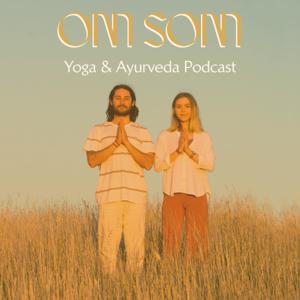
Thank you for listening to the Om Som Yoga & Ayurveda Podcast. Please share this episode with someone it might support, and connect with us on social media or via our website.
Instagram: @OmSom.yoga
Website: OmSom.yoga
We operate a yoga studio in Berwick, Victoria, Australia, offering classes, workshops, and Yoga Teacher Training programs. We'd love to connect with you wherever you are on your journey.
HARI OM
 View all episodes
 By Aaron Petty + Paige Taylah
5
77 ratings
PRACTICE WITH US:
365 Sadhana Sangha
https://practice.omsom.yoga/365-sadhana-sandha/join
100 Hr Asana Sadhana Dharma
https://practice.omsom.yoga/asana-sadhana-dharma-oto
200 Hr Yoga Teacher Training Sri Lanka 2026
https://omsom.yoga/200-hour-yoga-teacher-training-sri-lanka
50 Hr Online Yin Yoga Teacher Training
https://practice.omsom.yoga/yin-yoga-and-prana-vayus-oto
ON THIS WEEK’S EPISODE:In this episode, Aaron is joined by long-time Om Som teacher and student of Chinese medicine, Selenna, for a grounded exploration of Langhana, the yogic principle of calming, descending, and settling the breath and nervous system. Together, we explore why so many people struggle to slow their breath, and how what we often label as anxiety or restlessness is actually excess energy with nowhere to land. Rather than breathing more, this conversation invites us to breathe less, allowing the system to settle through longer, slower exhalations. Drawing from yoga philosophy, Ayurveda, physiology, meditation, and lived practice, this episode reframes pranayama as an energetic practice rather than breath control, and offers Langhana as the foundational approach to calming the body, mind, and prana.
DEFINITION & ETYMOLOGY:• Langhana (लङ्घन) comes from the Sanskrit root lang, meaning to lighten, reduce, alleviate, or settle• In yogic and Ayurvedic traditions, Langhana refers to practices that calm excess and reduce overstimulation• Langhana describes an energetic effect, not a single technique• The result of Langhana is down-regulation, grounding, and nervous system settling
KEY CONCEPTS & INSIGHTS:• Anxiety and restlessness as excess energy rather than personal failure• The overfilled bowl metaphor and the need to empty before receiving• Why classical pranayama begins with the exhale before the inhale• Langhana as the first and foundational approach to breath and energy regulation• The difference between breath work and pranayama - prana rides the breath• How fast, forceful breathing can feel good while increasing agitation• Discomfort when slowing the breath as information, not failure
TEXTUAL SOURCES:• Yoga Sūtra 2.49 - pranayama as regulation of inhalation and exhalation• Yoga Sūtra 2.50 - exhalation, inhalation, and retention as the classical order• Yoga Sūtra 2.51 - dirgha-sukshma, the deep and subtle breath• Ayurvedic principle of Langhana as the primary response to excess and overstimulation
PRACTICAL INTEGRATION:• Practise slow, extended exhalations and build gradually over time• Use viṣama vṛtti, unequal ratios such as inhaling for 4 and exhaling for 6–8• Explore gentle belly breathing to support diaphragmatic movement• Use soft ujjayi on the exhale to naturally lengthen the breath• Pause between asanas rather than moving continuously• Do less, on and off the mat, to reduce excess stimulation• Notice natural sighs or spontaneous slowing of the breath as expressions of the body’s innate intelligence
SHARE & CONNECT
Thank you for listening to the Om Som Yoga & Ayurveda Podcast. Please share this episode with someone it might support, and connect with us on social media or via our website.
Instagram: @OmSom.yoga
Website: OmSom.yoga
We operate a yoga studio in Berwick, Victoria, Australia, offering classes, workshops, and Yoga Teacher Training programs. We'd love to connect with you wherever you are on your journey.
HARI OM
10,587 Listeners
624 Listeners