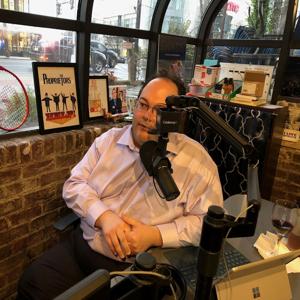
Law & Business

Law & Business

By Anthony M. Verna III, Esq.BusinessNewsBusiness News
Download on the App Store

Law & Business episodes

  • Episode 15 – Games for Promotions and Daily Fantasy Sports
    The newest trend is daily fantasy sports.
    Taking a step back, what makes a game used in promotion not gambling?  And what, then, makes a daily fantasy sports business model not gambling?
    In order to use a game for promotion, the sponsor of the game must remove one of three key elements of the game:

    * Chance
    * Prize
    * Consideration

    So, daily fantasy sports like Draft Kings and Fan Duel must be able to do that in order to run a non-gambling game.
    But those games also must have a set of rules and must also be run fairly, with a level playing field.
    Would you like to run a game in order to promote your business? Call or send an e-mail. 914-908-6757 or [email protected].
    15 min
  • Episode 14 – The sale of 4chan and Internet Privacy

    Here is a lightly-edited transcript of the episode:

    Oz Sultan:

    This is Oz and Anthony and we are broadcasting from Serendipity

    Labs and Rye, New York. We are up in Westchester County. The first thing I want
    to talk about, which is an interest to trolls and non trolls alike is the sale
    of 4chan this week.

    Anthony Verna:

    So let’s start here because I have to admit, despite my

    bachelor’s in computer science, I don’t really use 4chan. So let’s start here
    with anybody who probably doesn’t know 4chan better than the listeners on the
    podcast. So I don’t mind just starting there.

    Oz:

    Sure. So 4chan started with four friends started about a

    little earlier than Facebook and was literally considered the, I guess you
    could call almost like the armpit of the Internet. So while it’s interesting
    because they have this term called [inaudible] it posting, which is really,
    it’s, it’s not necessarily trolling but it’s on the caliber trolling, which is
    what a lot of the board does. So a lot of the board, which is B and pull in
    several other sub boards, almost like reddit that it becomes surprisingly
    popular are largely folks posting whatever their opinions are, which are, you
    know, largely I would guess troll s type opinions. But it’s, it’s really one of
    like the, the last sort of free rein areas in the Internet. And like you can
    say anything, literally anything.

    Anthony:

    And it doesn’t matter how, what the quality is, it doesn’t

    matter how good or offensive the posts are?

    Oz:

    You can say anything. And you know, in certain cases it’s,

    it’s that standard sort of one upmanship that we’ve been getting over and over
    and over again. W with Facebook posts now where everything has become the, you
    know, you’re arguing with my myopia, so I will throw more of my myopia at you.
    So, uh, so what was interesting was the one of the founders of two channel who
    had been booted off of to channel here are Yuki had actually acquired fortune
    from moot on Monday. So what’s interesting is in light of what had gone on last
    year with Gamergate, which I think everyone’s relatively aware of, a lot of the
    folks that have left reddit or were already on Reddit were also on
    unfortunately as well. Now the two channel, the two channel sale has some impacts
    to fortune. Um, in as much as when I’m, the owner of two channel had actually
    sold a lot of private data. So Fortune’s one of these places like reddit where
    you can not necessarily just hide behind a pseudonym, but most of the posts on
    this on four Tanakh are completely anonymous. Um, so it’s anonymous commenting
    and Anonymous. There is data that they capture in terms of who you are, where
    you’re coming from.

    Anthony:

    So they, when you log in, even if you’re anonymous, they

    know where you are. Cause you interrupt that.

    Oz:

    I mean unless you’re running behind a whole bunch of VPN

    proxies, they have a relative idea of who you are.

    Anthony:

    It also probably, it probably picks up the cookies as well

    Oz:

    Generally.

    So, I think that the challenge that you have to look at with

    this, with data being sold now or the ability to sell data, this is actually
    changing the way that people might generally engage. It also might push a lot
    of the folks that were on fortune or word trolls, um, onto other sites. So you
    could be looking at more gamer gate apps for Gamer Gate, like happening inside
    of the next 10 months.

    Anthony:

    I’m assuming 4chan is gigantic.

    Oz:

    That’s not unreasonable. I mean that’s reasonably large. I

    don’t think we have accurate data on who the users are or where the users are
    from. But I can tell you that they are largely 18 to 36 year old males,
    predominantly white, predominantly United States.

    Anthony:

    So still with that particular amount, it must take a lot of

    server space to keep the, keep it rolling to keep the database. Obviously there
    has to be quite a bit of surface space use.

    Oz:

    There was, I think there’s a fair amount of surface space

    used, but I think the larger issue is more the fact that if you have someone
    who has sold private data previously, right, uh, they are more than likely to
    sell the private data again and again of the new communities that they’ve, purchased.

    It’s a merit type system that you can buy into, which was

    almost, it was just kind of what reddit was, was founded on. But what’s
    interesting is looking at Reddit, and fortunately we got a lot of these
    communities that weren’t necessarily initially designed to monetize. They’re
    now being pushed into this monetization era where it’s like, hey, you have a
    community. You’re doing something, uh, we’re interested and turning you into
    some sort of profitable enterprise that’s gonna change everything. And I think
    it’s not just here. I think this is sort of the tipping point of what’s to come
    with reddit.

    Anthony:

    Europe, what do we know about 4chan?

    Oz:

    Currently, I mean a new owner, he was kicked off of 2chan,

    which was the company that he owns.

    He had apparently mounted DOS attacks against a two channel

    at one point and five of two channels.

    The Japanese equivalent for shot, so to speak. So there’s,

    there’s another one called hate channel for 8chan, which is still out there.

    So it’s going to be kind of interesting to see one, the

    migration of user base in between, you know, different anonymous private
    networks, but to what the impact of actually selling the data of users.
    Unfortunately it’s going to happen to the user base because people are
    expecting it to be anonymous.

    And one: first things first on the Internet. Nothing’s

    really anonymous because it comes with an IP address. It comes with your
    cookies that are sitting on a drive. So in your browser is your, is your
    history, and that can be sliced, diced and Juliet and sent out to 48 company.
    If you’re just searching the web and your cookies are being picked up, a lot of
    people would get really scared if they actually knew how that data was treated
    between company. So somebody goes to fortune thinking that they’re anonymous,
    that data can be sold and that data can be sold. Sorry, I like that podcast.
    But that day it can be resold and here at fortune in order to keep things going
    that that’s really going to be the way to monetize.

    Well, it’s, it’s not necessarily what should have happened, but it is what

    happened, right. Uh, I think the user base is a little about it. So I, you
    know, it’s, it’s, I think it’s something we’re going to keep track of and keep
    an eye on in the upcoming months and we’ll see where this one goes.

    Anthony:

    Do you expect, what 4chan is – the armpit of the Internet  – to actually change?

    Oz:

    No, I didn’t expect that to change at all. What I expect is

    that if people get angry at how, you know, it’s like the terms of use and
    Facebook, when Facebook had decided that they were going to use your personal
    pictures inside of advertising over years ago, everyone went up in arms and
    Facebook changed their position. Because what we’re talking about here is not
    terms per se, but the sale of the platform to someone who will most likely sell
    private data and has pretty much said that he’s looking to monetize by selling
    private data. I think either a people blue migrate or B, you will see a
    different type of engagement than you’ve seen previously.

    Anthony:

    Is this really though all that different than other Internet

    sites? Because a lot of internet sites in order to keep rolling, keep
    advertising money in, are selling the premises problematic?

    Oz:

    Well, I think, I think the, the, the challenge that you

    really have is privacy. All right, so what does privacy mean? What does mean
    when I go to a site? What does it mean if I’m actually exchanging money for
    that site and what does my privacy work? Um, I think most folks are open to Hani,
    a good chunk of privacy away for comfort commodity. Oh triplicity if I can sign
    up easy, if you can get me information alerts, great. Um, anything along those
    lines. They’re super happy just to, to not have to do other things to be sign
    up wholeheartedly. What is that going to lead to that could lead to problems
    future forward. But right now, right now I think simply because there aren’t a
    lot of great strategies out there for many of these companies and advertising
    agency advertising, seeing a dive. So as a, what was it, uh, first of this
    month? Yes. Google chrome pretty much said that autoplay and all ads that are
    earning insights to stop.

    Anthony:

    Even Microsoft Internet explorer and the new Microsoft Edge

    are defaulted to sending out the due, not practical to other websites. Now,
    some websites are combating that by saying we’re going to program our websites
    to ignore, do not track man.

    Oz:

    Right?

    But realistically, you know, most folks are going to see a

    little bit of a reduction in ads and most of what’s going to happen is going to
    see a reduction in revenues or, um, some of these sites.

    Anthony:

    Well, I would expect that to happen anyway because

    advertising monetized journalism.

    Oz:

    But, I think privacy is a big issue. Revenue’s a huge issue

    for companies and this shift that we’re starting to see where, you know, even
    the most secure or full private segments of the Internet are now for option.
    It’s kind of a brave new world, not just in terms of privacy, but in terms of
    companies are willing to do or speak to in order to tackle that Almighty
    dollar.

    12 min
  • Episode 14 – The sale of 4chan and Internet Privacy
    In Episode 14 of the "Law & Business" podcast, Anthony and Oz Sultan (Sultan Interactive Group LLC) talk about the sale of 4chan and how that intersects with Internet privacy.

    Internet privacy is an oxymoron. Any website that is accessible for free means that there's a product involved. (In this particular case, it is the services of Verna Law, P.C.) In many cases, if there is user-generated content, the content and the user are the products. Meaning that the website can only monetize by keeping track of the users and understanding the users' behavior, and, ultimately, selling that information to other websites that need the same information.


    Oz Sultan
    12 min
  • Anthony Verna on CYACYL (sound clip)

    Anthony Verna appeared on Change Your Attitude, Change Your Life on May 31, 2015.

    Anthony discussed the importance of registering a trademark and the difference between “TM” and (R) in trademark protection.  Listen here!

    Here is a lightly-edited transcript of the appearance:

    Does putting “TM” on my website do anything to help protect my business?

    I’m Anthony Verna, managing partner at Vern Law, P.C. We focus on Patent, Trademark, Copyright and Advertising Law.

    The short answer is: no.

    Many businesses place “TM” on their websites’ advertising and packaging. However, if a business has not done its due diligence and registered its name, slogans, logos, or product lines with the United States Patent and Trademark Office, then its trademarks may not be enforceable.

    Due diligence includes a performing a trademark search to find a potential plaintiffs who may already be using similar marks. Then the business may file an enforceable trademark with the United States Patent and Trademark Office.

    A trademark registered with the patent and trademark office receives the R-in-a-circle symbol and can be enforced under federal law. The trademark owner may have the possibility of retrieving high amounts of damages for infringement.

    I’m Anthony Verna and to talk to me about patents, trademarks, copyrights, advertising law or other areas of intellectual property.

    You may call Verna Law, P.C. at (914)908-6757.

    Verna Law, P.C. is at 80 Theodore Fremd Ave., Rye, NY, 10580. [email protected]

    2 min
  • Anthony Verna on CYACYL (sound clip)
    Anthony Verna appeared on Change Your Attitude, Change Your Life on May 31.
    Anthony discussed the importance of registering a trademark and the difference between “TM” and (R) in trademark protection.  Listen here!
     
    2 min
  • Episode 13 – Three Internet Policy Thoughts – Business and Legal Management

    Episode 13 of the “Law & Business” podcast welcomes Oz Sultan again.

    Oz Sultan

    In this episode, Oz and Anthony talk about three internet policy thoughts.

    • Domain Name Issues
    • Management and Enforcement of Intellectual Property
    • Economic Rationals for Enforcement
    • Also – was .sucks a good idea or a bad idea and can registering a .sucks domain name bring legal action?

      Here is a lightly-edited transcript of the podcast episode:

      Anthony Verna:

      So welcome again to the Law and Business podcast. I’m here again with Oz Sultan. And how you doing?

      Oz Sultan:

      Hello. Good to be catching up.

      Anthony Verna:

      So let’s start here. Plug yourself once again for those who may have missed your previous appearance.

      Oz Sultan:

      Sure. I am Oz Sultan and I focus on digital strategy, brand management, the execution and development of social campaigns and lead generation. And we have a new analytics dashboard product. So if you have a big data problem or a social digital data problem or a brand problem, SCM, that kind of stuff, we can probably help you develop your KPIs and look at all of that stuff in a simple way that your executives will love.

      Anthony Verna:

      What is a KPI?  I do advertising law and I never heard that phrase before.

      Oz Sultan:

      Key Performance Indicator. It’s basically what are your metrics? It’s like what’s important to you?

      Anthony Verna:

      I can’t keep up with the TLAs today.

      Oz Sultan:

      I know.
      At least that’s better than, than trying to keep up with the TLDs.
      Anthony Verna:
      Those I can keep up with.

      Oz Sultan:

      And the TMCs…

      Anthony Verna:

      Quick aside, speaking of TLS…

      Oz Sultan:

      What’s your P’s and Q’s?

      Anthony Verna:

      Yes, exactly. Speaking of top level domains, there are some issues because apparently I can allow the .sucks. And, of course, a lot of companies are up in arms because who wants to…

      Oz Sultan:

      Let’s talk about the most important person who is up in arms, Taylor Swift.

      Anthony Verna:

      Why? Did somebody register TaylorSwift.sucks?

      Oz Sultan:

      No, as soon as the TLDs came out, Taylor Swift went out and registered a lot of those for herself and it kind of hearkens back to in 2000 going back to yesteryear or going back to a 2001- 2002 When I was running, fye.com, which had to be purchased from the Fye family of Australia.

      And that was a Trans World property back when Trans World was a $3 billion company, and had all of the music stores in the country and then bought Tower and Warehouse and sort of imploded like a flan in the cupboard. I had to sit there with this much older than I woman and explain to her in graphic detail why we had to buy swear word permutations of the domain. She was sitting there basically just ghost faced with the list I gave her, cause there was about 75 different permutations, but it was basically F a F coconuts, F FYE because they owned every single music store back then.

      Anthony Verna:

      Right. I understand.

      Oz Sultan:

      So one of the things that you know, that harkens back to is reputation management and piracy and some of the things I guess you want to discuss today.

      Anthony Verna:

      Sure, we can easily slide into that because talking about management of intellectual property, and that’s one way of managing trademarks and managing brands. And as many brand owners will tell you, you have to make sure that people can can’t come at you in other ways. And having all those, owning all those domain names, regardless of the permutations, is one way of getting people to not, not talk about.

      Oz Sultan:

      Just out of curiosity, how much are the dot sex domains?

      Anthony Verna:

      Dot sex?

      Oz Sultan:

      Dot sucks.

      Anthony Verna:

      Sorry. Some were going for $2,500. Let’s take a look cause I know some are going for really high numbers here, but, Joel Wilcox. sucks. So, whoever owns that now with selling it for about $4,000. Wow. Yeah. So, some people are buying domains like ADP. Dot sucks. Applecare.sucks and you know, eharmony.sucks. But, I’ll go and do something that I did a long time ago and I wrote a paper on brand management. And really it was, it was for musicians, but ultimately musicians are a subset of being a brand and domain names. When you file a domain name, you have to know that you’ve got some ability to, to use it.

      Oz Sultan:

      By the way that the dot sucks are, I mean, I just searched the dot sucks domains are expensive. They’re 230 bucks a pop.

      Anthony Verna:

      Right. And but these brand domain names, I mean that’s cybersquatting. Under US federal law. We don’t really call it cybersquatting although, I forget the term now in the trademark statute, but it a cyber piracy, no, not cyber piracy, I forget the term. But anyway, it is trademark infringement to take a domain name that you know that is somebody else’s right. And use it. And also, it’s a violation of the UDRP (uniform domain name resolution policy) to not have good faith, right. To use a domain name of somebody else’s trademark. Now, one mad face is a different story as well. And you know, somebody could set up an email address and use it and maybe that’s good faith, but you know, if you buy a domain name with somebody else’s trademark and you’re out to bad mouth that company or just kind of hold it hostage, and, and try to resell it for a lot of money, that’s not going to be good faith.

      Oz Sultan:

      No. Well, I think one of the things to think about too is, well in addition to what you do and the work that you do, one of the easiest ways to really kind of see where you are is take a look at the Howard Greenstein who we’ve known from the tech community forever has a new company called DomainSkate. Which is a good way for you to kind of check what is the reputation around your brand and what’s interesting too, And you two should actually talk next week, they can help shepherd the litigation process. One of the pieces of this is if someone is squatting on a permutation of your brand, say for example, you had, I think it’s Olive Garden has sued a few people in the past, but I’m trying to think of someone who’s more germane where there was, it was kind of like cooption, right? So, it says whatever you had was very close to the name of the brand that’s there. That happens on a regular basis. One of the things that, that we’d sort of laughed about was I think someone that created Taco Bell with an E. This is a while back, but,

      Anthony Verna:

      Like a woman?

      Oz Sultan:

      So you have a picture of a woman and it’s Taco Belle, but because the trademarks sounds the same, you know, and they hadn’t trademarked and I think they got shut down. It was just a one-time thing in the South. But, because the trademark’s in place and the trademark’s enforced and it’s really something to think about in terms of your brand. And then really if you’re even creating a brand, and even nowadays with, with all of the brand assimilation going on, I mean, Kraft just bought Heinz, so I suppose you can now have macaroni and cheese and ketchup in some sort of value pack. It sounds right.

      Anthony Verna:

      I love your sentences.

      Oz Sultan:

      You know, that’s it. This is where it’s going, man. You know, it’s going into brand wars. And it’s, it’s going into brand carteling, based upon who you are and where those brands are important in your life. And I think people need to be aware of that. I think people need to be aware of that and sort of the trademark aspect that you’re talking about. And then to everything that you were talking about with the UDP and those pieces, you know, what is there beyond fair use and, and how do you really protect your brand online and, and how do you handle your reputation management if you really piss someone off. Like what if someone went out and spent the money to buy Comcast.sucks?

      Anthony Verna:

      I would say there’s an ability to, under the U S Constitution we have a first amendment right to at least express an opinion about a company. But on the same token, you don’t have the ability to block that business’ ability to do commerce in many states. And you don’t have a right to defame a company. No. And frankly, when it comes to a domain name, it’s straight out trademark infringement if you’re taking that domain name and either using it to just resell and make a profit or using it to really speak poorly about the company that domain name’s about.

      Oz Sultan:

      In a lot of cases, you know, when it’s expletive or F-word or something like that name, it’s kind of clear cut. The problem that you sort of run into is it’s the opposite of what exactly was the term. It’s all of this revenge porn stuff that was going on online. I mean, that guy just got 18 years. And realistically what that could be used at looked at is it’s an infringement issue on the rights of the content holder. It’s also an issue of interstate commerce fraud for underage sex trafficking. Okay. So weird things that kinda come into play with all of these little digital tools.

      Anthony Verna:

      That’s really the law of unintended consequences in play for the dot sucks, we know ICAN was looking to create conversations and they really, ICAN really want it to have something like life.sucks or divorce.sucks. And, maybe it’s a little on the controversial side, but the idea was that these domain names are about things that hurt people and they didn’t really think that through that their property that some people might take it to complain about others.

      Oz Sultan:

      Well, no, you’re a name of person dot sucks. Name of religion dot sucks and name of political concept dot sucks. It’s really open, it’s a shooting gallery of sorts.

      Anthony Verna:

      Absolutely. But, we’re talking about intellectual property protection in general and that’s trademark protection. Copyright protection comes in with businesses that create works that fall under copyright law. And just like we just talked about having a sliding scale, where’s your ability to protect, say with copyright law, where’s your ability to protect and what makes sense and what doesn’t make sense? I’m not a game of Thrones fan. But you certainly have seen game of Thrones downloading. That’s right.

      Oz Sultan:

      Well,  so eight million viewers. Okay. For the premiere on HBO, which is a pay service. And that also includes HBO Go. I believe they factored in there. I called it game of buffering because I was trying to watch it on HBO Go. And that just didn’t happen. You would think that if they can have 20 million people watching the Victoria’s Secret angel show that HBO would get their act together given the fact that that Victoria’s Secret thing happened 10 years ago. Maybe they need to fire their CTO. I don’t know. Or maybe they need to call my buddy Robbie over at Ramp Rate.

      Anthony Verna:

      Oh, sure. Just keep plugging all your friends.

      Oz Sultan:

      I’m just going to plug all my friends.

      Anthony Verna:

      I’m going to say hi to Raj of Braden Link. Hey, how ya doin’, Raj?

      Oz Sultan:

      It’s just like it’s ludicrous. It’s absolutely ludicrous. You could go…

      Anthony Verna:

      I want to say hi to my fiancee, Michelle at New York Funeral Consultant, if you’re planning a funeral, call Michelle. I’m sorry.

      Oz Sultan:

      I haven’t been an applied gas for a while. These are germane conversations, other conversations you and I are having. There’s brand issues there. So,  one is HBO had a bit of a fail, but there’ll be fine because people figure out how to watch it. But what people were worried about inside of the industry two weeks ago was, Oh my God, everyone’s been to take Periscope, or Merecats, or they’re going to take a String Wire and and they’re going to record this and then they’re going to syndicate it and everyone will be watching it on Twitter.

      Anthony Verna:

      And didn’t major league baseball issue a press release stating that they wouldn’t stop fans from using Periscope in stadium stadiums.

      Oz Sultan:

      Correct. And, and you know, I think what you have to consider as major league baseball is taken this as is probably the smartest because, not everyone wants to buy the bootleg DVD from the Asian guy who sells them  in my McDonald’s, right around the corner from my house.

      Anthony Verna:

      Those of us who live in urban areas. I mean, we’ve had that experience before in a bar, somebody just like walks in with a whole stack of bootleg DVDs and movies that came out yesterday and the bouncers are trying to figure out how to boot the guy quietly. And of course, they’re getting better. Bootlegs are getting better, but, but I think when it’s something through Periscope, you’re still dealing with the limited quality, the limited quality experience. I mean, even Periscoping abut I can’t believe I just used it as a verb, but, but even broadcasting through Periscope, a baseball game, it means that somebody who’s holding his cell phone up during the game. It’s not a television quality camera. It’s not television quality broadcasting. It’s limited, but that’s one app as compared to downloading Game of Thrones, which, which we know happens. We know that there’s bootleg out there. We know that you can get the torrents and start downloading and get the the high definition file.

      Oz Sultan::

      Well, and then let’s go to the second problem with this. So, all of a sudden, the first five episodes of GoT (Game of Thrones) are available in the Tor network. They’re available as torrents. They’re they’re all over the place. Right? And you know, there’s nothing in addition to plot reveals, which are pissing people off. And you know, Google has, well, it’s interesting Google, Google just patented preventing spoilers from your search results based upon their indexing way too much data about your life. So that’s their latest patent falling. But we live in this very interesting world where on the one side, you have to, to maintain your brand and protect your brand. But let’s kinda think about this, right? In a way, Game of Thrones by allowing that kind of piracy is going to allow the dissemination of this to drive larger fan bases than they’ve ever had before.

      And at the same point in time, because seasons one through four are now available on HBO Go, which just happened to deploy on an Apple device. Everyone who has access on PlayStation 4 Okay, but the market penetration of PlayStation 4 is versus Apple TV devices, is infinitesimal. So, all I’m thinking is in a way by their allowing for the brand co-option and allowing for the brand, dilution as you would think about it. They’re actually allowing for the success of this because this is just going to get bigger and bigger and more popular, more popular. However, that doesn’t necessarily apply to things like Adidas. Right. Where I think anyone here who’s traveled to Latin America or in the Middle East or some Southeast Asian country has seen a Adidos. My favorite is Nikke.

      You know, it’s not Nike, it’s Nikke. Yeah. Yeah. It’s an that’s getting better. There was a actually going to a house, like Game of Thrones, but House of Lies, right? So, OK. Recently in House of Lies, Marty’s son became very unpopular because he got caught selling basically knock off high end designer bags, which as we know in New York is a big thing, you know, for tourists, tourists coming to Canal Street, it’s like you don’t think that you’re going to go into some back room on Canal Street and get a brand new Valencia bag for fricking 300 bucks. You know, it’s just not going to happen.

      Anthony Verna:

      $30, $30, $30. And, I will say counterfeiting of product has gotten better in times the quality of the product is better, but you will still see differences, differences in stitching, differences in the quality of maybe the inner liners, maybe the zipper is a different quality. A lot of people don’t realize you do pay for what you get. And if you’re paying $30 for a bag, it’s not going to be the same quality.

      Oz Sultan:

      It’s not just the quality. It’s, I mean, in a lot of cases, think about this. You’re paying for design. Yes. You’re paying for the conceptualization, you’re paying for the salaries of a ton of people to produce this. You’re then paying for the production mechanism and transport of it, and then you’re paying for the people who are selling it to you in boutique so that they can give you odd faces. If you sort of, not necessarily disrupt, but if you disintermediate that model by going and buying something bootleg, yeah. There’s multiple ramifications. One is the economic ramification. Two is the fact that if someone catches you with it, you’ll just be made fun of. But three is the fact that it’s somewhat harmful to the brand. Yes. I think that’s the the United States. I think it’s the of, it’s the FTC in conjunction with like two other departments destroys like they confiscate and destroy something about how something like a billion dollars a year.
      Anthony Verna:
      So, how something can get destroyed comes from a myriad of different ways. I mean obviously if something’s brought into the US through customs and there is a registered trademark, the registered trademark owner has to be a federally registered mark. This is one of those hidden benefits of having a federally registered mark is that the business owner can have customs actively help in grabbing counterfeit goods and then destroying the counterfeit goods. And the importer can pay fines up to the retail cost of the goods. So, if it’s bought at wholesale and then of course retail is double the price and that means the fine could be double the price. So that means that the importer is out the cost of the goods plus the retail cost of the goods as well. So, double that in that loss. So, there are high fines for it and obviously you can be fined storage fees as well as their structured fees. So, there are high fines for importing counterfeit goods.

      Oz Sultan:

      Right. Well, one other thing I’ll add too is, and so this loops back to our talk about social media this morning, one of the biggest places to find counterfeit goods is Instagram and you have folks who are not necessarily in this country, , they could be in Mia, so Europe- Middle East region, sometimes in Asia, but largely what they do is they’ll have, it’s close enough looking. You know, I mean, you and I both worked in the industry with a couple of marks, so I think we can kind of look at stuff and be like, yeah, that’s off. It just looks off. But I think a lot of people just don’t know. And if you were to say just, what is it Louis Vuitton through Chanel clutches, it’s like average somewhere in between $595 to $1395 each.

      When you have someone selling for $295 on Instagram plus shipping and we’ll ship anywhere in the world. When you look at it and it’s like I don’t think Chanel uses cheap brown paper and tape to take like portions of their their straps. There’s that. But I think maybe, well there’s a follow up to this. I’ll put a, an article on LinkedIn cause I’ve got a lot of that content captured and we can discuss that. But you know, it’s bad for you in the long run because you look foolish. It’s bad for the brand in the long run because they’ve lost a sale and it’s, I think bad economically because realistically you’re not pouring those dollars in a way that they’re actually going to benefit a company that’s going to reinvest in our country. You’re benefiting someone who’s probably using sweat labor or slave labor somewhere else to make something of substandard quality.

      Anthony Verna:

      Yes, yes. As a business owner that owns intellectual property, all of these of businesses need to consider the economic cost and ramification of the hard fisted tact as well as the let everything go tact. I mean, if we let everything go, effectively  all of your registrations and all of your intellectual property isn’t worth the media that you’ve done. It’s put on. But the hard fisted is you go after everybody. And I know a lot of business owners don’t like to be seen as being a bully, but there’s an economic cost to letting to letting infringements go, whether it’s trademark infringement, copyright infringement. There’s that economic reality and that economic reality is that you let a sale go, you let substandard products into the marketplace. You may think that your consumers would prefer maybe a lesser quality than what you’re giving. You know, especially if stuff just gets out there for free.

      Oz Sultan:

      If stuff gets out there for free, it’s a challenge and I that’s like a good way to bridge into maybe some final thoughts, but also talking about freemium versus premium. A great way for people who are selling virtual products and goods and services is to allow freemium version for premium. And in a lot of cases people will convert with that. If you’re talking about traditional goods and services in the brand mark associated there too, there’s a necessity to be vigilant and there’s a necessity I think to maintain your trademark or get your brand mark. And I think there’s a necessity to look at things from the perspective of there is some fair play you will allow in terms of its co-option or if someone is for example, there’s other folks I’ve seen on Instagram, who will take a Louis Vuitton bag and they’ll decorate it and then they’ll sign. It’s basically like such company X, Louis Vuitton, which is very much like, what we’ve seen Yeezy ex Adidas recently with your $2 to $20,000 a day to shoes.

      Anthony Verna:

      And of course the, the legality or lawfulness of that is in a gray zone because on the one hand, these are two companies that aren’t really doing business with each other. But on the other hand, we have something called the first sale doctrine. But still when you’re, when those two collide is fills a gray area in a situation like that.

      Oz Sultan:

      Right. You know, and, and I think that the simple fact that you’ve got larger brands sort of annointing these types of collaborations, it makes other brands say, well, you know, I can’t really be too harsh in regards to these folks that are extending my brand reach by making my brand a little bit cooler than the way that we can necessarily make it cool because we’re a little bit too corporate or because you know what, that just doesn’t necessarily fit our style. But if you like having something original, I think a lot of people do. And I think, you know, looking at norm core, looking at half of the stuff that’s out there is, it’s being original in a sea of similarities to the degree that you think that your original to yourself, right? I know maybe this kind of definition, it’s like a hipster.

      Anthony Verna:

      I feel like I’m having a shark tank moment.  “There’s nothing proprietary in this …”

      Oz Sultan:

      Exactly. Exactly.

      Anthony Verna:

      So I guess our general thought is that if you’re a business owner, you seriously need to consider how hard you are protecting your intellectual property regardless of what form the IP is, right? Because economically it might cost you a little extra. Either you don’t have a cease and desist letter be written right by counsel, or to pick up the phone and say there’s something infringing here. But  ultimately the economic benefits will overcome that little bit of pain.

      Oz Sultan:

      Absolutely. And I think also the point is you need to understand if it’s digital media, traditional media, a digital product or a traditional product, and what is the opportunity afforded to you by allowing this and what is the impact afforded to you by pursuing it, right? If you chase them, is this going to make you look foolish? And if you allow it, is it gonna make you look better and sell more goods? So, it’s a very fine line that you’re kind of treading these days, especially with the way that the social medium is evolving so quickly.

      Anthony Verna:

      I always have people ask me because they find themselves as defendants in lawsuits and they always say, well, what if I just go to the press with this? And I said, well, what do you think the press is going to do? Well, they’re going to see that this company is a bully. I go, probably not. You know, probably not. It probably because the plaintiff has some kind of trademark claim and the press looks at this and says, I don’t really understand this area of law myself. And it doesn’t necessarily seem as if there’s something bullying going on. I felt a little different with the eat more chicken, eat more kale this year because I think inherently a lot of people understood that eat more kale when you know represented a company that was not fast food.

      Oz Sultan:

      I mean you’re, you’re not going to see more kale and think, Oh my God, they’re ripping off Chick-Fil-A. I know. I think that  there’s that decided separation there. The same thing can be alluded to the new no angels campaign that basically puts natural sized women and plus size women alongside the idiom of what Victoria Secret was pushing, which is basically lingerie for anyone up to a size six, right? Or realistically more like an average size two. And that’s fine. You know, I just kind of think it’s becoming very interesting that where do you want to pick and choose your battles with this stuff? Because you are not necessarily trying this in court the way you used to.

      You are being tried in the eyes of society and if you do this the wrong way, you can hang yourself out to dry. You could also pretty much ruin your entire customer base as we saw with,  the social media debacle with that small restaurant in Arizona that had been in a Gordon Ramsay show that then subsequently got into a massive sort of internet verbal fist fight.

      Anthony Verna:

      Started on Yelp and bled over to Facebook.

      Oz Sultan:

      And bled to Reddit first, remember. That it started in Yelp and bled to Reddit. Then it bled to Facebook and they were ridiculed because they couldn’t even get the nomenclature right. They didn’t know what this, they’re like, you know, you Reddits, go to heck. And it’s like, well, they’re actually called Redditors or, you know, and the same way we’re called New Yorkers and Pennsylvania are called Pennsylvanians.

      Not Pennsylvanias. You Pennsylvanias! I mean it’s substantial and also sometimes a mia culpa is needed if something stupid happens. After all of that, they try to Mia culpa, you might as well just change your brand at that point.

      Anthony Verna:

      Sure.

      Oz Sultan:

      After you’ve had a protracted three months flame war with everyone who is challenging you on some of the most basic things.

      Anthony Verna:

      It really says that in these particular areas, businesses need to get experts in those areas to help, whether it’s social media and exactly what it is. Thank you for coming.

      Oz Sultan:

      Absolutely.

      Anthony Verna:

      And we shall do this again soon.

      Oz Sultan:

      I think we shall. This is a good dynamic.

      Anthony Verna:

      I agree completely.

      Oz Sultan:

      Excellent.

      Anthony Verna:

      Thanks, Oz.

      Oz Sultan:

      All right. Bye bye.

      31 min
    • Episode 13 – Three Internet Policy Thoughts – Business and Legal Management
      Episode 13 of the “Law & Business” podcast welcomes Oz Sultan again.
      In this episode, Oz and Anthony talk about three internet policy thoughts.

      * Domain Name Issues
      * Management and Enforcement of Intellectual Property
      * Economic Rationals for Enforcement

      Also – was .sucks a good idea or a bad idea and can registering a .sucks domain name bring legal action?
       
      31 min
    • Episode 12 – Comic Books, Geek Life, and Trademark & Copyright Law

      In Episode 12 – Comic Books, Geek Life, and Trademark & Copyright Law, Jim Cushing joins Anthony Verna to talk about comic books, some history of comic books (Jim and Anthony let their geek sides out), and the intellectual property issues of comic books.

      James Cushing, Esq.

      A lightly-edited transcript of the podcast episode appears below:

      Anthony Verna:
      Welcome to the Law and Business podcast. I’m here with Jim Cushing. How are you doing, Jim?

      Jim Cushing:
      Hi, Anthony. Doing well, thanks. How are you?

      Anthony Verna:
       doing great. Thank you. Tell everybody how to find you again. Plug away.

      Jim Cushing:
      Thanks. Jim Cushing, you can find me as James W. Cushing on the Internet. And I work for the law office of Faye Riva Cohen, f a y e r i v a c o  h e n in Center City, Philadelphia, Pennsylvania. I specialize in, or my office specializes in employment law, family law, and estate practice, mainly, and some smattering of other plaintiff’s side stuff. I also have a blog, at judicialsupport.wordpress.com. Oh, my firm’s website is fayerivacohen.com and you can reach me on the telephone at (215) 563-7776. Thanks, Anthony.

      Anthony Verna:
      No problem. And of course, if anybody listening has questions for me, I can be reached at [email protected].

      Jim Cushing:
      This is my third time doing this and it seems like you ask me to come on when you have nerdy subjects to discuss, so…

      Anthony Verna:
      Well, you know, you’re a part of my advanced circle of friends. So, having first met many years ago and I think yes, there are a lot of nerds in our circles of friends.

      Jim Cushing:
      We’re being polite and that’s good.

      Anthony Verna:
      Of course, of course, but that’s half the fun. But yeah, so our nerdy topic today is of course the Marvel issues, for lack of a better word. And you know, to take that out to a further context because I actually did have a comic book case and there’s stuff about that that I can bring into this discussion and of course stuff that that is still, you know, attorney client privilege. But I think we can easily talk about some of those issues in general. And here, let’s start with Marvel. Jim, I’m going to let you take it away on describing exactly what’s going on with Marvel comics and ownership.

      Jim Cushing:
      Well, there’s a couple of things, one of which I find to be terribly confusing, but another one, not so much.

      Anthony Verna:
      Welcome to intellectual property law. As my friend Dave says, you guys live in a special level of hell.  

      Jim Cushing:
      What?  The intellectual property lawyers? Yeah. Well, Marvel comics and I think you can explain the legalities of this a better than I can, but there is a difference between owning a character and owning movie rights to that character. And, so Marvel comics, the characters are owned by three separate movie… I was going to say movie franchises, but it’s movie companies, I guess.

      Disney which owns Marvel owns ironically what they believe to be the lesser characters of the Avengers, which is suddenly now the complete opposite. I mean, when Marvel… Basically back in the late nineties, Marvel were struggling to get movies going because they really couldn’t get anything sort of live action happening that was productive. As opposed to DC, which has, you know, the long history of Superman and Batman and so on.

      Anthony Verna:
      Absolutely.

      Jim Cushing:
      But Marvel…

      Anthony Verna:
      But really only Superman and Batman have been successful in the movies.

      Jim Cushing:
      Yeah. Of the high-end sort of success or Dick Tracy‘s in there. I don’t know who owns Dick Tracy, but I don’t know if that was successful.

      Anthony Verna:
      Yeah, well it was, and it was only one movie.

      Jim Cushing:
      That’s true. That’s true. And just thought it, for whatever reason that Disney came up, the Rocketeer was in there somewhere.

      Anthony Verna:
      Yes. No, that’s true.

      Jim Cushing:
      Swamp Thing was somewhere in there.
      Anthony Verna:
      Did anybody see Swamp Thing?

      Jim Cushing:
      Somebody did it because I made a second one.

      But Marvel was never able to get like a … But you know, DC had Batman the tv show, Wonder Woman the tv show. But Marvel, for whatever reason, the live action stuff was never really much past the Incredible Hulk. And so, they saw the opportunity, with technology and CGI and so on to make movies and the o o’s for want of a better term, the aughts, whatever you call that.

      Anthony Verna:
      There you go. The  aughts.

      Jim Cushing:
      Yeah. And so they sold Sony the Spider-Man franchise and they sold Fox the X-Men franchise and the Fantastic Four franchise. And they believed at the time that those were their top franchises. Cause Spider-Man -obviously is arguably the most popular comic book hero of all time. Or perhaps Superman, I don’t know. And the Fantastic Four is their original super team and the X-Men, of course, that had crossed at gender popularity for years.

      Anthony Verna:
      Yes.

      Jim Cushing:
      Because a lot of women or girls or whatever follow the X-Men. And so, they sold them off so that  left the characters in the Avengers sort of doing nothing, in terms of movies that Disney never gave them up. And then Disney purchased Marvel and decided to make a set of movies about those characters. And like I said, those were the lesser ones for Marvel at the time. And now you have this weird situation where you have the X-Me people happening on these sets of movies. You’ve the rest of the Marvels over here and the Spiderman specific ones over here, none of which can cross over because they’re all owned by separate companies. And the only thing is the only way they’ve been able to do crossovers is with these really strange… You know, to the movie viewer, you might not notice it, but if you’re a comic book nerd or paying attention to this kind of stuff, you’d notice it. But like characters like Quicksilver, which a super-fast running mutant type character, is somehow for one reason, another shared for by the Avengers and the X-Men. So, that character now appears in both, though not by the same actor and not technically speaking the same character.

      Anthony Verna:
      Right. Because if I recall correctly, and I’m not gonna sit here and say that I recall correctly, the, the name has mentioned in one movie, but not both.

      Jim Cushing:
      That’s correct. And and he has a different last name in I think both. And then I just saw the X-Men movie. Quicksilver doesn’t appear until Avengers 2, which is in May. So I don’t know exactly how they’re going to present it, but in the, in the Avengers: Days of Future Past, excuse me, X-Men: Days of Future Past came out in the summer, which I did see, he is not, for whatever reason, mentioned as Magneto’s son, even though in the comic books he is. I don’t know why they wouldn’t play that up, but he has a different last name than Magneto in those movies too, whereas in the Avengers, they’re not allowed to use the word mutant. That’s owned by the X-Men people. Even though Quicksilver’s a mutant and his sister is the Scarlet Witch, which also appears in the Avengers movie or will be appearing.

      Anthony Verna:
      Is your head spinning yet?

      Jim Cushing:
      Yeah. Right. I don’t know if this is a spoiler for you people who haven’t seen this. While I’m saying this in the like two seconds, I’m gonna say this.
      At the very end…

      Anthony Verna:
      Spoiler alert!
      Jim Cushing:
      Yeah. Right. At the end, the after-credit scene of Captain America, there’s an appearance of Quicksilver and Scarlet Witch being captured by his name is Casey . Now one of the barons is a Nazi guy, Hydra guy and he calls them miracles as a way to avoid using mutants. Right. And so that’s sort of like the weird sort of movie conundrum that Marvel has found that stuff, which I don’t think applies in DC. Is that right, Anthony? Pretty much everybody’s sort of consolidated with DC?

      Because no one’s made movies
      besides Batman.

      Anthony Verna:
      Well, Warner brothers. Yeah. Warner Brothers owns DC and so I believe the DC movies are all a part of Warner Brothers.

      Jim Cushing:
      The main DC and I don’t know who owns the Watchman.

      Anthony Verna:
      Right, exactly. Exactly.

      Jim Cushing:
      The main  continuity of characters that we normally associate with DC.

      Anthony Verna:
      Yeah. I wasn’t considering comic book movies that have been disowned and royalties not taken by the original creator.

      Jim Cushing:
      That’s right. Yeah. Or Alan Moore is very much opposed to the movie making of the Watchman. For the record, that is one of my all-time favorite movies. So, I know it’s very controversial, but it can only be viewed in the nearly five-hour version.
      Everything else is vastly inferior. I don’t know if you’ve ever seen it. There’s the ultimate cuts.

      Anthony Verna:
      And Allen Moore has disowned any movie version of anything he’s put…

      Jim Cushing:
      Including V for Vendetta?

      Anthony Verna:
      Yes, yes. Well, and for V for Vendetta and we’ll go off on a tangent here. He basically said that…

      Jim Cushing:
      Tangent? Isn’t that what podcasts are all about?

      Anthony Verna:
      Yeah, that’s true. It is. For V for, well we’re getting uber nerdy here. But for V for Vendetta, Alan Moore said that it was very Americanized. He saw all of the government parallels as Bush era America. And whereas in reality it was an English comic book about English politics and English beliefs. And he really saw it as very Americanized and disowned it and did not like it for that particular reason. He said it has nothing to do about Republicans versus Democrats. It’s about the form of government, whether it’s fascism versus a democracy. And I hope if anybody out there wants to correct me, they can certainly do that. And he saw it as very Americanized, even though they kept the setting of London, that they kept the English people for the most part.

      Jim Cushing:
      Exactly. I enjoyed it. I enjoyed the film. I’m not a big V for Vendetta fan and I’m gonna sort of reveal myself to the comic book fandom and that I’m really a Marvel person.

      Anthony Verna:
      That’s perfectly fine. That’s perfectly fine. I take no sides in the DC versus Marvel.

      Jim Cushing:
      Yeah, that’s right. You’re the Image comics. I don’t know. Maybe not.

      Anthony Verna:
      Hey, both have both of their strengths and weaknesses and that’s about it. But as for movie ownership, yes, the rights can be split into different media. Let’s step back into copyright law, the owner of a copyright and whether that owner is the original artists/creator/author, depending on how you want to define it or whether the owner is the corporation to whom those rights have been granted, the copyright owner can split those rights into different media. And so, there can be different television rights and there could be different paper rights and I’ll say paper for comic books or maybe novels themselves or some other kind of kind of creation, coloring books, for example. So, you can really divide and subdivide your media.

      Jim Cushing:
      Coloring books. I have two young sons and I read a lot of comic coloring books.

      Anthony Verna:
      Do your sons color inside the lines?
      Jim Cushing:
      Well they’re getting better at that. Yeah, my oldest, my older one has gotten, he takes it very seriously now .

      Anthony Verna:
      You know me, I’m going teach them how to do it right outside the lines, it’s fill in the negative space first rather than …

      Jim Cushing:
      Well, they’ll never see a negative photograph. So, they’ve got to start somewhere. So, let me ask you a question about the film rights. Everybody who is a comic book fan or what they used to call fanboys, I guess, will know that there was some really, really, really crappy movies made in the 90s that  only saw the light of day if you happened to go to your West Coast Video and rented them.

      And I’m thinking of Captain America had a super terrible movie, well not super terrible. It was one of one of the better of the terrible. Fantastic Four is awful and you can watch it on YouTube.

      Anthony Verna:
      And by the way, if you caught the Netflix season of Arrested Development, they had an ongoing story arc about making a Fantastic Four movie that was utterly terrible.

      Jim Cushing:
      That’s true, about seeing a Thing. And just so if people who are listening to this don’t know, I’m not referring to Chris Evans in the Marvel movies and the Fantastic Four ones,  that came out with, what’s her name? Uh, Alba a couple of years ago, I’m)
      talking about in the mid-nineties, where they’re out there, virtually no one ever saw them and they’re terrible. And so I think they’re called ashcan movies and my understanding you can correct me, is that you have to use your rights within certain number of years or else you lose them. And so, they make these films on virtually no budget just to say, they did something. Is that about right?

      Anthony Verna:
      Well, the reason that it’s that are the contracts and essentially those particular contracts, if I recall correctly, had options. And that’s where the options expired. If the options weren’t used, they expired, and they went to somebody else. So, a lot of these were made basically to fulfill the contract. And therefore the option is kept open for another x amount of years depending on the contract as well as the ability to make another movie even.

      Jim Cushing:
      Is there a certain amount of like good faith on these, because you know, if you watch the Fantastic Four movie, it’s pretty bad. I mean, like I said,  it’s on YouTube, people can go and look at it and if I were, let’s say Marvel, who was interested in getting my property back, could I make the arguments that obviously you had no good faith in making this film. I mean, it’s terrible and no one saw it and it’s only on like the back room of a West Coast Video.  

      Anthony Verna:
      I think that that argument’s a little more complex than you might think, because
      yes, that argument’s there, but what’s bad faith? Is bad faith the  requirement, and look, at the time, it’s not
      as if superhero movies had the cache[KR2] 
      that they do now. You know, we talked about it. There were Superman,
      there was Batman and there were a bunch of one-offs. But, you know, Swamp
      Thing didn’t really have a high budget. The Rocketeer was a
      successful movie, but there wasn’t a sequel. So, what would be good faith? Is
      it a $1 million movie? A $10 million movie? That’s really going to be the
      issue.

      Jim Cushing:
      Or a movie that’s released in a movie theater.

      Anthony Verna:

      Yes. But then they put this movie together and nobody liked it. And so, it was spiked
      and I think it’s not hard to make the argument that, look, we put some money
      into it. We had some actors, and at the end, this was so bad, we just spiked
      it. And there’s no way that we were going to spend the money to distribute and
      market it because that would’ve been even more of a loss. So while I hear you that
      this was not necessarily the work of something that felt like a good faith
      effort, I certainly think you could easily make that argument that it was a
      good faith effort.

      Jim Cushing:

      Yeah. I guess in that vein, in terms of good faith effort is that I don’t know
      if people remember this, but there was… Maybe you do, Anthony. In the 90s,
      there was an X-Men TV show. Do you remember that?

      Anthony Verna:

      You don’t mean the animated one?

      Jim Cushing:

      No, no. Live action. And I think I’m pretty certain it was by Fox and I’m
      trying to remember what it was called. I think it was called Mutant X or
      something like that.

      Anthony Verna:

      Well, let me see if I can…

      Jim Cushing:

      Yeah, it was.

      Speaker 2:

      Mutant X  tv show. Here you go. Mutant
      X. Oh, I do remember this.

      Jim Cushing:

      It was very sort of strange in terms of they didn’t have the traditional
      characters you may expect, but it was very mutantesque, X-Menesque, I should
      say. And Victoria Pratt was in it, who I think it was the biggest name in the
      show, which is that she’s sort of a… I don’t want to say a name, but she’s a
      purveyor of bed tv sci-fi.

      Jim Cushing:
      So, people who look at that stuff and wouldn’t know who she is.

      Anthony Verna:

      I remember this now. I don’t know that I saw it, but I knew that it existed. If
      I recall correctly, there was a lawsuit about that as well, but I’m not very
      familiar with it at all. Except that there was one. Part of the issue here is
      that stepping back and looking at the broader issues you can split those
      rights. And in Hollywood, look, there’s options all the time because it takes a
      long time to get a movie made or even a television show, especially when it’s
      going to be this complex.  

      Jim Cushing:

      Yeah. And if I remember right, I think making the new Man of Steel was
      like 20 years in the making?

      Anthony Verna:

      Something to that effect. Yes. Because it resulted… You might remember Superman
      Returns with Brandon Routh?

      Jim Cushing:

      As much as I’ve tried not to.

      Anthony Verna:

      I’ve actually avoided it completely. I never saw it. So, you had that and then Man
      of Steel took about 20 years after that to be made.

      Jim Cushing

      Maybe it was Superman Returns I’m thinking of. I mean it took a long
      time to get made.

      Anthony Verna:

      That did take a long time to get made. Yes, it did. And don’t forget with the Amazing
      Spider-Man, the new trilogy that was done basically because of an option as
      well. I believe Spider-Man is a part of Sony pictures?

      Jim Cushing

       Yes, that’s correct. I don’t know if
      you’ve seen the movie, but you can’t help but know that it’s from Sony pictures
      when you watch it.

      Anthony Verna:

      I saw Spider-Man One and Two and then didn’t see three. I haven’t
      seen the Amazing Spider-Man series. At some point I’m like, this is a
      rehash. Cause I thought two was basically a rehash of one, but anyway,

      Jim Cushing

      Amazing Spider-Man Two was  not that good. Amazing Spider-Man one was
      pretty good.

      Anthony Verna:

      That doesn’t really thrill me to go see it, but the issue there was that there
      was an option up and Sony basically found lukewarm response to making Spider-Man
      four. And if I recall correctly, the original cast wasn’t going to do it. Sam
      Raimi didn’t want to direct again. So instead of making a Spider-Man four
      in the vein of doing Batman Forever, with a totally different cast and
      then Batman and Robin with yet another totally different cast. They just
      decided to reboot and try to start again, which is what they did. So, it was
      for some people, for some commentators, it was a very cynical move on Sony’s
      part to basically show us a movie that we already had seen maybe 10 years ago, with
      the Amazing Spiderman, but they did it to keep the option open. And
      that’s a part of the issue in in this particular contract or a series of
      contracts, cause it’s never just one, but ….

      Jim Cushing

      They’re doing the Same thing with the Fantastic Four sets of movies.
      They didn’t seem to think that the first set had a whole lot of success or not
      where they wanted to be anyway. So, they’re not doing a soft reboot like the,
      the last X-Men movie. They’re doing a hard one. They’re restarting the
      franchise.

      Anthony Verna:

      Do you know what studio that one’s with?
      Jim Cushing
      What? Fantastic Four?Oh that’s with Fox, it’s owned by the same
      as the X-Men people.

      Anthony Verna:

      Okay. So, it’s not going to be a part of the Marvel Cinematic Universe as
      they’re calling it, is it?

      Jim Cushing

      No, that’s not part of the cinematic universe as much as they would like it to
      be. In fact, strangely enough, the marvel cinematic is sort of confusing. So, I
      want to be clear that the Marvel Cinematic Universe is owned by Marvel comic
      books who makes the comic books and Disney, of course, is the umbrella. But my
      understanding, from my being in the comic book nerdy world, is that Marvel
      comics is more or less trying to passively resist the Fantastic Four movie,
      the new sets of Fantastic Four movies by basically shutting down the Fantastic
      Four comic book and discontinuing sort of advancing that franchise in the
      comic books because they’re hoping that it sinks and that Fox will be motivated
      to sell it off back to Marvel.

      Anthony Verna:
      You know, these days comic books themselves don’t make money and they just
      exist as loss leaders for other licensing properties such as television shows
      and the movies. So, that’s not really a surprising play that they’re making.

      Jim Cushing
      Yeah. I am personally surprised that the idea that  Fantastic Four will be that popular. I
      think they’re sort of, as much as I like the Fantastic Four, they seem to be
      sort of hokey in today’s comic book sort of reality. But maybe not, I don’t
      know.

      Anthony Verna:

      Well I guess you’re going to be getting a grittier, more realistic, Fantastic
      Four.

      Jim Cushing

      You know, all the rumors out there are, are ranged from terrible to ridiculous.
      So, I’m not sure.

      Anthony Verna:

      Wait, there are rumors. I didn’t, I’m shocked. I tell you the shock. You know,
      this ownership issue is not surprising to me because one, the comic book
      industry itself has a history of being, let’s just say all over the place. How
      does that sound?

      Jim Cushing

      Well, I mean, are you going to raise the Image comics revolution?

      Anthony Verna:

      No, not necessarily. I’m just saying in general. I mean, it’s interesting to me
      that a comic book company like DC or Marvel has their standard lines and those
      lines can cross with each other. They have their subsidiaries and of course
      none of those quote unquote universes may ever touch. And that’s true with Marvel
      as well. But you saw before Marvel was bought by Disney, one set of books
      having movie rights in one studio, another set of books being in another
      studio. And in a way what was precious in the comic books to them, being able to
      make those characters interact from time to time doesn’t exist in other media.
      And…

      Jim Cushing

      Well, that’s one of the things that make comic books a lot of fun is that, you
      know, Batman can meet Superman at some point.

      Anthony Verna:

      Yes, exactly, exactly. But it’s a new idea to do that in other in other media.
      You know, there never was a Batman and Superman movie, until next year.

      Jim Cushing

      I would note that Marvel really is the comic book company had revolutionized
      the idea of the crossover. They did that from the very, very beginning.

      Anthony Verna:

      But yet in other media, that wasn’t ever the case, so that’s all I’m I’m
      pointing out. In movies, it was we sold the rights to one set of characters or
      one character and that movie company gets it, the next movie company gets it.
      And it’s only until recently with the Avengers line has that been
      thought of as something to do in movies.

      Jim Cushing

      Yeah. There was truly a world-building effort with that, that has never been
      undertaken in that way, I don’t think.

      Anthony Verna:

      But like I said, I’ve known the, the comic book industry to be sloppy, for lack
      of a better word. I think I’ll use that word when it comes to dealing with
      their own rights and to protecting themselves. The lawsuit that I dealt with
      and I’m not going to give too many details, but I’m sure Dr Google could easily
      help anybody find the details that I was involved with, but I represented the
      artist and just to show you, you know why I’m saying what I’m saying? The
      artist, of course, for most of us would say, well, the artist isn’t the one
      that owns the work. It’s the comic Book company. And I think a lot of us
      inherently might agree with that particular statement. Copyright law says that,
      of course, it’s the artist that owns or the author that owns any work that
      falls under copyright law unless it’s given over.

      And usually if it’s done by employment, then obviously, something that you do
      that falls under copyright law that furthers your employment belongs to your
      employer. That makes perfect sense. Anything that is done, if you’re an
      independent contractor in furtherance of what we call a work made for hire agreement,
      then that work belongs to the the contractee , I guess, the company that
      commissioned it. So my question, is if a comic book company basically says
      everybody’s an independent contractor and gives everybody an IRS 1099 form
      because they’re not employees and nobody gets 
      insurance or health benefits or retirement benefits because nobody’s an
      employee. They had better have their work for hire agreements sewn up and therefore
      making sure that they own the rights to all the work that is being created.

      And I can tell you that might be the case  now, but 10 years ago and previous to that, a
      lot of comic book companies, were very sloppy with handling the rights and with
      the lawsuits that you see, whether it’s the Kirby suit. I know that Stan Lee has
      resolved his particular differences with Marvel and Disney. But I know that
      there are some people out there who are still claiming that’s not quite the
      case. Comic book companies are very sloppy with keeping their intellectual
      property straight and you see that on the front end coming out in different
      media and licensing and you see it on the back end with actual creation as
      well.

      Jim Cushing

      Well, isn’t that one of the reasons that sort of sparked or inspired the
      creation of Image comic books? Because there was a move… for the people who
      don’t follow a comic book history… In the beginning of the nineties, there
      became this sort of a loyalty to the artists, you know, Todd McFarland, Jim Lee,
      and people like that and they were sort of wielding a lot of influence and
      power in terms of sales and creation and so on. And so, they said, hey, this
      isn’t fair. This is my stuff. And people like Stan Lee said, “No, it has the Marvel
      name on it, so it’s mine or ours.” And so, they they went and created Image,
      which was the way to have preserved the creators’ rights within an umbrella, a
      greater umbrella of a comic book company.

      Anthony Verna:

      No, that’s absolutely, that’s absolutely correct. Part of that is frankly
      terrible corporate culture in the industry to begin with. And…

      Jim Cushing

      By that you mean the lack of respect for the creator?

      Anthony Verna:

      I would say  lack of communication, I
      don’t necessarily know about respect. I would say, if you’re being paid by the
      work, chances are where you’re working isn’t going to respect you as much as
      you think it should. And I think that’s endemic to society, but at least in the
      comic book industry, there really wasn’t a very good communication policy. I
      can tell you today that’s not the case. If you’re working for Marvel and you’re
      an artist and you will not just sign a work for hire agreement that’s very
      blanketed. You will also, for all of your pay vouchers be signing a work for
      hire agreement so that they have your agreement that what you made is a work
      made for hire so that Marvel owns that work, in the beginning and at each pay
      period. That might sound harsh, but, we don’t necessarily get all of these
      particular cinematic universes without that particular protection. And it,
      really does exist to protect lawsuits like the Kirby lawsuit. Like, whatever
      Stan Lee was doing. Superman’s creators, were still fighting with DC…

      Jim Cushing:

      They notoriously lost the rights until the movie came out.

      Anthony Verna:
      Yes, yes, exactly.

      Jim Cushing:
      I still think they got like $65,000 or something like really small.

      Anthony Verna:

      No, it, yeah, it was something like that. But of course, when Superman was
      created, in the 30s and 40s, when Superman and Batman were created in the 60s,
      when Stan Lee was at the height of his creation and Kirby, Jack Kirby was at
      the height of his creation, copyright law wasn’t as sophisticated as it is
      today because frankly, so many articles of work just fall under copyright law. But
      from a corporate policy standpoint, that’s what a company that has to deal with
      artwork and with a lot of work that falls under copyright law in order to use
      it, make money, license it, you really need to stay from the beginning. If we
      have a department of people who are creating work that falls under copyright
      law, we need to make sure that the company is the owner.

      And you’re going to do that in either one of two ways. You’re either going to
      make them an employee and if somebody is an employee, you have to deal with the
      employee, work behind it, whether it’s health insurance and benefits and all
      those other good things. Or they’re independent contractors and you’re just
      going to have a ton of paperwork discussing what a work for hire is, and what
      those work for hire agreements look like. And you’re just going to have to have
      a ton of them signed.

      Jim Cushing:

      Right, right. But even with that though, it’s fair to say that there’s still
      individual issues or instances where, let’s say a creator gets attribution
      whenever the character is used. So like Batman movies always say, created by
      Bob Kane, for example. And aren’t there royalties that go to him or his estate
      for that at this point?

      Anthony Verna:

      Well, sure. I mean, look at every Star Trek movie since Roddenberry
      passed, based on Star Trek by Gene Roddenberry. Right There’s credit given
      and I’m sure there’s something worked out with the estates just to do that.
      Credit doesn’t speak here. Money speaks here, and credit is nice. Yeah. But
      it’s not the be all, end all because ultimately copyright infringement is that the
      infringer or accused Infringer made a work or sold a work or made copies of a
      work or public publicly performed a work. And presumably there was some aspect
      of money exchanging hands there to which would then create damages for
      copyright infringement. And so, the credit is nice, don’t get me wrong, but if
      a company is making movies that they don’t have the, right to, then ultimately
      there’s an exchange of money that has to take place.

      Jim Cushing:

      Um, yeah. So speaking of something like that, what is maybe… I don’t know if
      this is a sort of skew of what we’re trying to talk about, but what is it that
      makes character a character in terms of intellectual property rights?
      Cause I have some specific questions in that regard. So, go ahead.

      Anthony Verna:

      That’s fine. Now we’re getting to nerdy law talk instead of nerdy comic book
      talk. But that’s okay. When an author takes an idea and puts it on a medium,
      copyright law attaches. And in an instance like this, if somebody has an idea,
      an artist has an idea for a character and we’ll just start off blank. And then that
      author starts going through iterations of what the hair might look like or what
      the costume might look like, or what the secret identity might look like, or
      whatever else. All of that falls under copyright law. Now there are also
      trademark rights once you’re taking these particular characters or the names
      and you’re making money with it. So, you’re selling a book series or you’re
      trying to license it to other media. And in that particular case, trademark law
      is all about what a consumer thinks of when a consumer sees a business brand
      name, logo, slogan, something like that. So while Batman and Superman are
      registered trademarks of DC comics… By the way, the word superhero is a
      registered trademark that is shared by DC and Marvel. They both own and enforce
      the word superhero.

      Jim Cushing:

      So, that word cannot be used without some kind of arrangement with somebody,
      like say Image.

      Speaker 2:

      In a comic book or other related media point of view. Yes, you are correct.
      Yeah. You and I can say the word superhero until our lungs turn blue. Nobody
      can do anything about it. Just like we can sit here and say Apple until our
      lungs turn blue. So anyway, copyright law attaches as soon as there’s this this
      drawing on a piece of paper or on a computer screen and that’s when copyright
      law starts. Now you need to register your copyrights. So, any artists out there
      needs to file that copyright registration… And trust me, when I say comic book companies
      register every issue. That’s required. I shouldn’t say it’s required. You can’t
      start a lawsuit without it. You can’t enforce a copyright without the
      registration. So, it’s important to get that registration even though copyright
      law attaches the second that is on that piece of paper.

      There’s nothing that can be done about it. Now, the tricky part here, Jim, is
      if an artist is at home drawing characters and that artist happens to be let’s
      just say a full time employee of a comic book company. And then we can muddy
      the waters and say what if they’re an independent contractor? But if that
      person’s an artist and an employee of a comic book company is drawing on a
      piece of paper in furtherance of the job and who owns that particular
      copyright? Cause there is a copyright again that once there’s an idea on a fixed
      medium.

      Jim Cushing:

      Yeah. So, I guess that leads me to a couple of questions that I had penciled in
      before we made this call. For example, what does it mean to create a character?
      Right? So you have Bob Kane who’s the Batman Creator, but Bill Finger whose
      his, I guess his associate or assistant, or, I dunno. I dunno what his
      relationship, but they worked together DC or what was DC then. And Bill Finger
      came up with a ton of stuff that we would now associate with Batman, like the
      utility belt and the Batcave. And then the same thing with Superman, right? So,
      Jerry Siegel came up with this idea of like this strong guy from another
      planet, but you know, it was radio and TV. They gave him flight and it gave
      them the fortress of solitude and other things that we think of when we think
      of Superman. So, how did those guys get put into the sort of the stew for these
      characters?

      Anthony Verna: (

      That’s a harder question to answer because we’re dealing with one, another time
      when the law was different as well. And also, a core quote unquote corporate
      culture, for lack of a better phrase that I’m not going to claim to be familiar
      with because I’m sure that it wasn’t as formalized then as it would be today. So
      I’ll say this, there’s probably going to be for lack of a better word right
      now, credit given to each of them because they each had input and they are each
      authors. So, in today’s world, what we would do is we would say, well, this
      work has joint authors to it. And so, while one person may have created the
      outfits, somebody else created the stories behind it. And so, there’s some kind
      of joint authorship there and it’s gonna be hard to split the baby. So,
      copyright law, the statute does not really try to do that. The statute says if
      there are joint authors, then joint authors share equally. And so it doesn’t
      matter if you’re a 10% author or 90% author, if there are joint authors absent
      an agreement and there’s always that, then you’re going to be splitting credit 50/50,
      and you’re going to be splitting royalty rates 50/50, and also absent an
      agreement, a joint author can go license under the nose of any other authors.

      Jim Cushing:
      What is some of the comic book characters though? I mean, they’re around for
      literally a lifetime, right? Generations now. And so, you have elements of a
      character can be added in long after its creator is dead.

      Anthony Verna:
      Absolutely.
      Jim Cushing:
      So do we look at the…

      Anthony Verna:

      Look at the   does Superman shave or does he burn the hairs
      with his laser eyes off of a mirror?

      Jim Cushing:

      Oh yeah. I mean, how else would he shave? Of course.

      Anthony Verna:

      How was his hair trimmed so nicely also? Yeah.

      Jim Cushing:

      All the time. Well, it’s precision, right? I mean, come on.
      I mean the idea that you’re asking is cause he has mirrors. His bathroom is a 360
      mirror, of course. Maybe it can be cut with like a fortress of solitude icicle.

      Anthony Verna:

      But you realize that in the 90s when DC introduced that particular aspect, people
      were like flipping out about it or I think he have long hair in the 90s. Right?

      Jim Cushing:
      For a brief time. Yeah. He had something of a Nicolas Cage kind of mullet.

      Anthony Verna:

      Yeah. So, people were flipping out about it. But those were changes to the
      character.

      Jim Cushing:
      Well,  Wolverine is the classic example.
      I mean, he’s totally different than when he was started. They had no idea what
      he was going to be. Or Venom is another one.

      Anthony Verna:

      Right.

      Jim Cushing::

      So did those guys to get added into the mix as co-creators of this? I have this
      character now ?

      Anthony Verna:

      No, no, they wouldn’t. I mean, especially when it comes down the line like
      that, if you’re coming down the line and, and chances are everything that
      you’re doing would fall under what is a work made for hire, then chances are
      your additions are works that are made for hire and not really a part of the
      creation.

      Jim Cushing:

      Okay. Yeah. Even though sometimes your elements that you add are as known or
      more known than some of the original elements, it’s just the luck of the draw.

      Anthony Verna:

      Absolutely correct. Yeah. And I know that sounds harsh and unfair, but yes,
      you’re absolutely correct on that.

      Jim Cushing:

      So let me ask you another one. Let’s take the Hulk, for example, and I guess
      you can make an assumption that the laws are different in 1963 or whatever it
      was, but one of those little known facts outside the comic book circles that
      the Hulk wasn’t always green. Right? So, the, the first five  issues or so of the Hulk, he was gray. But for
      whatever reason, the colorist had a hard time maintaining the gray. So, he arbitrarily
      made them green. There’s no in-story explanation for that at the time. But they
      since, like as comic books are wanting to do, 10 years later they explain, “Oh yeah,
      we totally meant to do that. And this is why.” And even though it was… So I guess
      the question is, if you’re gonna copyright things as you were describing as by
      day almost, right?

      So, or by contract, you know, the Hulk was, is a bruiting gray character. And
      so, if someone came up with the Incredible Bulk, he was gray and did whatever,
      or the Credible Bulk, he’s always tells the truth and he just happens to be
      large and gray or something. And so, obviously that will be a problem, but now
      that you sort of arbitrarily made him green, does Marvel now have some kind of
      copyright over the multicolored Hulk? Cause now there’s a red Hulk, right?
      Although that’s sort of an intentionally created character, but the blue, the
      gray, and green seems to be sort of an oops and they made them green for time
      memorial basically. And do they now have like some kind of ownership over a
      gray character that’s large and crazy and the green one, even though that was
      just sort of a coloristic technology problem?

      Anthony Verna:

      I would say the process matters as well. And let’s look at what happens with
      the comic book process. I mean, somebody creates a character, somebody else
      might draw a panel, somebody else might, or excuse me, somebody who might write
      the story and kind of do some stick panels and then somebody else might draw
      the panels and then somebody else will ink it done.

      Jim Cushing:

      Yeah. Usually they’re all separate jobs.

      Anthony Verna:

      Exactly. So on one hand, you know,  if a
      character’s color had to change or something like that, I don’t know that we
      would necessarily call that creative input. Although frankly that’s kind of how
      we see that character today. And that’s a part of that.

      Jim Cushing:

      Yeah, the Hulk is green, that’s part of who he is. But what about like if
      someone created a large character that’s gray would Marvel, say, “Hey, that’s
      the Hulk.” But even though everyone knows the Hulk is yellow and cause it’s
      causing confusion in the marketplace, which is one of the standards, right?

      Anthony Verna:
      Well that, that that would be a trademark standard, not a copyright standard.
      Okay. And, part of the issue there that you’re going to have is from a
      copyright infringement standpoint, how similar are they? Like, have I
      contributed something new or am I just really ripping off somebody else? And
      that’s going to be a part of that, is the new work really not new for lack of a
      better question to ask, but that’s where you’re going to start from a trademark
      standpoint because when we’re dealing with intellectual property, there’s
      always multiple rights. From a trademark standpoint, that’s going to be a
      little more tricky because the question there is right, the Incredible Hulk is
      probably a registered trademark. And my thought is that chances are the gray Incredible
      Hulk hasn’t really been used the way the green has in order to get consumers
      and to show that this is a Marvel product or something to that effect. And I’m
      not saying it hasn’t been done, I’m just guessing that it’s been less than the
      green. So, there might not be such strong trademark rights in a big, gray
      character as there is in a big, green character.

      Jim Cushing:

      Okay. That makes sense. So, you’re talking about rip offs, right. So, one of
      the reasons why I hate the Green Arrow, who is a popular television show right
      now called Arrow. Besides that, even though I can suspend my disbelief about
      the crazy alien come from another planet as a baby, I just can’t imagine some
      superhero walking around the city with a bow and arrow, but, be that  as it may, the Green Arrow started life as a
      Batman rip off. Right? So, he had the Arrow Cave…

      Anthony Verna:

      I didn’t realize that.

      Jim Cushing:

      Yeah. Yeah. The Arrow cave and the Arrow mobile. And he was a rich playboy who
      had this dark past. He was a superhero. Right. So, He’s like a Batman. I can’t
      remember who creator is at this very second. But yeah. So, I mean that seems
      pretty similar, but really, he’s a different character. I don’t know if that’s
      something that will be the subject of a lawsuit that like, Hey, he’s just a
      Batman who shoots arrows.

      Anthony Verna:

      Well, it very well could be. There’s the case of Lucas Arts or I should say
      Lucas Films. And then I forget which studio created Battlestar Galactica,
      but they basically sued each other. It was a Lucas Film started basically. And
      they basically said, here are all the lists of similarities between the Star
      Wars movies and Battlestar Galactica. And I think this lawsuit
      started, of course, in 79 or 80, and ultimately it went to the Ninth Circuit Appeals
      court. And basically, they said, “Yeah, if you line up all of these
      similarities, you see that Battlestar Galactica has some kind of
      derivative of Star Wars.” And I think today our sensitivities might be
      different. We might say, “Okay, but this is just what space operas do. Space operas
      have ships and they fight each other and, whatever other similarities are out
      there.”

      You can’t have a space story without actually having ships and you have to have
      bad guys. And so, those particular similarities that the Ninth Circuit found
      back in 1980 probably or whenever the appeals decision was made, I should say
      86 or so. It’s going to be different than I think what we find today. I think
      you could say that, in your example, Jim, that there’s a chance that there is
      some risk of being a defendant in a copyright infringement suit.

      Jim Cushing:

      Well, DC purchased the characters, so that sort of nullified that. But they had
      a very similar, they did actually file suit against the Fawcett Comics years
      back against the Captain Marvel and yeah, with Superman. Well, that’s a
      different one. See that’s the weird cause Captain Marvel became the subject of
      lawsuits but with Marvel comics and DC comics, what bad luck that is. Right.
      So, because DC said, “Hey, Captain Marvel is basically a Superman rip off.” and
      Marvel comics said, “Hey, he’s using our name, Marvel.” Because that was the
      very first Marvel comics number one. So, and now they had this weird thing
      with Marvel where they can’t use his name on the cover of any comic book.

      Anthony Verna:

      Right. Which is why they just call them Shazam.

      Jim Cushing:

      In fact, in the new movie that’s coming out in the next couple of years, starring
      the Rock, I think the character in the title is gonna be Shazam. I don’t think
      they’re using the word because Captain Marvel is going to be a Marvel comic
      book character superhero movie coming out around the same time concerning the
      character called Carol Danvers. Cause originally it was Mar-vel. Right? Cause
      they had to make it interesting.

      Right? So, you were just stuck with both because of the name and the look and

      the type of character he was, which is a super strong guy with a cape.

      Anthony Verna:

      Yes. Yeah. No, exactly. It had that particular issue with it. And I mean, I
      know that that lawsuit was settled and I don’t…

      Jim Cushing:
      DC took over the character, that one too. I mean I that seems to be their way
      of settling a lawsuit is buying the character.

      Anthony Verna:

      Not a bad way.

      Jim Cushing:

      Yeah. Right.

      But you know, but that to me seems to be even more tenuous in Green Arrow

      and Batman because, yeah, they’re both sort of square jaw, dark hair guys,  with capes. But, you know what…

      Anthony Verna:

      By the way, just to let you know, cause I just pulled it up, but, the appeals
      court basically stated that the Superman copyright was valid, but while the
      character of Captain Marvel was not an infringement, certain storylines or
      other characteristics of the character could be infringement. It was sent sent
      down for another trial and before the second trial, because even in the 50s,
      nobody wants to go through two trials for any particular issue.

      Jim Cushing:

      That makes more sense because Captain Marvel, he’s not like an alien. He’s got like
      the the wisdom of Solomon, the strength of Hercules and like all these
      mythological characters. Yes. Oh, the speed of Hermes or something. I forget
      the S H A Z A M s.

      Anthony Verna:

      I have it up. I have it up in front of me. Solomon, Hercules, Atlas, Zeus,
      Achilles and….

      Jim Cushing:

      Yeah, there you go. Hermes, I meant Mercury. Not Hermes, like it’s the same
      person, but yeah, so he has a weird like shoulder’s cape and not the full cape,
      too. Right? It’s only on one side. Shazam had a whole… they create like the
      whole family of Marvels, like the Ms. Marvel, Kevin Marvel, mom, Kevin Marvel.
      It’s fun. I mean all these like the Marvel family, right. So, they all wore like
      different color outfits. So they obviously, that’s not really a Superman thing,
      but  Not to get you on that tangent, but
      you know, there’s the, at some point in the history of comic books, when having
      man attached to your name was like the thing. There was a whole variety of
      variants, right? There was Superman, Supergirl, Superboy, Superdog, literally.

      So the Superman or Spider-Man, Spider-Woman, so there’s this weird thing, how

      does this work? And, and maybe it’s just the word wonder, I guess, isn’t
      trademarkable or copyrightable but Wonder Woman famous, a person who invented
      the lie detector test and he was very interested in female bondage, created Wonder
      Woman, who had a lasso that bound you and need to tell the truth. And she was,
      by the way, in bondage in every issue at least for like the first 20 years. So
      that’s an established DC character, no doubt. But then you have Wonder Man and DC
      apparently forgot to get that one. And that’s now a Marvel. That’s been a Marvel
      character for at least 40 years.

      Anthony Verna:
      Oh really? I have no idea.

      Jim Cushing:

      Yeah. Wonder Man, he’s an android and something or other. And he was involved
      with, he became sort of associated with the Vision and the original Human Torch
      and so-and-so. But anyway, so does that, I guess every iteration of a name
      isn’t automatically presumed to be yours just because you happen to use Wonder Woman?
      Is that about right?

      Anthony Verna:

      I mean let’s start that from a trademark standpoint. The first issue is, at
      this point in time, cause I’ve pulled up Wonder Man here, he’s been around
      since 1964 so, right. So, it’s a little late to put the cat back in the bag.

      Jim Cushing:

      Yes, but in 1964, could DC have said, hey, that wonder theme, that’s our thing?

      Anthony Verna:

      Yeah. I mean, you would have thought that that’s something that they would’ve
      done. Now, in today’s world, when you’re doing something like that, you would
      probably want to claim not just trademark infringement of one trademark, but if
      you have something like that, then it would be a family of trademarks. And, to
      me, the family of trademarks that looks good is, you know, anything from
      McDonald’s. They do mc everything, Chicken McNuggets, McCafe, almost anything
      from McDonald’s has mc in it. So, you need to look at that. And that’s a part
      of the, the issue. Now,  in here, it’s
      going to be a little trickier, cause I’m sure there really wasn’t like a Wonder
      Girl or Wonder Boy or something like that. So maybe there wasn’t necessarily a Wonder
      family of trademark.

      Jim Cushing:

      I think there’s Wonder Girl, I think Wonder Girl’s real. I think that’s true.
      Like her little cousin or sister or something.

      Anthony Verna:

      Yeah. So it’s, it’s a little, I know we’re being picky in here, but it’s a
      little hard to….

      Jim Cushing:

      We’re lawyers, of course we’re being picky. We make a living in being picky.

      Anthony Verna:
      But to me that might not necessarily be a family of trademarks. Two, might not
      necessarily be enough. And the question is, how are they used as well? A family
      of trademarks really needs to be used as a family. You need to show that
      consumers will see the Spider-Man and Spider-Girl and Spider-Boy as the same or
      Superboy or with the Wrath of the Supermen at the time and those particular
      issues need to be shown that consumers recognize a family of trademarks. So, it’s
      a powerful claim for trademark infringement if you, as a plaintiff, can do it.
      But it’s not necessarily something that everybody’s able to do.

      Jim Cushing:

      Yeah. I guess it’s the more unique of the words here, right? Cause the Spider is
      a character that exists that has nothing to do with Spider-Man. Cause spider is
      just a word. But I guess if you had, like I said, it’s sort of sort of being
      funny earlier about the Incredible Bulk. I mean that’s, that’s very similar to
      the word Hulk.

      Anthony Verna:

      Well and there comes into what we would call the dominant portion of a
      trademark. And for a lot of trademarks, for a lot of people who are being sued,
      the first thing I say is, “Well, you know, look at your first syllable or your
      first word. And if it’s something like that, if you’re coming up before with
      the Incredible Bulk…”

      Jim Cushing:

      Incredible Bulk, right? He’s the truth telling big guy.

      Anthony Verna:

      That sounds like a C grade wrestler, doesn’t it?

      Jim Cushing:

      That’s right. He’ll put you into submission and make you to tell the truth?
      Would he be a heal or a face? And this is really terribly nerdy. Okay. Moving
      on.

      Anthony Verna:

      What you’re going to find there is, hey, look, your first problem is that
      you’re dealing with the incredible. And then, two words that rhyme, yeah, so
      that’s going to be a little bit of an issue. I had a trademark case, last year
      where I… first off is one of the rare cases that went to the trademark trial
      and appeal board oral arguments. And that really is a rarity to go to oral
      arguments. Usually most people are happy after, after briefs[KR3] 
      …

      Jim Cushing:

      Alright, moving on. Humble brag.

      Anthony Verna:

      It’s not a humble brag. The board ruled…in this particular case, my client is
      making an epinephrine auto injector, like the EpiPen, and Mylan Pharmaceuticals
      was the plaintiff and my client is doing it in a key shape. So, EpiKey is what
      it was calling it and basically the board said, Epi which may or may not stand
      for epinephrine, and the shape of the device, along with epi and the shape of
      the device, so when you look at EpiPen versus EpiKey. My other argument on that
      was e p i really did stand for epinephrine and therefore it was descriptive,
      and you had to move on past the descriptive part of the trademark. So, the
      board didn’t recognize any of the evidence that we put in, but oh well, so we
      lost that case. But what I’m saying there is that the dominant part there does
      matter and if the only argument that you have to trademark infringement is to
      demystify the dominant portion and try to make it a descriptive portion then
      there may not be such a hard argument there for you.

      Jim Cushing:

      Okay, but what about, for example, The Avengers, which everyone knows is
      a movie, but there is also The Avengers which is also a tv show. I’m not
      sure that it was based on something else, but I’m sure that I was. You know
      what I’m talking about?

      Anthony Verna:

      Oh, yes.

      Jim Cushing:

      I think it was based on a series of books.

      Anthony Verna:

      Oh, yes. The British…

      Jim Cushing:

      Yeah, that’s right. It was a movie that came out in the 90s about The Avengers
      with like Uma Thurman.

      Anthony Verna:

      Oh, really?

      Jim Cushing:

      Yeah, I’m looking at it right now. Uma Thurman, Sean Connery. So, that’s two
      names of action adventure. Are they not comic booky enough?

      Anthony Verna:[58:33]

      Well, I would say on one particular issue, again, we’re dealing with after
      30-40 years, it’s impossible to put the cat back in the bag. That would issue
      1. Issue 2 is probably their origin. One is British and one is American so
      that’s going to be an issue as well. I would also say when you look at what’s
      in it, the contents themselves are radically different. So, while the Avengers
      may be a registered trademark of Marvel…I need to look this up…Magazine and published
      periodically. That is the goods and services described for the Avengers and
      while that might be true, basically the Avengers for other things isn’t
      necessarily going to be able to be enforced against something else that’s been
      around 30-40 years.  But, also, when you
      look at the Avengers tv show versus the Avengers magazine published periodically,
      those goods and services are different and so their entry points are radically
      different. And that’s where you’d have to start with.

      Jim Cushing:

      And then there’s, and I know I’m hitting you with a lot of stuff, have you ever
      heard of Squadron Sinister in Marvel comics?

      Anthony Verna:

      Squadron Sinister? No, I mean, you’re getting a little…

      Jim Cushing:

      Yeah, they’re a little whatever, but its basically a set of bad guys, that
      they’ve used the characters in other context, but not to get bogged down in the
      comics story, but each character in the squadron is basically a double of a
      Justice League DC character.

      Anthony Verna:

      Oh, so they’re like Bizarro…

      Jim Cushing:

      Kinda, but a different character. So, like there’s Hyperion, which is basically
      Superman or The Whizzer, who sounds like he just pees on people, but he’s a
      fast running Flash character. He whizzes around. Then there’s Nighthawk, who is
      obviously Batman. Then, there’s Dr. Spectrum is the Green Lantern.

      Anthony Verna:

      In a way, it’s their way of mocking DC.

      Jim Cushing:

      So satire is obviously one of the exceptions, right?

      Anthony Verna:

      To copyright infringement, you can always comment and criticize. I shouldn’t
      say always. There are going to be limits. It’s part of the Fair Use Doctrine of
      copyright. There are limits.

      Jim Cushing:

      What about an homage?

      Anthony Verna:

      But, yes, something that would be an homage or comment and criticism. That’s
      really the key, comment and criticism and if your work can comment and
      criticize another work, you can have fun with it all day. The hole that was
      blown into parody/satire/comment and criticism is the 2 Live Crew which took
      place, I think, when we were in high school, and in it…Your favorite rappers in
      the world, Jim. 2 Live Crew. I know they’re your favorite. They did a “parody”
      of Roy Orbison’s “Pretty Woman” and lyrics, not to be repeated here because I’d
      lose that clean label, they made these very crude lyrics about hygiene and as
      you can imagine, Acuff-Rose, who at the time owned the Roy Orbison catalog,
      filed a lawsuit for copyright infringement. Now, there are two really broad
      issues. One was the fact that the first 5-10 seconds really are the first 5-10
      seconds of the original recording before it breaks out into the parody, for
      lack of a better word. Two is the fact that there’s a fact that there’s a
      parody. The court seemed to roll everything into one by saying, “This entire
      recording mocks the dating process in general.” Where “Pretty Woman” was an ode
      to running into somebody randomly and feeling forlorn at the inability to meet
      this person until the end where she’s “walking back to me” as Roy Oribson sang.
      Whereas the 2 Live Crew version mocked dating and sexuality in general by being
      crude. But, we don’t judge on crudeness under copyright law and comment and
      criticism, we judge on is there comment and criticism at all. Does it harken
      back to the original at all? And I’m not sure that I agree with the Supreme
      Court that in that particular case that it did harken back to the original or
      that it did mock the original. But, basically, the Supreme Court did say same
      song, different lyrics, it mocked the general thinking of the original, so it’s
      comment and criticism. I’m not a huge fan of the decision, I think it could
      have been done a little more narrowly, but basically anything that comments or
      criticizes the original is not going to be found an infringement of copyright
      law. So, in this particular instance, I’d say yeah, no, Marvel is making
      comments or criticisms on what DC characters are like and they’re having fun
      with it and it would be a-okay.

      Jim Cushing:
      Well, alright That’s interesting because the characters have taken on a life of
      their own.

      Anthony Verna:

      Oh I don’t doubt that.

      Jim Cushing:

      Except for in a part of their obvious analogs. I guess it would fall under one
      of these exceptions. I don’t know if you know this, but Spider-Man and Superman
      were the first intercompany crossover back in the mid70s. They did a treasury
      size which is the giant, massively…I mean dimensionally large issue. And
      eventually, Marvel did this comic book called What Ifs where basically
      what if this happened… And basically, in the first issue, there’s a what if super
      strong aliens came from another planet, referencing Spider-Man vs Superman,
      which is not in the continuity, and it has a blue arm with a fist, which is
      obviously Superman. But, I guess such a vague reference would not call upon the
      powers of intellectual property law to weigh in on.

      Anthony Verna:

      Probably not.

      Jim Cushing:

      Yeah, but I don’t know. It’s just one of those things, whatever gets the
      hackles up on someone when they see something. “Hey, that looks like
      something.” There’s this old character called the Shield who looks like Captain
      America’s original triangular shield. Cause he originally had a triangle shield
      and of course, he’s red, white, and blue World War 2 era character and Marvel,
      who was then called Timely Comics, they said, “Hey, that’s too much like our
      guy.” and they litigated that. Would it be fair to say that a lot of the stuff
      comes up with something that looks like something that is ours as opposed to
      some weird technicality of trying to line up criteria. Is that about fair?
      Because a lot of these characters are very similar because they’re comic book
      superheroes.

      Anthony Verna:

      That does come to the point of at what point are we treading on each other’s
      feet, there’s nothing new, things like that. That’s kind of my …from a
      philosophical standpoint, at what point are you just not copying from someone
      else?

      Jim Cushing:

      You brought up Swamp Thing and I think, Swamp Thing came out after Man Thing,
      which is a Marvel character. I’m not sure one of them came out first, but I’m
      pretty sure Man Thing came out first. They’re both pretty similar characters,
      but no lawsuit was filed because I guess…

      Anthony Verna:

      It probably wasn’t popular enough, frankly.

      Jim Cushing:

      And I guess you can create even similar looking characters, you can create a
      story and a backstory and adventures that are markedly different which would
      give it different context. Because you know, Man Thing and Swamp Thing are
      completely different characters even though they’re both swamp creatures. And
      they’re both, by the way, rip offs of another character called like The Muck
      Monster. They’re all very similar but we’re not going to fight over this
      because they’re just sort of goofy, little characters.

      Anthony Verna:

      It could be because the values just makes it not worth fighting. It could be
      because when you’re thinking of creativity and authorship, there may not have
      been any creativity and authorship in any of these particular characters.

      Jim Cushing:

      Oh, no, I’m sorry. It’s a character called The Heap.

      Anthony Verna:

      When you look at these and compare it to the Creature from the Black Lagoon,
      what’s the difference?

      Jim Cushing:

      That one isn’t made of moss. That’s sort of an undersea creature. Obviously,
      Anthony, obviously. All of these look like Moss Man from the He-Man continuity.
      For those of you who are He-Man fans. Cause Moss Man is a green guy who was
      made of moss and does all these weird things. I guess it’s fair to say, and
      this kind of harkens back to our Roger Dean podcast from a few months ago, that
      at some point, you have a creative type and at some point, you can’t own the
      type forever. So, you have muck monsters who are green and come out of the
      swamp and do certain things and that’s a sort of character[KR4] 
      and no one person can own that at some point. Just like when we were talking
      about Roger Dean, nobody can own a flying island because that’s just a thing
      that exists in a creative sort of way.

      Anthony Verna:

      I know exactly what you mean. If there’s not a work of authorship, so there’s
      no thought or creativity that goes into it because somebody has done it….

      Jim Cushing:

      It’s like a space opera. You can’t have a monopoly on the space opera at some
      point because then there’d be only one and that’d be, I guess, Star Wars
      or whatever predates Star Wars.

      Anthony Verna:

      Exactly and then you’d have to define what a space opera is. So, you’re not
      really going to be sitting there defending genres. It’s going to have to be
      what the work of authorship is, the stories, the characteristics. Anything that
      goes into authorship that’s what you have to go into, that’s what you have to
      delve into. When you’re dealing with character designs, it depends on the
      artist and what does the artist know. So, those are going to be difficult
      issues. One of the first copyright cases I handled, is from someone who worked
      as a camera man on a documentary and he was trying to film this documentary and
      the producer or director was doing an interview. The director had about three
      questions. After the third question, my client chimed in and said, “Is that all
      you have?” The director’s like, “Yeah, that’s all I have.” You’re not going to
      be able to make a feature length documentary without sitting here and talking
      with this person for 3-4 hours. So, the guy didn’t have any more questions and
      my client chimed in with a bunch of questions and got this person to speak. So,
      we argued, and we settled, by the way, that wasn’t going to be something that
      you take to court. But, our argument was, my client was hired, my client
      filmed, my client wasn’t hired to ask questions and my client wound up asking
      questions and my client ended up creating a lot of the interview time that you
      get your documentary from. So, sometimes the work of authorship argument can be
      a little tenuous but you really just have to be careful as to what really is a
      work of authorship and maybe not what’s a rip off but not all that original.

      Jim Cushing:

      How does ownership of a property happen or work where a character is already an
      established thing? So, for example, you have Marvel, the Mighty Thor. Obviously,
      Stan Lee…well, maybe he’s a time-traveling Norseman, but probably not and
      therefore did not create Thor as a person or a character, but he created a
      caricature of a Marvel character, so does he now own Thor forever and ever, or
      no?

      Anthony Verna:

      Well, again, you have to take it step by step and what was created and for whom
      and under what auspices. And I’m looking at today’s world, only because all of
      these old comic book arguments, for the most part, have been settled by other
      agreements or ruled upon. Looking forward, if you’re a comic book company, an
      emerging comic book company, or whatever the case may be, you need to make sure
      that your agreements are in place. You need to make sure that your work for
      hire agreements are in place, that these artists are not going to be employees.

      Jim Cushing:

      No, that’s true, but I mean in terms of the character, like Thor, I mean,
      that’s not a comic book…well, it is now, but its something that pre-dates comic
      books and he just made it into something…

      Anthony Verna:

      And he made it into something and what I would say is, if you want to do
      something to the effect of a comic book yourself about Norse mythology, as long
      as you’re not stepping over what Marvel has done, you’ll be okay because Thor
      is Norse mythology. If you wanted to do something about the 300, that’s
      historical story. So, you’re able to do that. That’s in the public domain. Those
      things are in the public domain. The comic book companies’ expressions of those
      stories are not in the public domain, but if you aren’t doing their expressions
      of those stories, you’ll be okay.

      Jim Cushing:

      I see comic books do that all the time. Like, Marvel uses Goliath as a name.
      Hercules is all over the place. All the gods and goddesses are used pretty
      fairly commonly. I guess it’s their expression…so Goliath is a biblical person.
      Goliath as Hawkeye using Pym particles is different.

      Anthony Verna:

      You hit the nail on the head.

      Jim Cushing:

      You’re the purveyor of all intellectual property knowledge. That’s why I grill
      you when I get a chance.

      Anthony Verna:

      I do my best. Sir, on that note, I have an answer to go write so I should
      probably go…

      Jim Cushing:

      So can I say that you’re going to go fight for truth, justice, and the American
      way or is that also copyrighted by Superman?

      Anthony Verna:

      My client’s Chinese.

      Jim Cushing:

      That’s a good response. Good one.

      Anthony Verna:

      Jim, thank you so much for joining us.

      Jim Cushing:

      Any time. Thanks, Anthony, for having me.

      Anthony Verna:

      No problem. I’ll talk to you soon.

      Jim Cushing:

      Okay, bye bye.

      1 hr 17 min
    • Episode 11 – Film, Entrepreneurship, Intellectual Property Issues

      Anthony Verna and Daron Jenkins talk about film, entrepreneurship and creating a business, and intellectual property issues.

      Daron Jenkins

      Topics included:

      • Dreaming without money
      • Business plans
      • Originality
      • Expressions of ideas/Copyright law
      • Protection of expressions of ideas
      • Importance of contracts in guiding relationships in business
      • Work-for-hire agreements
      • The importance of doing due diligence
      • Music copyright litigation issues
      • Film copyright litigation issues
      • Here is a lightly-edited transcript of the podcast episode:

        Anthony Verna: Thank you for listening to the Law and

        Business podcast. I’m Anthony Verna. I’ve recorded this episode with Daron Jenkins
        at the Citizen M hotel right in the lobby where Daron was working that day. We
        talked about film and entrepreneurial issues in film. I understand that there’ll
        be plenty of ambient noise in the background. I certainly hope you’ll enjoy
        listening to this episode. It’s full of wonderful substance and wonderful tips
        for the entrepreneur. Thank you.

        Welcome to the Law and Business podcast. I am with Daron Jenkins. How are you
        doing, Daron[KR1] ?

        Daron Jenkins:

        What’s going on today?

        Anthony Verna:

        It’s a work day except we’re podcasting instead. Anyway, Daron, I’ll let you
        plug away and you can tell everybody who you are, what you do. Besides the fact
        that I know you do everything.

        Daron Jenkins:

        So, I’m an entrepreneur in New York City, who is the founder of CMPR, which is
        kind of a networking collective for entrepreneurs and I’m also the co-founder
        of the New York Film Loft which is a coworking and an incubator for film,
        television, and digital projects.

        Anthony Verna:

        So, in the film and television business, you’re dealing with a lot of people
        who have a dream, have an idea, probably don’t have money.

        Daron Jenkins:

        None of them have any money, are you kidding me? Just this morning, you know, I
        got at least three or four emails from different people asking me either about money
        or distribution. It was something related to the process of trying to get their
        film or television project done. I mean, no one has money, but everyone has
        money. It’s kind of a very strange situation, right.

        Anthony Verna:

        From my particular standpoint, when somebody comes to me with a dream and we’re
        talking film and television, I would say my first step is asking if you’re
        protected and we do that from an intellectual property standpoint. What’s your
        first question for somebody who has the dream but maybe not the money?

        Daron Jenkins:

        I come from kind of the creative slash business end of the mind, right? So, my
        first question is to kind of, so I stand in between them and the money and the
        distribution, right? So, the money people are asked, ask me certain things that
        I need to kind of then… Then, the distribution people have what they need.
        Right. So, my question is kind of like, “Is it viable?” It’s almost, I’m almost
        like the Mark Cuban of film. I sit there and I have to kind of poke holes in
        this thing that they want to produce to kind of see if t’s as viable. Cause
        unfortunately these days digital world is such that is very easy to make
        content now. Right? So everyone’s doing it. Talented or not, they’re doing it.

        Anthony Verna:

        Yes. Well, like we’re doing right now. Right. So, when somebody comes to you,
        do you help them set up a business plan?

        Daron Jenkins:

        I’ll tell you what my first thing is from you to tell them that they need to be
        the king. My first, my first advice to them is that you need to be  business people before creators.

        Anthony Verna:

        I’m glad I’m not the only one telling creative people that.

        Daron Jenkins:

        Well that, no. I was at SXSW this past month and you sort of listening to
        Christine DeShawn of Killer Films, we was in her keynote. She says a lot of
        similar things where filmmakers need to be more than just creative people and you’ve
        got to come at this from a business side of things. You’ve got to get your
        money right, legal things right. Everything needs to be tight. I mean, you
        can’t just go in and say, Hey, I got this great idea because you know, right
        now there’s so many people trying to get business deals that the more that you
        have done before you come to people like me, the better off. And more
        importantly, it protects you because there’s nothing stopped. I mean, you know,
        back in Hollywood days plenty ideas were stolen out of hey, yeah, sure, I’ll
        take this.

        Anthony Verna:

        Well, I would say there are two main issues there. One, is there something
        protectable and under copyright laws, we know ideas themselves are not
        protectable and you need to take that idea, fix it on a medium, and then
        there’s somewhere in between the original idea and what’s been fixed upon a
        medium that’s protectable. The other issue that I certainly have seen is that
        maybe there aren’t a lot of original ideas out there and I don’t want to
        necessarily criticize those creative people, but under copyright law you need
        to make sure that what’s there is original or at least the expression is  original.

        Daron Jenkins:

        Well, I mean that brings you…so you’re completely correct. I think Hollywood
        has gotten to a point where they’re regurgitating a lot of content, whereas
        it’s been stuff that’s been done here in the states or whether it’s been done
        abroad, which is really interesting. A lot of people are taking content from Europe
        or Asia and they’re just retooling it, or they’re buying the rights to
        different books or they’re not even buying the rights. They’re just reading
        stories. Okay. It’s easy enough for you to say you came with this idea and
        maybe in the back of your mind you really did. Is this something you saw as a
        child? It just stuck there 30 years later you think it’s an original idea and
        you don’t do your research, or you go to copywriting and they’re like, well,
        it’s not original dude. And that’s Hollywood. By that I mean it’s, there’s
        probably I guess a fair amount of content that is just, that doesn’t get
        produced simply because of that situation.

        Anthony Verna:

        Sure. You know, and it’s funny that you talked about doing a search because in
        my law practice, when a company comes to me with the new trademark, so
        something relating back to the goods and services, the first thing we do is a
        trademark search. On the copyright side of life in the artistic business, we
        don’t really think of copyright searches yet. A colleague of mine sent me an
        email asking me about tools to do a copyright search and you’re going to do a
        copyright search in order to make sure that that even if your idea might not be
        the most original idea in the world, at the very least is your expression original
        or at least original to the best that you can look up? And the important part
        there is one, is there something that the artist or the creator of this work
        can protect and two, is the creator of this work going to be sued for
        infringement?

        Daron Jenkins:

        You know what? This is something that you answer this because I can’t. In this
        day and age, everyone is suing everybody. Whether it’s Hollywood or the music
        world and yeah, I mean it’s just so crazy and how you come up with this idea
        for something and forward with it, make money with it, go big with it. And the
        second you start making money off of it, 
        someone out of the blue shows up either because you didn’t do enough due
        diligence or maybe just honestly it’s so close to someone else’s work that people
        will come out of the woodwork and like, hey, this looks exactly like a screenplay
        that I sent to so and so and blahblahblahblah. Like it happened to a friend of
        mine about a few years ago. I was trying to help a friend of mine produce a film.
        She bought the rights to the books so she had the rights. That was all good for
        her. All that. And of course, she started into producing and  she brought another woman onto onto the project
        who was the producer. That person then started pulling in content for the film,
        unbeknownst to my friend, that was not hers. Okay. And so, it caused the ripple
        effect. The ripple effect was one, the person who owned the rights to the book was
        unhappy.  Now the  person who sold her the rights to the book for
        a dollar. She found out that this was all going on. She decided, well, when the
        rights are up this year, I’m not going to sell them back to you.

        Now she’s also in legal hell because now she’s trying to also extricate this
        woman off the project. So, it’s like oh shit.  I didn’t want to say it, but when she first
        came to me with the project years ago, that was one of the first days I said to
        her, I said, be careful, be careful who you bring on the project. Be careful
        how you handle the contracts and between all these entities that you’re
        bringing to the project. And also  maintain creative control of what you’re doing
        because this is could happen.

        Anthony Verna:

        And part of that is making sure that the contracts with the team, for lack of a
        better word, with the team members are vetted, reviewed, and state what you
        want to state. Well, if one person is to have creative control the contracts
        with anybody else on the team have to state who the owner of the copyright is,
        it’s partially we would call it work for hire agreements and also what the
        pecking order is. I mean that’s very important. I would say.

        Daron Jenkins:

        In the a film world, entrepreneurial world, it’s really very same. It’s really
        very little difference. And I was just having this conversation about the
        certain person that I know and their startup company and how they kind of like,
        so they pulled some friends into as their partners, but there’s no partnership
        agreements in place. There I there’s no incorporation at all. If there is those
        people outside of them don’t have any stake in it whatsoever. So, I said to
        him, I’m like, so, and then he was surprised because he’s like, well, they’re
        not engaged. Exactly. So, what’s in it for them? Seriously? Like if I was them,
        I’d not be doing anything because one, I don’t have a position. Two, I’m not legally
        part of the company. Three, there’s been no predefined parameters of what the
        agreement’s going to be between you and when you start making money. And this
        company is already making money, which means, …

        Anthony Verna:

        I once had a client who wanted to put together an animated show, and I found
        somebody who was interested at the very least in helping to find an investor if
        the investment wasn’t right for him. And eventually he pulls me aside long
        after the company was no longer a client. And he said to me, “Anthony, you
        know, if you were to take the owners, the organizational chart, the owner of
        the company wanted to be in every single box of the organizational chart.” And
        it doesn’t quite work that way. You don’t get a project off the ground unless
        you have the defined roles of different people in that project.

        Daron Jenkins:

        I would just guess you’d be really busy doing everything, too. So, there’s that.

        I mean that’s, a lot of people don’t understand. I think when you start a

        business, regardless whether you’re a creative person or you’re starting with
        medical startup, educational startup, whatever, people don’t understand the
        legal stuff, right. Though the contracts, the copyrights, the trademarks, all
        these things are put in place as a benefit to you. It’s not that…Yeah, it’s a
        pain in the ass. You gotta fill out all these things. You may have to,
        depending on how complex things are, hire a lawyer to kind of you navigate that
        water. I  get all that. And it’s not
        maybe as you anticipate being sexy to spend on the business, right. It is far
        less work to do that than to have to deal with the aftermath of not having any
        of that stuff done. Come tax time, it’s a huge benefit because God knows, I
        mean, if you’d end up owing down the road, don’t you want to separate your
        money from your company’s money?

        Because if you go in the fall, you end up having to, they come after you.
        They’re not coming up with this entity. They’re coming out to your pockets.

        Anthony Verna:

         IRS has the ability to go straight to
        the business owners.

        Daron Jenkins:

        Yes. Yes. So, you know and I tell people…

        Anthony Verna:

        And I’m not a tax lawyer, but I know that.

        Daron Jenkins:

         So, you know, but people, it’s not sexy.
        That’s what it is. Right. Entrepreneurship has always been sold as a sexy way
        of making money.  It only gets sexy if
        you do it right, if you do it the proper way, if you do all your due diligence
        and get the copyrights that you need, get the trademarks you need and you make
        sure you’re intellectual property’s secure, probably that’s when you get sexy because
        then you’re bulletproof. Or at least as close as you can get there.

        Anthony Verna:

        There is no such thing as a hundred percent as we know. Let’s take this back
        into the creative realm for a second. Just to kind of make a bit of a point
        because we had in the music realm copyright issues and we will all the time,
        there’s no doubt about that. But we have Sam Smith paying basically Tom Petty
        and his co-songwriter6% of of royalties. We have the “Blurred Lines’ lawsuit.
        Do you have any thoughts on either of those situations as to how similar they
        sounded to your ears?

        Daron Jenkins:

        You know what, I come from the old school of music. I grew up in the Motown
        time. The seventies you know, Marvin Gaye and stuff.

        Anthony Verna:

        So give me the four chords, throw a minor seven in there and a lot of this
        isn’t all that different anyway.

        Daron Jenkins:

        When I hear songs today, you can’t help but hear some of the influences from
        those times.  To go back to what I was
        saying before, where maybe you had this idea, you’re in the music, right?
        You’re in the studio. You’re laying down tracks.  Everything this flowing, right. In this is a original,
        but in the back of your mind, it’s not, maybe you did hear it, maybe you didn’t.
        I don’t know. Because unless we were in the studio, we don’t know what your
        intentions were. That is not really, you’re not getting sued for your
        intention.

        Anthony Verna:  And that’s something, and

        that’s something that a lot of people miss, that the history of that actually
        comes from George Harrison and … Oh, great. You’re familiar with “My Sweet Lord”
        and the lawsuit involved there. Ultimately going up to the Supreme Court and
        the lawyers at every stage through Harrison’s attorneys stated there was no
        intent to copy another song. He grew up hearing the allegedly infringed song. He
        knew that it existed, but when he wrote it, it was unintentional. And, and
        ultimately there is no intent for copyright infringement. You have to sit there
        and do it. It’s a fact-based issue every single time. Right. And, that’s the
        case every single time there’s this…

        Daron Jenkins:

        They have like, so you know, the only time I can see where you can sit there
        and say there’s that intent to it is in cases where maybe as early as the 80s
        djs would use snippets from different songs. Those are intentions, right?
        Because they are literally taking pieces of a song and copying it.
        Anthony Verna:
        The Beastie Boys Licensed to Ill would never have been made today.

        Daron Jenkins:

        So that’s the only way I can actually say, okay, there was an intent here to
        use someone else’s music without permission. That happened. God no 70s and 80s.

        Anthony Verna:

        It happened in film, in film as well. Lucas Arts back in the day sued the
        creators of Battlestar Galactica. And I forget the name of the
        production company at the time, but the Ninth Circuit Court of Appeals, which
        is in California, when went plot by plot point by plot point in its decision.
        It didn’t really make any new law, but it went plot point by plot point talking
        about how similar the original Battlestar Galactica tv show was to Star
        Wars. And, at that point we’re only talking about the first movie and basically
        stated that there was at least some kind of copying. On the same token, when
        you sit there and look at that today, you state, “Well, gee, isn’t this a lot
        of science fiction having some of these similar tropes and were a lot of
        westerns having these similar tropes and at some point where’s the line?” And
        ultimately, sometimes you have to kind of shrug your shoulders and say, do your
        best to create something original.

        Daron Jenkins:

        Well, Indiana Jones, Indiana Jones was a tribute to all of the cliffhangers
        back in the 50s. If you can’t find similarities in any of those films, some of
        those you’re not looking hard. Right. I’m saying this all day. Right. I wonder
        if, I think some of it, and this is stupid, where I guess is that it’s equal
        fixed a lot of it, right. I know for me, let’s just say tomorrow I create the
        world’s like, I create a science fiction movie that is considered one of the
        best of all time. Right? It’s so, you know, $2 billion at the box office. I’m
        just amazed. Right? Right. 10 years from now, some young filmmaker, who is like
        eight-nine now is 18. He writes a film as a tribute to the film that I did now
        and takes literal pieces out of the film. Maybe. Maybe it’s not a science
        fiction film. Maybe it’s drama. Right. Do I shoot him? I could probably, I
        probably could say, “Hey, you’re stealing from my film.” As an ego, I could do
        that. I could completely say, “I don’t like this, and I want a piece of what
        you’ve just created.” Or I could just say, you know what, it’s a tribute.

        I get it.

        Anthony Verna:

        You know, there’s a part here where it takes careful consideration with counsel
        in order to discuss what’s infringement. Yep. What’s a tribute or a past each[KR2] ,
        what is blatantly ripping off and there are fine lines between all of that.

        Daron Jenkins:

        Is that, I mean like is it, is part of that conversation, what is it? Go back
        and goes back to the tape again? Right. It goes back to tint in the sense that
        if you’re having this conversation with your attorneys, right. And okay. You
        know, so he releases a script and you see him on all the talk shows and talking
        to the press, this is mine. It’s all mine. There’s nothing really, you know,
        Oh, I’m brilliant, I’m brilliant. And then you find that, but you, I mean, you
        can literally pull pieces out, right? If I’m your lead legal representation, if
        I’m your business people, I go, yeah, you have to do something about that. And
        the reason why is because you don’t, as much as no one wants to be sued. I
        don’t want to be sued. No one does, I don’t want to be in court, but there has
        to be a line that has to be drawn when it comes to claiming the creative intent
        of a project. You know what I mean? And that unfortunately when it comes to
        that level, it comes down to, I think the legal process has been played out
        somewhere down the line.

        Anthony Verna:

        To go back to the Blurred Lines case. One of the issues that I think
        hurt the case is that what was filed, I’m going to get a little legal
        procedural wonky here and there’s a part of me that doesn’t like doing that
        when I do a podcast, but in this particular case, the plaintiff, what were the
        plaintiffs were Pharrell and Robin Thicke as the writers, they filed the suit
        asking the court for what we would call a declaratory judgement, basically asking
        the court to write a piece of paper that says no copyright infringement exists.

        And you do that when you think you’re actually going to be a defendant and you

        tried to circumvent the process. I’ve only had one of those particular
        situations and I’ve thought about filing another one because it’s rare to ask a
        court for declaration. Right? And I don’t like it because it’s barely worth the
        paper it’s written on it. And two, I think it backfires. I was in a lawsuit
        where our client was, the recipient was the defendant officially and the
        plaintiff filed the declaratory judgment. Eventually it was settled, but I
        think it was settled because eventually the plaintiff said, “Gee, our claims
        don’t necessarily come out and I don’t think we’ll be keeping the copyrights.”
        I think the copyrights would have been transferred anyway. So, when the
        settlement was made, their copyrights were transferred to my client. But the
        declaratory judgment, that particular legal maneuver tends to fail, I think
        because it has an easy way of backfiring.

        Daron Jenkins:

         It’s almost like…

        Anthony Verna:

        You’re asking the court to say we did nothing.

        Daron Jenkins:

        Like it, it’s like a Jedi mind trick.  “This
        is not the droid you’re looking for.” Seriously. It’s a sneaky way of  declaring your guilt. But tell them we’re
        guilty saying by saying we’re not . I’m not a lawyer, but if someone said that
        to me in court, even, I would be like, really? Seriously. Um, no, I totally get
        what you’re saying.

        Anthony Verna:

        Yeah. So, so you know, those particular issues really require a long time with
        counsel in order to determine what the right move is. I’m curious how you
        advise people to come to you with the dream on how to set a budget because we’re
        talking legal issues at the moment, but there are practical issues such as
        writing, filming, distribution. I mean, besides all of the legal issues, you
        know, whether the project sag after and those contracts are a nightmare, and
        not just because they’re typed up in eight-point font, but you know.

        But how do you advise anybody with a dream to make that dream reality,
        especially when you have to create the budget?

        Daron Jenkins:

        Well the budget’s kind of like this thing for film. I mean, cause it a little
        different depending on the project, if it’s a film or television project or
        digital stuff. But if it’s a film, kind of a project, one thing about
        filmmakers is that filmmakers are unrealistic sometimes in their financial
        projections for many startups. Yeah. Like I said, which very similar world. The
        difference being is, is that with film makers, you know, when you’re trying to
        get investment from different project, different entities, especially when you
        start getting into like guys, like vcs or something like that or private hedge
        funds, and to do those type things, they require a lot more information about
        the finances of what you’re trying to do, you know, so understanding your
        finances and what your budget is and where things are going and allocate it to
        is really important. You can’t just go, hey, I need $100,000. And they’re like,
        for what? Like, just for some film and stuff. You gotta be able to break it
        down where everything is going and you know, and that, there’s some filmmakers
        who have been very good at doing the consents. I mean, he’d done it a long time
        differently.

        He’s familiar with how to break down the budget line by line and stuff when
        you’re starting now, you don’t probably have that knowledge. So, you’re really
        kind of fishing around trying to figure out if I don’t have knowledge, who can
        give me the knowledge, right. Is it going to be my accountant? Is it going to
        be my lawyer? You’d be surprised how many people will, you know, think it’s
        their accountant as to, I told him this, I told him it’s really kind of a
        combination. I mean I think it really depends. I think you should have a lawyer
        around because especially in a good entertainment lawyer understands a lot of
        stuff that they’ve seen, and then a CPA who’s familiar with the financial
        breakdowns, obviously is handy. But having somebody in the team who has done it
        before is good because you know, because you’ll get the experience in their
        experience. And what was the one thing why people don’t talk about is… so a lot
        of filmmakers are going into the crowdfunding platforms in order to find money
        because everybody thinks that’s the magic bullet. It is a magic bullet that can
        kill you as well because a lot of people don’t seem to get that as the end of
        the day. And you’ve crowdfunded this hundred thousand dollars, guess what?
        These guys, you can call them thugs, you can call them the men in black, but
        they’re called the IRS and they’re coming for you. You have to be prepared.

        Anthony Verna:

        You need a suit. And this is something I tell all entrepreneurs and I just told
        somebody this last week and I’m actually going to be speaking with this
        entrepreneur, again with my partner, we’re going to have a phone conference
        because it’s somebody who has never set up a company before. And I said, you
        need a CPA and you need a tax lawyer. I said, I will gladly help you with your
        intellectual property and I’ll gladly help you with your advertising concerns
        cause you’re gonna go and have both in this particular, in this, in this
        particular business. But, if you’ve never set up a business before, you need a
        CPA and this person had never used a CPA before. I said, so I got a CPA for you
        to talk to.  

        If you don’t like them, we’ve got others. I said, I know a tax lawyer. You
        should speak to the tax lawyer and it’s actually, a business that’s going to
        have inventory. So, while again, I’m not a corporate lawyer and I’m not a tax
        lawyer, I said, what you should do is talk to the tax lawyer about a c
        corporation instead of an s corporation. When your business has to hold
        inventory. I don’t know the manipulations, but I know that there are
        manipulations and differences between the two. And you know, this person said,
        I don’t know what a c corp is. And I said that’s fine. That’s why they’re here.
        I just had this conversation with my partner actually. We were talking about
        that and she’s like, so what’s the difference between an LLC, an s corp and a
        corp. Between all of them is how is the, how protected you’re going to be as a
        individual, right. I mean cause that’s ultimately your goal is to kind of create
        a separations, a line of  separation in
        between you.

        Anthony Verna:

        But it’s also how the partners are taxed. How the partners are allowed to pull
        money out as well.

        Daron Jenkins:

        I mean there’s so many. So that, and that goes back to knowing what kind of
        business structure you’re going to have because what works for this company is
        not going to work for you.

        Also, let me use a whole bunch of other stuff. I mean we can get into where

        you’re going to be forming this company from. You know, again, like you said, whether
        or not you’re going to have inventory…

        Anthony Verna:

        I was at an event earlier this week and somebody there said always form a
        Delaware LLC or always form a Delaware Corporation.

        Daron Jenkins:

        Someone said that to me as well.
        Anthony Verna:
        And I’m not a Delaware attorney. I know Delaware has corporate friendly laws,
        but if you’ve got zero clients, and this is something I say, , if you’re going
        to speak to a tax lawyer and you should always speak to a tax lawyer and have corporate
        formation attorney. But the questions to ask are, if I have zero customers in
        Delaware and therefore, I’m never going to visit Delaware and I’m going to have
        a New York City office, is it really beneficial to form a Delaware Corporation
        or a Delaware LLC?

        And, and I’m not saying there aren’t any, but that’s something that’s something
        to really take into consideration because if your business address is in the State
        of New York, you can be hauled into court in the State of New York regardless
        of where your corporation is formed. Exactly. And I’ll tell you what, I’ve got
        a client with a really bizarre situation that obviously I can’t go into depth
        about. But, predecessor company. So, there was a predecessor company that
        predecessor went bankrupt. My client is the successor. The predecessor company
        was a New York Corporation with a New Jersey address. And when a financing
        agreement was filed, the financing company filed under the uniform commercial
        code of New York in the State of New York for all of the, the product that the
        predecessor company had, all of the equipment to make the product, all of the
        intellectual property of the company. And they did it in New York.

        And that was a proper filing because even though the company was sitting in New
        Jersey, excuse me, it was a New York Corporation and therefore the filing in
        New York was proper. Now, if it were a New Jersey Company and with the New
        Jersey address, then that wouldn’t have been the case. But it was a New York
        company with the New Jersey address. And so, the filing in New York was proper,
        you know? And so that’s an issue that a nobody thinks, Gee, what if my company
        goes bankrupt? And nobody thinks that, and nobody should. But you should
        prepare and think about what are the consequences, positive consequences and
        negative consequences. And when we’re talking in the creative industry,
        bankruptcy and intellectual property in the creative industry and creative
        industries are painful to think about because a lot of creditors don’t know
        what to do with your intellectual property. You know, if your company goes
        bankrupt.

        Daron Jenkins:

        Auction. That’s really it. Yeah, I mean it’s my understanding that there are a
        number of coworking environments in the city who actually did the LLC in
        Delaware. For whatever reasons, I don’t know that.

        Anthony Verna:

        Right. And again, I’m not being critical of companies that do that. Right.

        Daron Jenkins:

        I totally don’t know. When I was looking to incorporate, that was the, one of
        the things I did my research right now, you know I’ve talked to a few people
        and a few people said shh Delaware. Incorporate in Delaware. I’m like, for
        what? It’s not like Delaware is Amsterdam. They’re not, they don’t have an
        extradition treaty. This intrigues me that you’re not going to get me. So, I
        was just like, while you’re doing this in an investigation of like whether we
        should do that or not. That was my first point. I’m like, what’s the benefit? I
        didn’t see anything that was so radically different. That’s what kept me from
        saying that. Yeah.

        Daron Jenkins::

        The nice part about New York state is the five boroughs and the five boroughs
        have a lot of commercial litigation. So, through the years, New York has
        developed statutes that I won’t say are similar to Delaware’s. But New York has
        a lot of business friendly, core corporate statutes. I will say this though,
        New York state has a lot of terrible state judges and that’s something… I tried
        to be in federal court when I can because in New York state, the federal, the
        federal judges are a lot better and I hope nobody who’s listening ever finds
        out. But  those are, again, those are the
        considerations that you need to, that you, that a lot of, especially creative
        businesses I think don’t, don’t necessarily think about it.

        Daron Jenkins:

        It’s a little different sometimes for filmmakers, right? Because filming crews
        are always doing stuff, not necessarily locale. So, you know, they do stuff in
        all countries and other places and stuff. So, and then during a lot of
        different things, there’s a lot of them that have, that are not incorporated in
        them. Now. I don’t know how it’s gonna work out for them in the end. Maybe it’s
        great we can save some money up front. I don’t know. They’re waiting for to
        make their first million dollar check. Hey, mistake, but whatever. But there
        again, if a lot of filmmakers, there probably are a lot of creators or should
        we say only artists, writers, what have you. My thing is if you’re going to be
        an individual who’s going to be making more than $5,000 in a year doing
        whatever it is that how you think you’re going to be doing as a business, you
        should be incorporated.

        It just pays, I think, you know, from all for all types of reasons, it just

        pays to do things the right way. It’s, you know, great thing. So we met because
        we’ve come a couple of my events and stuff and you’re spoken at my events,
        which is awesome. Of course. And you’ve provided some awesome attendees
        awesome. And you know, so people like yourself and other lawyers, we, the great
        thing about our events is that we get a little bit of everything right. We do
        get, we get trademark attorneys, we get tax attorney, we get all kinds of
        attorneys to come because I don’t think they come because they’re looking for clients.
        They come because they enjoy meeting new people and stuff. But the great thing
        is that if you’re a creative person or an entrepreneur or something, if you
        come to our events, uh, you know, you can’t say you can’t find a lawyer.

        Anthony Verna:

        The support system is there regardless of who the service provider is. The
        support system is there …

        Daron Jenkins:

        And some of these are pro bono places, I mean for the reduced fee.

        Anthony Verna:

        Sure. In, in New York City, there’s the volunteer lawyers for the arts. And a
        lot of those attorneys will work pro bono on a lot of these smaller situations.

        Daron Jenkins::

        I think you know, regardless of how you do it, you should do it, get a good one
        that you’re comfortable with, somebody that you trust can give you, cause
        obviously they’re giving you information that’s going to impact your career and
        your business. I, that’s one thing I observed regardless of whether it’s legal
        fees, legal advice, creative advice. I always tell people, don’t settle for the
        first person if it’s not somebody you feel comfortable with. I think we were
        just having that conversation where you just have good feeling in your gut. You
        got work with, uh, you know, for, for a creative person. You know, in this we
        don’t have a lot of knowledge about these things that we’re trying to do. Sometimes
        we just need somebody who’s more smart. I said, I smarter than you and don’t
        pretend you’re smart because you’re not, I’m not smart, trust me, I tried to
        find as many smart, smarter people than me because you know, seriously, I’m
        trying not, that’s like, I want to be dumb. I don’t have a problem with being
        dumb. Seriously. So, if you’re hearing this podcast thing, you’re an
        entrepreneur or creative play stupid. Seriously play stupid. Going to go
        because the, speak to somebody and don’t be afraid to ask questions. Don’t be
        afraid to ask even the dumbest question because this, look, those questions will
        save you a lot of money, a lot of pain.

        Anthony Verna:

        I want to move on to getting eyeballs, getting ears. Cause that part’s the
        tough part because in today’s world, a lot of musicians can get their band
        together. Maybe it costs $5,000 to put a five song EP together. And you know,
        for a lot of creatives that that’s a hard number to, to spend. They have to
        spend that in order to sell something in order, whether you’re selling a CD or
        selling it on iTunes, what you know are on some other website or trying to get,
        you’ve got to think about this in a business sense and put all of all of these
        numbers together and create a business. So how do you tell people to get
        eyeballs to their film or content? Because sometimes
        you’re just gonna put it on Youtube. And how do you tell musicians to get those
        ears as well? I know that’s, that’s a loaded question that we could probably
        sit here for months distilling.

        Daron Jenkins:

        But one of the things, one of the many things that I do is… I actually also do
        some artist representation. There’s a band called Eleventh Ward that I’m
        managing right now who’s released their first EP last summer. And so creative
        side, especially musicians, guys, we love you, but you are the worst and you
        guys, they know. The reason why is because some musicians, artists, filmmakers.
        Musicians are different.

        Musicians don’t want to deal with the mish mosh that comes from promotion. They
        don’t, they don’t. They would rather not and they don’t know how. They’re not
        going to sit there and figure out social media plan. They’re not going to try
        to come up with a marketing plan, a brand identity campaign. They’re not going
        to think about how best to distribute something. I’ll give you a case of
        example. There was a guy, there’s a guy … There’s a guy who is a talented
        producer. He produces a lot of sports content, produces pretty good, a lot of
        different things. One of the things he produces is actually a TV show on YouTube
        for fashion. Great content, fantastic, was at fashion week, did some fantastic
        stuff, great interviews and slice and dice and edited, beautiful. He produced
        like I think about seven or eight, no, four or five episodes. He put the first
        one up on YouTube, let us know. People are like wow. Promoting, promoting, you
        know, about three weeks go by and I hadn’t seen the second episode and I was
        like, hmm, that’s interesting. So, we email them and says, hey man, um, when’s
        the second episode coming in? He goes, oh, it already came out. What, what do
        you mean? He goes, I put it out. But the second, the third one and the fourth
        one already out. I said, you put them out together. He goes, yeah. I go, why?

        It’s like, no, you don’t see many things wrong with that. But it is because
        think of it. So, Netflix can do that. Netflix can go, I can put into put twelve
        episodes together. Boom, drop them. Right. Cause that’s …

        Anthony Verna:

        And you may want to do that if you have a podcast. So that iTunes has multiple
        downloads, so when somebody comes in.

        Daron Jenkins:

        You’re doing this, when you are an entity that’s an unknown quantity of sorts,
        right? And you’re trying to kind of build bucks sometimes. So, there are
        different types of marketing models. They use people, you know, and I think
        Netflix does a fantastic job of what they do. As far as me, I’m a big man in
        all one season. Only bad thing about it is I’ll watch it all and then I get I’m
        fiending for more, but…

        Anthony Verna:

        And you’re doing that at 3:30 in the morning.

        Daron Jenkins:

        Exactly. I should be asleep. But I told him, you have Netflix, man, you don’t
        have enough traction behind it so that if everybody watches it all at once, they’re
        not going to sit there and hunger for more. So, you’ve got to take a different
        role. And so, he didn’t understand that. When you’re trying, getting eyes on is
        changed right. Back in the day for festivals, four wall deals, is whatever you
        could get in theaters, you know. Right. Hard as hell to get into theaters.  Today, I can shoot something in about 10
        minutes and have it up on YouTube in 20 minutes and tada, I’m a filmmaker. Yeah,
        but who’s watching it? Who’s watching?

        Anthony Verna:

        So, then what’s the ratio, like only 1% of, of YouTube videos are actually
        producing money for the creator? I mean maybe I’m a little off on that number. Maybe,
        maybe something like 5%.

        Daron Jenkins:
        Pretty much. Even if it was 10% right? That number is still, I mean, okay, yes.
        YouTube has a massive amount of content on there. So, 10% of that is really a
        high number if you really think about it, but it’s not, it’s not a realistic,
        like you can’t keep up that kind of, not everybody can do basically. Right. And
        when they do do it it’s not, it’s you go something that’s big or overnight and
        like something that you just can’t replicate, or it’s been a very calculated campaign.
        There’s no middle ground, there’s nobody that say, as said as well, I just put
        a video of my dog there and I’m gonna tell ten of my friends is, unless it’s
        something, like I said something just like completely ridiculous. Right. And, I
        mean, I don’t know what the statistics on within a 5%, you’re saying short of
        what of that is actually what I call brand produced content. You know what I
        mean?

        Anthony Verna:

        I’d say a whole lot of that is brand produced content. I mean even if the video
        is of is of a musician or a band in the studio recording the song, right? Isn’t
        that your brand content? Absolutely. Yes.

        Daron Jenkins:

        That’s why I say it’s not the, so it’s not something easily replicatable unless
        you’ve got a $2 million marketing budget behind you helping you to promote it. YouTube
        have their new studio here in New York City. And it’s for YouTubers who are,
        you know, hot to trot, very hard to get into here. You got to have x number of
        views to come be part of that platform, which is great. Right. Realistically,
        and for most people to get that kind of buzz on YouTube, I mean it’s kind of
        like, you know, it’s like south by southwest. I was considering doing an event
        in SXSW. Right. Cause that’s what I do. I do events, right. But it wouldn’t
        make no sense from here. And the reason why is because there’s so much stuff
        going at South By that I would have been a speck of dust on a black wall.

        Anthony Verna:

        I went to south by, not this year, but last year and I actually was in Austin
        for, for a case. So did double duty and I found it to be so noisy, right. That,
        yes, even going out and shaking hands, trying to put an event, if you’re small possibly,
        probably because you are that speck of dust.

        Daron Jenkins:

        I mean, that’s exactly what you face being a person on YouTube, probably times
        10 or a hundred, because you know what, I don’t know what the numbers of events
        hold them that maybe it’s a few hundred and YouTube, we’re talking two or 3
        billion anymore. I’m not sure exactly. Probably much more than that. So, you’re
        a speck of dust on a black wall and that wall is floating out in the universe,
        okay. Only way for you to get any real attention as if you start the black
        hole. Right. You know what I mean? So, sure. To go back to your original
        question, how do you get views and how do you get eyes on, Three different ways?
        Three of the best ways that I find. One has to do with money. The first way is
        crowdfunding. A lot of people underestimate the fact that crowdfunding is not
        how funding is about money. It’s not about money, it’s about markets. It really
        is. I mean, if you’ve been on Kickstarter and do well, you will have done very
        well because now people are going to that site, and it’s just, it’s really a
        marketing tool. The second way is to look into, meeting someone who…

        Anthony Verna:

         I hope people aren’t building their
        business plans get lucky.

        Daron Jenkins:

        $5,000 turn marketing 10,000 for getting lucky tomorrow. You’ve got the second
        part of that is to try to get some kind of digital distribution, right? There
        are a ton of platforms online you can pay to get distributed and then you’ve
        got companies like Orchard that does a lot of digital distribution. They do,
        you know, go to the film festivals, get your stuff, get into licensing major
        festivals. Orchard is normally they’re looking, they were at south by, they,
        there will be, there’ll be a Tribeca, they go to Sundance. So, they go
        different places and they try to gather stuff and  to do the same thing. And Orchard was just
        bought by Sony. So, I’m not sure what, how that’s going to change things for them?
        Maybe better or worse. The third way is split into a couple of things and this
        is where it gets really cool and interesting for filming digital. Digital. When
        I say digital, I mean webisodes, I mean branded content. I mean on your own
        digital have more, digital platforms is going to be very interesting in the
        next five minutes. Television companies, film companies right now all trying to
        make a play for digital marketing, digital branded content. Lionsgate just announced
        their new digital platform.

        Christine  who I mentioned earlier, merged
        with … I can’t remember the company, but they are now, they made sort of a digital
        media company. They’re instead of Killer Films, they are now Killer Content,
        right. Which is producing something like the new and online video show for
        comedians.

        Anthony Verna:

        Sure. And just a kind of look back at this in the last, let’s call it eight
        years. I mean, this isn’t necessarily new either. I mean you have the founder
        of Vimeo who created Next New Networks. And, I actually forget what happened
        with Next New Networks, but, I mean that was an early adopter business plan,
        which is what everybody here is doing now that it’s accepted.

        Daron Jenkins:

        Well, I think what’s happened is, is that I think you’re seeing this on a, on
        the television, TV side, TV, sides starting to become more aggressive about it.
        They’re looking for new revenue stream. So they’re starting to see this things
        are starting to inch together. Where advertising it starting to use together
        with film and…

        Anthony Verna:

        Which is how it used to be. I mean, when television was first launched, I mean
        every, that’s why they’re called soap operas and, but even the variety shows
        weren’t hosted by somebody. It was presented by the sponsor. Exactly. So, none
        of this is necessarily new, different package. Yes, and in today’s world, if
        there’s some advertising and creative content that blends together, I mean, we
        can talk about advertising which we won’t right now,  we could do so until we’re blue in the face. But
        when those merge and you have a smaller audience, what’s nice is that the
        advertiser gets a targeted niche audience. There’s an attention span that’s
        gathered that’s not done in either, you know, instances. I mean, to go really
        macro with this, Superbowl purchase is good because it’s an efficient buy for
        eyeballs, but a lot of these smaller stations, for lack of a better phrase, all
        of these channels that, that a content creator can put out on the web has the
        attention span of the people who are watching it.

        Daron Jenkins:

        You’re really getting the full targeted audience that and what it also does, is
        it takes that annoying factor out. For years, people set online, and they had
        all these annoying popups. And all these different versions and commercials.
        Goodness commercials. If you look through my TV show right. Now, it’s not. Do
        you know why? Because it is your tv show. It’s part of your TV show and it’s
        presented in such a way that you probably don’t even know it’s there and you
        know, but it’s there and you know, is it, you know, I give BMW a lot of credit,
        right. I remember years ago when they started doing those long form commercials
        where it was like he’s um, they would have like female film directors direct
        these long form commercials. It’s like all these stars that would be in those
        sent the stage.

        Anthony Verna:

         American Express did the same thing.
        Yes. As well.

        Daron Jenkins:

        Them, Apple, Sony, BMW, Panasonic might’ve been doing it as well. They started
        set the stage for us. Now people started saying this commercial’s not so bad
        now. Interesting. You know, now you fast forward and now you’ve got, this was
        kind of where I came in 11 years ago to the industry where I started to see
        say, Hey, I have lots of filmmaker friends, lots of videographers, lots of creators.

        I also worked in digital publishing environment, Wall Street, Disney, Reuters,

        you know, all these guys who here talking behind the scenes going, you know,
        user generated content, user generated content, we really want the engineering
        of the content. And he’s got, had no idea what was going on. They were like,
        yeah, we’re still going to be filming. Right. Christine said it, she said at
        South by, I’ve been saying it for a long time as well, is that filmmakers,
        filmmakers who understand how to take advantage of opportunities that are being
        presented right now by not just school, not just taking, they’re trying to be
        stubborn and saying, I’m just going to film right with taking this, the films,
        the representations, whatever they’re creating and leveraging it toward the
        publishing side of things into branded content stuff is going to be going.
        There’s a guy who he is with, I called YouTube broker.

        What he does is he goes where he finds talent on YouTube, on creative content
        stuff. Sure. He says, this is interesting. It’s getting lots of views, blah,
        blah, blah. Let me get you some money. Let me make some money for it. So, he
        then takes that content, brings it to the brands and says, this is up your
        alley, you should bring it. Right. Boom. They make the deal with this guy, they
        brand that channel, they get money, they get content. It’s a happy marriage.
        That is going to be the paradigm for the next five, six years. If you asked me
        where people are going to get eyes, that’s where they’re gonna get eyes. Online
        is going to be where filmmakers, content creators can get eyes on seeing this
        content that they not necessarily meaning for theatrical release, but use that
        as a branding mechanism for themselves. So that way when they go into
        investment, they can say, hey, look at all the views that I’m getting on my
        content online or with my field, all of these people, once I’ve promoted them,
        you’re going to be in the theaters watching it. Give me too many dollars. That’s
        what film makers are going to need to do.

        Anthony Verna:

        So since we need to wrap up at this point, because everybody’s attention span,
        I think, at the end of it. I would say one, if you’re going to dream, you’re
        allowed to dream and dream big. Make sure your practical issues are settled
        because that’s your foundation. Make sure your legal issues are taken care of,
        whether it’s intellectual property, corporate formation, tax issues, contracts.
        Make sure…

        Daron Jenkins:

        Get out and  network. If you don’t know
        people that could help you with that information because networking will help
        you find them. It will help you find all the legal people, branding people, the
        marketing people, all the things that you need. Networking is the key.

        Anthony Verna:

        I agree wholeheartedly. Daron, thank you so much.

        Daron Jenkins:

        Thank you. This was fun.

        Anthony Verna:

        We’ll do it again.

        1 hr 4 min

      About Law & Business

      From the publisher's feed

      The podcast about legal issues and how they affect your business