
Sign up to save your podcasts
Or

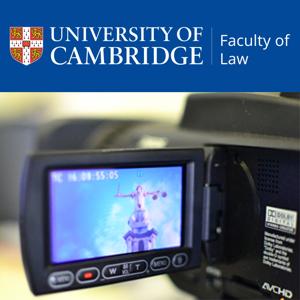


The successful appeal in R v Jogee and Ruddock v The Queen before the a combined Supreme Court and Privy Council raises important issues in the criminal law of complicity (sometimes unhelpfully labelled 'joint enterprise').
In this video Dr Matthew Dyson, who advised the appellant's counsel in the case considers the law of complicity, what the case changed, and its implications.
Dr Matthew Dyson is Fellow in Law and Director of Studies at Trinity College. His research includes complicity specifically, giving evidence before the House of Commons Justice Select Committee, and wider issues such as volumes like "Comparing Tort and Crime" and "Unravelling Tort and Crime" by Cambridge University Press. For more information about Dr Dyson, please refer to his profile at http://www.law.cam.ac.uk/people/academic/m-dyson/716
Law in Focus is a collection of short videos featuring academics from the University of Cambridge Faculty of Law, addressing legal issues in current affairs and the news. These issues are examples of the many which challenge researchers and students studying undergraduate and postgraduate law at the Faculty.
This entry provides an audio source for iTunes U.
The conviction of Oscar Pistorius for committing culpable homicide in relation to the shooting of his girlfriend Reeva Steenkamp made worldwide news.
In this video Professor Christopher Forsyth reflects on his previous comments about the original conviction, and describes how the Supreme Court of Appeal interpreted the South African law on intent to kill. Although the Court complimented Ms Justice Thokozile Masipa on her handling of the case under intense media scrutiny, they reversed her decision (as Professor Forsyth originally suggested they might), and and replaced the verdict with one of murder.
Professor Christopher Forsyth is Professor of Public Law and Private International Law in the University of Cambridge, and Extraordinary Professor of Law in the University of Stellenbosch. For more information about Professor Forsyth, please refer to his profile at http://www.law.cam.ac.uk/people/academic/cf-forsyth/31
Law in Focus is a collection of short videos featuring academics from the University of Cambridge Faculty of Law, addressing legal issues in current affairs and the news. These issues are examples of the many which challenge researchers and students studying undergraduate and postgraduate law at the Faculty.
This entry provides an audio source for iTunes U.
This video discusses six issues arising out of the recent statement of Prime Minister David Cameron to the House of Commons entitled "Prime Minister’s Response to the Foreign Affairs Select Committee on the Extension of Offensive British Military Operations to Syria".
Dr Veronika Fikfak and Dr Hayley J Hooper discuss the questionable international legality of military action, the strategic use of parliament and its potential impact upon the emerging Consultation Convention, and the responsibility of MPs to hold government to account across a broad range of relevant domestic issues. Thereafter they analyse the impact of the way government shares intelligence information with the House of Commons, especially in light of the 2003 Iraq conflict, highlighting several relevant but under-discussed rules. Finally, they discuss the role of party political discipline on armed conflict votes.
Dr Fikfak researches in the fields of public law, human rights and international law. She is particularly interested in the interface between domestic and international law and is currently writing a monograph on the role of national judges in relation to international law. Dr Hooper is currently a Fellow at Homerton College, and her doctoral research at Balliol College, University of Oxford concerned the use of "closed" or "secret" evidence in the context of judicial review of counterterrorism powers, and its extension to civil procedure more broadly.
Drs Fikfak and Hooper are currently co-authoring a monograph on parliament's involvement in war powers entitled Parliament's Secret War (forthcoming with Hart Bloomsbury, 2016).
For more information about Dr Fikfak, please refer to her profile, and about Dr Hooper to her profile.
Law in Focus is a series of short videos featuring academics from the University of Cambridge Faculty of Law, addressing legal issues in current affairs and the news. These issues are examples of the many which challenge researchers and students studying undergraduate and postgraduate law at the Faculty.
This entry provides an audio source for iTunes U.
In his speech at Chatham House on 10 November 2015 (https://www.gov.uk/government/speeches/prime-ministers-speech-on-europe), the Prime Minister David Cameron outlined those aspects of the EU he would like to see reformed prior to any referendum on the UK's continued membership of the EU. EU employment law - one of the most controversial areas of EU policy - was not expressly identified in his list. In this video, Catherine Barnard considers the impact of EU social poicy on the lives of UK employees and what effect 'Brexit' might have on employees' rights.
For more information about Professor Barnard, please refer to her profile at http://www.law.cam.ac.uk/people/academic/cs-barnard/9
Law in Focus is a collection of short videos featuring academics from the University of Cambridge Faculty of Law, addressing legal issues in current affairs and the news. These issues are examples of the many which challenge researchers and students studying undergraduate and postgraduate law at the Faculty.
This entry provides an audio source for iTunes U.
From the publisher's feed
19 Listeners
5 Listeners
1 Listeners
0 Listeners

7 Listeners
11 Listeners
16 Listeners
2 Listeners
0 Listeners
1 Listeners