
Sign up to save your podcasts
Or

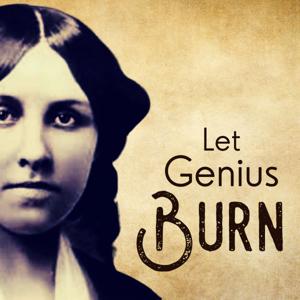


Jan Turnquist, Executive Director of Louisa May Alcott's Orchard House, has made her life about Louisa's legacy. Whether she is portraying Louisa May Alcott around the world, consulting on Little Women adaptations with A-list actors, or simply showing someone around the house museum, she brings the same level of commitment and enthusiasm for sharing Louisa May Alcott with others.
In this episode, Jan shares the story of how she started portraying Louisa May Alcott for the public and how it transformed her life. She also discusses working with Greta Gerwig, Maya Hawke, and Annie Leibovitz through her role at Louisa May Alcott's Orchard House. She discusses how connection is at the heart of her preservation work, and how individual stories about Louisa's influence have shaped her life.
Learn more about Louisa May Alcott's Orchard House at louisamayalcott.org
In the first bonus episode of Let Genius Burn, Jill and Jamie dive into the details of three passages from Louisa's work beyond Little Women. Listeners will learn about the different ways Louisa's life experiences shape her writings. Plus, after twenty months of working together on Let Genius Burn, Jill and Jamie finally meet in person!
At the time of Louisa May Alcott's death, she was known to most as the "children's friend," an author of children's books and particularly books for girls. As time passed and scholars made the connection between Louisa May Alcott and the lurid thrillers she wrote under pen names, Louisa's legacy took on new dimensions. Today, we can appreciate Louisa May Alcott as the feminist and forward-thinking woman who is also the author of a famous novel called Little Women. This episode discusses Louisa's legacy and how it has changed over time.
Support Elsewhere Studios: https://www.elsewherestudios.org
Learn more: www.letgeniusburn.com
In Louisa May Alcott's time, strict definitions and expectations of white womanhood permeated Louisa’s society and culture. Marriage and motherhood were the accepted roles for women; voting was inaccessible and illegal, education restricted, and earning a living through a career was limited. Louisa May Alcott defied gender expectations, sometimes through her acting as a way to embody a male character and through her dress, language, and active lifestyle. From a topsey-turvey girl to a self-made woman, she wore her own version of womanhood like a badge of honor.
Learn more at www.letgeniusburn.com
Donate to Sojourner Family Peace Center: https://www.familypeacecenter.org/
When Little Women became a sensation, Louisa May Alcott became the ultimate literary celebrity. Fans were waiting out on her lawn and knocking on her door, and her life was suddenly not her own. Although she had always yearned for fame, she was surprised to find it costly and unpleasant. Still, her celebrity opened new doors for her. It gave voice to her causes, and it may have even spurred her creativity. In this episode, we unpack how Louisa's celebrity status defined the last twenty years of her life, whether it's possible to separate the artist from their art, and how Louisa's celebrity has continued into the 21st century.
Learn more at letgeniusburn.com
Support Mass Audubon this week: https://www.massaudubon.org/.
Louisa devoted her life to the causes she believed in, primarily abolition and women's suffrage. Her political beliefs were handed down from her parents, who were constantly striving for a better world. The Alcotts made their home available to freedom seekers on the Underground Railroad, and Louisa eventually became a nurse during the Civil War, as she was otherwise not allowed to go and fight. She was also the first woman registered to vote in Concord. Learn about food reform, dress reform, and more in Louisa as Activist.
Learn more at letgeniusburn.com
Support the Robbins House this week: https://robbinshouse.org/.
In this episode, we pull back the curtain to take a peek at Louisa at her writing desk. We will trace the development of her writing style, the desires that pushed her to write, and the arc of her professional career.
From crafting jolly tales to journaling her worries and struggles, Louisa spent her life meeting herself on the page. Writing, she said, “is my salvation when disappointment or weariness burden and darken my soul…” Through introspection and observation, she explored herself and the world she struggled to fit into, while her vivid imagination allowed her to express what was unvoiced inside of her. Through her writing, Louisa strove to prove her existence to herself, to claim a right to her thoughts and desires in a world that expected women to stay silent. Fortunately, her words still exist for us today, as luminous as ever.
Learn more at letgeniusburn.com
Support the UW Odyssey Project: https://odyssey.wisc.edu/
Before she became an author and celebrity, Louisa May Alcott was a teacher, seamstress, governess, companion, servant, and nurse. Though they were difficult, her experiences gave her material to write for the rest of her life. This week, learn about Louisa May Alcott's relationship with work, which was both her salvation and the bane of her existence.
Learn more at letgeniusburn.com
Donate to Educational Opportunities Fund: https://www.educationalopportunitiesfund.org/donate/
Once upon a time, four sisters became immortal. When they were young, the four girls were still flesh and blood, ordinary girls who built towers out of their father’s books and put on plays in the barn for their neighbors and went hungry too many nights. One day, when they were all grown up, the second sister took out her magic pen and began to write down the stories of their adventures: the simple yet profound drama of growing up into women and forging their own paths. Like a spell, she transformed her sisters with paper and ink into characters who would live forever: from Anna, Louisa, Elizabeth, and May into Meg, Jo, Beth, and Amy. This is the story of the sisterhood behind Little Women. This is Louisa as Sister.
Visit our website to learn more: www.letgeniusburn.com/learn-more.
This week, we're asking for support for Louisa May Alcott's Orchard House museum. Please give if you're able: https://louisamayalcott.org/donate.
Before Louisa May Alcott grew up to be a famous children's author, she belonged to her parents: Bronson Alcott and Abigail May Alcott. Bronson was an educator whose lofty ideas brought him to the forefront of the Transcendentalist philosophy movement. Abigail May Alcott was a social worker and ardent supporter of women's suffrage. Together, they created a family where their four daughters were encouraged to be active, creative individuals. This is the story of Louisa May Alcott as a daughter.
Visit our website to learn about the references in this episode: https://www.letgeniusburn.com/learn-more
If you can, please support Feeding America: https://www.feedingamerica.org.