
Sign up to save your podcasts
Or

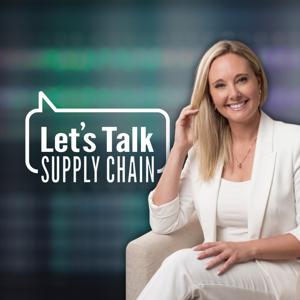


Ann Marie Jonkman of Blue Yonder talks about using tech to solve labor challenges; empowering teams & organizations to fulfill potential; & future supply chains.
IN THIS EPISODE WE DISCUSS:
[07.42] An introduction to Blue Yonder, what they do, and how they help their customers.
"We're your technology partner… if you want new innovation, advice on reducing your labor cost, reducing your tech stack debt… we have the chops and vision to execute with you."
[09.19] The ideal client for Blue Yonder.
"Our clients are looking for innovation and differentiation; in this volatile market, they're looking to reduce costs… and they're looking for a partner."
[13.02] The current landscape of supply chain, and the biggest challenges faced by Blue Yonder customers.
"2024 has been a slow recovery. When you look at transportation, post-pandemic, there was a lot of excess capacity… Now volume is down, we have a lot of healthy competition, and shippers were smart – they locked in rates… So people are looking to increase utilization with what they have. So labor and cost, as opposed to scale for growth, is driving most of the portfolio."
[15.43] Blue Yonder's transportation management solution, and how it's helping customers to overcome challenges, as well as transform their transportation operations.
[22.10] The evolution of warehousing, and how Blue Yonder's range of warehouse management and execution solutions are helping customers to keep up with rapid change, pivot, and set themselves up for the future.
"I've seen the most change in this space. We see heavy automation, automation cost investment - but we see the labor cost driving automation."
[28.46] Blue Yonder's Edge technology solutions, how they integrate into customer organizations, and the incredible results they can help customers to achieve.
"Robotics has been around for a while, but what we've seen in the last 2-3 years is an explosion."
[34.42] How Blue Yonder helps customers with labor management, helping them to find the balance between people and technology, and achieve employee engagement as well as peak operational performance.
[40.25] A case study exploring how Blue Yonder provided solutions to allow a key client to better understand and utilize analytics, helping them to make operational changes and achieve a 25-30% reduction in labor cost, worth millions of dollars.
[43.50] Why Blue Yonder is committed to helping customers fulfill their potential, and the impact that empowering people and organizations is having on the industry.
"We want to be your technology partner, we don't want to just sell you a product. We look at your utilization, and help you during implementation… we want you to be successful."
[47.32] The supply chains of the future, and the Blue Yonder innovations that are helping to drive the industry forward.
"That's the next vision – it's not just the products and solutions, it's connecting them. And it's not just visibility – it's decisioning, its orchestration, where we're all working collaboratively."
RESOURCES AND LINKS MENTIONED:
Head over to Blue Yonder's website now to find out more, and discover how they could help you too. You can also connect with Blue Yonder and keep up to date with the latest over on LinkedIn, Instagram, Facebook, YouTube and X (Twitter), or you can connect with Ann Marie on LinkedIn.
If you enjoyed this episode and want to hear more amazing supply chain content, check out 377: How AI is Improving Supply Chain Sustainability, with Dyci Sfregola and Hope White or Nicole Glenn on the Power of Hope and Transforming the Logistics Industry.
IN THIS EPISODE WE DISCUSS:
[06.43] Introductions to today's guests and what they do.
"I completely nerd out about supplier management and third-party risk!"
[09.02] From collection and validation to ongoing maintenance, the current processes and challenges of supplier management.
"You'd think it was simple… but, in reality, suppliers get asked by a lot of customers to provide data in any number of ways – portals, emails, forms – and if you're a big supplier, it can be thousands of different ways that you're transmitting that information, through lots of different people and functions."
"Big organizations use supplier information differently – in sourcing, contracting, supply chain, finance – and all of a sudden there's multiple versions of this supplier that exists."
[15.26] A closer look at the DNA of a supplier profile, and the importance of having visibility over that data.
[19.47] Supplier validation – the challenges of payments and banking, and finding the balance between security and maintaining speed and efficiency during the validation process.
"Efficiency is coming, and AI will be a part of that, but it's really difficult – getting valid information for a supplier is the biggest roadblock for the onboarding process."
[22.59] How Matt works with his suppliers, and the processes that help him find that balance.
"We've watched this evolution. Originally we were really just focused on data – 'How do I pay this company?', and collected just enough for that. Now it's much more than that. Now it's 'Are they compliant with regulations?'; 'Do they have certain certification levels?'; 'Are they in a particular region?'… It becomes much less about the accounts payable piece and much more about the supply chain piece."
[27.14] A case study exploring how Relish and SAP helped a shared client to prevent a case of fraud, worth a huge $2.1 million, and what we can all learn.
[33.11] The risk inherent in supplier management, and how organizations should work to identify, assess and manage risk proactively.
"Most companies are doing the assessment of risk… but the challenge is that it's very reactive… You know there's a risk, but what do you do with it? So how can technology help you to become more predictive?"
[34.36] The role technology, specifically AI, plays in this space now – and its potential for the future.
"AI is here… but without the context to answer the question properly, you're going to get bad steering. The next evolution is how to put context to that data."
[39.36] The complexity of the current IT landscape; why we should all be looking to simplify; and how organizations can find the right solutions for their supplier management.
"We're going to stop thinking about supplier management as a module, and we're going to start thinking about it the same way we think about user group management that goes across everything… Suppliers are so core to everything in procurement that you're going to see it more as a horizontal rather than a vertical."
[44.46] All about solutions: what's to come in episode 430, our upcoming collaboration with Relish.
RESOURCES AND LINKS MENTIONED:
Head over to Relish's website now to find out more, and discover how they could help you too. You can also connect with Relish and keep up to date with the latest over on LinkedIn, YouTube and X (Twitter), or you can connect with Ryan or Matt on LinkedIn.
If you enjoyed this episode and want to hear more from Relish, check out 408: Strategically Extend Your Enterprise Applications, with Relish.
Evin Sisemore talks about founding a business alongside her husband; navigating its acquisition; how sales have evolved; & supporting women in supply chain.
IN THIS EPISODE WE DISCUSS:
[07.47] Evin's career journey, and how she found supply chain.
"I ended up taking a job and falling in love with it. We always joke, 'Don't ever burn any bridges in this industry' because, once you're in it, you're hooked!"
[09.22] Why Evin decided to found her own business, Texas Motive Solutions, in 2018; and her advice for budding entrepreneurs.
"The reason we were so successful is because we had an amazing team. I would never go into anything without having the best people surrounding me."
[12.52] Evin's experience founding a business with her husband, and how they achieved a work/life balance whilst living and working so closely together.
"My husband is my biggest cheerleader, but he will also push me more than anyone else to be better."
[16.29] How Evin navigated the acquisition of Texas Motive Solutions by Concentric; how the acquisition allowed her to continue to achieve high levels of customer experience whilst growing rapidly; and how she found her place in the new organization.
"It didn't feel like I was selling our company. It was: we're merging with these other people, and we're going to have people that we can share best practices with. They have their strengths, we have ours – and we're just bringing them all together and making it better for our customers."
[19.41] Evin's role as Regional Vice President, and why entrepreneurship means doing the dirty work.
[23.51] A closer look at the forklift power industry, and its increasing focus on sustainability issues.
[26.14] The changing face of sales, and how Evin adapted her strategies and techniques, especially as a woman in the industry.
"Sales used to be that you had to be at the golf course, or the bar. But, as a woman, I didn't want to just go out to happy hours every night – we had to find a way to bring our customers value. We go in, find their problems, and find a way to prevent them."
[28.31] Evin's experience as a woman in the forklift power industry, and how she approaches equality in her own organization.
"There are definitely still challenges, but it's changing – people are seeing value in great people, whether you're male or female."
[32.18] How Evin supports women in the industry and her advice for what we can all do to help move the needle.
[33.52] The biggest lessons Evin has learned over the course of her career so far.
[35.20] Evin's love of sports!
[37.08] The future for Evin.
RESOURCES AND LINKS MENTIONED:
You can connect with Evin over on LinkedIn.
If you'd like to hear more stories from other incredible women in supply chain, check out 410: Women In Supply Chain™, Julie Tilenius or 380: Women In Supply Chain™, Christine Barnhart.
Dwayne Johnson talks about SCI; Section 321 & the rise of borderless e-commerce; & why a well-designed cross-border supply chain can be a competitive advantage.
IN THIS EPISODE WE DISCUSS:
[06.45] An introduction to SCI, what they do, and how they help their customers.
"Everybody is competing for customers, so it's important to build a model where the shipping is sustainable, but so is the cost."
[09.15] The ideal client for SCI.
[11.09] The changing face of the logistics industry, and why embracing that change is so important.
"We, as consumers, are driving the change. Who thought it would take a few days to get something from Asia? Supply chain is changing every day."
[14.10] A closer look at the landscape of logistics, the key challenges and opportunities, and why consumer mindsets are shifting.
"Amazon has changed the way we, as consumers, think… but it's starting to shift – and consumers are thinking 'do I really need this straight away?'"
[18.25] The rise of borderless ecommerce, and how SCI is helping customers to embrace it.
"We started to understand trade agreements… then we went to our customers and had conversations... And the impact you can have by talking to a customer about being able to avoid something like duties – it's tangible dollars."
[21.12] The secret to SCI's competitive advantage, and how they're helping clients to create well-designed supply chains and unlock international markets.
[25.57] How SCI is helping customers with international expansion and localization.
[28.39] A case study showing how SCI helped a key customer to embrace borderless commerce with section 321 and put $ 6 million back on their bottom line.
"That money could open retail stores, add to marketing, and help you expand internationally. Handing people that much money is a big advantage."
[31.54] The importance of partnerships when it comes to creating competitive advantage, and what it looks like to work with SCI.
[34.31] How organizations can get started with Section 321, and what they should be thinking about before they start.
[36.54] The future for the industry, and for SCI.
RESOURCES AND LINKS MENTIONED:
Head over to SCI's website now to find out more. You can also connect with SCI and keep up to date with the latest over on LinkedIn, YouTube, Instagram or Facebook, or you can connect with Dwayne on LinkedIn.
Martin Hespeler & Graham Burford talk about warehouse management; challenges & opportunities; & how tech is helping logistics providers navigate market forces.
IN THIS EPISODE WE DISCUSS:
[08.21] Introductions to Martin and Graham, and their roles at CargoWise and AWA Logistics.
[09.54] The traditional approach to warehousing and how, and why, that approach has evolved.
"The traditional methods are in the rear-view mirror, and we're moving quite quickly with technology."
"In years past, people would ask 'how do I reduce my labor cost?'… Since the pandemic, the conversation has shifted dramatically to 'how do I optimize?' because labor is not readily available anymore."
[13.10] How the pandemic, and other disruptions, have driven change; and a closer look at the current logistics and warehouse management environment.
"The industry has changed, but the labor force has also changed, and that's the biggest thing we're seeing with automation. We're being driven by the labor."
[15.38] The biggest challenges logistics providers face now, as they balance a rapidly changing market with a dated infrastructure.
"Now, many companies are dealing with the reverse logistics component which has been a nightmare, quite frankly, for decades!"
"One of the big things we're starting to be managed on is opportunity cost. If we haven't returned or delivered in a certain KPI, what does that lost opportunity cost? Customers now aren't just looking at freight spend or delivery cost, they're looking at the time in transit and what a lost sale is costing them."
[21.51] The importance of thinking about warehousing from a cross-border perspective and updating the traditional approach so that logistics providers are cross-border adept.
"When you can provide visibility to both the logistics provider and their customer, it's extremely powerful."
"We're starting to see a lot of manufacturers move production to Mexico and other Central American countries to get access to this market, and to avoid additional duties and taxes."
[27.49] How CargoWise is creating a highly integrated and capable global solution; and why thinking on a global scale is crucial.
"It's all about the data… without data being in a system that can transmit electronically to multiple countries and systems, we can't move cargo. Having a database and resource that allows us, not only to have that data accessible but in the correct format to transmit it, is critical."
[33.10] The importance of market awareness and keeping that global thinking approach, when it comes to sustainable growth and expansion.
[35.57] How CargoWise technology is helping AWA logistics to optimize, stay competitive, and navigate unpredictable global market forces.
"The technology has allowed us to continue to be competitive in the market… it's really changed us from a manual process… It's taken out 12 hours of pick time, on one lane, per week… and we've cut down our errors by 80%."
[41.22] How CargoWise has created an effective communication process for AWA Logistics, helping them to expand their business.
[45.55] The key warehouse management trends we should be paying attention to, and Martin and Graham's advice for organizations as they think about the years ahead.
"Integrated solutions, with centralized data management, is key."
"You have to be really forward thinking – if you're not looking for what's coming next, you're not with the right provider."
RESOURCES AND LINKS MENTIONED:
Head over to CargoWise's website now to find out more, or download their FREE Global Warehousing eBook. You can also connect with CargoWise and keep up to date with the latest over on LinkedIn, YouTube, X (Twitter) or Facebook, or you can connect with Martin or Graham on LinkedIn.
If you want to hear more from CargoWise, you're in luck! Check out 406: Unlock the Opportunities of Cross-Border Ecommerce, with CargoWise, 346: Enable and Empower Your Supply Chain, with WiseTech, 367: Going Beyond Visibility – Unveiling The Invisible, 369: From Chaos To Clarity: Simplifying Global Customs Compliance, 371: Going Beyond Visibility – From Risk to Resilience: How Technology Is Transforming Global Supply chains, or 373: Going Beyond Visibility – Culture and Digitization.
Neil Clover talks about bridging the digital divide; design thinking; the challenges of integrating new tech; & empowering workers by simplifying solutions.
[07.09] Neil's journey through the world of tech; his reflections on what's changed and what he's learned; and why we all need to focus on the art of simplicity.
"There's a lack of simplicity, a lack of elegance… and technology gives us the ability to overcomplicate things – on steroids!"
[13.05] Why supply chain is still about people, despite technological advancements; and Neil's vision for integrating technology with human potential in supply chains.
"We have to think of technology as just another tool. When forklifts were introduced, they didn't replace the people – they augmented the people… There are a lot of repetitive things that machines are built for, but people are the glue, the purpose. You can do a lot of things to a machine, but you can't put passion into it."
[15.35] The power of design thinking, and how it's influencing SDI's approach to implementing technology in supply chains.
"I've sat in so many corporate meetings with people saying 'we've got the solution' – but that isn't the problem we're trying to solve."
[20.27] From competency to cost, the biggest challenges Neil sees when introducing new technologies, and the lessons he's learned from them.
"Process before technology... the technology is not the answer."
[23.18] Why workforce resistance to new technology is so common; the impact of change management; and how organizations should be thinking about balancing people and technological change.
[27.41] The importance of simplifying tech, and engaging workers by developing solutions that truly work for them.
"Give people what they need, and only what they need – and they'll love you for it."
[31.25] SDI's strategies for adapting technological tools to align with the expectations and needs of the emerging workforce, and the importance of bringing different generations of workers together.
[34.47] How organizations can use those strategies to create operational efficiency and cost savings and to achieve impactful quick wins at the same time as laying the groundwork for future success.
"If you can take the pressure down, learning increases. And stop with the all-in-one tools! Do those two things, and efficiency goes through the roof, because confidence goes through the roof."
[38.49] How organizations can keep the human aspect front and center during the technological evolution of supply chain.
"Happy employees are naturally more productive."
[41.50] How SDI plan to continue to help clients bridge the digital divide, simplify and leverage technology for frontline efficiency.
Julie Tilenius discusses her career journey; the importance of building skills by trying new things; how the industry has changed; & her biggest achievements.
IN THIS EPISODE WE DISCUSS:
[08.57] Julie's early years; how her father's career ignited a passion for finance; and the job that laid the foundations for her future career path.
"I was so fortunate that my first job out of college was for KPMG… working there exposed me to so many industries and different business models.... That was really the stepping stone for my career."
[11.30] How a personal tragedy drove a career change for Julie, and led her to supply chain.
"Here I am, a 25-year-old female, going to work for an industrial tool distributor!... But, little did I know, that was going to be the beginning of something amazing for my career."
[13.46] The many and varied roles that Julie experienced during her time at MSC and the importance of trying new things; how she was able to move through disciplines within the business; and her advice for professionals looking to take this approach.
"Take the chance, be open to change. Yes, it's scary! But it's OK to feel comfortably uncomfortable."
[17.15] An introduction to TrueSource, and Julie's role as President.
"In this business, service is key. So, when I first took on the role as President, that was my main focus. How are we going to deliver top-notch service to our customers?"
[20.31] A closer look at Julie's key areas of focus within TrueSource; her ambition to deliver best-in-class service; and the importance of building strong partnerships.
[23.30] From increasing costs and decreasing footfall to rising theft, a closer look at the current market and the challenges faced by Julie and TrueSource customers.
[26.22] What Julie loves so much about supply chain; the motivations that drive her; and the importance of celebrating success.
"Always having a purpose is really what motivates me every day."
[29.36] Julie's experiences as a woman in the industry, and utilizing curiosity, dedication and a commitment to learning to build trust over time.
"Early on, it was a challenge working in a male-dominated industry. There would be so many times I was the only woman in the room. I put up a barrier, I wasn't confident. But I pushed myself through that barrier to speak up. And, at first, my voice fell on deaf ears."
[32.12] The gap between different generations of supply chain professionals, and the importance of building relationships.
[34.30] How Julie's daughter is following in her finance footsteps; how the industry that she's stepping into is a very different one; and Julie's advice to her daughter for navigating the journey that's ahead.
"Build strong relationships, because you have to rely on others – success doesn't come on your own."
[38.52] Julie's biggest achievements over the course of her career so far.
[40.14] The future for Julie, and for TrueSource.
RESOURCES AND LINKS MENTIONED:
You can connect with Julie over on LinkedIn.
If you enjoyed this episode and want to hear more from strong women in the industry, check out 342: Women In Supply Chain™, Juliette Samson, 405: Women In Supply Chain™, Lalitha Rajagopalan or 191: Women In Supply Chain™, Lora Cecere.
Krenar Komoni talks about Tive; understanding the condition, as well as location, of shipments; sustainability; and why every shipment matters.
IN THIS EPISODE WE DISCUSS:
[07.19] Krenar's education, his passion for start-ups, and the career journey that led him from space stations, chips, and wireless to founding Tive.
"I've always worked for start-ups since I was a kid… I fell in love with this idea that you can build something out of nothing."
[12.13] An overview of Tive – who they are, what they do, and how they help their customers.
"We make sure our customers have the least amount of shipping problems as they can!"
[13.42] The ideal client for Tive.
[18.08] From theft to compliance, the biggest logistics challenges currently faced by Tive customers.
"Theft is huge right now in the market… just with one company, every week we're catching two or three events."
[20.57] Visibility – what it means to Tive, and why it's so important that we recognize its value and translate that into effective supply chain strategies, processes, and tools.
"Better quality conversations build a better quality of supply chain."
[24.31] A closer look at Tive trackers, the technology, and what sets them apart from the competition.
"We've really built them purposefully for supply chain and logistics – and for the people who use this every single day. We've built a device, at the right cost, with the right features and right outputs that customers want."
[26.51] Why Tive has coined the phrase 'ground truth' and what it means to them, and to customers.
[28.14] A closer look at Tive tags; how clients can use them to monitor what's happening to their product as it moves through its journey; and why it's just as important to know what condition your shipments are in, as exactly where they are.
[31.08] Tive's 'every shipment matters' motto, and the impact the industry could make if every organization and professional truly honored that motto.
"In order to make supply chain, and the whole planet, more efficient, you have to live by it – every single shipment matters. If we take care of every shipment the way we do high-value ones… if every shipment got the care it deserves, we'd be in much better shape."
[33.44] The importance of sustainability, and how Tive weaves it through everything they do, creating products that are better for the environment, and better for their customers.
"Our non-lithium trackers are much better for the environment… and you don't have to use a 'dangerous goods' sticker. So, you have sustainability, plus a better customer experience."
[37.37] Two case studies show how Tive trackers helped highlight a mistake with temperature-controlled cargo, saving a half-million-dollar shipment, and locating a missing million-dollar shipment.
[43.25] The future for Tive, and the industry.
"Customers are realizing that, to get 100% visibility and really understand their supply chains, they have to start embracing IoT."
RESOURCES AND LINKS MENTIONED:
Head over to Tive's website now to find out more, download their FREE State of Visibility 2024 report, and discover how they could help you too. You can also connect with Tive and keep up to date with the latest over on LinkedIn, YouTube and X (Twitter), or you can connect with Krenar on LinkedIn.
If you want to hear more from Tive, they were first on the show way back in 2020! Check out what's changed by listening to Episode 131: Forget Surprises! In Transit Visibility Is Here.
Ryan Walicki of Relish talks about why enterprise solutions rarely cover all bases; the rise of AI; & the importance of collaboration & customer experience.
IN THIS EPISODE WE DISCUSS:
[07.28] The story behind the brand name Relish.
"While I'm more of a mustard and ketchup guy personally (!), Relish just really stood out to us – a word that can create certain emotions."
[09.02] Ryan's background, his love of procurement, and his journey to co-founding Relish.
"I fell in love with it… I watched the perception of procurement go from 'people who buy stuff' to a strategic function, from analytics and sourcing all the way through invoicing and payment."
[11.53] An overview of Relish – who they are, what they do, and how they help their customers.
"We're trying to meet users where they are. A lot of users have succumbed to "I'll just create a workaround" or "Excel can do that for me"… Enough of that!! You should expect more, you should demand more from your enterprise software."
[15.37] The ideal client for Relish.
[16.45] Ryan's perspective on why enterprise solutions rarely meet all requirements; the biggest enterprise software challenges; and how those challenges have been compounded by the industry changes we've seen over the last few years.
"These solutions are presented as 'It'll do everything you want – and cut your grass!' The customer takes that at face value, builds a business case, builds an ROI case – and they never meet it."
[20.37] How Relish is working to simplify processes, extend solutions, and bridge gaps in order to complement and enhance enterprise software.
"5% of business revenue is lost due to fraudulent activity... there's too many workarounds and stale processes out there… But there's an end to this story that's a lot more positive, automated, safe, and economic than Excel workbooks."
[25.02] Why Relish is so passionate about collaboration, partnering with some of the industry's biggest names to create ecosystems that drive success for everyone.
[27.18] The rapid evolution of AI, and how Relish uses it to help clients streamline and enhance their processes.
"There are a lot of folks that present themselves as AI experts. But this is so new, it's moving so fast – there are no experts!"
[31.47] Customer experience, and the importance of creating an effective chain of solutions for your customer, and your customer's customer.
"One of the most frequent phone calls finance gets is from suppliers asking: "When am I going to get paid?"
[35.34] A case study showing how Relish helped a global financial institution to solve its invoice challenges, increasing automation from 24% to over 95%, streamlining its source-to-pay process, and boosting its visibility and process speed.
"We felt like the root of all evil is in master data inefficiency, and so if we built a platform that had the capability to go after that core problem, we could manifest those as applications in invoicing, supplier, and automation."
[39.25] Ryan's hockey team, and whether or not they'll be making the finals!
[41.23] What the future holds for Relish, and for the industry.
"The time between point A and point B keeps getting shorter because innovation is happening fast… We're outgrowing applications very quickly."
RESOURCES AND LINKS MENTIONED:
Head over to Relish's website now to find out more, and discover how they could help you too. You can also connect with Relish and keep up to date with the latest over on LinkedIn, YouTube and X (Twitter), or you can connect with Ryan on LinkedIn.
If you enjoyed this conversation and want to hear more about procurement, check out The Three Biggest Challenges For Procurement – And What To Do About Them, Women In Supply Chain™: Procurement Leader, Stephany Lapierre on Using Supplier Data to Empower a More Connected, Diverse Supply Chain or 243: Reinventing Freight Procurement with Emerge.
Stephen Dascoli & Vincent Lacopella talk about cross-border ecommerce - the challenges & opportunities; the importance of technology; and market growth.
IN THIS EPISODE WE DISCUSS:
[07.24] Introductions to Stephen and Vincent, and their roles at CargoWise and Alba Wheels Up.
[09.58] The rapid rise in ecommerce, and the factors driving its international growth.
"As consumers, we want convenience. You can compare prices, it's cheap… cross-border ecommerce is going to continue to grow."
[11.54] The impressive growth rate we can expect in ecommerce, and what that growth means for the industry and the different players within it.
"The pandemic saw some changes in the way ecommerce was shipped… with more growth comes more opportunities for forwarders, but also more challenges."
[15.04] From compliance and regulations to capacity, the big challenges posed by cross-border ecommerce growth and how they're affecting the B2B supply chain.
"Surging B2C commerce is going to continue to put pressure on small to medium sized forwarders – the volume that the ecommerce giants ship these days, they're taking up all the capacity with carriers and making it hard for small-to-mids in the international space."
[18.50] The growing opportunities for forwarders in cross-border D2C ecommerce fulfillment.
"We see huge opportunity on the southern border, a lot of companies are looking to put inventory there, and keep it there until it's sold… companies that don't do that, and still pay duty on that D2C, might be at a disadvantage because of the pricing."
[23.42] Why forwarders are recognizing this time of growth and becoming proactive; and how they're tackling the challenges, embracing the opportunities, and making the operational changes needed to ensure success.
"They're recognizing that if they don't have the capabilities in the cross-border ecommerce space, they're going to have to eventually, or they're going to miss out… They're working it out, doing the research, talking to the right people so, once that opportunity comes up, they've got the right tools, they're in the right place, they've got the resources – and they can jump on it."
[27.14] How technology is helping organizations to realize faster, safer, and more reliable cross‑border ecommerce order fulfillment.
"The competition in the space, with such little margins – you can't just throw people at the problem, the overheads of throwing labor at it just isn't going to work… organizations must utilize technology to automate their processes."
[28.51] Alba Wheels Up's long-standing relationship with CargoWise, and the benefits it brings.
[31.26] How investment in technology has allowed Alba Wheels Up to take advantage of opportunities presented by international ecommerce fulfillment and boost their business intelligence and customer service.
[33.34] Vincent's advice for how organizations should approach opening themselves up to international ecommerce, and the challenges and opportunities it brings.
"We're in this debate in the customs brokerage community about Section 321… so companies need to figure out how they're going to operate in the space, how are they going to take advantage of what's going on? Because I don't see any big regulatory changes on the horizon that are going to change the trend."
[36.29] The typical questions and concerns of brands looking to partner with CargoWise, and Stephen's advice for overcoming volume and data fears.
"Don't be afraid of the amount of data there is. The majority of that data (if you do it the right way), you can validate it, screen it – it's only a small portion of that data that you actually need to action."
[38.20] The future for cross-border ecommerce, and how we can expect to see the market continue to grow.
RESOURCES AND LINKS MENTIONED:
Head over to CargoWise's website now to find out more, download their free ecommerce eBook, or request a cross-border ecommerce consultation. You can also connect with CargoWise and keep up to date with the latest over on LinkedIn, YouTube, X (Twitter) or Facebook, or you can connect with Stephen or Vincent on LinkedIn.
If you enjoyed this episode and want more, we have lots more amazing CargoWise content for you! Check out 346: Enable and Empower Your Supply Chain, with WiseTech, 367: Going Beyond Visibility – Unveiling The Invisible, 369: From Chaos To Clarity: Simplifying Global Customs Compliance, 371: Going Beyond Visibility – From Risk to Resilience: How Technology Is Transforming Global Supply chains, or 373: Going Beyond Visibility – Culture and Digitization.