
Sign up to save your podcasts
Or

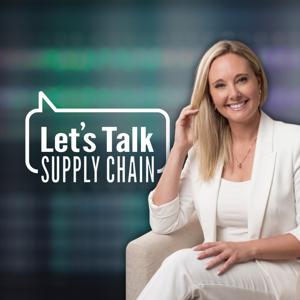


Angie has worked in supply chain all her life, with her earliest career memories involving a master thesis and meeting Ted Ruhly, the CEO of Maersk. Since then, Angie has continuously sought career growth and built extensive experience within the industry. Featuring Angie in our "women in supply chain" series has a personal significance to Sarah and is a career highlight for Angie with all her hard work in helping to close the gender gap. In this episode, Angie talks about the guidance she received from her father, why she is passionate about this industry and how the people make all the difference.
Angie's main challenge in supply chain was the pushback she got from colleagues and coworkers when she advocated for change and innovation. Angie knows that disruption is what encourages progress, but it can be difficult to implement when leaders are being pulled in so many different directions. As a woman in supply chain she has worked hard to challenge the status quo at all times in her career in order to encourage more diversity amongst male and female leaders.
What's her advice for the younger generation? She explains that it's worth exploring the different partnerships your universities may offer. Be willing to go to conferences and reach out to leaders, look for ways to optimize the supply chain ecosystem and consider getting into cyber security. As she says, there is a shortage of talent and therefore many opportunities for students looking to get into the industry. For Angie herself, the future is focused on finding a healthy work balance and driving innovation forward.
In this episode we discuss:
Resources and links mentioned:
With procurement departments finding themselves lean and mean these days, where are you spending gaps? Are you leaving money on the table? You might be, so what are you going to do about it. Some of your biggest savings lie within your nuisance expenses like uniform, waste disposal and pest control services and you may be like many other procurement departments that only review these expenses every few years. Rich Ham from Fine Tune is here to tell us why we should reconsider that strategy and how his company helps companies save money by optimizing those difficult-to-understand expenses.
The current challenges of procurement professionals are that expense categories are segmented, some requiring much more management than others. This means that many business strategies leave money on the table, waste time and energy and don't allocate resources adequately. With Fine Tune, companies can outsource all the complex, confusing expense management processes and focus on their core competencies and as Rich says "offloading headaches".
How does Fine Tune do this? They partner with the right people and focus on collaboration amoung all parties. This is very apparent when Rich shares with us a real life example of a client who had 14 different suppliers with several different contracts. Fine Tune helped that company reduce their suppliers to 4 through consolidation and that resulted in a huge cost savings of 35%. Rich goes on to say that their true speciality is removing friction from procurement and operations. The result? Companies invest in the Fine Tune management program because they don't want to let go of Fine Tune!
In this episode we discuss:
Resources and links mentioned:
What does your digital future look like? That is the question on everybody's mind as tech changes on a daily basis, In Sweetbridge's episode in 2019 Scott said the knowledge base is changing every 1.5 years.
Diane is the Vice President of Omnichain, a company that offers end to end supply chain solutions to companies looking to optimize workflow, manage different channels and orchestrate correct supply strategies. They are the partner for the future.
Currently, many team members of companies need to manually add data into systems, losing information, accuracy and time. This is because the supply chain industry is still very fragmented, with organisations struggling to connect and collaborate. Omnichain's platform describes itself as a digital supply chain fit for the future, thanks to its better forecasting, operations system and proactive push model. Omnichain's solution is what distinguishes it from its competitors; no need to download or integrate anything, everything can be done directly within the platform!
Omnichain prides itself on using blockchain, a kind of distributed ledger and database that allows you to maintain and record all devices and transactions across a supply chain. Most people co-relate blockchain to crypto currency but that is not always the case. This technology allows you to hold information quickly and securely, which allows Omnichain to keep the entire supply chain management securely under a blockchain key. Omnichain's ideal client is someone who faces the challenge of a fragmented operation and is looking for a better day to day workflow. Its solution encourages companies to go from a reactive management situation to proactive, allowing them to deliver real value from their data.
In this episode we discuss:
Procurement Foundry is an online private community for people working in supply chain. Mike founded this community when he knew he needed a safe place to network and discuss challenges with other professionals, but didn't have the time or energy to go to regular networking events. Procurement Foundry now has over 2,000 highly engaged members with 20 chapters in the world.
How can you join Procurement Foundry? If you're a professional working in supply chain, you can head to the website and fill in their membership request form. Then, your application is vetted and processed by a team to make sure you're not a consultant or salesman. Once in, you have access to several discussion channels, job boards and even virtual meeting rooms.
Mike says that Procurement Foundry has a huge amount of potential he hadn't foreseen when he first started the community. First of all, the huge amount of empathy amongst the members means people are willing to share templates, strategies and advice to other professionals. Secondly, the huge amount of expertise in the community means there are plenty of talent opportunities, which translates into a great talent pool for hiring managers and great learning opportunities for students. Finally, the high engagement means that Mike is able to accumulate a lot of data on the members, which helps understand the direction in which the industry is going. If you're all for collaboration, Procurement Foundry is the place to be!
In this episode we discuss:
Resources and links mentioned:
Akshay is the co-founder of Terminal 49, an online platform that helps importers, trucking companies and brokers track all their container movements. In the container world, things are still being done as they were 10 years ago. Terminal 49 aims to simplify global trade with much more efficient workflows.
Visibility is a big challenge in supply chain: truckers, shipping companies and freight forwarders don't communicate effectively and lack collaboration. Everyone's solving a different problem, there's a lack of education and cooperation is non-existent. This disconnect is what Terminal 49 aims to resolve.
Akshay provides us with two excellent examples of a shipper and a broker. Before using Terminal 49's dashboard, this shipper had several spreadsheets used for forecasting reports, ETAs and container management. When an incident happened, all information had to go through several different people in the chain. Now, with an all-in-one dashboard, the shipper can easily track every container and keep on top of demand. Oh, and all they need to do is import their spreadsheets onto the dashboard - no need to copy and paste thousands of numbers. Although the logistics world is a competitive space, Akshay says there's a lot of room to innovate and create value, and that really, it's still early days!
In this episode we discuss:
Resources and links mentioned:
Elizabeth got into supply chain after discovering her love for writing so she fell in love with the supply chain industry. That makes Elizabeth perfect for our Women in Supply Chain feature on the podcast for the month of March because
Beth believes that this industry truly has the power to make the world a better place and that is why she has stayed working with ASCM for over 16 years.
Global is where is it atWhat is the future for supply chain media? Rennie believes that there's a trend for high quality content that's not focused on day to day tasks, but instead on more important global issues.
She's contributed herself by working with Mr Supply Chain (Daniel Stanton) and his book titled Supply Chain Management for Dummies. Elizabeth is also very proud to have contributed in-depth interviews with successful women in supply chain, and believes these are great opportunities for women to learn from each other.
No longer the only Woman in the roomIn terms of diversity, Elizabeth is so excited to see that more and more women are joining the supply chain industry. Like at one point in her career she would look around the room at conferences and could maybe count the number of women in the room on one hand.
More organizations are working to increase diversity which in turn creates a healthy form of tension created by different points of view and more innovative conversations. So, Are you looking to get into supply chain? Her advice to the younger generation is to always be open to opportunities and taking risks, you never know where it can lead.
In this episode we discuss:● [1.16] Falling in love with Supply Chain
● [4.30] Learning to become self aware
● [12.31] The future of supply chain media
● [18.02] The proudest moment in her career
● [21.52] No longer the only woman in the room
Resources and links mentioned:● Supply Chain Management for Dummies
● ASCM
The damage and loss of products in supply chain cost the industry billions of dollars every year. That's a huge amount of money and waste in products that are being thrown out - That's the issue Spotsee is tackling with their product: indicators that track and record data such as temperature, tilt and impact throughout a shipment journey. There are a lot of challenges in this area that supply chain professionals are facing, Angela talks about the top realities companies are facing and how exactly Spotsee can help you save time, money and waste.
Spotsee allows companies to be proactive rather than reactive when it comes to damaged products. Instead of receiving damaged products, blaming the shipment company and filing an insurance claim, companies can now collaborate with the freight forwarders to determine why and how the damage happened and work on fixing the problem together, all based on data. These monitoring programs reduce damage to 40%, which can translate into tens of thousands of dollars saved for certain companies.
Spotsee works with several market segments as well as SMEs that are looking to grow. By having real time data on product journeys, companies waste a lot less time, energy and money fixing these issues. In the long run, this is a much more sustainable business model which can give companies a huge competitive advantage. Spotsee are also big on company culture, find out more about how they are encouraging the next generation to come and work in supply chain. Their ambition? To aggregate all the data from every journey, product and company so their customers can take real actionable steps from large-scale data analysis.
In this episode we discuss:
Resources and links mentioned:
Meet Catapult, an intuitive digital platform that helps businesses make decisions based on freight rates. The founders were tired of the manual process of keeping track of rates through word documents, excel spreadsheets and decided to build a solution to help manage all the different rates from different carriers.
What does all this technology mean for your business? Virgil Ferreira, the CEO of Catapult joins us to talk about how their platform helps businesses see rates from different carriers including ocean, air and ground, giving logistics providers more visibility into their rates so they can increase their margins. A Challenge that logistics providers face is that they don't have access to industry data but Catapult changes that as providers can also compare their own data with industry data and see it all in a standard, easy-to-use view. The biggest challenge logistics providers face is understanding how to get the best market rate. With Catapult, businesses can use the tool to see the gaps in their system and focus on improving profit, which all providers are looking to do!
Their typical clients are mid to global sized forwarders with a large number of vendors and a large customer base. These are clients looking for technology enabled solutions and need help getting their rate management house in order. By using a rate management platform, logistics providers can apply margins where they want, map different features into an internal format and use this across different modes. As Virgil says, the main things companies should be focusing on in 2020 is understanding what the customer is expecting and encouraging interoperability across different structures.
In this episode we discuss:
Resources and links mentioned:
BEHIND THE SEAMS - Suuchi Ramesh is a software engineer with a background in supply chain, she is also the founder and CEO of a tech company that is bringing supply chain and fashion together called, Suuchi. Suuchi is the next generation technology platform for fashion, managing everything from design through distribution.
The main challenge the fashion industry faces is that the entire supply chain needs to be unbelievably fast, diversified and efficient. Suuchi helps companies get to the next level by taking care of the back end, and letting companies focus on what they do best: scaling the brand. Suuchi helps companies diversify the supply chain by digitizing the entire process, because all brands must start thinking of supply chain as a strategic competitive advantage
What sets them apart? Transparency. They're able to track and trace every process in the supply chain, which allows them to provide their customers with truly data driven solutions. Suuchi has the flexibility to work with all size of companies and their customers use their software in a few different ways: some use their software just for supply chain, others use the software from the design of products all the way to the distribution of their products to their end consumer. Suuchi is also very passionate about helping their customers and brands become more sustainable and reduce overall waste in their businesses. When creating Suuchi, they were mindful to include in-depth data and analytics that helps to optimization sustainability and the reduction of waste strategies. Suuchi is now going into series B and expanding their reach in supply chain, all while providing smart, sustainable solutions.
In this episode we discuss:
Resources and links mentioned:
Claudia is our Women in Supply Chain Feature for February and is someone who enjoys life to the fullest. Her attitude is: family first, career second and community third. She graduated in engineering, joined IBM, ran an entire supply chain, worked in GE Healthcare and is now working in supply chain for Google. Her career has been a huge adventure, and today she shares some of the nuggets of wisdom she's learned over the years.
She's had many challenges in her career as a female on a supply chain team, but it's her positive attitude and openness to taking care of others that helped her get to where she is now. She's really had to push for opportunities, and has seen the industry evolve over the 36 years that she's been working in supply chain. Things are getting better, with now 25% of leadership positions held by women. Claudia works hard to educate leaders and encourage the right conversations about diversity and openness.
What about supply chain? Claudia explains that companies aren't using data as they should be. She says that it's important to get the basics first, make sure to have the right KPIs in place and then analyze the big picture. Her advice to fellow supply chain leaders is to meet with customers on a regular basis. Understand the voice of the customer and don't always think of optimizing a function but instead, the end to end journey. Her plans for the future are to keep on learning and growing, never wasting a day and keep pushing for diversity.
In this episode we discuss:
Resources and links mentioned: