
Sign up to save your podcasts
Or

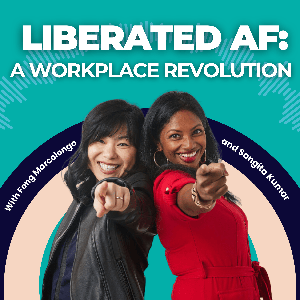


We’re back—and diving into the realities leaders are facing this fall. With funding getting tighter and teams doing more with less, how do we decide where to invest limited professional development dollars?
In this episode, we unpack how to make professional development more strategic—whether we're setting culture, aligning teams around shared practices, or closing specific skill gaps.
For people leaders navigating limited budgets and changing workforce expectations, the message is simple: meaningful growth doesn't happen by checking a training box. It happens when learning, leadership, and behavior work together.
🎧 Listen in for a conversation about making professional development more strategic and connected to the culture we're building.
We’re back! After a summer break, Liberated AF: A Workplace Revolution is officially back—and we’re kicking things off with a big question. What comes first: liberation or reparation?
In this episode, we sit with this big question and explore what it means to practice liberation and repair within the organizations and communities we actually have influence over. Rather than treating liberation as an abstract, massive goal, we consider what happens when we create smaller, bounded spaces where people can practice sharing power, navigating conflict, repairing harm, and building the skills needed for deeper collective change.
At the heart of this episode is a challenge to think differently about liberation: What if liberation isn't something we simply achieve, but something we practice together?
For leaders, facilitators, equity practitioners, and anyone working to create meaningful change inside an organization, this conversation offers a powerful reminder: we don't have to transform the entire world at once. We can start by practicing differently with the people around us.
We’re glad to be back. Press play, join the conversation, and let’s get back to the work.
Conflict isn't what breaks workplace culture—avoiding it is.
In this episode of Liberated AF: A Workplace Revolution, Sangeeta Kumar and Fong Marcolongo explore a growing challenge they're seeing across organizations of every size: employees who disengage instead of addressing conflict. Whether it's ignoring coworkers, staying silent during meetings, avoiding collaboration, or letting personal frustrations spill into professional relationships, these patterns quietly erode trust and team performance.
Rather than blaming individuals, Sangita and Fong examine what's underneath these behaviors. They discuss how digital communication, shifting workplace norms, vulnerability, and psychological safety have changed the way people engage with one another—and why many leaders feel caught between showing empathy and maintaining accountability.
In this episode, they explore:
Creating a human-centered workplace doesn't mean lowering expectations. It means helping people develop the skills to engage, repair relationships, and contribute to a culture where collaboration is everyone's responsibility.
If you're leading a team, managing workplace conflict, or trying to strengthen your organization's culture, this episode offers practical insight into one of today's biggest leadership challenges.
🎧 Listen now and discover why the path to a healthier workplace starts with choosing engagement over avoidance.
Why do some feedback conversations lead to growth, while others leave people feeling hurt, misunderstood, or defensive?
In this episode, we explore the delicate intersection between identity and performance feedback. Through real workplace examples, they unpack how even well-intentioned feedback can unintentionally trigger feelings of exclusion, erasure, or judgment—and what leaders can do when that happens.
In this episode we discuss:
Rather than avoiding difficult conversations, Sangeeta and Fong show how leaders can navigate them with empathy, accountability, and clarity. They offer a thoughtful framework for moving beyond defensiveness and creating a workplace culture where honest feedback strengthens relationships instead of damaging them.
If you're a manager, executive, or people leader, this episode will help you approach feedback with greater confidence, compassion, and intention.
🎧 Tune in to learn how to separate identity from performance—and build a culture where feedback becomes a catalyst for growth, not conflict.
Letting someone go is one of the hardest responsibilities a leader can face. But what would it look like to approach transitions with transparency, dignity, and care instead of confusion, secrecy, and fear?
In this episode, we unpack the real challenges of hiring, onboarding, performance conversations, layoffs, and departures, and why these moments reveal the true culture of an organization.
Why employees often create their own stories when communication is unclear
The difference between legal confidentiality and human-centered transparency
How supervisors can prepare for difficult conversations instead of "winging it"
Why clear expectations and ongoing feedback reduce the shock of transitions
How teams can be informed without gossip, shame, or unnecessary secrecy
Practical ways to preserve dignity for both the departing employee and the people who remain
Rather than treating transitions as isolated HR events, we explore how onboarding, supervision, feedback, performance management, and departures are all connected parts of the same human system.
If you lead people, manage teams, or want to build a workplace where difficult moments are handled with honesty and compassion, this episode offers a thoughtful framework for making transitions more humane.
🎧 Listen in and learn what it really means to put people at the center when change happens.
What happens when an equity strategy designed to create inclusion… doesn’t work for everyone in the room?
In this episode, we unpack a powerful facilitation moment that challenged assumptions about inclusion, safety, and allyship in real time. During an equity training, a participant openly shared discomfort with introducing gender pronouns—creating a tense but transformative conversation about whose needs get centered in workplace culture.
Together, we explore:
Through honest reflection and practical facilitation insights, this episode explores what it means to stay in the conversation—even when it feels messy, uncertain, or emotionally charged.
If you lead trainings, manage teams, or care about building workplaces where people can truly belong, this episode offers a nuanced look at what inclusion really requires.
🎧 Tune in and explore what happens beyond one-size-fits-all solutions.
Ever wonder why some groups just click—while others feel tense, quiet, or stuck?
In this episode, Sangita Kumar and Fong Marcolongo geek out on the often-invisible forces that shape how groups function. From who speaks and who stays silent, to how decisions get made (or avoided), they break down the patterns, behaviors, and dynamics that influence every team—whether we name them or not.
They explore:
Through stories, reflection, and practical insight, this episode invites you to look beneath the surface of your meetings and team interactions—and start leading with greater awareness and intention.
If you’ve ever facilitated a group, led a team, or wondered why collaboration feels harder than it should, this conversation will give you a whole new lens.
🎧 Tune in and start seeing your groups differently.
In this episode, Sangita Kumar and Fong Marcolongo unpack what it truly takes to create feedback cultures rooted in trust, clarity, and growth, not fear, avoidance, or defensiveness. They explore how feedback is deeply shaped by identity, power dynamics, and past experiences, and why good intentions alone aren’t enough.
They dive into:
Through real examples and actionable insights, this episode reframes feedback as a practice, one that requires consistency, humility, and a willingness to learn together.
If you’re trying to build a culture where people can be honest, grow, and stay in a relationship, this episode offers both the mindset and the tools to get there.
🎧 Tune in and start building a feedback culture that actually works.
Conflict is inevitable in organizations, but the labor it takes to navigate that conflict is often invisible, uneven, and undervalued.
In this episode, Sangita Kumar and Fong Marcolongo explore what really happens beneath the surface when teams experience tension. From emotional labor to relational repair, they unpack how certain people, often those closest to harm, carry a disproportionate share of the work to keep things moving.
They discuss:
The hidden labor behind conflict resolution and culture repair
Who tends to carry that labor, and why it matters
How avoidance and urgency can deepen, rather than resolve, conflict
What it looks like to “vizibilize” labor in real, practical ways
How leaders can redistribute responsibility and build more sustainable team dynamics
Through real examples and honest reflection, this episode challenges leaders to rethink how conflict is handled—and who is expected to hold it.
If you’re leading teams, navigating tension, or committed to building more equitable workplaces, this conversation offers both insight and actionable shifts.
🎧 Tune in and start making the invisible work visible.
What’s your role as a leader in equity work—are you here to disrupt the system, protect it, or somehow do both?
In this episode, Sangita Kumar and Fong Marcolongo unpack the real tension leaders face when trying to shift culture while managing budgets, relationships, timelines, and organizational stability. Through candid reflection on their own team’s journey, they explore how easy it is to conflate personal comfort with structural constraint—and why that awareness matters.
They dive into:
The tension between disrupting and protecting systems
Why bite-sized, practice-based change builds real capacity
How to navigate champions, skeptics, and active detractors
The difference between relational, facilitative, and positional power
How to name tension in the room without escalating conflict
Why facilitation is a leadership muscle—not just a meeting skill
Whether you’re leading from positional authority or influencing from the middle, this episode offers practical moves for holding complexity, setting boundaries, and guiding productive struggle.
If you’re doing equity work inside real-world constraints, this conversation will help you flex your facilitative power with more clarity and confidence.
🎧 Tune in and keep building the muscle.
From the publisher's feed