
Sign up to save your podcasts
Or

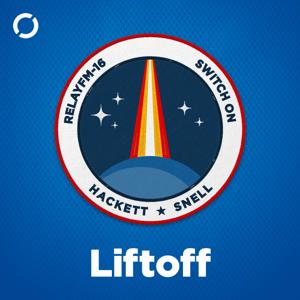


Less than a year after the disastrous Apollo 13 mission, the program returned to flight when Alan Shepard, Stuart Roosa and Edgar Mitchell landed on the moon in February, 1971.
Our Apollo Episodes:
Jason and Stephen start 2021 by picking some things they are looking forward to in what promises to be a very busy year in space.
You get a sample return; you get a sample return; you get a sample return!
In other news: SN8 had a rough landing, SpaceIL is getting back on the horse and NASA has unveiled more Artemis plans.
The world is mourning the uncontrolled collapse of the Arecibo observatory, even as China's Chang’e-5 mission is underway to return lunar samples to Earth, which would be a first since the final Apollo mission. Also: an update on the SLS and Orion and a look at what's going on at Roscosmos.
Commercial Crew has gotten official with the launch of Crew-1 over the weekend, the start of a six-month expedition on the International Space Station. That and the possibilities of Jim Bridenstine's future. Oh, and kilonovas!
Zac Hall from Space Explored and 9to5Mac joins Jason to discuss the post-election future of NASA (and administrator Jim Bridenstine), the 20th anniversary of the permanent habitation of the International Space Station, a bunch of news about the moon, and OSIRIS-REx taking a bite out of Bennu.
Zac Hall
Stephen comes with good news about InSight's Mole, and Jason says there probably aren't aliens on Venus. Also: OSIRIS-REx is due for a big day and the space industry in China is heating up.
Jason and Stephen are joined by Dr. Katie Mack to discuss her book The End of Everything: (Astrophysically Speaking).
Katie Mack
The recent announcement of phosphine being detected in Venus' atmosphere could have a major effect on future scientific missions, so Jason is excited about space blimps again. Then, Stephen walks through NASA's most recent Artemis roadmap, and the guys discuss what the future of the program could look like if the White House changes hands next year.
In the Utah desert, Northrop Grumman has tested a full-sized SLS SRB, while the future of work in low-Earth orbit is being debated. On Mars, InSight's troubles continue and 17 billion light years-away, two black holes have collided.
From the publisher's feed

35 Listeners
213 Listeners
373 Listeners

83 Listeners

568 Listeners
49 Listeners

1,281 Listeners

121 Listeners

398 Listeners

107 Listeners

120 Listeners

8 Listeners
167 Listeners

6 Listeners

18 Listeners

192 Listeners
153 Listeners

20 Listeners
86 Listeners