
Sign up to save your podcasts
Or



Send us Fan Mail
In 1948, 16-year-old Harriet Eleanor Taylor found herself struggling to be a mother to two children, one a year old and the other 4-months-old. Her prominent black middle-class family shunned poor Harriet as they tried to take her babies away from her. They found an aunt in Cleveland who was willing to take the older child, but Harriet was so fearful of losing the child she had known for more than a year, that she decided to give up the 4-month-old, Jacqueline, for a local adoption with the Family and Children's Society in Baltimore. She hoped against hope to find her baby and informally searched for her through the years. Shortly thereafter, Harriet married the father of the two children, and they had 3 more children.
Fast forward 38 years, and as a result of a search initiated by Jacqueline, who by now was a Social Worker with the same agency from which she was adopted, Harriet's search ended. This episode details the journey of these two women, now 77 and 93, and how their lives were blessed by the mother who adopted Jacqueline, the late Mrs. Helen Sewell.
Make every moment count! E-mail me at [email protected] and tell me in 25 words or less why I should interview you.
Send us Fan Mail
"The Hill" will always be in Leonard Hamm's heart--as with many of us first generation Cherry Hill kids. It may sound trite to many of you, but you just had to be there. The brand new Cherry Hill Homes community had the greenest grass, the bluest skies, and the freshest air, fragranced with honeysuckle--when you weren't smelling the trash from the dump. All of this of course through a child's eyes and nose. Leonard serves and protects Cherry Hill, to the extent that he can, today. Listen as he reminisces about this love of his life,
Make every moment count! E-mail me at [email protected] and tell me in 25 words or less why I should interview you.
Send us Fan Mail
Ever since Rick Nelson and Jenny Wilson met in the quadrangle on the Poly/Western High School campus in the 1970s, they have been sailing through life together--literally. They kept the relationship alive through college and graduate school by telephone, and the rest is history. These Baltimore Boomers share their love for each other and the sailing life.
Make every moment count! E-mail me at [email protected] and tell me in 25 words or less why I should interview you.
Send us Fan Mail
There are times when you meet people who are called to do what it is they do. Dr. Marcy Rachamim Jackson is one such person. At an early age, she began relating to the people with special needs who resided in her grandmother's home as family. When she had a child with special needs, Dr. Jackson did the work necessary to find him services. After over 17 years of formally honing her craft, Dr. Jackson has consolidated her knowledge and experience into the book, Pour the Water: Transformative Solutions for Equity & Justice in Special Education, which she discusses in this episode.
Make every moment count! E-mail me at [email protected] and tell me in 25 words or less why I should interview you.
Send us Fan Mail
Each week I will have commentary on where the podcast stands or is going. In this episode, I have also provided my thinking on the contributions of the author, Antero Pietila, the former Baltimore Sun reporter, and William Lloyd Adams, known to many Baltimoreans as Little Willie Adams.
Make every moment count! E-mail me at [email protected] and tell me in 25 words or less why I should interview you.
Send us Fan Mail
Boomers range in age from 79 to 61. Kevin and Mary were not aware they were Baby Boomers until this interview. I chose to interview them because whenever I see them, they seem like newlyweds. Hear their advice for staying together and enjoying the journey.
Make every moment count! E-mail me at [email protected] and tell me in 25 words or less why I should interview you.
Send us Fan Mail
Dr. Jerry Luck, Sr., was another iconic member of the Cherry Hill community. Rain or shine, night or day, he was there for us and only charged $ 3 per visit into the late 1960s. According to his daughter-in-law, Kathy Kyper Luck, Dr. and Mrs. Gertrude Luck lived in public housing when they first moved to Cherry Hill in 1945 because the houses on Swale Avenue were not completed yet. Since the first houses in the project to be completed were on Spelman Road, that is likely where they first lived. Dr. Luck practiced there using the living room as his waiting room, seeing patients in the kitchen, and using a bedroom upstairs as his examination room. Now that's dedication!
He then purchased two adjacent houses on Swale Avenue for his practice and residence. The waiting room and office were downstairs in one of the houses, with the downstairs in the other house being the family's living room and kitchen, and the upstairs being the bedrooms. He combined two small bedrooms into one for his sons Jerry, Jr., and Larry. Dr. Luck could not get a mortgage because banks would not lend to black homeowners, so he had to pay cash for the houses--probably about $3,500 to $5,000 each. Listen as Kathy and Carter share their memories of Jerry, Jr., a renowned cardiologist. Dr. Luck's granddaughter, Megan, is married and lives in Pittsburgh. For more information about Dr. Luck, read my book, Cherry Hill: Raising Successful Black Children in Jim Crow Baltimore.
Sometimes I get information that I deem significant after I end the interview. In this case, I should add that while Jerry and I went to the same high school, Edmondson High School, I never met him. He graduated in June 1964, a year ahead of me. Kathy told me how when Jerry went off to the University of Pennsylvania that September, he and three other black students, were not allowed to eat with their white classmates. They had to eat by themselves in a separate room jerry-rigged as a dining room. The Civil Rights Act of 1964 was signed into law by President Lyndon Johnson on July 2, 1964.
Make every moment count! E-mail me at [email protected] and tell me in 25 words or less why I should interview you.
Send us Fan Mail
Wayne and Debbie are my cousins. They have a delightful story of life as a career military family. High school sweethearts, they married at 18, and the rest is history. They have travelled internationally and at one time, considered staying in Europe. Their children were raised multiculturally, which prompted one of them to ask--when in an inner-city McDonald's--where are the white people? Out of the mouths of babes!
I apologize for the sound quality, as I did not set the volume correctly on the track recording Debbie. I sent it to a sound editor who managed to improve Debbie's volume somewhat. I considered having Wayne and Debbie record their interview over, but it would have lost its authenticity--a quality I am big on. Please don't beat me up! I'm old!
Make every moment count! E-mail me at [email protected] and tell me in 25 words or less why I should interview you.
Send us Fan Mail
Each week on Wednesday as I publish new episodes, I will give you some thoughts that I have collected since the previous week. These thoughts can pertain to something that happened over the course of the week, or they could be totally random. This week I am discussing feedback I have received from friends about the podcast. It would probably be helpful for you to listen to Boomer Thoughts on a weekly basis to give you insight as to where we are and possibly where we are going. This is more work than I imagined it would be, but I keep telling myself that at 77, I am up to the challenge. You be the judge.
Make every moment count! E-mail me at [email protected] and tell me in 25 words or less why I should interview you.
Send us Fan Mail
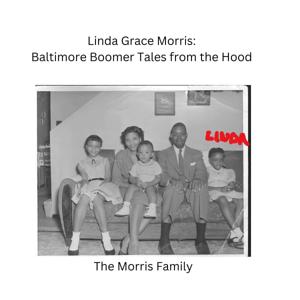
Linda G, Morris is the author of Cherry Hill: Raising Successful Black Children in Jim Crow Baltimore. She learned so much about Baltimore writing the book, she wants to share Baltimore and her fellow Boomers with the world. In this inaugural episode, Linda free flows about her life and times. She invites listeners to contact her to share their experiences and life lessons growing up in the 1950s and 1960s. Join her as she learns the technology of podcasting while taking you back to what were fun times for her, and she hopes for you too.
Make every moment count! E-mail me at [email protected] and tell me in 25 words or less why I should interview you.
From the publisher's feed
Baltimore was the place to be in the 1950s and 1960s, bustling with all the industry and social change about to come. For African Americans, it was a jobs magnet with all the major manufacturers.…