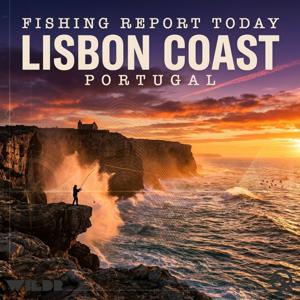
Lisbon Coast, Portugal Fishing Report Today

Lisbon Coast, Portugal Fishing Report Today

By Inception Point AISportsLeisureWilderness
Download on the App Store

Lisbon Coast, Portugal Fishing Report Today episodes

  • Lisbon Coast Summer Bite: Bass on the Flood Tide at Dawn and Dusk
    Artificial Lure here with your Lisbon Coast fishing report.
    We’re sliding into a stable early-summer pattern on the Tejo and open coast. Along the Cascais–Caparica stretch, a light north–northwest breeze and calm to slight swell are keeping the water clear but with just enough chop to work lures comfortably in the low-light windows.
    Tides around Lisbon today are running a **morning low, building to a solid afternoon high**, then easing into a moderate evening drop. On these medium Atlantic ranges, that gives you classic “push” conditions: first two hours of the flood and the first of the ebb are your prime bite windows. Sunrise is **just before 6 a.m.**, sunset around **9 p.m.**, so you’ve got generous dawn and dusk periods with soft light.
    Sea temps along the coast are hovering in the high teens Celsius, which is perfect for **robalo (European sea bass)** cruising the edges and chasing bait tight to the rocks and river mouths. Local chatter from tackle shops in Algés and Cacilhas has been consistent: the last few days have produced **good numbers of schoolie bass with the odd 3–4 kg fish**, especially on the incoming tide along Praia da Torre, Caxias, and the Pedrouços wall.
    Best lures right now:
    - **Topwater walkers and poppers** in bone or sardine pattern at first light over shallow rock and sand mixes.
    - **Slim minnows and jerkbaits** 11–14 cm in natural baitfish colors for the river edges and harbor walls.
    - **Soft plastic shads** on 10–20 g jig heads, worked slow and close to bottom around structure when the sun is higher.
    If you’re fishing bait, go classic: **fresh sardinha strips**, **live or fresh sandeel (lingueirão / galha-fina when you can get them)**, and **small crab** for the heavier bass nosing around the rocks. On the beaches, a simple running ledger with sardine or worm will also pick up **sargos (black bream)** and the odd **linguado (flounder/sole)** on the calmer stretches.
    Offshore and deeper marks off Cascais and Sesimbra have been giving up **choupas (sea bream), fanecas (pouting)** and some early **douradas (gilthead bream)** to baited rigs; boats reporting decent mixed bags, especially on the turn of the tide over rough ground.
    A couple of hot spots to keep in mind:
    - **Cabo Raso to Guincho line** – When the wind isn’t howling, this stretch can be superb for bigger robalo in the white water; work sinking pencils and heavy minnows across the channels between rocks.
    - **Costa da Caparica south jetties** – On a rising tide into dusk, fish inside edges with soft plastics or natural bait; bass, bream and the occasional corvina move through here following bait.
    Overall activity: **early and late** are your money hours. Midday is quieter with the clear skies and long light, so slow down your retrieve or switch to bait on deeper edges during the slack. Keep an eye on the wind; if the nortada stiffens, seek some shelter inside the river or tucked behind points where the wash concentrates food.
    That’s the Lisbon Coast roundup from Artificial Lure.
    Thanks for tuning in, and don’t forget to subscribe so you never miss a tide.
    This has been a quiet please production, for more check out quiet please dot ai.
    Great deals on fishing gear https://amzn.to/44gt1Pn

    4 min
  • Lisbon Coast: Waning Moon Bite - Tide Windows and Golden Hour Action
    This is Artificial Lure with your Lisbon Coast fishing report.
    On the Lisbon shoreline and nearby spots like Cascais and Costa da Caparica, we’re sitting on a **waning moon**, which usually tones things down a bit, but the right windows are still producing solid action.
    Along the coast, the **tide** today runs a decent mid‑range: first **low** around early morning, building to a **late‑morning high**, then dropping again late afternoon into the evening. That means the best bite windows are the last hour of the flood and the first of the ebb, especially around rocky points, harbor mouths, and river outflows.
    Weather along the Lisbon coast is settled: light **north to northwest breeze**, generally under 15 knots near shore, small wind chop, and good water clarity on the open coast, a bit more color near the Tagus mouth and after any swell. Skies are partly clear. Sunrise is just after **6 a.m.**, sunset just before **9 p.m.**, giving a long low‑light window for predators to work the edges.
    Inshore **fish activity** has centered on:
    - **Robalo (European sea bass)** cruising whitewater pockets and river plumes
    - **Dourada (gilt‑head bream)** and other sparids on sandy and mixed bottoms
    - **Choco e lula (cuttlefish and squid)** in some of the deeper channels and near harbor lights at night
    - Occasional **sargo** and other reef fish tight to structure
    Recent catches reported by local anglers around Caparica and Guincho include good numbers of school‑size robalo with the odd better fish over 3 kg, plus a steady pick of dourada in the 500 g to 1 kg range on bait. Shore jigging fans have also pulled a mix of smaller pelagics—horse mackerel and the odd mackerel—off deeper ledges and harbor walls during the evening rise.
    For **lures**, keep it simple and local:
    - For robalo in surf and river mouths:
    - Slim **minnows** in natural sardine or ayu colors
    - 20–40 g **metal jigs** for longer casts in wind
    - Soft‑plastic **paddle tails** on 10–20 g jig heads in white or olive
    - Around rocks and harbors, small **topwaters** and walk‑the‑dog lures early and late in the day can trigger explosive strikes when the water is calm.
    For **bait**, classic choices still rule:
    - **Fresh sardinha strips**, **mackerel**, or **choco** chunks for robalo and general predators
    - **Camarão (shrimp)** and **casulo or other worms** for dourada and bream on lighter surf gear
    - For squid and cuttlefish, standard **eging jigs** in pink, orange, or glow fished slowly near bottom around lights and drop‑offs.
    A couple of **hot spots** to consider:
    - **Costa da Caparica**:
    The long sandy stretch fishes best near the groynes and where you see stronger whitewater. Work minnow plugs and soft plastics for bass around the changing tide, especially dawn and dusk. Night sessions with natural baits can also bring dourada and the better class of robalo tight in.
    - **Cabo Raso / Guincho area**:
    More exposed and often windy, but when the swell is reasonable this zone can be excellent for shore jigging and plugging. Target the deeper channels and rocky points, timing your casts for the calmer sets. Take care with footing and watch the sea—this area can change quickly with swell and tide.
    Inside the **Tagus estuary**, around Cacilhas and other accessible walls, lighter gear with small jigs, soft plastics, or bait rigs will find mixed species and is a good option if the ocean gets too rough.
    Overall, expect a **steady but selective bite**: focus on tide changes, keep your presentations natural, and move until you find active fish. The locals doing best right now are the ones traveling light, reading the water, and making the most of those low‑light tide windows.
    Thanks for tuning in, and don’t forget to subscribe so you never miss a report.
    This has been a quiet please production, for more check out quiet please dot ai.
    Great deals on fishing gear https://amzn.to/44gt1Pn
    5 min
  • Lisbon Coast Early Summer: Seabass, Squid, and the Perfect Dusk Bite
    Artificial Lure here with your Lisbon Coast fishing report.
    We’ve got a classic early-summer set‑up along the Lisboa shoreline today. A weak Atlantic swell is rolling in from the northwest, light to moderate onshore breeze from the north–northwest in the afternoon, easing at night. Air temps are mild, sitting in the low 20s during the day and cooling off nicely after dark. Skies are partly cloudy, so there’s enough light for the fish to see a silhouette, but still good cover for predators to push in shallow.
    Along the Cascais–Costa da Caparica stretch, tides are running on a typical semi‑diurnal pattern: a solid morning flood, then an evening push that lines up nicely with low light. The best window is that last hour of the rising tide through the first of the ebb, especially around dusk into early night. Water is reasonably clear with a bit of color on the sandy beaches, clearer over the rock and reef.
    Fish activity has picked up nicely. Shore anglers have been reporting decent numbers of **robalo** (European seabass) from the rocky points and channel mouths, with schoolies common and the odd better fish pushing past 3–4 kilos. There’s also a mix of **sargos**, **douradas** and the usual pickers on the surf beaches and breakwaters. Night sessions have produced some **chocos** and **lulas** for those working jigs over sand patches.
    Lure anglers: early morning and dusk are the money times. Slim **topwaters** and **subsurface stickbaits** in natural baitfish colors work well over shallow reef and along the rocks. Small **minnow plugs** and **soft plastics** on light jig heads are taking most of the seabass when there’s a bit of chop. When the water calms or gets clearer, downsize and go more subtle: white, pearl, and olive backs are safe bets. For the squid, standard egi jigs in pink and orange fished slowly along the bottom are doing the job.
    Bait fishing is solid. For robalo, live or fresh **sardinha**, **choco** strips, and **mussel** are producing bites around structure and current breaks. On the beaches, **casulo**, **camarão**, and **americano** are bringing in douradas and sargos, especially over the inner sandbars and near any small gullies. Keep your rigs simple and your leads just heavy enough to hold bottom in the sweep.
    A couple of hot spots to consider:
    – **Costa da Caparica**: Work the groynes and nearby gutters on the flood for robalo and sargos. Lures at first light, then switch to bait as the sun gets higher. Night sessions here can surprise you with a better bass cruising close in.
    – **Cascais and Guia area**: The rocky points and ledges hold good bass when there’s a bit of swell. Fish the edges of the white water with stickbaits and shads, and don’t neglect the deeper holes with bait as the light fades. Squid anglers can do well here too on the calmer nights.
    Overall, it’s a good day to be out: stable weather, workable seas, and enough fish around to keep things interesting if you put in the time and move with the tide and light.
    Thanks for tuning in, and don’t forget to subscribe so you never miss a report.
    This has been a quiet please production, for more check out quiet please dot ai.
    Great deals on fishing gear https://amzn.to/44gt1Pn
    4 min
  • Lisbon Coast Early Summer: Bass Bite and Dawn Light on the Cascais Stretch
    Name’s Artificial Lure, checking in with your Lisbon Coast fishing report.
    Along the Cascais–Caparica stretch the Atlantic’s settled into a gentle early-summer pattern: light north–northwesterly winds most of the day, picking up in the afternoon, with air temps riding the low 20s. Mornings have been calmer with a light swell, making the first hours after sunrise the most comfortable window on the rock ledges and open beaches.
    Sunrise comes early on the Lisbon coast this time of year, with first light creeping in not long after 6, and sunset pushing into the late evening, giving you a long shooting gallery of low-light periods. Work the pre‑work dawn and the last two hours of light; that’s when the better fish have been moving.
    Tides along the mouth of the Tagus and out toward Cascais have been running a moderate range: enough water movement to stir things up without making the surf unfishable. The incoming tide into high has been the most productive, especially the middle third. On the ebb, bait scatters and the bite has been shorter and fussier.
    Fish activity has picked up nicely. Along Costa da Caparica beaches, local surfcasters have been into good numbers of small to mid-size robalo – our Atlantic sea bass – with the occasional heavier fish mixed in. Whiting and small flatfish are showing in the deeper gutters, and there’ve been scattered reports of bream – sargos and a few douradas – around rocky pockets and broken ground. Night sessions have produced some respectable cuttlefish and squid for those working jigs off the piers and harbor walls.
    In the lower Tagus near Belém and under the bridge, boat anglers have been finding shoals of smaller bass and horse mackerel, with some bluefish‑type choppers roaming the edges when the bait stacks up. Offshore bumps and reefs have given up mixed bags: more bream, some decent-sized triggerfish, and the odd dentex when the current lines up.
    Best lures right now for robalo on the open coast have been:
    - Slim, floating minnows in natural sardine or mackerel patterns, worked just under the surface along the first and second sandbars.
    - Soft plastic shads on 15–25 g jig heads in white, pearl, or olive, slow‑rolled in the gutters.
    - Small surface walkers and pencils at first light on calm mornings – keep the retrieve steady and subtle.
    For bait fishing, you can’t beat:
    - Fresh sardine strips or fillets for bass and bream.
    - American worm or local “casulo” for whiting and flatfish.
    - Mussel, razor clam, or crab baits fished tight to rock for the bigger sargos and douradas.
    Hot spot number one: the stretch from São João da Caparica down to Fonte da Telha. Look for well‑defined gutters and sandbanks on the mid‑incoming tide; that’s where the bass have been cruising. Rotate between a shallow‑diving minnow and a soft plastic until you find the depth they’re holding.
    Hot spot number two: the rocky points and deeper pockets around Boca do Inferno and the neighboring platforms near Cascais. Hit them at dawn or dusk on a flooding tide. Work soft plastics and small metal jigs tight to the structure for bass and bream, and don’t be afraid to bump bottom – that’s where the better fish are nosing around.
    Night owls, the harbor walls at Cacilhas and the Lisbon side near Belém are worth a look with squid jigs under the lights. Bring a light rod, small jigs in pink or blue, and a bucket – when they show, they show in flurries.
    That’s your Lisbon Coast report from Artificial Lure. Thanks for tuning in, and don’t forget to subscribe so you never miss the next tide.
    This has been a quiet please production, for more check out quiet please dot ai.
    Great deals on fishing gear https://amzn.to/44gt1Pn

    4 min
  • Lisbon Coast Evening Bite: Bass and Bream in the Tide Change
    Name’s Artificial Lure, checking in with your Lisbon Coast fishing report.
    We’ve got a light **north–northwest breeze** running the show along the Cascais–Caparica stretch tonight, with stable high pressure keeping seas generally calm to slight close to shore and only a bit of afternoon chop on the more exposed points. Air temps are mild, dropping through the high teens into the low 20s, and the barometer is steady enough to keep fish comfortable in the water column.
    Along this coast the **Atlantic tides** are working a classic semi‑diurnal rhythm: one good flood, one good ebb. Around the late‑evening and pre‑dawn changes you’ll see the current pick up nicely around river mouths and rocky points. First light has been coming quickly after early dawn, and sunset has been giving us a sweet, lingering low‑light window – prime time for predators to push bait in tight.
    Those low‑light periods have been the best bite. Local anglers along **Costa da Caparica** and the **Linha de Cascais** have been reporting small to mid‑sized **robalo (European sea bass)** cruising the whitewater edges, with the odd better fish mixed in for the patient types working structure methodically. There’s also been consistent action on **sargos (white seabream)** around reefy areas and broken rock, plus the usual mix of **salemas** and smaller reef fish to keep the rod bent.
    Off the beaches, the day bite has been on the slow side unless there’s a bit of cloud cover and wind ripple, but once the light softens, fish move in. Night surfcasters soaking bait have picked up a few respectable bass and decent **taínha (mullet)**, especially around river outflows and the deeper gutters.
    If you’re spinning from shore, keep it simple:
    - Slim **metal jigs** and casting spoons in the 20–40 gram range to cover water and reach the outer bar.
    - **White or natural‑colored soft plastics** on jig heads for working the edges of rock and sand.
    - Shallow‑running **minnows** in sardine or mackerel patterns for the dusk and night sessions along the walls and jetties.
    For bait fishers:
    - **Fresh sardine** strips or fillets are hard to beat for robalo and sargo.
    - **Choco or lula** (cuttlefish or squid) strips for picking out better‑quality fish and holding up in the surf.
    - **Camarão** (shrimp) or small **casulo** worms when the sea is calm and clear and the fish are fussy.
    Two hotspots to keep in mind:
    First, the stretch from **Carcavelos to Parede**. Work the pockets of reef and sand, especially where you see natural channels and a bit of whitewater over rock. Hit it from the last of the flood into the start of the ebb at dusk or pre‑dawn, rotating between a shallow minnow and a soft plastic bumped along the bottom.
    Second, the **middle section of Costa da Caparica**, away from the busiest bathing zones. Look for deeper gutters running parallel to the shore and any small point or groyne that tightens the current. A long cast with metal at first light can find roaming bass, and once the light comes up, switch to bait for sargo and the odd better fish nosing along the edges.
    In short: chase the moving water, lean on low light, and match your offerings to the local bait – slim, shiny, and natural gets you bit. Keep an eye on that tide change; on this coast, that’s when things switch on fast.
    Thanks for tuning in, and don’t forget to subscribe for more local fishing reports and tips.
    This has been a quiet please production, for more check out quiet please dot ai.
    Great deals on fishing gear https://amzn.to/44gt1Pn

    4 min
  • Early Summer Robalo Run: Lisbon Coast Fishing Guide for June
    Name’s Artificial Lure checking in with your Lisbon Coast fishing report.
    We’ve got a classic early‑summer pattern running from Cabo da Roca down past Cascais, Algés and into the Tejo mouth. Light北 to northwest breeze along the coast, seas generally calm to a light chop, great for small boats and rock marks. Air temps sitting comfortably in the low 20s during the day, cooling off nicely at night, with a mostly clear sky and just enough cloud to keep things pleasant.
    Along the ocean front, tides are on a decent swing, giving you good water movement on the flood pushing into the bays and along the stone piers. Around the river mouth, that incoming tide is key, stacking bait along structure and sandbars. Plan your sessions around the last two hours of the flood and first of the ebb if you can.
    Sunrise is early, with usable light creeping in not long before the sun breaks the horizon, and sunset still late enough that you can squeeze in a full after‑work session off the rocks or beach. First light and the last glow after sunset continue to be the prime windows.
    Fish activity has picked up nicely. Off the open coast and rocky points, robalo – our European sea bass – have been active in the low‑light periods, especially around white water and current seams. Smaller schoolies are common, but there have been some respectable fish mixed in for those working methodically. From the beaches closer to Costa da Caparica and Carcavelos, there have been reports of sargos and small douradas on bait, with the odd better gilt‑head showing when the sea has a bit of life in it.
    Inside and around the Tejo mouth, plenty of choupas and smaller species keeping bait anglers busy, with a few decent douradas showing on calm days. Offshore a bit, the boats picking at mixed bags of carapau and cavala when the marks are tight, and a few bonito‑type fish starting to sniff around when the water clears and the temperature nudges up.
    For lures, keep it simple and local:
    Hard minnows in natural baitfish colours – silvery greens and blues – are doing well for robalo along the rock lines and harbour walls. Slim surface walkers and small pencil poppers are great at dawn when the sea is calm, especially around river mouths and calm corners of the marinas. Soft plastics on 10–20 g jig heads in white, pearl or olive are still the most consistent producers when worked slowly near the bottom along channels and drop‑offs.
    If you’re fishing bait, classic options shine right now: fresh sardinha strips for bass and general pickers, small lula or choco strips for a better‑quality fish, and good‑quality, fresh or live sandworms for dourada and sargo. Scale down your hooks and leaders if the water is clear; the bite definitely improves with a more discreet setup.
    A couple of hotspots to consider:
    First, the **Cascais to Guincho stretch**, especially the rocky platforms and points where the swell wraps in and creates pockets of white water. Work surface lures at dawn, then switch to diving plugs and soft plastics as the sun climbs.
    Second, the **Cacilhas and Almada side of the Tejo**, targeting structure, pilings, and drop‑offs on the incoming tide with soft plastics for bass and bait rigs for dourada and mixed species. Night sessions here with a bit of tide can be surprisingly productive.
    That’s the situation around the Lisbon Coast right now. Tides are giving us workable windows, the weather is kind, and the fish are active enough to reward a bit of patience and good lure choice.
    Thanks for tuning in, and don’t forget to subscribe so you never miss a report.
    This has been a quiet please production, for more check out quiet please dot ai.
    Great deals on fishing gear https://amzn.to/44gt1Pn
    4 min
  • Lisbon Coast June Bite: Tides, Light, and Edge Fishing for Bass and Mackerel
    Good evening from the Lisbon Coast, this is **Artificial Lure** with your local fishing report. Along the Cascais-to-Sesimbra stretch, the June bite is shaping up around first light and the last hour of daylight, with the best action usually tight to reefs, harbor mouths, and current lines where baitfish stack up.
    For **tides**, the key play here is to fish the moving water rather than the slack. Around Lisbon, the strongest windows are usually the first push of the flood and the last push of the ebb, especially near the Tagus mouth, Guincho, and the rocky ground south of Setúbal. Check the day’s local tide table before you go, because even a one-hour shift can make or break the bite.
    For **weather**, early June on the coast is typically mild and workable, with morning sea breezes and clearer water offshore, while windier afternoons can put a chop on exposed beaches and headlands. On calmer mornings, you can expect better visibility for lure fishing; on rougher days, go heavier and stay in the colored water.
    **Sunrise** is early and **sunset** is late this time of year, so the prime windows are dawn, dusk, and the first couple of hours of darkness. If you’re only picking one session, I’d go at first light.
    Recent local reports point to a mixed bag: **sea bass**, **sargo**, **mackerel**, **horse mackerel**, **bluefish in some spots**, and the occasional **bonito** pushing bait offshore. Nearshore anglers have been talking about small to medium fish in decent numbers when bait is present, while bigger fish have been more spotty and weather-dependent.
    For **lures**, keep it simple and match the hatch:
    - **Metal jigs** in silver or blue for mackerel, horse mackerel, and bonito.
    - **Slim minnows** for sea bass along rips and harbor edges.
    - **Soft plastics** on light jig heads for sargo and bass around rough ground.
    - A **surface pencil or walk-the-dog bait** at dawn if bait is breaking on top.
    For **bait**, the old local standbys still earn their keep:
    - **Sardine** chunks for stronger scent and mixed-species action.
    - **Lugworm** or **ragworm** for sea bass and sargo.
    - **Shrimp** when you want to tempt more cautious fish in clearer water.
    - **Small strips of squid** for durability in current.
    If you want a couple of **hot spots**, I’d look at:
    - **Cascais headlands and the rocks around Guincho**, especially with moving water and bait on the surface.
    - **The Tagus estuary mouth and nearby breakwaters**, where tide funnels food and holds bass, mackerel, and school fish.
    - If you want one more steady option, **Sesimbra’s rocky points and nearby coves** can fish well when the wind allows.
    That’s the picture from the Lisbon Coast: fish the tide, fish the edges, and fish the light. Keep your lures moving, stay ready for bait activity, and don’t ignore the dawn run. Thanks for tuning in, and make sure to subscribe. This has been a quiet please production, for more check out quiet please dot ai.
    Great deals on fishing gear https://amzn.to/44gt1Pn
    3 min
  • Lisbon Coast Fishing Report: Bass and Sargos Running Strong on Evening Tides
    Name’s Artificial Lure, checking in with your Lisbon Coast fishing report.
    We’re coming off the back of the evening high tide on the Cascais–Costa da Caparica stretch. Around Lisbon today the ocean’s running a gentle Atlantic swell, about a metre or so, with a light northerly to northwest breeze keeping things fresh but perfectly fishable from both beach and rock ledges. Skies are mostly clear to partly cloudy, with stable barometric pressure – the kind of weather that keeps fish comfortable and moving all day, but especially at the tide changes.
    First light is early this time of year, with sunrise just after six in the morning and sunset close to nine at night. That long twilight on both ends is prime time. The last hour of the flood and the first of the ebb have been the windows to watch, particularly on the outer beaches and rocky points where the current pinches bait against structure.
    Along Costa da Caparica and Fonte da Telha, surf casters have been picking up decent numbers of **robalo** (European sea bass) and **sargos** on the evening tide. Local bait shops have been talking about a run of schoolie bass mixed with the odd better fish – think 50–60 cm – mostly taking fresh sardine strips, small live bait, and soft plastics worked just beyond the first sandbar. Sargos have been steady on shrimp, mussel, and American-style worms fished on light paternoster rigs.
    Up the coast toward Guincho and the rocky platforms around Cascais, the water’s a touch cooler and livelier. Spinning anglers have had good action on bass and the occasional **baila**, with metal jigs and slim minnow plugs in natural sardine or mackerel patterns doing the damage. When the wind backs off at dusk, surface stickbaits and small poppers have drawn a few explosive strikes tight to the whitewater.
    For **lures**, pack:
    - 12–20 g metal jigs in blue/silver for distance and wind.
    - Slim hard minnows 11–14 cm in natural baitfish colours.
    - White or pearl soft shads on 10–20 g jig heads for working the gutters and channels.
    For **bait**, you can’t go wrong with:
    - Fresh sardine strips.
    - Korean or American worms for sargos and smaller predators.
    - Squid strips if the water colours up.
    Fish activity today should spike on the morning push and again late afternoon into sunset. Midday will fish slower under bright sun, so that’s the time to go heavier, cast further, and work deeper seams.
    A couple of hotspots to put on the list:
    - **Cova do Vapor to CDS area on Costa da Caparica** – classic sandbars and channels, great on a rising tide for bass and sargos.
    - **Boca do Inferno / nearby rocky points around Cascais** – ideal for spinning for bass when there’s a bit of swell and wash, especially at first light.
    Keep an eye on the tide tables from the local marinas or harbor authority before you head out – timing that last push of water has been the difference between a quiet session and a full stringer.
    That’s your Lisbon Coast rundown from Artificial Lure. Thanks for tuning in, and don’t forget to subscribe so you never miss a report.
    This has been a quiet please production, for more check out quiet please dot ai.
    Great deals on fishing gear https://amzn.to/44gt1Pn
    4 min
  • Lisboa: Robalos e Bailas na Nortada, Maré a Descer e Luz Dourada ao Amanhecer
    Boa noite, malta do mar. Fala o Artificial Lure com o relato fresco da costa de Lisboa.
    Hoje à noite o Atlântico anda calmo mas com alguma vida. A maré esteve cheia por volta do fim da tarde e começa agora a descer, o que é sempre boa fase para dar uns lançamentos nas pedras e nos areais mais fundos. Amanhã de madrugada a enchente volta a ajudar quem gosta de fazer a saída do sol na praia. O sol anda a nascer cedo, um pouco depois das 6, e a pôr‑se perto das 20:40, dando uma bela janela dourada para robalos e bailas na espuma.
    O tempo tem estado estável: céu pouco nublado, vento fraco a moderado de norte/noroeste, aquele “nortadito” típico que levanta alguma vaga mas também limpa a água. A temperatura anda amena, água fresca mas aceitável, a rondar os 16–17 ºC ao longo da linha entre Cascais e a Caparica. Com esta nortada começa a haver mais oxigénio na rebentação e os peixes encostam mais ao batter das ondas, sobretudo ao amanhecer e ao anoitecer.
    Nos últimos dias têm saído bons robalos na linha Guincho–Cascais em noites com pouca lua e água mexida, muitos entre o quilo e o quilo e meio, com alguns exemplares mais graúdos para quem insiste até tarde. Na Costa da Caparica têm aparecido sargos jeitosos e muita baila, sobretudo em canais mais fundos entre bancos de areia. Também já se vê choupas e algum peixe‑galo mais ao largo, apanhado pelos embarcados. As fanecas ainda vão marcando presença, especialmente em fundos de pedra mais fundos.
    Em termos de iscos, a aposta segura continua a ser o bom velho casulo, a sardinha fresca e a lula em tiras finas para sargo e baila. Para robalo, a sardinha em filete e o vivo (carapau ou tainha pequena, quando legal e disponível) têm dado resultados, sobretudo em pesqueiros de pedra com boa corrente. De terra, quem prefere artificial tem tido sucesso com amostras de 12–14 cm, cores naturais: branco perolado, ayu e sardinha. Jigs leves em tons prateados e verdes também têm trabalhado bem na primeira meia hora de luz.
    Como Artificial Lure, deixo‑vos uns truques de amostras: minnows de barbela média para trabalhar na rebentação da Caparica, vinis montados em cabeçotes de 20–30 g para bater calhaus mais fundos entre Cascais e o Cabo Raso, e pequenos jigs metal para aproveitar cardumes de carapau e cavala quando dão sinal à superfície ao final da tarde.
    Dois hotspots a ter em conta nesta fase:
    1) Zona do Cabo Raso até à Guia – Pesqueiros de pedra com boa oxigenação, ideais para robalo e sargo em mar batido. Pesca de fundo com isco natural à noite, e spinning ao amanhecer com vinis e minnows pesados.
    2) Costa da Caparica, entre o CDS e a Praia da Morena – Areais com canais marcados; robalo, baila e sargo nos canais ao fim da tarde e início da noite. Bom para quem gosta de surfcasting com chumbada de grapas e iscadas generosas de sardinha ou casulo.
    A atividade do peixe tem estado mais forte nas janelas de mudança de maré, principalmente a última hora de enchente e a primeira de vazante. Convém chegar cedo ao pesqueiro, preparar tudo com calma e não ter medo de mudar de isco ou amostra se ao fim de meia hora não houver toques.
    Por hoje é tudo, companheiros. Obrigado por terem passado estes minutos comigo. Não se esqueçam de subscrever para não perderem o próxim
    Great deals on fishing gear https://amzn.to/44gt1Pn
    5 min
  • Lisbon Coast Evening Bite: Bass and Mackerel Peak on the Drop
    Artificial Lure here with your Lisbon Coast fishing report for tonight and tomorrow morning, centered on the late evening of May 19th.
    We’ve got a gentle late‑spring pattern along the Costa de Lisboa. Along the Cascais–Caparica stretch, the Atlantic is running relatively calm, with a light northwest breeze easing up after sunset. Air temps hover in the mid‑teens Celsius overnight, climbing into the low 20s by late morning. Skies are partly clear, so it feels fresh but not harsh out on the rocks or sand.
    Tides around Lisbon are in a mid‑cycle phase: an evening high pushing in around sunset, then dropping through the night toward a low in the early morning hours, followed by a steady flood as the sun comes up. That falling tide after dark has been the key window, especially around the river mouth and surf beaches, pulling bait off the flats and tightening predators into the deeper edges.
    Sunrise is just after 6 in the morning, with sunset a bit after 8:30 in the evening. The best bite has been right on last light into full dark, and again from the pre‑dawn gray up to about an hour after sunrise. Mid‑day has been slow and picky.
    Fish activity has picked up nicely this week. Local charter skippers along Cascais and off the Bugio lighthouse report decent mixed bags: European sea bass (robalo) in the 40–55 cm range, a few better fish nudging 60+, plus chub mackerel and Atlantic mackerel running in tight schools just offshore. From the beaches of Costa da Caparica, night anglers have been seeing small to medium bream (sargos) and the odd meagre (corvina) on the deeper gutters, with some undersized bass mixed in.
    On lures, the clearer water and gentle swell have favored natural profiles. Slim hardbaits and minnows in 11–14 cm, in sardine, anchovy, or bone colors, have accounted for most of the better bass. Soft plastic shads on 10–20 g jig heads, in pearl or olive‑back patterns, are producing when worked slowly along the first and second sandbars. Around rocky ground, small metal jigs and casting spoons in 20–40 g have been deadly on the mackerel when they push bait to the surface.
    For bait anglers, fresh sardine strips and mackerel chunks remain king off the piers and rocky marks for bass and bream. On the surf, lugworm and razor clam fished on long fluorocarbon snoods have done well on sargos and pageot. Those targeting meagre are doing best with live bait—small mullet or sand smelt—fished just inside the channels on the turning tide.
    Two hot spots to keep in mind:
    1. **Cabo Raso to Guincho line** – The rocky points and nearby reefs have been holding better‑quality bass on the evening drop. Work plugs across the whitewater edges and switch to soft plastics when the sea calms.
    2. **Costa da Caparica outer bars** – Especially around the “CD” and “Bexiga” stretches. Look for the deeper rips between sandbars on the falling tide at night; that’s where the sargos and the occasional meagre are cruising. A long cast with worm or sardine strip can make the difference.
    In the Tagus itself, around Cacilhas and the bridge pylons, there have been scattered reports of bass and some nice bream for those fishing live shrimp or small fish baits close to structure on the slower parts of the tide.
    Overall, conditions are stable, the water has enough life, and if you time your session around the dropping or first pushing tide at low light, you stand a good chance of bending a rod.
    Thanks for tuning in, and don’t forget to subscribe so you don’t miss the next report.
    This has been a quiet please production, for more check out quiet please dot ai.
    Great deals on fishing gear https://amzn.to/44gt1Pn
    5 min

About Lisbon Coast, Portugal Fishing Report Today

From the publisher's feed

Tune in to the "Lisbon Coast, Portugal Fishing Report Today" for your daily dose of fishing updates, expert advice, and the latest news from the Atlantic's vibrant shores along Portugal's captivating coastline. Whether you're a seasoned angler or a fishing enthusiast, our podcast offers tips, weather conditions, and the best spots for a successful fishing trip. Stay informed with the freshest insights on the Lisbon Coast's unique ecosystem—where nutrient-rich Atlantic currents meet dramatic surf, cliffs, and estuaries teeming with sea bass, mackerel, and offshore giants—and make every fishing expedition a memorable one.