
Sign up to save your podcasts
Or

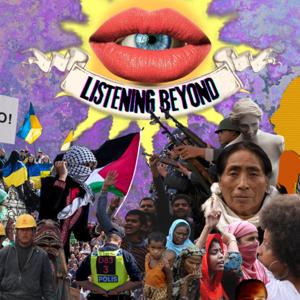


In this episode, we talk to Alexandra Pierre, activist and author of Empreintes de Résistance - a book of interviews with nine women of colour activists in Quebec - about her experiences within Quebec’s activist sector. In particular, we discuss the performative intersectionality of the province’s feminist movement, tensions within the Black activist community, and ancestries of resistance. This is a bilingual episode.
In this episode, interviewers Tamiah Bourgeois, Jelian Alcos and Anitha Sivaginesh will be interviewing Gisela Frias, a professor at Dawson College and doctor of geography, earned from McGill University. Gisela Frias shares her difficulties, achievements and hopes for the future generation in this insightful interview. As a second-generation activist, Gisela Frias has gained insight from her father, who was imprisoned in her early life for his activism. Born in Chile, Frias was born in 1969, where mobilisations for system change, in an effort to break free from imperialism, were prominent. Her father, involved in unions and movements, was imprisoned under dictatorship. Naturally, this was very hard for her as a child, however, this did not stop her from devoting her life to the greater good. When in university, Frias was engaged in sustainability action. She has also travelled back to Chile for her activism, aiding in social activism.
Now, Gisela Frias is a professor at Dawson College and a big part of the Dawson North South Studies program. This is how she helps the new generation become active in change. This program sends students to Cuba to learn more about the issues at hand. Frias has also created works of embroidery depicting her hard work which can be seen here. She hopes to share her gained knowledge with her students and spark meaningful impacts in their lives.
Below is some of the embroidery made by Giselas Frias;
Jean Hogue is the founder of the grocery store chain Co-op Alentour. Co-op Alentour are grocery stores that sell organic local products . Hogue, Co-op of Alentour’s president, has long been considered an activist for all the effort he puts into producing healthier products for people. As a niche farmer, it is difficult to compete with larger companies but Jean Hogue has maintained his ideology. His inspirations of producing local products started in Saint-Jerome, Laurentides, where he was exposed to agriculture at a young age. Jean Hogue and his siblings used to work with their parents and grandparents from a very young age in their farms. Their farms delivered local products to grocery stores.
We invited Jessica Quijano to Concordia's Webster Library, to talk about the crisis of Missing and Murdered Indigenous Women, Girls, & Two-Spirit people. She has been involved in community work and activism for over two decades. Among her many roles she coordinated the Iskweu Project, which aims to reduce the number of Missing and Murdered Indigenous Women, Girls, & Two-Spirit people of Quebec by filing a missing person's report, following up with police investigations, assisting family and friends in their search for loved ones, and much more. Jessica shares her views on activism, allyship, identity, the challenges she faced, and how people can get involved.
Content warning: This episode discusses violence against Indigenous women and may be disturbing for some listeners.
Anwar Alhjooj is a Palestinian Bedouin. He was born and raised in an unrecognized village in occupied Palestine/ Israel with no electricity, running water, or proper housing, and there he learned what injustice meant. He got his law degree in Italy and headed back to occupied Palestine/Israel to pursue his career, and there his activism began. As an Arab, Bedouin, and Palestinian he faced discrimination in court. He was never just a lawyer, he was always an Arab lawyer. He rarely got good cases or respect in court. Facing this discrimination he decided to stand up for Palestinian rights in the 48’ occupied territories, and the West Bank. He would now represent them in court and win cases despite the racism he was facing. In 2011, he came to Canada with his family where he did his Master's at McGill. He later began volunteering for Montreal City Mission and then got a job there as Assistant Director & Coordinator of Maa'n. Since then he has channeled all of his time into helping families integrate into Montreal, creating programs for newcomers, and most importantly empowering refugees and immigrants.
Links:
Montreal City Mission home page: https://www.montrealcitymission.org/
Montreal City Mission Canada helps: https://www.canadahelps.org/en/charities/montreal-city-mission/
Montreal City Mission camp Cosmos: https://www.campcosmos.org/
Montreal City mission Maan (catering and sewing): https://www.montrealcitymission.org/maa-n-together
CBC charity of the year Montreal City Mission: https://www.cbc.ca/news/canada/montreal/community/meet-our-2022-cbc-charities-of-the-year-1.6605884#:~:text=Montreal%20City%20Mission%20and%20Townshippers%20Foundation%20have%20been%20selected%20as,who%20are%20making%20a%20difference.
CBC Montrealer of the month Anwar Alhjooj: https://www.cbc.ca/news/canada/montreal/montrealer-of-the-month-anwar-alhjooj-1.5823962
McGill Alumni News- A pillar of hope in the middle east, bridging communities Anwar Alhjooj: https://mcgillnews.mcgill.ca/s/1762/news/interior.aspx?sid=1762&gid=2&pgid=1667
In this episode, Arwa and Iléana interview Norman Nawrocki, a part-time professor at Concordia in Community Economic Development program, an artist, and an activist who participated in the Quebec Student Strike of 2012. The interview begins with a few questions about his personal perspective of life and what has brought him to where he is now in activism. Then the two students start getting into more details about the strike, asking questions about Norman's motivations to be part of it and what he took away from the experience.
Links/footnotes:
https://www.goodreads.com/book/show/18267785-red
https://linktr.ee/normannawrocki
https://youtu.be/7bs--UT-5C0
L'action militante en matière d'éducation: Une entrevue avec Julie Robert par Arianne Chagnon, Melissa Spiridigliozzi et Shinder Virdi
Julie Robert est une enseignante de secondaire 5 en Monde Contemporain et en Droit, à l’école Polyvalente Sainte-Thérèse. Dans cette entrevue, Julie partage avec nous son univers en tant que militante pour le progrès social. Elle nous fait part de ses expériences professionnelles et ses méthodes d'enseignement qui permettent de développer l’esprit critique des jeunes; un aspect très important de son travail. Cet épisode explore la façon dont elle concilie ses idéologies sociales avec l’impartialité que requiert son titre d’enseignante dans le système éducatif.
On Militant Action in Education: An Interview with Julie Robert, by Arianne Michaud, Melissa Spiridigliozzi, and Shinder Virdi
Julie Robert is a secondary 5 Contemporary World and Law teacher at Polyvalente Sainte-Thérèse. In this interview, she draws from early exposures to Quebec sovereignty movements and her participation in anti-war protests, as she reflects on her identity as a “militante” for social change. This episode will explore how she reconciles her radical values with the implications of working within the education system, all while emphasizing the radical nature of education through instilling capacities for critical thinking.
In this episode, Cassandra, Milan and Lukas interview Ana Amaya, a member of a food security organization called Chic Resto Pop, a social economy enterprise. We begin the interview with a brief description of her childhood growing up in El Salvador and her family life, which has greatly contributed to her outworld paradigm and critique of political and economic systems.
Scott Adams & Abigail Lalonde interview lawyer and former CSU president Lex Gill, where she reflects upon her activism during Quebec's 2012 Student Strike. As we approach its ten-year anniversary, our conversation centres the strike and touches on opportunity in differences, lessons learned from SCPA, and the importance of grounding oneself in community.
Mr. Alix Adrien, advocate for educational reform for the English-speaking Black community, discusses collectivization and policy. We spoke to Mr. Adrien about his upbringing, mentorship with youth and involvement as the President of the Quebec Board of Black Educators (QBBE) as well as his earlier work with the Negro Community Center of Montreal (NCC). Throughout the interview Mr. Adrien highlights the various challenges and systemic barriers Black and other racialized students face in Primary & Secondary schools in Quebec, and what changes need to be made in order to achieve equity for these groups, focusing heavily on the importance of collective action. Mr. Adrien has a longstanding history of empowering and supporting youth to take on action and leadership roles in their own communities, coming from an upbringing that encouraged these same teachings and support.
From the publisher's feed