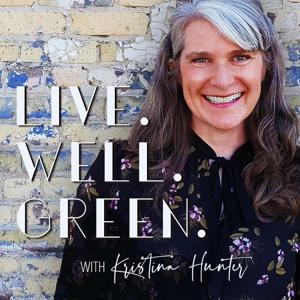
Live. Well. Green.
Download on the App Store

Live. Well. Green. episodes

  • Episode 47: A Flourishing Year in Review

    What a year it has been! In this episode of Live.Well.Green, Tekla Cunningham interviews Kristina to reflect on all that 2020 has brought us. Tekla is a student who uses archaeology to study how people in the past responded to climate change. She is also Kristina’s niece and has been helping out behind the scenes on the podcast since the very beginning! Today, we’ll learn about Kristina’s journey getting the podcast off the ground and why she decided to share her message on this platform. It has been a fast-paced year since she left her university teaching job at the end of January, full of unexpected twists, turns, and connections. Kristina talks about the growth of her global community and how it has blossomed from an email list sent to 40 people to reach thousands of people as far away as the United Kingdom and Australia. We hear about the podcast's evolution over the year and how major world events, like the pandemic, inspiring social movements over the summer, and natural disasters that were intensified by climate change affected the content of the podcast. While this has been a difficult year in many ways, it has also been one to grow, learn, and think about sustainability in the most holistic way possible. Thank you so much for your support! We look forward to flourishing with you even more in the upcoming year.  


    Key Points From This Episode:

    • What inspired Kristina’s life change to leave teaching to start this podcast.
    • Hear about the transition to podcasting and the skills Kristina learned along the way.
    • How Kristina built her online community, which was particularly important given the lockdown.
    • What you can expect to find in Kristina’s newsletter, which comes out every Friday.
    • Some of the episodes that have stood out most to Kristina over the past year.
    • How the murder of George Floyd informed the work Kristina was doing on the podcast.
    • Sustainability cannot happen without fighting against systemic racism.
    • The tremendous growth Kristina’s newsletter saw over the summer and the growth of a global community.
    • Hear about the topics Kristina tackled coming into the fall and the growing listenership.
    • Challenges that come with the lack of immediacy of podcast feedback.
    • Why personal wellbeing and wellness is not separate from broader sustainability issues.
    • The power of taking small actions and the compounding effect of this. 
    • Kristina’s top three lessons that she has learned this year.


    Links Mentioned in Today’s Episode:

    Kristina Hunter Flourishing

    The Unexpected Gift Box

    Sustainable Wellbeing Academy

    Tekla Cunningham on Twitter

    University of Manitoba

    Greta Thunberg on Twitter

    Live.Well.Green Episode 14: Air Quality and Health Part 1: Outdoor Air

    Live.Well.Green Episode 15: Air Quality and Health Part 2: Indoor Air

    Live.Well.Green Episode 01: The Human-Nature Connection

    Live.Well.Green Episode 06: Affluenza Antidote

    Live.Well.Green Episode 07: The Middle P

    49 min
  • Episode 46: Kids Answer Big Questions

    Welcome, my flourishing friends! Since it’s the holidays, I thought it would be a great idea to involve kids in this episode! We know that the festive season usually centers around spending time with family and friends, but because of COVID, we’re not able to do much of that this year. So, what better way to bring some joy into our lives by hearing what the young ones have to say about the most important things, tapping into their wisdom, and getting a sense of how they see the world? Children often come up with brilliant ideas because they don’t have the concerns and constraints that can prevent adults from accessing their creative spirits. In this episode, I pose big environmental questions to kids aged 10 and under to hear what we can learn from them and the possible solutions they offer. Let’s dive in! 


    Key Points From This Episode:

    • The problems adults should work on first and why it should take priority. 
    • Why we need to stop the earth from getting hotter for the sake of ice hockey! 
    • The little people unpack why pollution poses a huge threat to human health. 
    • Riding your bike, electric cars, and other solutions for using less fuel.  
    • What we can do to prevent plastic pollution in the things we buy and consume. 
    • The value of spending more time in nature and the respect it teaches a person. 
    • The kids share what they would do to protect the environment if they were in charge. 
    • Hear how planting more trees can help the poor and save us some money. 
    • Suggestions for how we can protect our planet through activities in and around schools.  
    • The schoolyard reimagined: wooden play structures and trees for playing in the shade. 
    • Games, sports, and outdoor activities for winter and summer. 
    • What we can do to reduce food wastage. (Parents, listen up!) 
    • Last words of advice to grown-ups: stop killing whales, don’t put animals in cages, and more! 


    Links Mentioned in Today’s Episode:

    Kristina Hunter Flourishing

    The Unexpected Gift Box

    30 min
  • Episode 45: Changing the Climate Within: Spiritual Ecology and Yoga

    In today’s episode, we ask: Could there be a new approach to addressing the environmental crisis? Can the concept of spiritual ecology help us develop a new perspective on problem-solving? What about using yoga as a tool to guide us on this mission? Science and technology have long been considered the only answers to the problem of climate change, but we are not seeing the results we desperately need. Many individuals and corporations are simply going about their business in the same old way, failing time and again to make the necessary changes. Could it be that at the heart of environmental degradation lies a spiritual and cultural problem? Is it not our departure from nature and our identities as spiritual beings that are standing in our way of changing our behavior and mindsets? Joining me on the podcast today is someone who has studied the intersection of spiritual ecology and yoga, and together we unpack what that can mean for our spiritual and cultural states of being. Let’s dive in! 


    Key Points From This Episode:

    • Why we need to change our behaviors, perspectives, and beliefs to solve the climate crisis. 
    • Learn what spiritual ecology is and how it relates to morals, ethics, and values. 
    • Hear about the appeal to religious leaders to advocate for and take action on climate change. 
    • Why the root of environmental degradation could be a spiritual and cultural problem. 
    • How language and connection bring yoga and spiritual ecology into a relationship.  
    • Laura talks about her research and its basis in Modern Western interpretations of yoga.  
    • How yoga philosophy promotes environmental awareness and an eco-friendly lifestyle. 
    • The relevance of the yoga concepts of non-violence and non-possession. 
    • Understanding our interconnectedness with nature and that we are part of something bigger.  
    • How yoga and related institutions can be tools for environmental education and change. 
    • An overview of the eight limbs of yoga and their expansion beyond movement, posture, and breathwork. 
    • The benefits of yoga, including helping you find your purpose in and contribution to the world.  
    • Recognizing that people – not just science and technology – have an important role to play. 


    Links Mentioned in Today’s Episode:

    Kristina Hunter Flourishing

    Laura Lucas on Facebook 

    Spiritual Ecology – Leslie E. Sponsel

    The Yoga Sutras of Patanjali 

    The Unexpected Gift Box

    36 min
  • Episode 44: How to Beat the Holiday Blues

    In today’s episode, we are going to talk about how to beat the holiday blues. While the Christmas season can be joyous, it can also come with sadness as we reflect on the past year and mourn the loss of loved ones. Moreover, the COVID-19 restrictions will also mean a very different experience from what we are accustomed to, and the season will not be celebrated as we normally do with friends and family. So, I have several approaches for beating those blues and finding enjoyment in the moment, however bitter-sweet it is. Whether you find joy in reading a book in front of a fireplace, going for a walk in the snow, or baking your favorite biscuits, there are plenty of heart-warming activities that will keep you feeling comfortable and cozy this winter season! 


    Key Points From This Episode:

    • December is typically a joy-filled time of celebrating with friends and family. 
    • Finances, chores, and other reasons why not everyone enjoys this time of year.
    • How COVID-19 restrictions are impeding our Christmas traditions and gatherings. 
    • The trend for Canadians to go to warmer destinations over the winter holidays. 
    • Creative ways to embrace the cold season like the people of many other countries. 
    • How loving where you are – regardless of the weather – is an act of sustainability. 
    • What the Danish can teach us about the secrets to happy living. 
    • Indoor and outdoor ideas for de-stressing and finding contentment at home.
    • The importance of cultivating a feeling of comfort and security in COVID times. 
    • The ingredient for a hygge holiday season, from warm socks to mulled wine and chocolate. 


    Key Messages: 

    1.  Embrace where you are and who you are with, no matter the circumstances. 
    2.  Foster a sense of contentment with what you have, even amid the COVID restrictions. 
    3.  Embrace the cold, get a good parka, and spend time outdoors. 
    4.  Embrace where you are with the Danish concept of hygge, which means cozy contentment. This might involve snuggling up by a fireplace with a good book or perhaps playing a board game. You can also think about treating yourself with some baked goods and mulled wine. 
    5.  Be present with whatever you have and live in the moment by enjoying enriching experiences. 
    6.  Be grateful for the small daily pleasures.  


    Links Mentioned in Today’s Episode:

    Kristina Hunter Flourishing

    Kristina Hunter Flourishing Resources

    The Little Book of Hygge 

    Little Doerksen Co. 

    Life Below Zero 

    The Unexpected Gift Box

    20 min
  • Episode 43: Green Gift-Giving Panel 2020

    For today’s episode, I have assembled a green gift-giving panel where I chat with three wonderful women about the types of sustainable and eco-friendly gifts that they like to give and receive. Whether you are looking for something small to give to the host of a party, need something more substantial for your loved one, or want to come up with something interesting to give to children of all ages, the four of us cover it all! With a bit of creativity and planning, you can give a new dimension to your gift-giving this holiday season. Not only will the gifts we discuss be sustainable and environmentally friendly, but they will also save you a lot of money and keep you away from the overcrowded shops. From edible gifts such as preserves and cookies to home-made gift cards and heat packs, there is a gift idea for every style and taste, so tune in to hear all about it!  


    Key Points From This Episode:

    • An introduction to our guests Noelle Wood, Amanda Doerksen, and Jean Hunter. 
    • The tendency for people to get caught up in consumerism when it comes to gift-giving. 
    • Suggestions for small gifts you can bring along when you are invited to a party. 
    • The wonder of home-made gifts: from heat packs and scrunchies to baked goods and cards. 
    • Consider how you can also support local businesses by choosing to buy from them.
    • How you can give green gifts even when you don’t have the time to make them yourself. 
    • Subscriptions, memberships, experiences, and other examples of bigger eco-friendly gifts. 
    • Buying a piece of secondhand furniture and refinishing it according to the receiver’s style. 
    • Think about treating your partner with a mani, pedi, massage, or facial at home! 
    • The four gift rule for kids: give something they want, need, can wear, and can read. 
    • Ideas for hobby and sport-related paraphernalia to get for young boys and girls.  
    • Our guests share the sustainable gifts that they have been most delighted by. 
    • Innovative, sustainable gift wrapping and home decorating ideas.  
    • Choosing gifts that reflect your values and are thoughtful to the receiver and the environment. 


    Key Messages: 

    1.  Consider hand-made gifts, even if you don’t have skills. The gift themselves are still meaningful. 
    2.  Use gift-giving to support local organizations, charities, small businesses, and makers. 
    3.  Think about using reclaimed, repurposed, and vintage gifts. 
    4.  Surprise the receiver by giving an experience, a membership, a lesson, or time together. 
    5.  Never buy wrapping paper again by reusing newspapers, cards, tea towels, fabric, and more.  
    6.  The sustainable gifts that we give show others how to be sustainable. 


    Links Mentioned in Today’s Episode:

    Kristina Hunter Flourishing

    Woodworks Productions on Instagram

    Woodworks Productions on Facebook

    Little Doerksen Co. on Instagram

    Little Doerksen Co. on Facebook

    Charleswood Art Group (Jean Hunter) 

    World Wildlife Fund 

    Earth + Hide 

    The Unexpected Gift Box

    46 min
  • Episode 42: Salute the Makers 2020

    Do you love craft markets as much as I do? If so, you are in for a treat today! In this episode, I interview six different makers who create their products while keeping sustainability in mind. They share with us how they got into their craft and the specific ways that their work contributes to the wellbeing of the environment. Spindle + Company puts a spin on traditional yarn products and Manny Maiers uses broken cameras and other vintage equipment to make unique home decor pieces while also preventing those items from ending up in landfills. At Toss Recreations, you can purchase anything from clothes to rugs, while Turquoise Poppies can supply you and your family with fun wrist warmers this winter. Listeners will also find out where they can buy tote bags made from repurposed upholstery fabric and how to get their hands-on nature illustrations that are perfect for educating kids about the Australian outdoors. Be sure to join me today to get sustainable, hand-crafted gift ideas for the holiday seasons! 


    Key Points From This Episode:

    • Get to know a different kind of spinster who makes and sells unique yarn products. 
    • Learn about Kelly Mason’s online fiber community and how she got into old-school spinning. 
    • The therapeutic, meditative nature of spinning and weaving and how it impacts mental health. 
    • Ensuring that they source only from sustainable suppliers who take care of their animals. 
    • Manny Maiers talks about how he got into making industrial and modern vintage home decor.  
    • Why Manny believes so many people connect with his products made with old cameras. 
    • How sustainability is brought into Manny’s business through repurposing and up-cycling.  
    • The recycled materials used in the production of Toss Recreation’s bags, clothes, rugs, etc.  
    • Hear about the fabulous wrist warmers/fingerless gloves produced by Turquoise Poppies.  
    • How Melissa Rickey repurposes and gives the items that aren’t sold in thrift shops new life. 
    • Florence Niven talks about the tote bags she makes from repurposed upholstery fabric. 
    • How making these bags started with her grandmother and is now a family tradition!  
    • Learn about Shantele Ianna – the nature illustrator who focuses on Australian animals. 
    • The importance of educating kids about the environment and to find joy in nature. 


    Links Mentioned in Today’s Episode:

    Kristina Hunter Flourishing

    Spindle + Company

    LightAndTimeArt

    Toss Recreations

    Turquoise Poppies  

    Katwise

    IvyandEloise 

    Shantele Ianna

    The Unexpected Gift Box

    48 min
  • Episode 41: How to Live Green at Home

    Today on the show, we are talking about how to live green at home. I get many questions on this topic, and my Green Home Guide is by far the most downloaded resource I offer, so today I am going to break it down in more detail for you. Tuning in, you will hear how you can live greener by examining the food you eat, how you clean your home and different choices in your home. You will also learn about environmentally-friendly furniture and appliances and what you can do to keep your garden literally and figuratively green! Remember, it is not about perfection, but making small changes one step at a time. Let’s dive in! 


    Key Points From This Episode:

    • How food can serve to connect us with the environment, our loved ones, and our bodies.  
    • Not only the quality and source of your food but also the packaging impact the environment. 
    • Suggestions for making incremental changes to make food choices based on your values. 
    • The short and long-term negative impacts of food waste and how to avoid it.
    • Advice for choosing household cleaners that do not harm your health or the environment. 
    • Why it is important to consider the quality and energy efficiency of your appliances. 
    • Low-cost solutions for reducing your water consumption at home.  
    • Choosing furniture and decor that aligns with your values and style and will stand the test of time. 
    • Advice about heating and cooling solutions that save money and honor the environment. 
    • The benefits of creating natural outdoor spaces and growing your own organic food.  
    • How you can protect and promote the natural ecosystems in your environment. 
    • The problem with our “retail therapy” mindset and our love for cheap consumer goods. 
    • Why the size and location of your home and the places you visit and buy from matter.  


    Key Messages: 

    1.  Be mindful of your food and purchases. Let them reflect your values of sustainability. 
    2.  Buy local when possible. 
    3.  Get efficient with home heating and water use – it pays off! 
    4.  Avoid hazardous chemicals, such as pesticides, harsh cleaners, and solvents. 
    5.  Get your hands in the dirt and do some gardening; it is good for you. 
    6.  Rethink your purchases and consider quality over quantity. 


    Links Mentioned in Today’s Episode:

    Kristina Hunter Flourishing

    Kristina Hunter Green Home Cleaning Recipes 

    Kristina Hunter Organic Gardening

    Live. Well. Green Podcast

    Ecocert

    Green Seal 

    Energy Star 

    The Energy Label

    EnerGuide 

    Dave Hanson

    The Unexpected Gift Box

    25 min
  • Episode 40: Is Carsharing Right for You?

    In today’s episode, I talk about carsharing, what it is, and whether it is the right decision for you. Along with being a financial burden and stress, car ownership contributes to environmental degradation. To illustrate the benefits of carsharing and the co-operative model, we look at a case study of one such organization, Peg City Car Co-op, based in Winnipeg, Manitoba. As a member, I have already reaped countless rewards. First, I talk to Philip Mikulec, Peg City’s Operations Manager, who sheds light on the co-op model, how it differs from the for-profit structure, and some of the most common benefits he has heard members talking about. Next, I then chat with Beth McKechnie, a Co-Founder of Peg City and a member of the Sustainable Transport Team at the Green Action Centre. In this segment of the conversation, we talk about why they decided to start a carsharing co-op in Winnipeg, why carsharing is not about discouraging car usage, and what factors need to be in place to make this type of rental model world. Lastly, Dayna Kroeker, President of the Peg City Board of Directors, joins us. We talk about what drew her to the carsharing co-op structure, the increased flexibility she now has when choosing a mode of transport, and the major lessons she has learned from part of a co-op. 


    Key Points From This Episode:

    • Defining the concept of carsharing and how it differs from ridesharing and ride-hailing.
    • The origins of carsharing, starting in Switzerland in 1987 and its subsequent spread across the world.
    • How a carsharing co-op works and what membership fees typically give you access to.
    • The voting and decision-making power that co-op members have.
    • Peg City's fleet size and current user numbers.
    • Hear about the technicalities, like gaining access to cars, fees, and refueling.
    • How carsharing is similar to but still different from the standard car rental model.
    • Peg City's maintenance schedule and how they encourage members to clean the cars.
    • The various benefits that those who utilize carsharing gain.
    • Peg City's founding story and the impetus for starting the organization in Winnipeg.


    Key Messages: 

    1.  There are a host of benefits of being a member of a car co-op or carshare organization. The cost benefits include only pay for a vehicle when you need and no incidental car ownership fees.
    2.  Car co-ops make vehicle access available to more people through increased affordability.
    3.  Environmental benefits of a car co-op include shortening travel distances and decreasing air pollution by reducing car ownership.
    4.  Carsharing also increases our use of active transportation, like walking and public transit.
    5.  The reduced stress that comes with not having to own a car if you have access through a co-op.
    6.  If you are looking to start a carsharing co-op in your own city, find like-minded individuals, make sure you have access to insurance, and partner with your local municipality. And be prepared to work hard!


    Links Mentioned in Today’s Episode:

    Peg City Car Co-op

    Carsharing Association

    Modo

    Turo

    'Peer-to-peer car-sharing is here to stay' 

    'Impact of Carsharing on Household Vehicle Holdings'

    1 hr 1 min
  • Episode 39: Simplify to Amplify

    Today on the show, I share with listeners how they can simplify their lives to amplify the aspects that are most important to them, thereby helping them to create happier, more intentional lives. It is easy to be swept up and distracted by the issues of the present moment and what the media puts on our radar, but how about regaining control of your life and deciding which things you want to pay more attention to? If we fail to set intentions, we get pulled in every direction by what is happening in our world. When you know what you want to get out of life, it is time to start prioritizing so that those things can become the focus. This will require you to say no to some things, however, since every time you say yes to something, you are inadvertently saying no to others. In this episode, I discuss how we can apply the principles of voluntary simplicity, why we need to have a purpose and vision, and explain how thinking of every aspect of your life as a bank account can help you get the balance right! I also dish out several strategies for creating a calmer, simpler life that best serves you and your environment. 


    Key Points From This Episode:

    • Simplification and the environmental movement have gone hand in hand for many decades. 
    • Simplicity is also gaining traction in the areas of business, productivity, and life satisfaction. 
    • How simplicity also serves our mental health and the wellbeing of the planet. 
    • Learn about ‘voluntary simplicity’ and how it was embraced in the sustainability movement. 
    • Our tendency to repeat old patterns that perpetuate stress and chaos in our lives.  
    • The role of creativity and vision in helping us remedy what our reality lacks.
    • Examples of how the pandemic has shifted how we doing things in society.  
    • A few books to help you implement meaningful changes and live with a plan and a purpose. 
    • The value of envisioning a new future and reflecting on the legacy you want to leave behind.


    Key Messages: 

    1.  Simplicity is a thread that runs through not only sustainability but also minimalism, productivity, and business. 
    2.  The term “voluntary simplicity” has been impactful in our understanding of sustainable living where we wish to live a life that is outwardly simple yet inwardly rich. 
    3.  The Living Forward book gives us actionable steps in order to simplify our lives – be sure to check it out! 
    4.  Consider the different aspects of your life like bank accounts from which you can withdraw and deposit. Avoid withdrawing too much from one and over-investing in another. 
    5.  Remember that saying yes to one thing means saying no to others, so prioritize your life accounts. 


    Links Mentioned in Today’s Episode:

    The ONE Thing

    Marie Forleo

    Voluntary Simplicity 

    The Value of Voluntary Simplicity 

    Becoming Steve Jobs 

    Living Forward

    Free to Focus

    37 min
  • Episode 38: Chemicals and My Body

    6Today’s episode is all about synthetic or man-made chemicals, how they can affect our health, and what we should be most concerned about. Around the time of the Second World War, we saw a chemical revolution, with harmful substances being created for warfare purposes and because they were believed to solve several of mankind’s problems. Sometime after, however, the negative impacts started manifesting in the health of people and the environment, and we became aware that perhaps these chemicals do far more harm than good. I talk about the principles for determining the toxicity of a chemical, how we can manage its associated risks, how humans and living organisms are exposed to these chemicals, and why it is so dangerous for them to accumulate in our bodies and the food web. I also give you some actions to take at home and things you can ask of your government to protect our health and that of the environment, so be sure to tune in for another enlightening episode! 


    Key Points From This Episode:

    • Learn about synthetic chemicals and when they started to be mass-produced. 
    • The kind of problems people once thought they could solve with synthetic chemicals. 
    • When people became aware of the harm these chemicals do to the environment. 
    • Hear about the important role that the marine biologist Rachel Carson played in the 1960s. 
    • The principles for determining the toxicity of a chemical and the necessary regulations. 
    • Managing the risk of toxicity by considering the chemical hazard itself and the receptors. 
    • How we are exposed to chemicals: Ingestion, inhalation, absorption, and injection. 
    • The problem of persistent organic pollutants (POPs) accumulating in an organism and the food web. 
    • The roots of the precautionary principle and why it should be incorporated into legislation. 
    • Suggestions for the personal actions we can take to embrace the precautionary principle. 


    Key Messages: 

    1.  Chemicals have the potential to cause harm based on how they enter and behave in the body. 
    2.  Synthetic chemicals can persist in the environment and continue to cause harm and accumulate in our bodies and up the food web. 
    3.  Ten out of the twelve chemicals on the Dirty Dozen list are pesticides and fungicides. 
    4.  Use the precautionary principle and ask for it to be implemented in the legislation in your jurisdiction. 
    5.  Avoid potentially hazardous chemicals in your home and garden. 


    Links Mentioned in Today’s Episode:

    Kristina Hunter Flourishing

    Kristina Hunter Organic Gardening

    Silent Spring (Rachel Carson)

    Science & Environmental Health Network (Precautionary Principle)

    IUCN (Precautionary Principle Guidelines)

    Toxicology Education Foundation (Hazard vs Risk)

    Berkeley (Environmental Exposures) 

    Stockholm Convention (POPs)

    22 min

About Live. Well. Green.

From the publisher's feed

How can I live a more sustainable life? What actions really make a difference for the earth? How can I live a better, greener life? How do I deal with eco-guilt? How can we create a better future for…