
Sign up to save your podcasts
Or



“No man is an island.” Not a direct quote from Scripture, but it originated from a sermon by seventeenth-century English author John Donne. It means that no one is self-sufficient; everyone needs to rely on someone, anyone. That’s just the way we were built. It should be stated somewhere in the manufacturer's instructions. Something like: “Designed to play well with others.” It’s programmed into our DNA to associate, be affiliated, and be connected. The condition of our relationships with others ultimately makes the difference between a great life, full of joy and accomplishment spent here on earth, and a miserable existence, filled with sorrow and heartache, with no one around to support us. Tragic, ain’t it?
It seems like no matter where or when you start, this road trip we call life is littered with potholes. Our parents tried to give us the map. Mom would say, "Make good choices and always wear clean underwear!" And who could forget her timeless question: "If your friends jumped off a bridge, would you?" Turns out, the answer was "Maybe!" because despite all that advice, we still took wrong turns that led us right to the edge of that bridge, seriously considering the view.
As the saying goes, when you pray for rain, bring an umbrella. Why? Because He promises that the prayers of a person praying with the right intentions don't just disappear into the ceiling—they have serious power. They "avail much." How much? Try it and see!
I don’t know what you’ve heard, but the truth is... “Confess your trespasses to one another, and pray for one another, that you may be healed. The effective fervent prayer of a righteous man avails much.” James 5:16 (NKJV)
The knees creaked and the joints were a-poppin' when I got out of bed this morning. This has become a familiar song as the birthday candles on my cake begin to accumulate. My first sounds weren’t exactly “Hallelujah! I’m alive!” I sounded more like a sinister villain in my bunny pajamas mumbling, “Where’s my coffee?” Nonetheless, I am alive to tell you that this day, with all its potential for creaks, groans, and caffeine dependence, is the absolute best day of my life.
Is God's grace unfair? Delve into the Parable of the Workers in the Vineyard to see how God's sovereign rewards challenge our ideas of fairness and reveal His undeserved favor.
When we approach our Father in heaven in prayer, we might imagine it as a quiet conversation; having a heart-to-heart, so to speak. But, what if we entered that sacred space with every integral part of ourselves—mind, eyes, ears, spirit, lips, heart, hands, and feet—all offered freely for God’s specific purpose? Each piece, or as we Sicilians say, “qualunque cosa” woven together, creates a living, whole-body experience, ready to be tuned up and used by our Creator, preparing for sacred dialogue. Here is a poetic reflection on the head-to-toe prayer.
American liberty, as envisioned by our founding fathers, was not a secular invention but a direct inheritance from a Judeo-Christian worldview. Their understanding of scripture fundamentally shaped the nation's concept of rights, governance, and civic duty, creating a cultural and societal framework whose effects are still felt and unfortunately contested today. Nevertheless, this is how the Founder's faith forged American freedom.
My first poetic endeavor:
The struggle is real as the story evolves
Yet I cling to an answer Your Scripture resolves,
Behold the new work of Your Son.
The combat begins with the dawn's fresh dread
Fighting to keep the dead man dead,
But the battle is already won.
A delicate, sweet crunch followed by the warmth of ricotta generously embedded with tiny morsels of chocolate bits, plus faint essences of cinnamon and vanilla. The shell is made, I was told, with Marsala wine, producing its unique flavor and texture. Fresh from the “friggitrice,” or deep fryer, these delicate treasures are liberally dusted with confectioners’ sugar. After that first bite, you look like you've just kissed the cream puff.
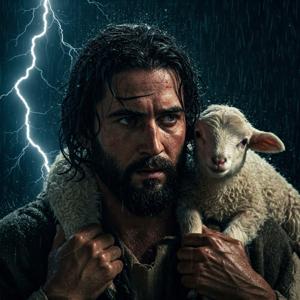
A journey with Psalm 23:4
Confidence, reliance, and assurance share a common misconception: we often preface them with "self." This approach leads us astray. If we follow the world's guidance, we risk being pulled deeper into its chaos.
As children, we learned that shyness was undesirable. We felt pressure to appear bolder. Society admires heroes. They become legendary figures, and we desire to be looked up to. This admiration makes us dream of greatness.
From the publisher's feed