
Sign up to save your podcasts
Or



Whitmore-Williams Professor of Psychology at the College of Wooster. Member of the APA task force on psychology and global climate change. Landmark contributor to the field of climate and environmental psychology, and IPCC chapter lead for the 6th Assessment Report. We speak with Susan about why she entered the field, the nature of climate anxiety, and the landscape of different options for responding to it.
The 10000 young person study: https://www.thelancet.com/journals/lanplh/article/PIIS2542-5196(21)00278-3/fulltext
Why breathing is so effective at reducing stress: https://hbr.org/2020/09/research-why-breathing-is-so-effective-at-reducing-stress
Mark Maslin is a Professor of Earth System Science at University College London and the Natural History Museum of Denmark, a scientist, a science communicator, and an award-winning author. Matt Winning is an environmental economist at University College London, a climate comedian, host of the BBC radio show Net Zero: A Very British Problem, author of Hot Mess, and TED speaker on the importance of using humor to discuss climate change. We speak with our guests about what the paleoclimate record tells us about what we should be worrying about, and the effectiveness of humour as a coping mechanism to trauma.
Mark's Books:https://www.amazon.ca/Climate-Short-Introduction-Mark-Maslin/dp/0199641137https://www.amazon.ca/Book-Futures-Planet-Survive-Century/dp/0241472520
Matt's Book:https://www.amazon.ca/Hot-Mess-Matt-Winning/dp/147227668X
Spencer has been an industrial engineer, an economic historian, a scholar of language and finance, and an executive for a major asset management firm. He now works to connect science and culture as the Founder of Probable Futures, a not-for-profit climate literacy initiative, and as a Senior Research Fellow at Woodwell Climate Research Center. We speak to Spencer about his journey from working in finance to becoming concerned about climate change, and about the parallels between the emotional impacts of climate change and chronic illness. (While I (Carter) won't speak on behalf of Patrick here, this is personally my favorite episode of the entire season.)
Probable Futures: https://probablefutures.org/
Human and Planetary Health Fellow at Stanford University and the London School of Hygiene and Tropical Medicine, best-selling author of Generation Dread, TED speaker. We speak with Britt about the mental health impacts of the climate and wider ecological crisis, and the challenging decision of whether or not to have children in the context of a warming planet.
Gen Dread - Britt's newsletter: https://gendread.substack.com/
Generation Dread - Britt's book: https://www.penguinrandomhouse.com/books/647141/generation-dread-by-britt-wray/
Behavioral psychologist, economist, entrepreneur, author of What You Think About When You Try Not To Think About Global Warming, TED speaker, and Member of the Norwegian Parliament. We discuss Per Espen's journey to becoming concerned about climate change, how and why he developed some of the foundations of the field of climate psychology, and conclude with an exploration of the different coping strategies people use to avoid engaging with the emotional consequences of a warming planet.
Per Espen's TED Talk: https://www.ted.com/talks/per_espen_stoknes_how_to_transform_apocalypse_fatigue_into_action_on_global_warming?language=en
Professor of Atmospheric Physics at the University of Oxford. A coordinating lead author for the Intergovernmental Panel on Climate Change (IPCC) Special Report on 1.5 Degrees. Credited as one of the scientists who discovered “net-zero” emissions are required to stop warming. We discuss how Myles' emotional response to climate science has changed over an almost 40-year career, and the way in which some climate anxiety is driven by a misunderstanding the 1.5C target. To conclude, Patrick & I speak about the value of education in managing fear.
Notes:
Myles refers to "Bill Nordhaus" making an accurate global warming prediction in the 1970's. He's actually referring to Jules Charney & the Charney report, the first major scientific report on climate change published in 1979, which can be found here:
https://nap.nationalacademies.org/read/12181/chapter/1#vii
The IPCC's Special Report on 1.5 Degrees: https://www.ipcc.ch/sr15/
A detailed explanation of why net-zero emissions are needed to stop warming: https://www.nature.com/articles/s41558-021-01245-w
Youth activist, founder of the Fridays for Future (FFF) organization in the Philippines: Youth Advocates for Climate Action Philippines (YACAP). We speak with Mitzi about the challenges of living in a country on the front lines of the impacts of climate change, and the emotional experiences that have led her to take up an activist role. We investigate the role of self-care in emotional resiliency, and the importance of breaking the link between unhelpful emotions and action. To conclude, we think about how institutions and activist communities can better engage with each other. Notes:
Organizations Mitzi belongs to: https://fridaysforfuture.org/, https://yacap.org/
Evidence of the link between climate change and tropical storms: https://www.ipcc.ch/report/ar6/wg1/chapter/chapter-11/ (See 11.7)
From the publisher's feed
Climate change has been endlessly debated. Is it happening? Are humans causing it? How bad is it going to get? What should we do about it? In this podcast a climate scientist and clinical…
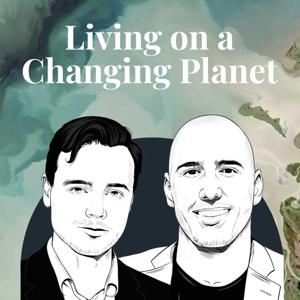
Whether you’re an energy worker who’s facing the loss of your job and ability to provide for your family, a youth activist afraid of what the future holds, or a nature-lover grieving the rapid ongoing destruction of our biosphere - we sit down with world-leading experts on climate change and the energy transition to explore the thoughts and feelings that keep them up at 2 A.M., and talk about how they manage them productively.
No political agenda. No alarmism. Just open, fact-based conversation about what it means to be a human being living on a changing planet. New episodes weekly!