
Sign up to save your podcasts
Or



I suspect this might be the most controversial episode of this podcast.
How do we use the land in our country?
What impact does our food have on nature?
How much land is needed for the meat and dairy we consume?
What diet is the best for the environment?
How can we help farmers work more sustainably?
A sweaty man ran towards me, suffering the exertions of his morn- ing run. This was the first grid square I’d been to that was predomi- nantly residential. I stepped aside on the church path to let him pass, but he just touched the trunk of the yew tree in front of me and ran back the way he’d come. The tree must have been his regular turna- round spot. I wondered if he gave it any thought, or if he was focusing more on his split times and Strava ranking.
If I was the sort of man who had a Top Ten ranking of trees in my head (and I am that sort), then I’d rank the yew far down the list. They look gloomy, suck away sunshine, and are hard to climb.
I’d ridden to today’s square straight after waking up, so still felt morning fuzzy as I sat on a log to settle into the woodland and sip coffee from my flask. The ground in the hollow was covered with a carpet of leaves, brown beech, tawny oak, orange sweet chestnut, yellow maple, and emerald moss. A brilliant blue sky framed the few leaves still lingering on the branches of silver birch trees. This was likely to be the one of the last days of late autumn colour, making it even more precious. Winter’s onslaught was being held back by these occasional autumnal flurries, but there would not be many more golden mornings until next year.
'My vicinity affords many good walks; and though for so many years
I have walked almost every day, and sometimes for several days together, I have not yet exhausted them. An absolutely new prospect is a great happiness, and I can still get this any afternoon.’
Henry David Thoreau
(and some moaning about fly-tipping!)
I studied my map for a while and found what appeared to be its most boring grid square. A square without road, house or river, just a single footpath, one pond, and the merest flutter of a lonely contour line. Here was nothing at all, neatly outlined within its crisp blue lines.
It was unremarkable: there was nothing to remark on. It was the ideal place to begin. If this first outing was too boring for me on my boring map, then it would certainly be too boring for you, and that would be the end of the book straightaway.
I folded up the map and headed out to have a look at nothing.
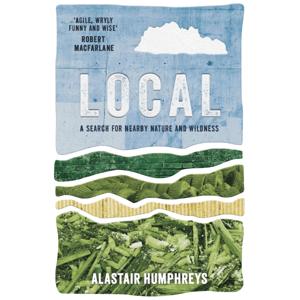
Welcome to this serialised podcast of the audio version of my book, 'Local'. Each episode is one chapter of the book. You can listen to the whole of the book on Spotify or Audible.
First up...
For more than twenty years, my favourite thing has been to leave here behind, with all its ties and routines. To hit the road and make my way to there. I get twitchy being in one place for too long. I have been lucky enough to cycle a lap of the planet, to row and sail the Atlantic, hike across southern India, and trek over Arctic ice and Arabian sands. The open road, spin the globe, and off I go. Home was for family, friends and real life, but not for exploration and adventure.
However, my mood has shifted, like many people’s. With the climate in chaos, I can’t justify flying all over the globe for fun anymore, burning jet fuel and spewing carbon for selfies. It feels particularly inappropriate as I write books that encourage everyone to get out and explore. If I love wild places so much, was I willing to not visit them in order to help protect them?
Coming soon: the serialised audiobook of 'Local, a search for nearby nature and wildness'. One chapter per week, in easily digestible segments.
Subscribe for free via wherever you get your podcasts...
First up - a brief audio explanation of what I'm trying to accomplish in this book.
You can also listen to the whole audiobook via Audible.
From the publisher's feed

99,761 Listeners